
Standing in front of the mirror and wondering why nothing looks right is a feeling almost everyone knows. Most of the time, it isn’t the outfit. It’s the cut.
Years of buying trendy pieces that never sat quite right taught one simple lesson: the fix isn’t more clothes. It’s the right shape.
Once you learn how to dress for your body type, shopping gets faster and outfits feel effortless. No more guessing games in the fitting room.
This guide breaks down your shape, the necklines and cuts that flatter it, and how to build a wardrobe that works every single time you get dressed.
How to Identify Your Body Shape
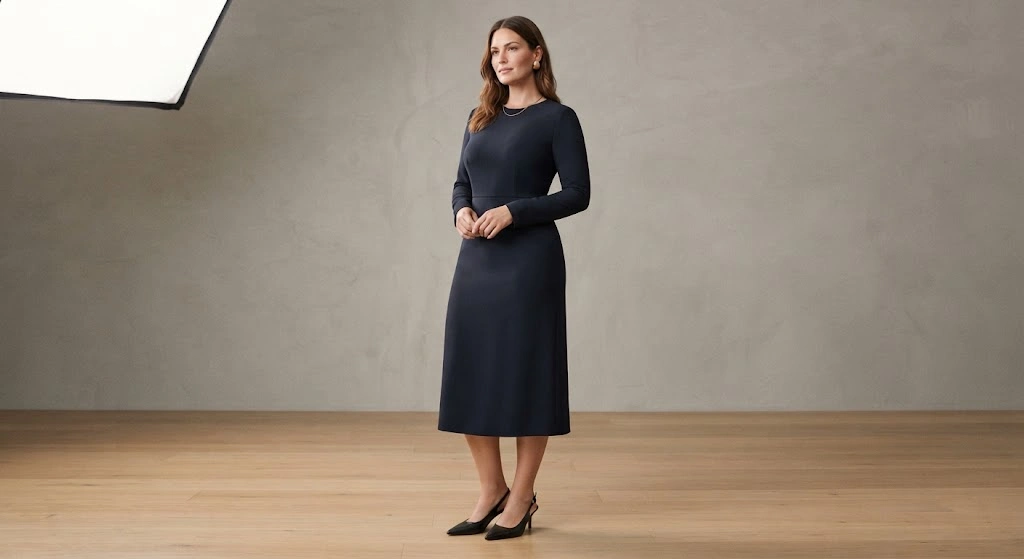
Before picking dresses for your body type, it helps to understand your natural proportions.
- Compare your shoulders, bust, waist, and hips to spot your shape
- Body type depends on proportion, not size, so this works for every frame
- Common shapes include hourglass, pear, apple, rectangle, and inverted triangle
- Most people sit between categories, so treat these as guides, not rules
- Measure your bust at its fullest point, your waist at its narrowest, and your hips at their widest
- Compare your upper and lower body to see where your shape leans
Once you know your basic proportions, choosing flattering styles gets much easier. This groundwork sets up every styling decision that follows.
Best Dresses by Body Shape
Once you know your shape, the next step is finding styles that work with it, not against it.
Every shape has cuts that flatter it naturally, along with a few that tend to fight your proportions. Here’s what suits each body type best.
1. Hourglass Shape
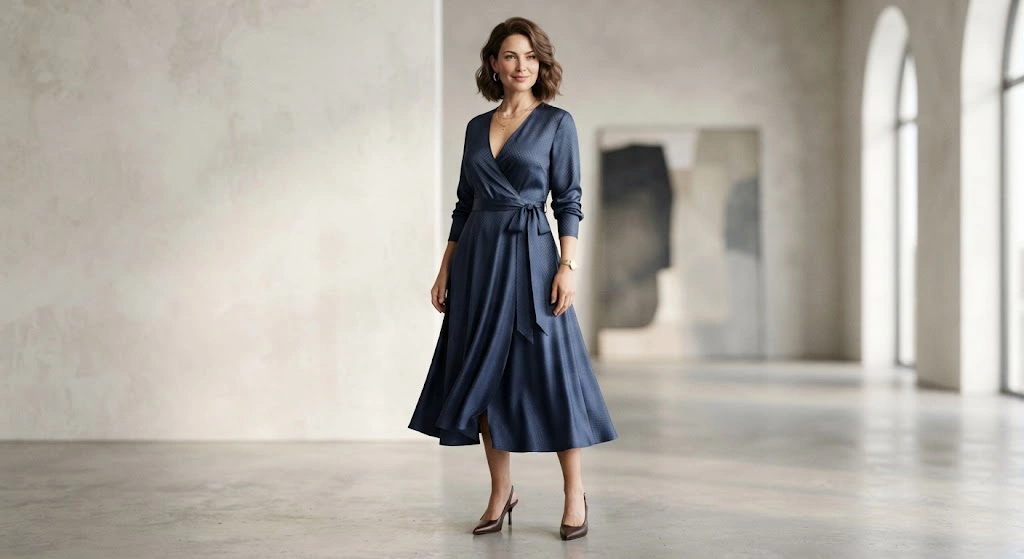
Hourglass figures usually have a defined waist with balanced bust and hip measurements. Dresses that highlight the waist tend to complement this shape best.
- Best styles: Wrap dresses, fit-and-flare dresses, sheath dresses, belted dresses
- Necklines and details: V-neck, sweetheart neckline, natural waistline, waist belts
- Styles to avoid: Very loose shift dresses, oversized silhouettes with no waist definition
2. Pear or Triangle Shape
Pear shapes usually have hips that are wider than the shoulders. Dressing this body type is about balancing the upper and lower half.
- Best styles: A-line dresses, fit-and-flare dresses, empire waist dresses, wrap dresses
- Necklines and sleeves: Square necklines, boat necks, statement sleeves, shoulder details
- Styles to avoid: Tight hip-focused dresses, boxy cuts with no waist shaping
3. Apple or Oval Shape
Apple shapes often carry more fullness around the middle. Dresses with comfortable waist placement and clean lines create a naturally balanced look.
- Best styles: Empire waist dresses, A-line dresses, wrap dresses, straight-cut maxi dresses
- Necklines and details: V-necklines, scoop necks, vertical details, simple waist placement
- Styles to avoid: Heavy detailing around the midsection, stiff fabrics at the waist
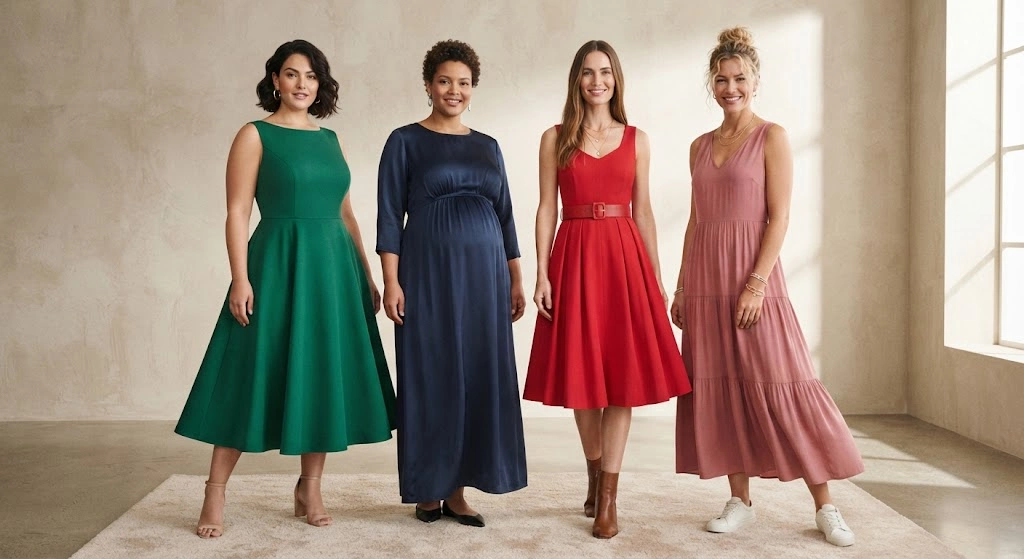
4. Rectangle Shape
Rectangle body types usually have similar shoulder, waist, and hip measurements. Dresses that add waist definition create more visible shape and structure.
- Best styles: Belted dresses, wrap dresses, fit-and-flare dresses, peplum styles
- Best details: Ruffles, layering, structured waistlines, side panel details
- Styles to avoid: Very straight, shapeless cuts, oversized dresses with no structure
5. Inverted Triangle or Heart Shape
Inverted triangle shapes usually have shoulders broader than the hips. Dresses that add volume below the waist help balance the whole silhouette.
- Best styles: A-line dresses, flared skirts, fit-and-flare styles
- Best necklines: V-neck, soft scoop neck, minimal shoulder details
- Styles to avoid: Excessive shoulder volume, heavy upper-body embellishments
Best Dresses by Body Size and Frame
Shape isn’t the only thing that decides what looks best on you. Frame size and build matter just as much. A petite frame, an athletic build, and a plus-size figure each call for slightly different choices, even within the same body shape.
These picks focus on working with your frame, whether that means adding definition, creating length, or keeping proportions balanced.
6. Plus-Size Body Types
Plus-size figures can fall into different body shapes, so the best choices depend on personal proportions. Structured dresses with thoughtful details offer comfort and shape.
- Best styles: Shirt dresses, belted midi dresses, structured maxi dresses, wrap-front dresses
- Best details: Defined waistlines, smooth fabrics, clean seams, balanced patterns
- Styles to avoid: Extra loose cuts with no shape, stiff fabrics, excessive layering
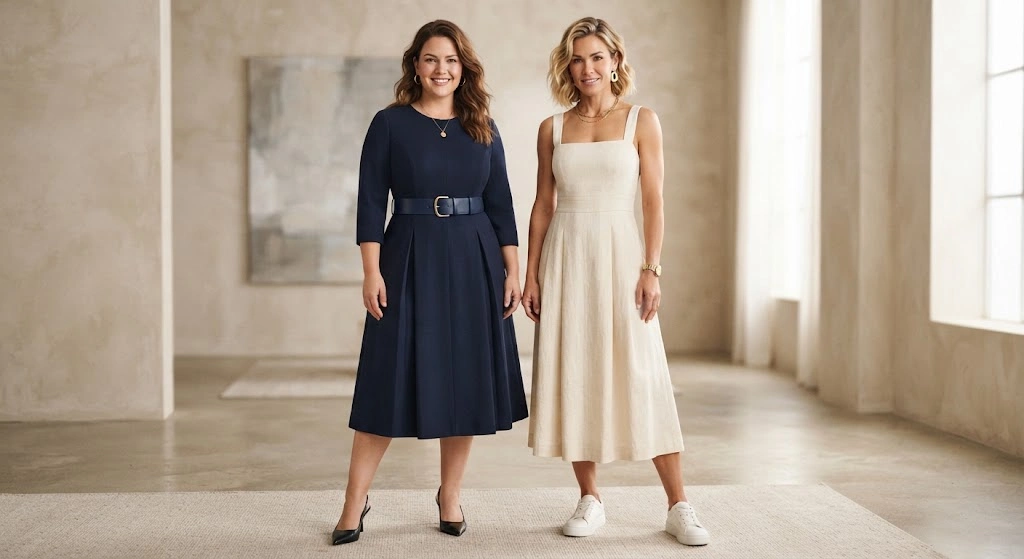
7. Athletic Body Types
Athletic body types often have straighter lines, so dresses with added detail create more shape and visual interest. Styles with movement and texture work well here.
- Best styles: Halter dresses, ruched dresses, square neck dresses, off-shoulder dresses
- Best details: Gathered waistlines, textured fabrics, sleeve details, curved seams
- Styles to avoid: Boxy dresses, plain straight cuts, overly structured designs
8. Slim Silhouettes
Slim silhouettes suit dresses that add volume or highlight the natural frame. Details around the bust, waist, or skirt add dimension.
- Best styles: Tiered dresses, ruffle dresses, bubble hem dresses, slip dresses
- Best details: Layered skirts, textured fabrics, waist ties, decorative details
- Styles to avoid: Very oversized dresses, heavy fabrics, cuts that hide the body completely
9. Petite Frames
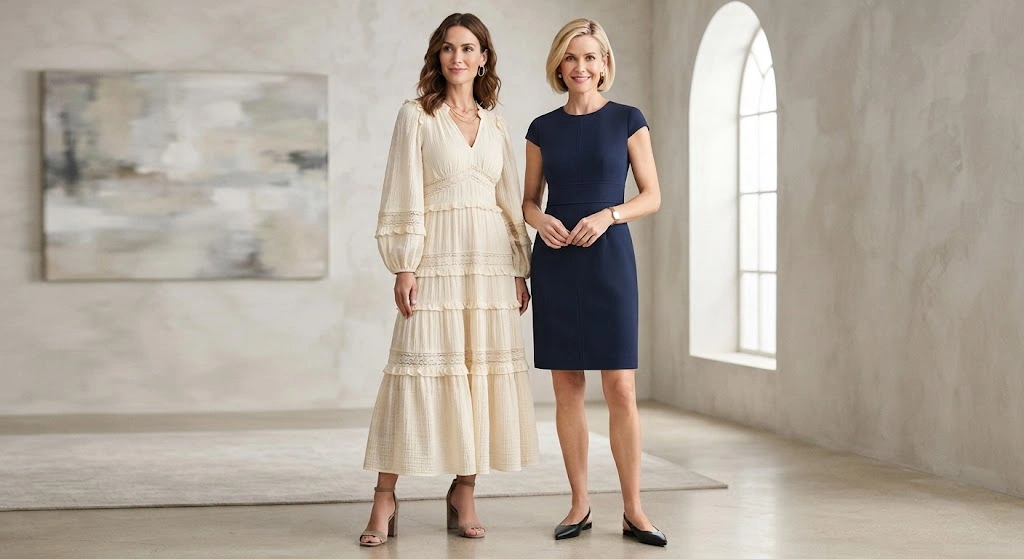
Petite frames suit dresses that create length and keep proportions balanced. Simple designs with clean lines avoid shortening the frame.
- Best styles: Belted shirt dresses, column dresses, high-low dresses, mini dresses
- Best details: Vertical seams, shorter hemlines, raised waist placement, minimal layering
- Styles to avoid: Floor-length loose dresses, heavy ruffles, oversized silhouettes
Best Dresses for Specific Body Features
Body shape isn’t the only factor worth considering. Features like hips or leg length also matter when dressing for your body type.
Paying attention to length, fit, and proportion helps narrow down styles further, and these small details often matter more than overall shape alone.
10. Best Dresses for Wider Hips
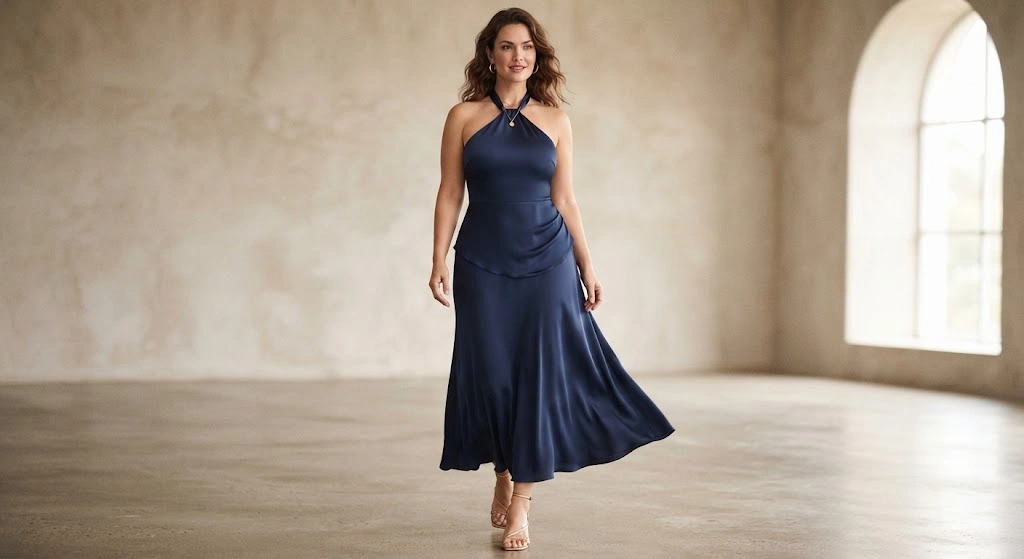
If you have wider hips, choose dresses that balance the upper and lower body while staying comfortable. Styles with flow and structure sit better around the hips.
- Best styles: Bodycon dresses, flowy maxi dresses, tiered dresses, halter maxi dresses
- Best details: Detailed necklines, lighter fabrics, fitted bodices, soft draping around the lower half
- Styles to avoid: Straight shift dresses, bulky hip details, dresses that end at the widest point of the hips
11. Dress Styles to Elongate Short Legs
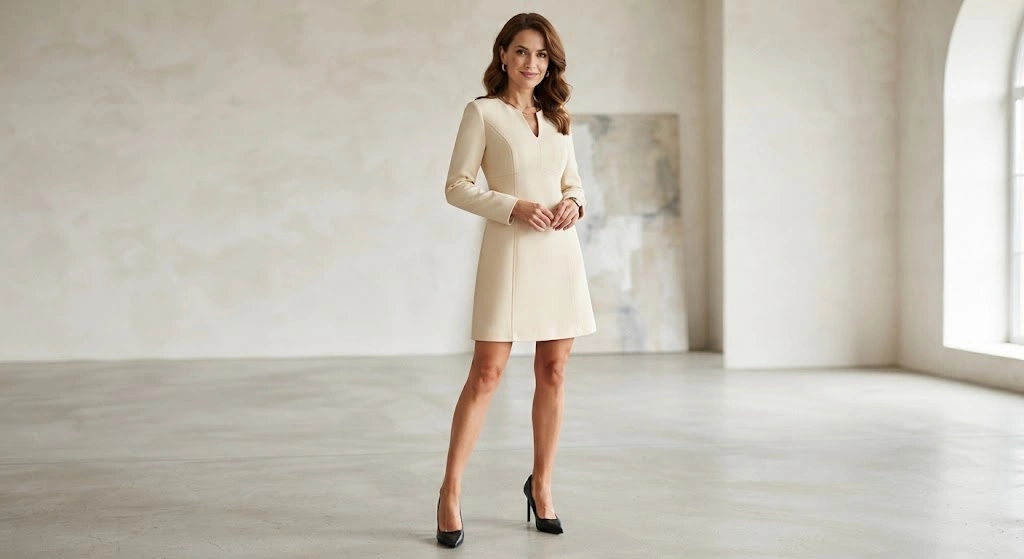
To make your legs appear longer, focus on lengths and details that create a longer visual line. The right proportions make the whole outfit look more balanced.
- Best styles: Mini dresses, A-line mini dresses, fitted midi dresses, dresses with side slits
- Best details: Vertical patterns, higher waist placement, shorter hemlines, pointed footwear
- Styles to avoid: Very long hemlines with no shape, dresses that cut off at the widest part of the leg, heavy lower-body detailing
How to Pick the Right Dress Length, Fabric, and Fit
The right silhouette depends on more than body shape alone. Length, fabric weight, and fit all affect how a dress looks and feels once it’s on.
| Category | Mini / Soft / Shoulder Fit | Midi / Structured / Waist Placement | Maxi / Fabric / Length |
|---|---|---|---|
| Length | Mini dresses show off the legs for a casual feel | Midi dresses offer versatile styling for most occasions | Maxi dresses create flowing looks for taller frames |
| Fabric | Soft fabrics allow natural, relaxed movement | Structured fabrics hold shape and add definition | Stiff or itchy fabrics should be avoided |
| Fit | Shoulders should sit properly without pulling | Waist placement should feel comfortable, not restrictive | Length should suit your height and proportions |
Focus on silhouette, length, fabric, and fit rather than chasing trends alone. With a little practice, choosing dresses that feel comfortable and look balanced becomes second nature.
Universal Dressing Tips for Any Body Shape
A few general rules apply no matter which shape you fall into.
- Focus on fit. Clothes that are too tight cling uncomfortably, while overly baggy pieces hide your natural shape. Tailoring is your best tool.
- Play with volume. Think of your outfit like a scale: pair something loose on top with something streamlined below, or the other way around.
- Draw the eye. Use bright colors, patterns, or statement accessories on areas you want to highlight, and keep simpler textures on areas you’d rather minimize.
These small adjustments work across every shape and can instantly improve how balanced an outfit looks.
Final Thoughts
Getting dressed shouldn’t feel like solving a puzzle every morning. Once you know your proportions, choosing an outfit becomes second nature instead of a daily struggle.
A well-placed waistline or the right fabric does more for how an outfit looks than any statement piece ever could.
Small shifts in fit and structure change everything. Confidence comes from proportion, not from chasing every passing trend.
Frequently Asked Questions
What is the hardest body type to dress?
Many people find the apple shape trickiest, since the midsection needs careful styling. Getting the waist placement, fabric, and silhouette right makes a noticeable difference.
Can I dress for both my body shape and my frame at the same time?
Yes. Start with your shape for the overall silhouette, then adjust for frame details like height or build, such as a higher waistline if you’re petite or a structured fit if you’re athletic.
How do I dress for my body type as I get older?
Comfort and fabric quality matter more as you age, alongside your natural shape. Focus on proper fit and structure rather than trends for a timeless, flattering look.