
You put on a great outfit, look in the mirror, and something feels off. Your skin looks dull. Your eyes look tired. The piece itself is lovely, but the color next to your face is not helping you.
This happens to many women after 50. A shirt you wore for years suddenly feels wrong. That does not mean your style is fading. It means your coloring has changed, and your wardrobe needs a small update.
Hair turns gray, silver, or softer in tone. Skin has less contrast than before. Makeup shifts too. All of this changes how clothing colors look on you, even if your warm undertone stays the same.
The good news is simple. You do not need a strict seasonal palette or a long list of rules. You only need to pick shades that work with your natural warmth, not against it. Once you do, stylish outfits for women over 50 become much easier to build.
This guide shows you how to find your best colors, build a warm neutral base, add richer shades, and fix colors that feel too cool. You will also get easy outfit formulas you can repeat all year.
Start With the Colors Closest to Your Face
Warm undertones look best in colors with a yellow, golden, peach, olive, or earthy feel. But not every warm shade will suit you the same way. Some are too bright. Some are too muddy. The goal is to find the ones that feel right on you.
The Easy Side-by-Side Test
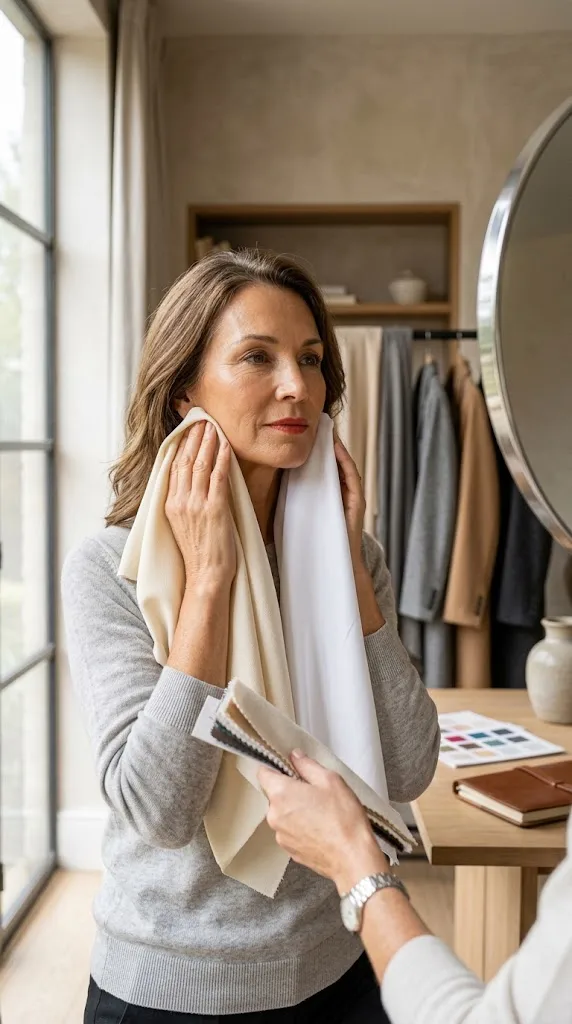
Comparison is the simplest way to find your best colors for warm undertones over 50. Here is how to do it:
- Stand near a window in natural daylight.
- Hold two similar colors under your chin, one at a time.
- Try pairs like bright white and ivory, or cool raspberry and warm coral.
- Watch your skin and eyes, not the fabric.
The better color makes your skin look smoother and more even. Your eyes look brighter. The shade feels soft and connected to you, not like a costume.
Do Not Rely on Old Rules Alone
You may have heard two popular tips. One says to check your vein color. The other says that if you look good in gold jewelry, you have a warm undertone. These tips can be a helpful hint, but they are not proof.
Trying real clothing colors near your face is usually more accurate. Lighting, skin tone, and hair color can all fool the vein test.
Your Hair Changes the Picture
Gray, silver, highlighted, red, brunette, and blonde hair all change the contrast around your face. Your undertone may stay warm, but your best palette can shift.
For example, you may now look better in softer shades than before. Or you may need slightly deeper or brighter colors to keep your face from fading into your hair.
Try this: Pick five tops from your closet. Wear each one by a window and take a photo. Look at all five photos together. The strongest colors often stand out right away.
Warm Neutrals Make the Easiest Wardrobe Base
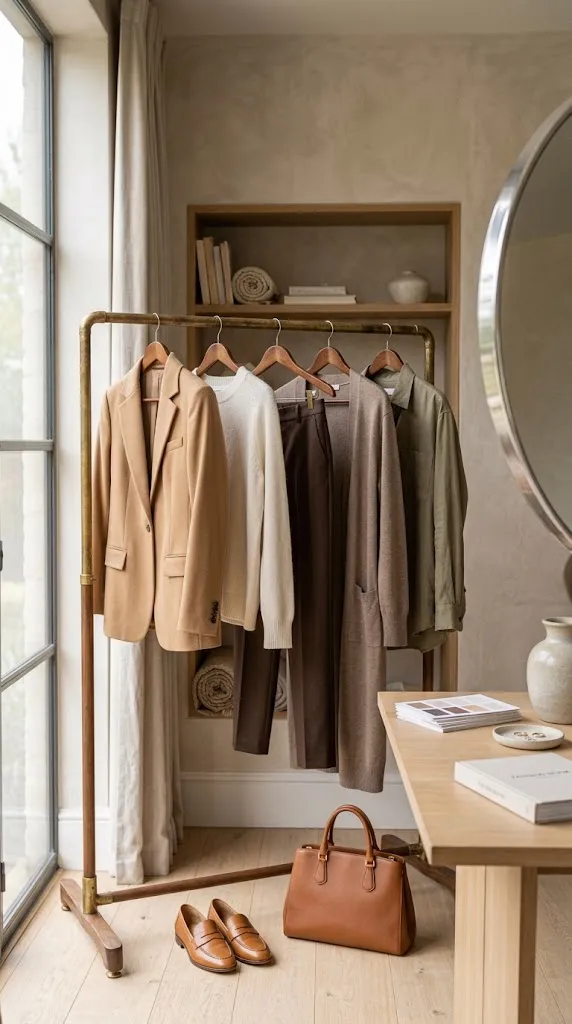
The most useful warm colors are often the quiet ones. Cream, camel, chocolate, warm taupe, tan, and soft olive make a strong base for a practical wardrobe.
These shades blend easily. They avoid harsh contrast. They also make it simple to pair denim, prints, jewelry, and brighter accent colors.
What About Black?
If black feels heavy near your face, you do not have to throw it out. Keep black trousers, skirts, boots, or handbags. Just wear a warmer color on top, close to your face. Black works well when it stays away from your neckline.
A Quick Guide to Warm Neutrals
| Color | What to Look For | Pairs Well With |
|---|---|---|
| Ivory | Creamy white, not blue-white | Camel, denim, olive, rust |
| Camel | Medium golden brown, not too orange | Ivory, chocolate, teal |
| Warm taupe | Beige-brown with warmth, not gray | Olive, cream, coral |
| Chocolate | Deep brown that can replace black | Peach, teal, rust |
| Soft olive | Muted green with a yellow or brown tint | Ivory, tan, warm navy |
These shades are perfect for a capsule wardrobe over 50 because they repeat well. A camel jacket, an ivory knit, chocolate trousers, and an olive overshirt can make many outfits. None of them will feel boring or repeated.
Fabric tip: Matte fabrics make earthy colors look rich. Think wool, brushed cotton, suede, linen blends, and soft knits. Very shiny fabrics can make camel, bronze, or mustard look louder than you expect.
Rich Earth Tones Add Warmth Without Feeling Too Bright
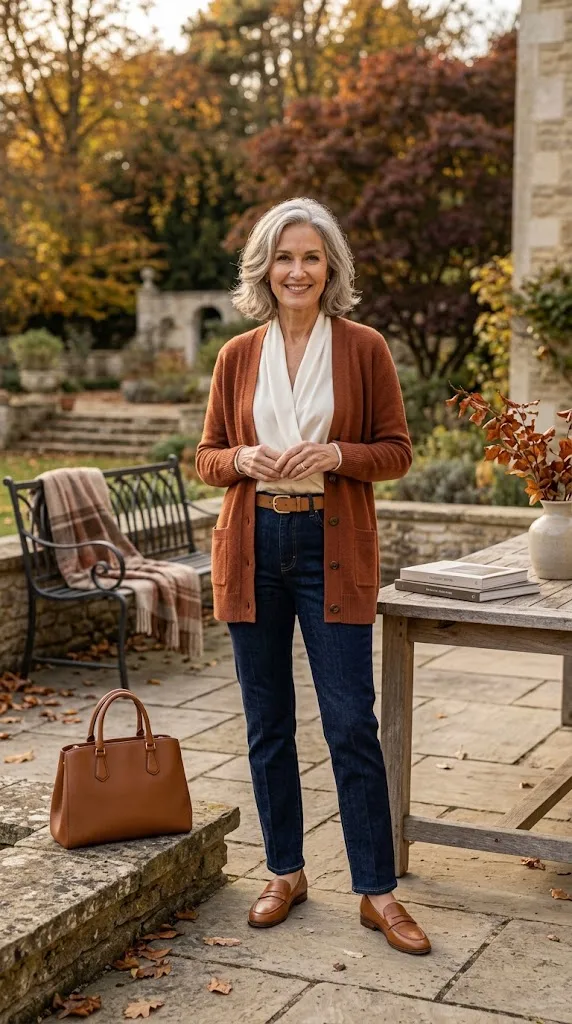
Want a little more color? Earth tones are a natural fit. Rust, terracotta, cinnamon, paprika, ochre, and burnt orange all have a brown or golden base. That keeps them softer than sharp, bright primary colors.
You do not need to wear them head to toe. One earthy piece is enough to lift a simple outfit.
Easy Ways to Wear Earth Tones
- A rust cardigan over an ivory top with dark denim
- Terracotta trousers with cream knitwear and tan loafers
- An ochre scarf, bag, or jacket when a full mustard sweater feels too strong
Combinations Worth Trying
- Terracotta with ivory and cognac
- Rust with dark denim and camel
- Olive with cream and chocolate
- Paprika with warm navy and tan
- Cinnamon with soft beige and gold jewelry
Why do these work? Balance. One rich color gives the outfit personality. The neutrals around it keep the look calm and polished.
This is one of the simplest ways to create chic outfits for women over 50. You get color, but the wardrobe still looks refined.
Choose Reds, Pinks, Greens, and Blues With a Warmer Base
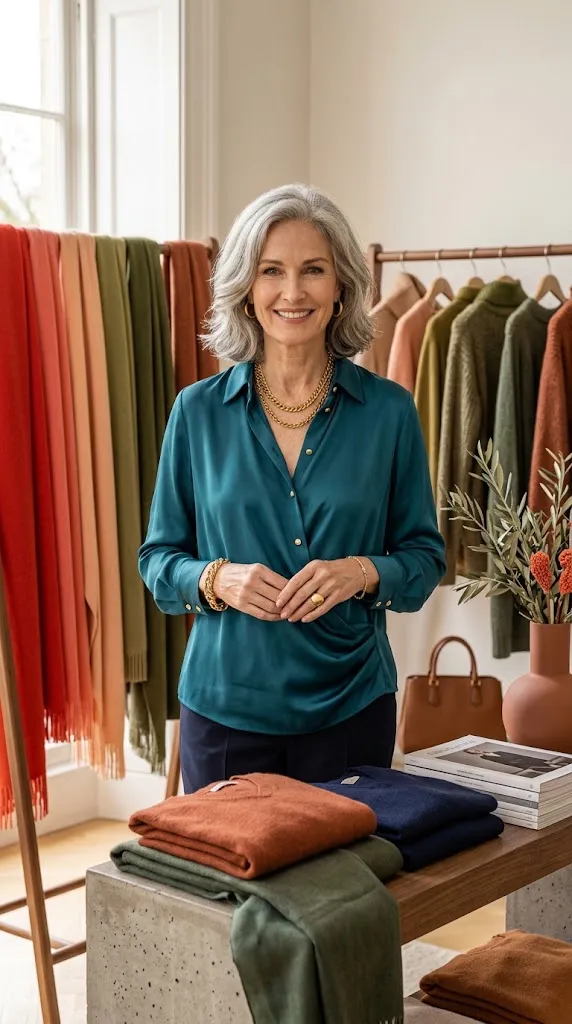
Having a warm undertone does not mean living in beige and brown. You can wear bold colors too. The secret is picking the version that has warmth built in.
Reds and Pinks
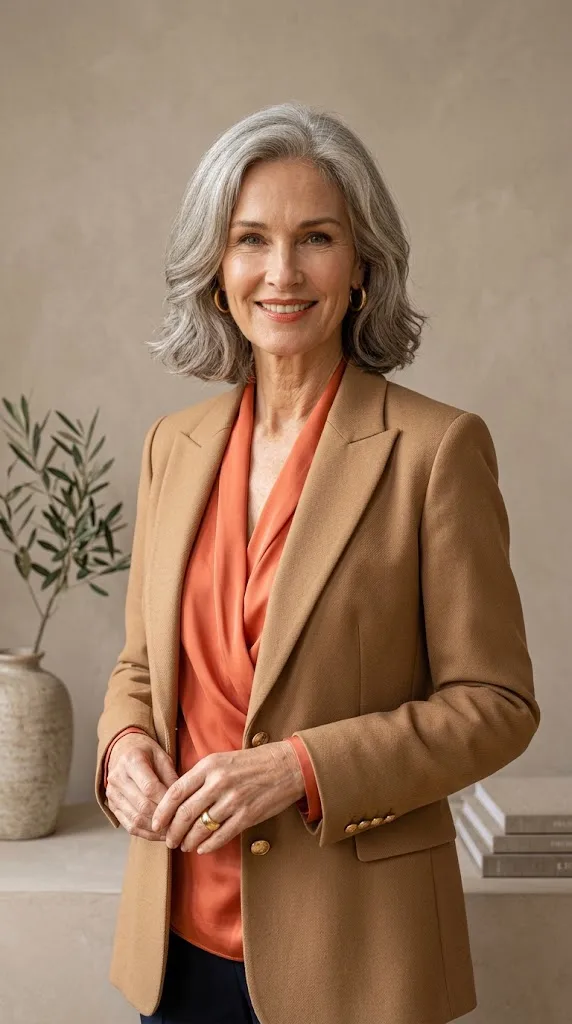
Skip the blue-based cherry red. Try tomato, brick, or poppy red instead. Swap icy pink for peach, salmon, coral, or warm rose. These shades add a healthy glow to your skin.
Greens
Green is the most flexible color for warm undertones. Olive, moss, khaki, warm forest green, and avocado all sit beautifully next to warm skin.
Blues
Blue may need a bit more testing. Look at teal, turquoise, petrol blue, peacock, and softer warm navy. These often look excellent on warm undertones.
Color note: The name on the clothing tag matters less than the shade itself. Two sweaters can both say “navy” and still have very different undertones.
A Simple Shopping Trick
Hold the fabric next to something cream, camel, or olive. If the color looks calm and harmonious, it will probably work well in your wardrobe. If it looks sharp or clashing, it may be too cool.
If a Color Feels Too Cool, Change the Shade, Not the Color Family
Color advice can feel like a list of things you can never wear again. It does not have to be that way.
Most colors come in warmer and cooler versions. A small change in shade often solves the problem. You can keep the color family you love and simply pick the right version.
Warm Swaps You Can Use
| If This Feels Harsh | Try This Instead |
|---|---|
| Stark optic white | Ivory, cream, soft ecru |
| Icy baby pink | Peach, salmon, warm rose |
| Blue-red berry | Tomato red, brick, coral red |
| Cool charcoal | Chocolate, warm taupe, brown-gray |
| Icy pastel blue | Teal, petrol, muted turquoise |
| Cool purple | Aubergine, or plum with a red base |
Still Love a Cool Color?
Wear it. Just move it away from your face. A cool gray trouser looks great with an ivory blouse. A lavender skirt feels more connected when paired with camel shoes and a warm cream knit.
This makes dressing over 50 feel freer. Color becomes something you adjust, not a rule you must obey.
Use Jewelry, Prints, and Accessories to Tie It All Together
Sometimes an outfit is almost right, but something feels slightly disconnected. Accessories can fix that fast.
Jewelry and Materials
Gold, bronze, brass, copper, tortoiseshell, cognac leather, and warm tan blend easily with a warm palette. Mixed metals also work, especially if you already own both gold and silver pieces.
Prints as a Bridge
A print can link pieces that would otherwise feel unrelated. A scarf with navy, rust, ivory, and olive can tie a whole outfit together.
When you choose a print, check the color closest to your face. If that background shade is flattering, the small cool colors inside the print matter much less.
Budget-friendly swap: Before you buy anything new, change the scarf, earrings, necklace, or jacket on an outfit you already own. The right warm accent may be all you need.
This also helps you repeat stylish outfits for women over 50 with less effort. Keep the same simple base and change the small details.
Build a Warm-Color Outfit Formula You Can Repeat
A good palette should make mornings easier. You should not need a color wheel every time you get dressed.
Start with one warm neutral. Add one supporting color. Finish with one richer accent if you want more interest.
Outfit Ideas for Real Life
| Occasion | Outfit | Why It Works |
|---|---|---|
| Everyday errands | Dark denim + ivory knit + camel jacket | Warm color stays near your face, while denim keeps it casual |
| Lunch with friends | Chocolate trousers + coral blouse + tan loafers | Coral adds life, and brown keeps it grounded |
| Smart casual | Warm navy trousers + cream top + olive jacket | Three soft shades create contrast without harshness |
| Travel day | Olive trousers + oatmeal knit + cognac shoes | Earthy neutrals mix easily and hide small travel wrinkles |
| Casual dinner | Dark denim + rust blouse + gold jewelry | Rust becomes the star while the rest stays simple |
Your Simple Everyday Formula
Warm neutral bottom + flattering near-face color + one connected accessory.
For example, wear chocolate trousers with an ivory blouse and cognac loafers. Another day, swap the blouse for coral or teal. The base outfit still works.
That is what turns color advice into a real wardrobe system, not another set of fashion rules.
Frequently Asked Questions
What colors look best on warm undertones over 50?
Cream, camel, chocolate, olive, rust, terracotta, coral, teal, and warm navy are all strong choices. They match the golden or peachy tone in warm skin and keep your face looking fresh.
Can I still wear black with a warm undertone?
Yes. Wear black on the bottom half, such as trousers, skirts, or boots. Put a warmer color like ivory, camel, or coral near your face.
How do I know if my undertone has changed?
It usually has not. What changes is your contrast, because of gray hair, softer skin tone, and different makeup. Retest colors in daylight and choose slightly softer or deeper shades if needed.
What is the best white for warm undertones?
Ivory, cream, and soft ecru. They look gentler than stark, blue-toned white.
Final Thoughts
The best colors for warm undertones over 50 are not about strict rules. They are about how a shade makes you look and feel. Start by testing colors near your face in daylight. Build your base with warm neutrals. Add rich earth tones and warm versions of reds, greens, and blues. When a color feels too cool, try a warmer shade or move it away from your face.
With a few smart choices, your closet will feel easier, fresher, and much more you.
Stay tuned to faminaz for more style, lifestyle, and beauty guides.