
Well-shaped eyebrows can completely transform your face. They frame your features, balance your proportions, and add a sense of polish to your overall look — without a single swipe of makeup.
That’s why more people are turning to semi-permanent and permanent brow procedures. No more filling in sparse patches every morning. No more smudged brows by noon.
But when it comes to eyebrow tattoo vs microblading, which one actually delivers better results? And which one is right for your skin type, lifestyle, and budget?
Let’s break it all down.
What Is Microblading?
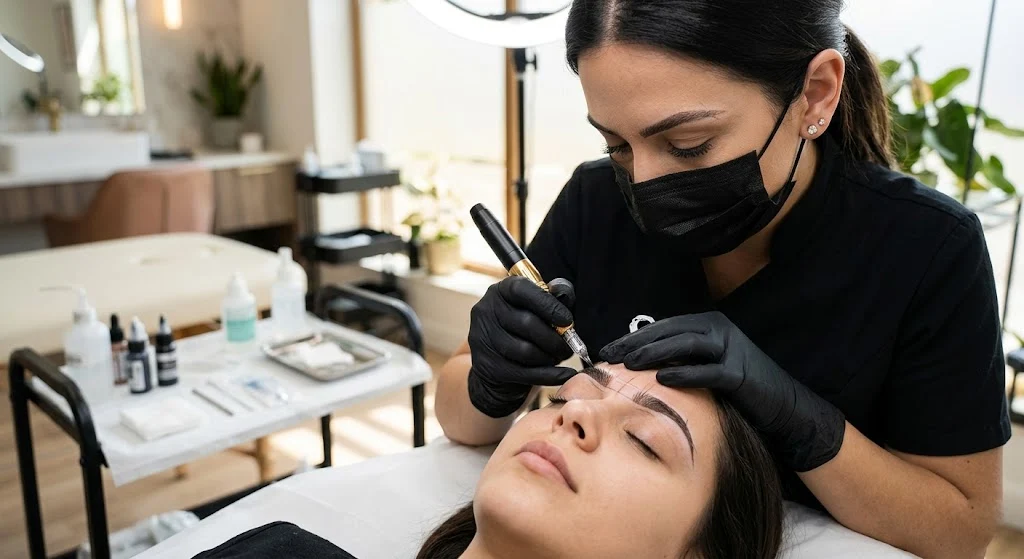
Microblading is a semi-permanent brow enhancement technique that uses a handheld tool to deposit pigment into the upper layers of the skin. The result? Fine, hair-like strokes that mimic the look of natural brow hairs.
The process starts with brow mapping — carefully measuring your facial proportions to design a shape that flatters your bone structure. Then, a trained technician manually draws each stroke by hand, building fullness and definition gradually.
Because the pigment sits closer to the skin’s surface, microblading fades naturally over 12 to 24 months. That’s actually a benefit for many people — it means you can adjust the shape or density as trends change or your face changes over time.
Microblading works best for people who want realistic, low-maintenance brows that still look natural up close.
What Is Eyebrow Tattooing?
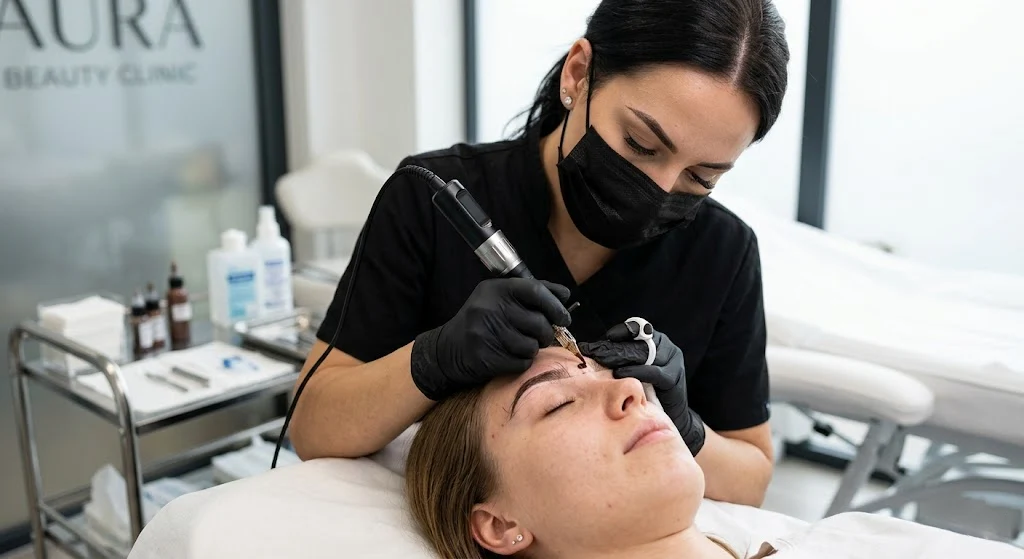
Eyebrow tattooing is a longer-lasting cosmetic procedure that uses a tattoo machine to implant pigment deeper into the skin. Unlike body tattoos, the pigments used are specifically formulated for cosmetic use — they’re designed to fade gradually rather than remain stark and permanent forever.
The technique is great for filling in completely sparse brows or creating a defined shape that holds up for years. Artists can shade, outline, or fill the brows depending on the desired look.
Because the pigment goes deeper, the results last significantly longer — typically three to five years — but that also means more commitment. Changing the shape later is much harder.
Eyebrow Tattoo vs Microblading: Side-by-Side Comparison
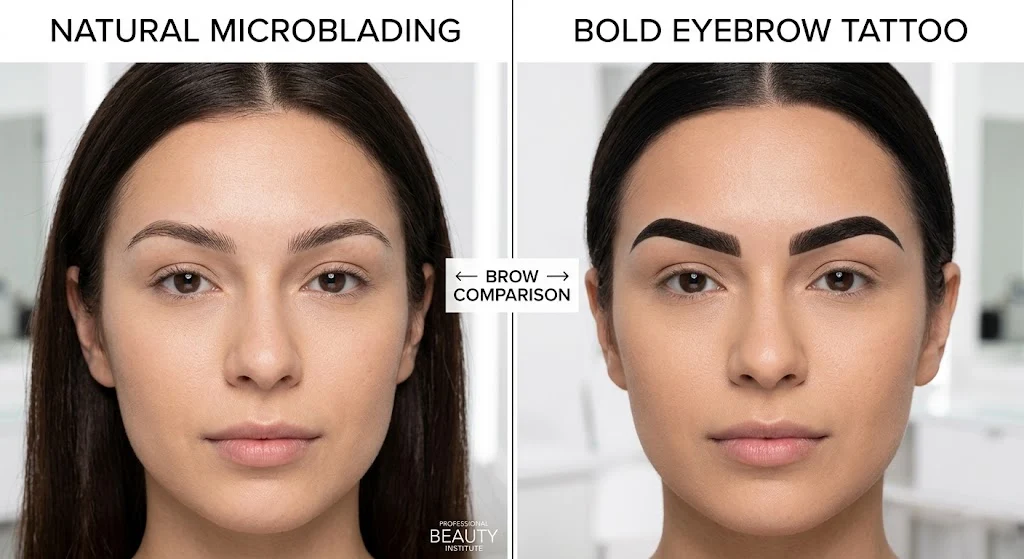
Here’s a clear breakdown of how these two techniques stack up:
| Feature | Microblading | Eyebrow Tattoo |
|---|---|---|
| Technique | Handheld blade deposits pigment into upper skin layers | Tattoo machine embeds pigment deeper into the dermis |
| Appearance | Natural, hair-like strokes that blend with real brows | Bolder, more filled-in finish with stronger colour saturation |
| Healing Time | Mild discomfort, most people heal within 7–10 days | Deeper pigment means longer healing and more aftercare |
| Longevity | 12–24 months with annual touch-ups | 3–5 years, though colour can shift over time |
| Cost | $500–$1,500 (average around $600) | $400–$800 (average around $600) |
| Best For | Natural-looking, adaptable brows | Long-lasting, defined brows with minimal upkeep |
Bottom line: If you want something that looks as close to real brow hairs as possible, microblading wins. If you want something bold, durable, and low-maintenance for years, eyebrow tattooing is the stronger choice.
What’s the Newest Eyebrow Procedure?
If you want the best of both worlds, meet nano brows — also called nanoblading.
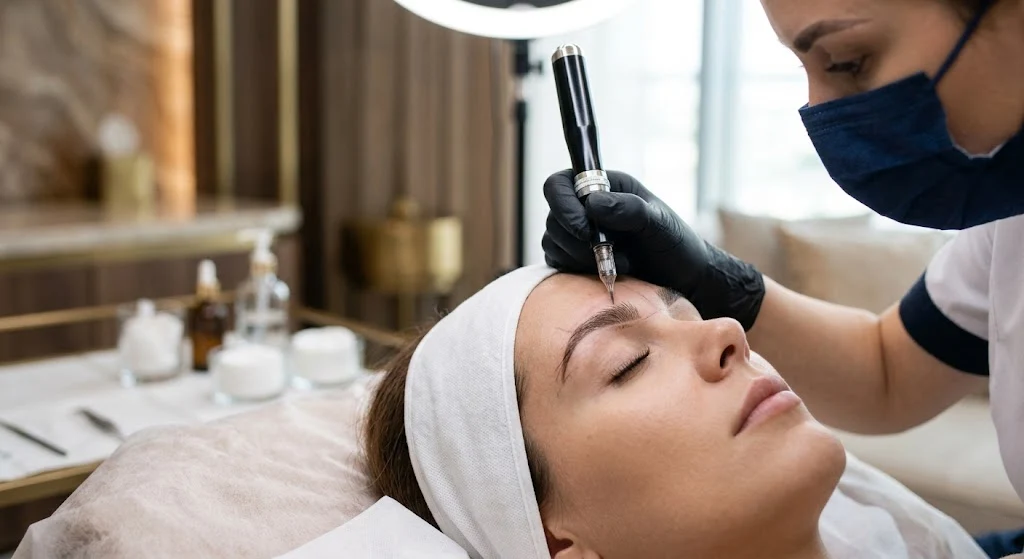
This technique uses an ultra-fine digital needle to place pigment with far greater precision than traditional microblading. Because the needle is so small, there’s less trauma to the skin, faster healing, and incredibly detailed results.
Here’s why nano brows are becoming the go-to option:
- Longer-lasting results — up to three years with proper care
- Works on all skin types — including oily, dry, and mature skin (which microblading can struggle with)
- Minimal irritation — the finer needle causes less friction and redness
- Exceptional detail — strokes look almost indistinguishable from real hair
- Better pigment retention — less fading between touch-ups
Nano brows are particularly worth considering if you have oily skin and microblading hasn’t worked well for you in the past.
Pros and Cons of Permanent Eyebrow Procedures
No brow procedure is perfect for every person. Here’s an honest look at both sides:
| Factor | Pros | Cons |
|---|---|---|
| Longevity | Defined brows that last months or years without daily effort | Colour can soften or shift tone, requiring periodic touch-ups |
| Convenience | Cuts down morning makeup time significantly | Healing periods and follow-up appointments take time |
| Customisation | Shaped to suit your face, style, and preferences | Your style or facial features may change over time |
| Confidence | Consistent, polished look in every setting | Natural brow hair changes with age can affect the overall balance |
| Cost | Reduces spending on brow products and salon visits long-term | Higher upfront cost and occasional professional touch-ups required |
The key takeaway: these procedures are an investment, not just in money but in research and patience. Going to the right artist makes all the difference.
How to Choose the Right Brow Procedure
Still not sure which path to take? Here are the most important things to evaluate before booking:
Check pigment quality. High-quality cosmetic pigments fade evenly and hold their tone longer. Don’t be afraid to ask your technician exactly what products they use.
Review the artist’s portfolio. Look at before-and-after photos carefully. Focus on clients with a similar skin tone and brow type to yours. You want to see soft, natural results — not overly dark or stiff-looking brows.
Consider your skin type. Oily skin tends to break down pigment faster, which can cause microblading strokes to blur or fade unevenly. If you have oily skin, powder brows or nano brows may deliver better longevity.
Prioritise proper brow mapping. A skilled technician will measure your brows carefully before picking up any tool. Symmetry matters — small miscalculations can lead to uneven arches that are difficult to correct.
Follow aftercare instructions. This step is non-negotiable. Keeping the area dry, avoiding sun exposure, and not picking at any scabbing during healing directly affects how your final brows look.
When in doubt, microblading tends to age more gracefully. The strokes are softer and more forgiving as skin changes over the years, making it a reliable choice for most people.
Best Eyebrow Options for Seniors
Mature skin has different needs, and not every brow procedure is equally suitable for older clients.
Traditional eyebrow tattooing in particular can be tricky on ageing skin. Mature skin tends to be thinner and less elastic, which increases the risk of pigment spreading, bruising, or uneven healing.
Here are the safest and most flattering options for seniors:
| Method | Best For | Why It Works |
|---|---|---|
| Microblading | Thinning or sparse brows | Lighter strokes reduce irritation and work well with delicate skin |
| Powder Brows | Sensitive or textured skin | Gentle shading instead of cutting strokes; minimises trauma |
| Nano Brows | Delicate or mature skin | Ultra-fine needles cause less friction and support faster recovery |
| Tinted Brow Gels | Minimal intervention preferred | Non-invasive, quick, and perfect for sensitive skin |
| Brow Pencils | Daily control and flexibility | No skin contact involved; easy to adjust shape day to day |
For most seniors, powder brows or nano brows offer the best combination of safety, comfort, and results. Always consult with a technician experienced in working with mature skin before committing to any procedure.
Final Thoughts
The eyebrow tattoo vs microblading debate doesn’t have a one-size-fits-all answer. Both are legitimate, effective procedures — what matters is matching the right technique to your skin type, lifestyle, and long-term goals.
If you want natural-looking brows that evolve with you, microblading is a strong choice. If you want something bold and durable that requires minimal upkeep for years, eyebrow tattooing delivers. And if you’re looking for the most advanced option available today, nano brows offer the best precision with the least skin trauma.
Whatever you choose, always prioritise artist experience, pigment quality, and proper aftercare. That combination makes the difference between brows you love and brows you regret.
Frequently Asked Questions
What do celebrities get done to their eyebrows?
Most celebrities opt for microblading, powder brows, or combination brow techniques performed by specialist artists. Many also maintain their brows with regular tinting, lamination, and shaping treatments between semi-permanent sessions.
What are ombre brows?
Ombre brows are a semi-permanent technique that creates a soft, powdery gradient effect — lighter at the front near the nose and gradually darker toward the tail of the brow. The result is similar to a filled-in makeup look but without the daily effort.
What’s the most flattering eyebrow shape?
The most universally flattering brow follows the natural golden ratio — with a gentle arch positioned at the outer two-thirds of the brow, full thickness throughout, and a shape that complements your specific face structure. A skilled brow artist will customise this to your features rather than following a one-size-fits-all template.
How long does the healing process take?
Microblading typically heals within 7–10 days on the surface, though full pigment settling can take 4–6 weeks. Eyebrow tattoos may take slightly longer due to deeper pigment placement. Avoid sun, sweat, and moisture on the area during the initial healing phase.
Can you remove eyebrow tattoos or microblading if you don’t like the results?
Yes, but removal is a longer process. Laser removal is the most common option for traditional eyebrow tattoos, though it requires multiple sessions. Microblading pigment, being shallower, tends to respond faster to removal treatments. The best approach is always to choose your artist carefully the first time.