
Walk into any barbershop today and you’ll hear one word more than any other: fade.
It’s not hard to see why. Fades work with almost every hair type, face shape, and lifestyle. They look sharp at the office, hold up at the gym, and still turn heads on a night out. That kind of versatility is rare in men’s grooming, and it’s exactly why the fade has stayed on top for years instead of fading into a passing trend.
This guide breaks down everything you need to know about fade haircuts in 2026. You’ll learn what a fade actually is, explore 12 of the best fade styles for men, and get practical tips on picking the right one for your face shape, hair texture, and daily routine.
What Is a Fade Haircut?
A fade haircut is a style where the hair transitions from very short at the sides and back to noticeably longer on top.
Barbers create this effect with clipper guards of different sizes. They start with the shortest guard near the neckline and ears, then switch to progressively longer guards as they work up the head. The guards overlap slightly at each stage, which blends the lengths together instead of leaving a hard line.
Done well, a fade shouldn’t show any visible steps between lengths. Instead, it should look like the hair melts smoothly from skin or short stubble into fuller length on top. That smooth blend is what separates a great fade from a rushed one, and it’s also why fades typically take longer in the chair than a basic clipper cut.
The 12 Best Types of Fade Haircuts
Every fade style has its own starting height, blend intensity, and finished look. Some are built for the boardroom. Others are made to stand out. Here’s how the main types compare.
1. Low Fade
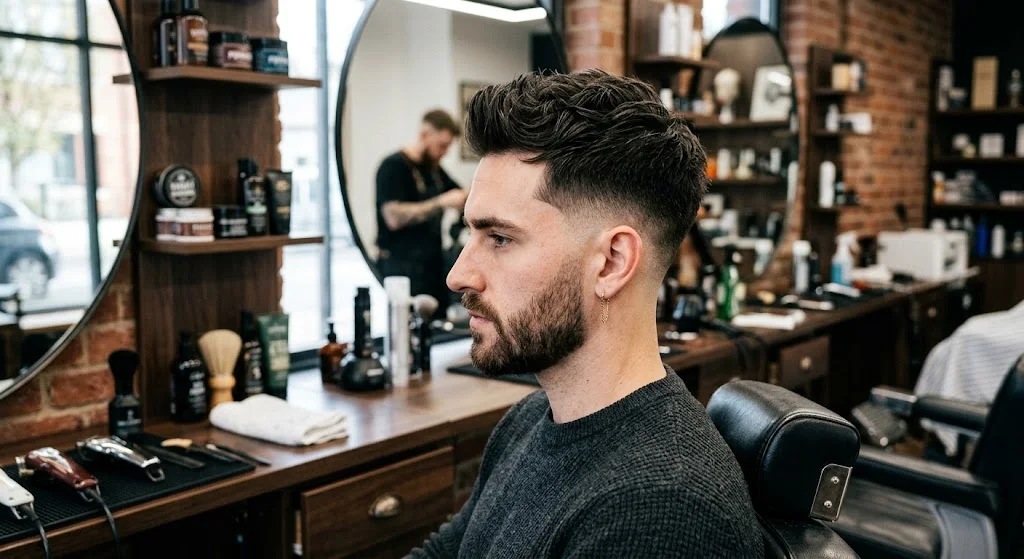
A low fade keeps the transition close to the bottom of the head, starting just above the ears.
Because the fade stays low, more length is preserved on the sides overall. This creates a cleaner, more conservative silhouette that reads as polished rather than edgy.
Best for: Corporate settings, client-facing jobs, and anyone who wants a fade that won’t raise eyebrows in a traditional office.
2. Mid Fade
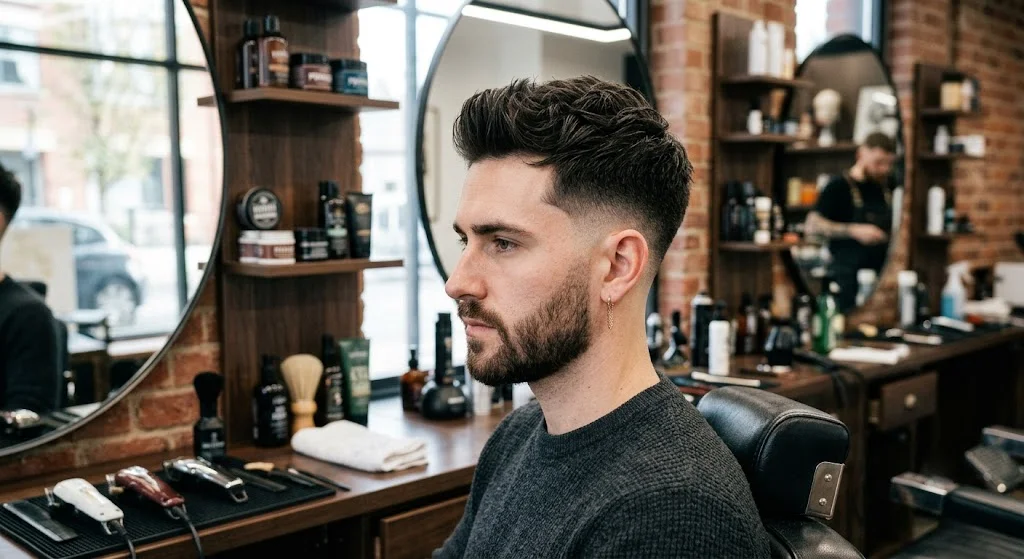
The mid fade starts around the temple area, roughly halfway up the side of the head. It’s the single most requested fade at most barbershops, and for good reason.
A mid fade strikes a balance: it’s defined enough to look intentional but not so aggressive that it feels like a bold statement. That makes it the safest entry point if you’ve never worn a fade before.
Best for: First-time fade wearers and anyone who wants a versatile, everyday cut.
3. High Fade
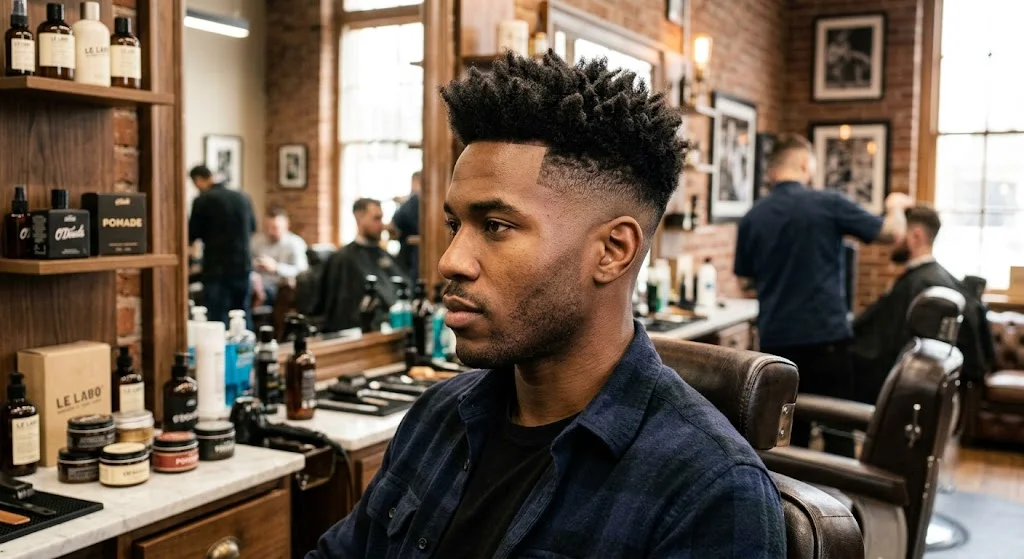
A high fade begins near the temples or even higher, closer to the crown. This creates the most dramatic contrast of the three main fade heights.
Because so much length is removed on the sides, all the visual weight shifts to the top. This naturally draws the eye upward, which is why the high fade is often used to add structure to longer or narrower face shapes.
Best for: Bold, statement styles and men with elongated face shapes who want more width up top.
Popular Fade Variations Worth Knowing
Once you understand the three fade heights, it helps to know the specialty variations built on top of them.
4. Shadow Fade
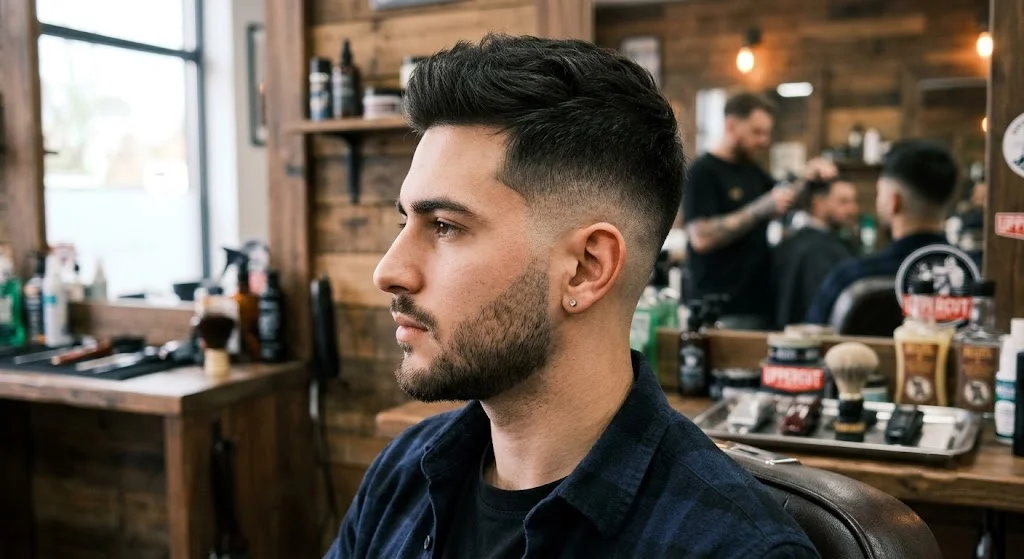
A shadow fade is designed to be nearly invisible. The blend happens so gradually that it reads more like a soft shadow than a defined fade line.
This subtlety makes it a favorite in ultra-conservative settings where a bold fade might look out of place.
Best for: Military members, law enforcement, and formal corporate environments.
5. High and Tight Fade
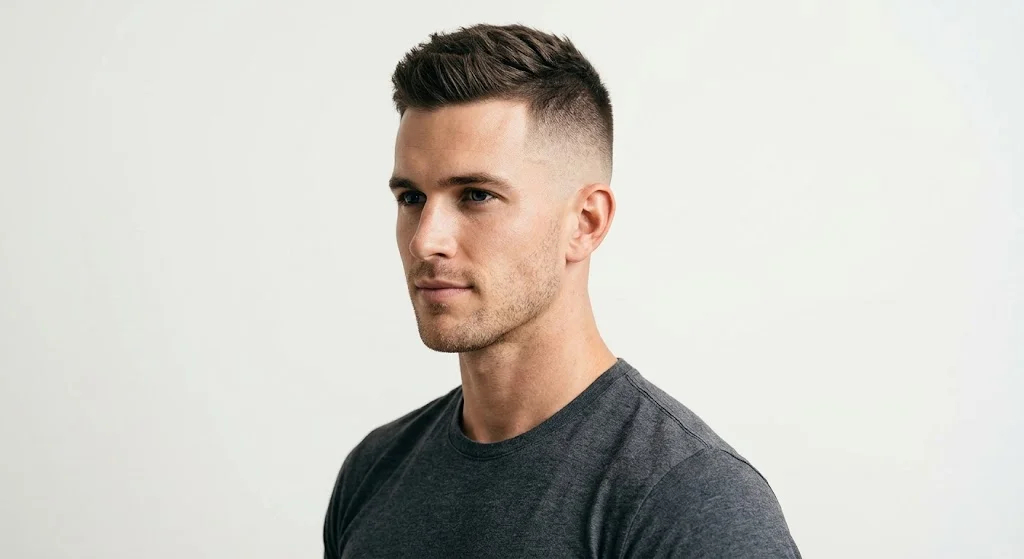
Borrowed straight from military grooming standards, the high and tight fade keeps the sides extremely short and fades into just a small amount of length on top, usually short enough to need no styling at all.
It’s about as low-maintenance as a fade gets while still looking deliberate.
Best for: Active-duty service members, athletes, and men who want a masculine, no-fuss look.
6. Pompadour Fade
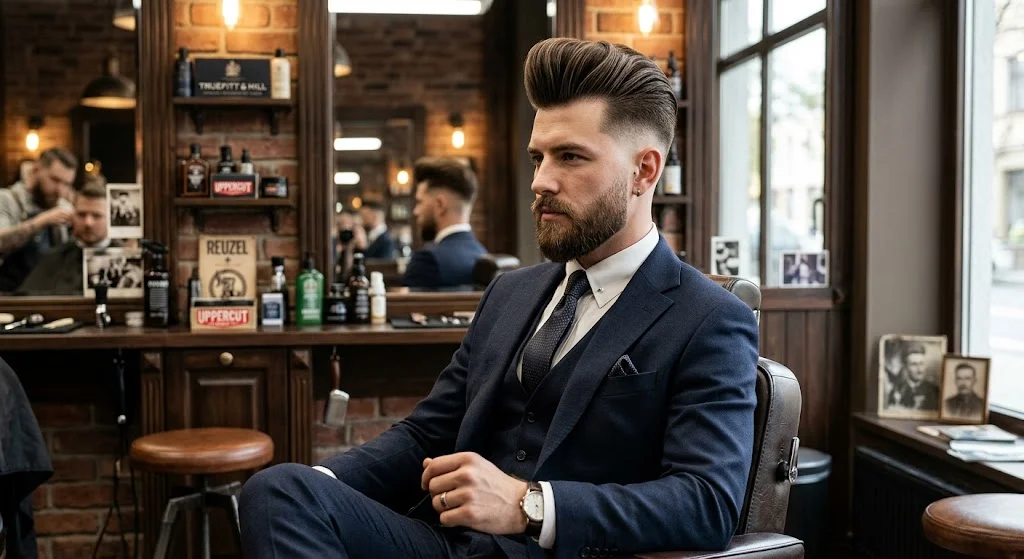
The pompadour fade pairs a faded side with a voluminous, swept-back top. It’s a modern twist on a retro classic, and it works for both formal events and casual weekends.
This style needs thicker hair on top to hold its shape, along with a strong pomade or styling cream for volume.
Best for: Men with thick or medium hair who want a vintage-inspired look with a modern edge.
7. Buzz Cut Fade
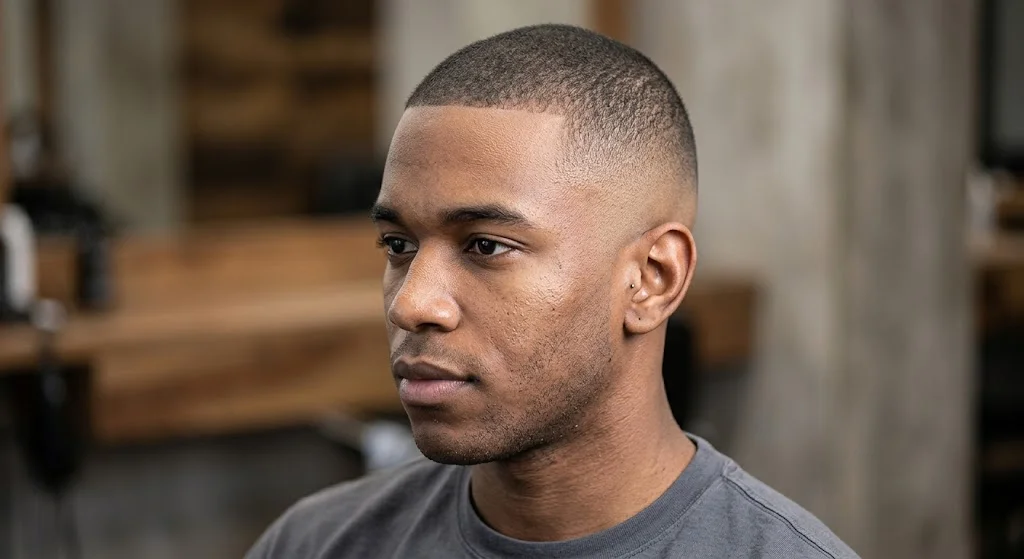
A buzz cut fade keeps the top very short, closer to a traditional buzz, while still adding a faded transition on the sides and back.
This gives an otherwise simple buzz cut extra dimension and visual interest, all without any daily styling required.
Best for: Men who want a sharp, clean look with almost zero upkeep.
Unique Fade Styles for a More Creative Look
These fades pair especially well with distinct hairstyles on top, from textured crops to slicked-back looks.
8. Skin Fade (Bald Fade)
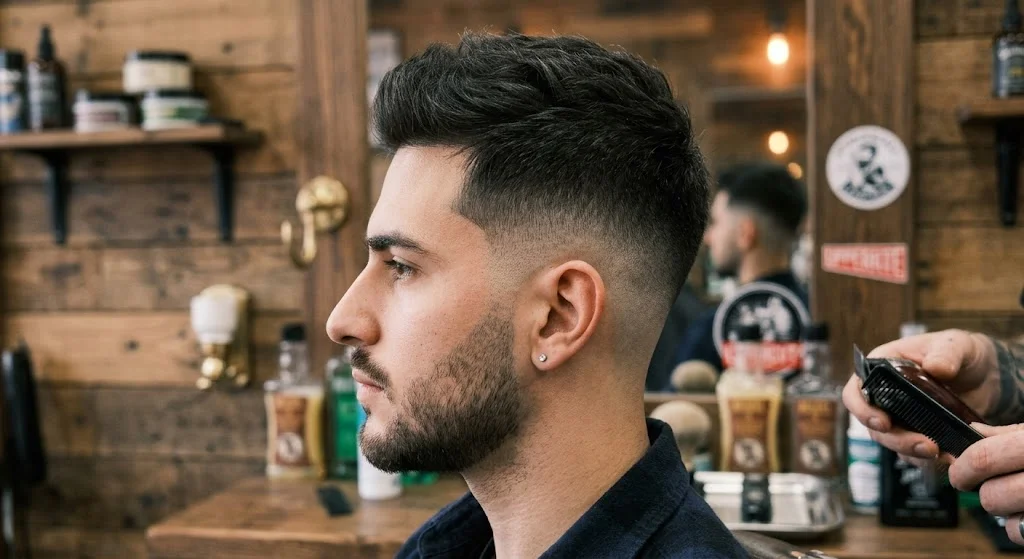
A skin fade takes the sides down to bare skin at the shortest point, then blends up into full length within just a few inches. It’s the sharpest and most defined fade you can get.
Because the contrast is so extreme, this style needs frequent upkeep to stay looking crisp, usually every two to three weeks.
Best for: Athletic looks, urban style, and anyone who wants maximum visual impact.
9. Taper Fade

The taper fade is the gentlest option on this list. Hair gradually shortens moving down the head, but it never disappears completely into the skin, so some length remains all the way through.
This softer finish makes it look natural and polished, which is why it’s such a popular choice across age groups.
Best for: Professionals and older men who want a subtle, low-maintenance, polished look.
10. Drop Fade
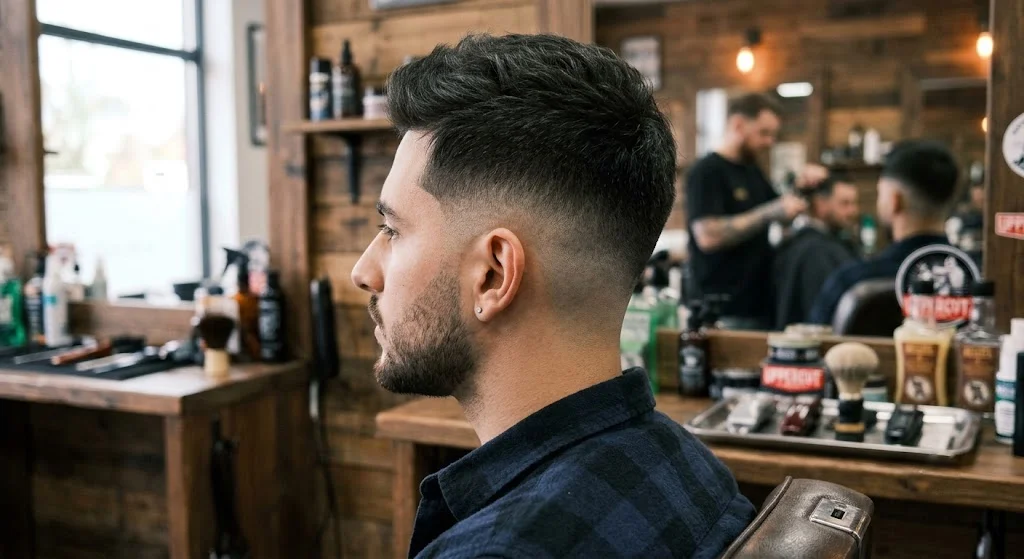
A drop fade follows the natural curve behind the ear, dipping downward before leveling out toward the neckline. That curved line works with your head’s natural shape rather than against it.
It tends to look especially good with wavy, curly, or thick hair, since the drop adds shape without fighting the hair’s natural texture.
Best for: Wavy, curly, or thick hair types.
11. Burst Fade
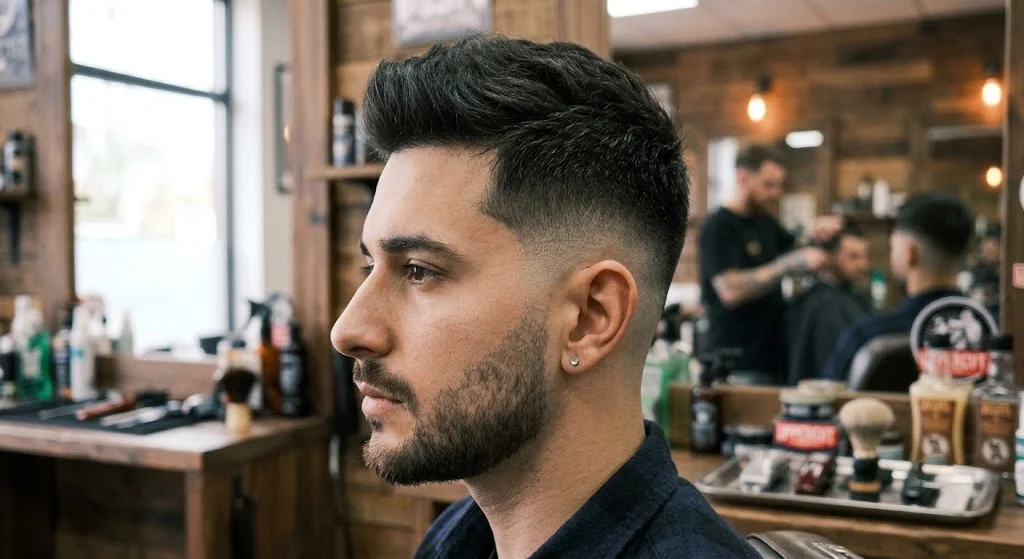
The burst fade curves around the ear in a semicircle, almost like a sunburst radiating outward. It’s most commonly paired with bold top styles like mohawks, faux hawks, or heavily textured crops.
Because it draws attention specifically to the ear area, it works best as part of a larger, more expressive haircut rather than a standalone conservative look.
Best for: Creative professionals and anyone wanting a distinctive, statement-making cut.
12. Temple Fade
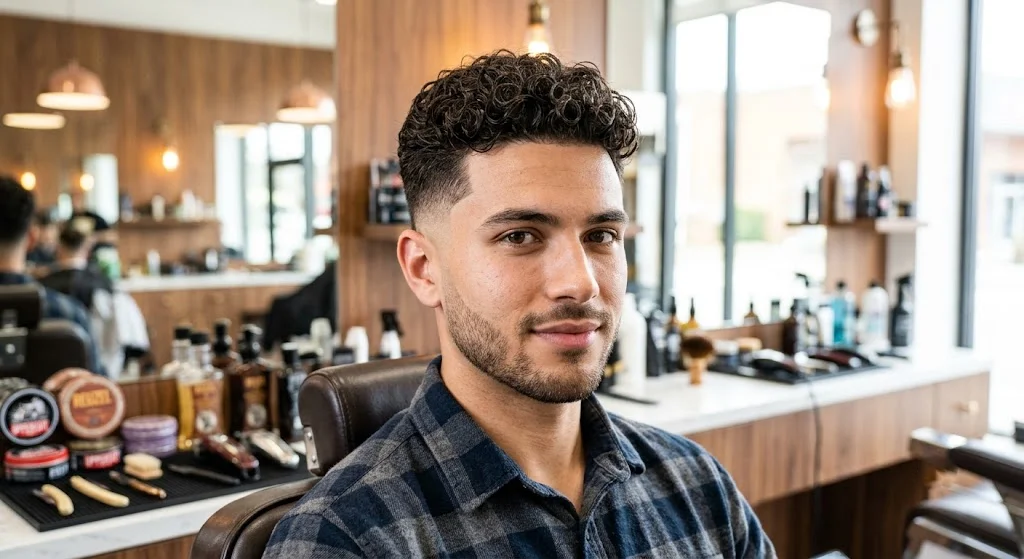
A temple fade concentrates the blend specifically around the temple area while leaving the back and lower sides longer. This creates a gradient effect exactly where you want it, without shortening the whole head.
It’s a common pick for men with curly or textured hair on top, since it highlights the temples without disrupting the rest of the length.
Best for: Curly or textured hair types.
How to Choose the Right Fade for You
The best fade for you depends on more than just what looks good in a photo. Here’s what actually matters:
- Face shape: Low fades tend to flatten round faces slightly, giving a more balanced look. High fades add structure and visual length to rounder or longer faces. Choosing the right height helps balance your features rather than exaggerate them.
- Hair texture: Curly or coarse hair generally works better with mid or drop fades, since these allow the natural texture to flow. Straight hair pairs well with high fades, which create sharper, more defined contrast.
- Lifestyle and maintenance: Skin fades look incredible but need a touch-up every two to three weeks to stay sharp. Taper fades grow out more gracefully, making them a better fit for busy schedules or longer stretches between barber visits.
- Talk to your barber: An experienced barber can read your face shape, hair type, and growth pattern better than any online guide. Bring one or two photo references so you’re both on the same page before the clippers come out.
Tips to Make Your Fade Last Longer
A great haircut fades over time, no pun intended, but a few habits can stretch the life of your style between appointments:
- Switch to a silk or satin pillowcase. Cotton creates friction overnight that flattens and distorts your fade’s shape.
- Keep your hands out of your hair. Constant touching transfers oil and dirt that speed up how quickly your cut looks messy.
- Protect your scalp from sun exposure. UV rays can dry out your scalp and fade hair color, which is especially noticeable with skin fades.
- Clean up your edges weekly. A quick trim of your neckline and sideburns at home keeps the overall shape looking freshly cut, even between barber visits.
- Comb or brush in the direction of the fade. This trains the hair to lie flat and keeps the blend looking clean day to day.
Final Thoughts
Choosing the right fade isn’t about picking whatever looks trendiest online. It comes down to your face shape, your hair texture, and how much upkeep you’re realistically willing to commit to.
From the low-key taper fade to the bold, high-contrast skin fade, every style on this list serves a different purpose. The right one will feel effortless once you find it, and pairing it with consistent maintenance is what keeps it looking sharp long after you leave the chair.
Bring this guide to your next barber appointment. Knowing the right terms and options makes it far easier to get the exact cut you’re picturing, rather than hoping your barber guesses correctly.
Frequently Asked Questions
Which fade haircut is best?
The best fade depends on your face shape, hair type, and personal style. Low fades tend to suit professional settings, while high fades create a bolder, more dramatic look.
What is a drop fade?
A drop fade curves downward behind the ear, following the natural shape of the head. This creates a more contoured, natural-looking finish that enhances texture on top.
Are burst fades and drop fades the same?
No. A burst fade wraps in a semicircle around the ear, while a drop fade slopes downward behind it. The two create distinctly different shapes and are often paired with different top styles.
Let me know if you’d like a shorter meta description variant, a different slug, or the faminaz closing line and image prompts added to this one.