
Your hair looks straight in the mirror. But it doesn’t act straight.
It frizzes the moment the air gets humid. The roots go flat by noon. The ends feel dry, even though you just washed it two days ago.
That mix of problems isn’t random, and it isn’t bad luck. If this sounds like your hair, you likely have 1C hair — a specific strand type with its own rules.
This guide breaks down exactly what 1C hair is, how to tell it apart from close look-alikes, why it behaves the way it does, and how to care for it without overcomplicating your routine.
What Is 1C Hair, Exactly?
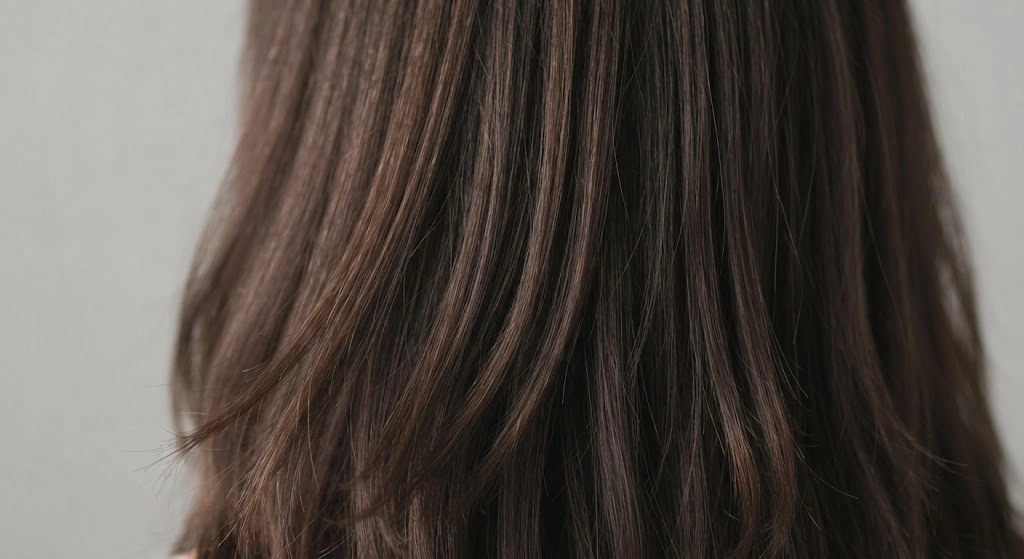
1C hair is straight hair with a coarse texture and very subtle bends near the ends. It sits at the very edge of the straight hair category, right before wavy hair begins.
This classification comes from the Andre Walker hair typing system, the most widely used method for sorting hair types. Type 1 covers every kind of straight hair, and within that group, 1C marks the coarsest, most textured end of the spectrum.
Here’s where most people get confused: 1C hair is often described as “slightly wavy,” but it isn’t wavy at all. The subtle bend you see doesn’t come from a curved hair follicle. It comes from the weight and thickness of the strand itself. Because the follicle is straight, 1C still officially counts as straight hair — not a wave pattern.
1C vs. 1B vs. 2A: How to Tell Them Apart
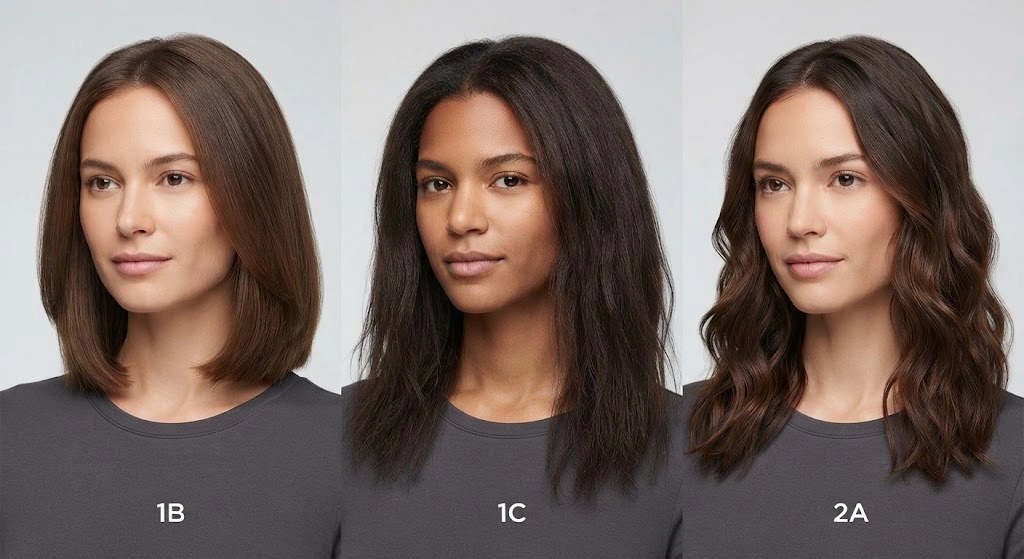
Figuring out your exact hair type can feel like guesswork, especially when your hair sits between two categories. The clearest clues come from strand thickness and how your hair looks after it air dries.
Here’s a side-by-side breakdown to make the differences easier to spot:
| Feature | 1B | 1C | 2A |
|---|---|---|---|
| Strand thickness | Medium | Coarse | Fine to medium |
| Air-dried pattern | Slight body | Uneven bends | Defined waves |
| Frizz tendency | Low | Moderate to high | Moderate |
| Wave definition | None | No true wave | Clear wave |
| Humidity response | Minimal | Puffs and frizzes | Waves tighten |
The single biggest giveaway is wave definition. 1C hair shows random, uneven bends with no repeating pattern. 2A hair, on the other hand, forms a clear, consistent wave shape from root to tip.
Once you know what to look for, spotting your type becomes second nature — especially on wash day, when your hair is at its most natural.
Why 1C Hair Frizzes, Flattens, and Feels Dry
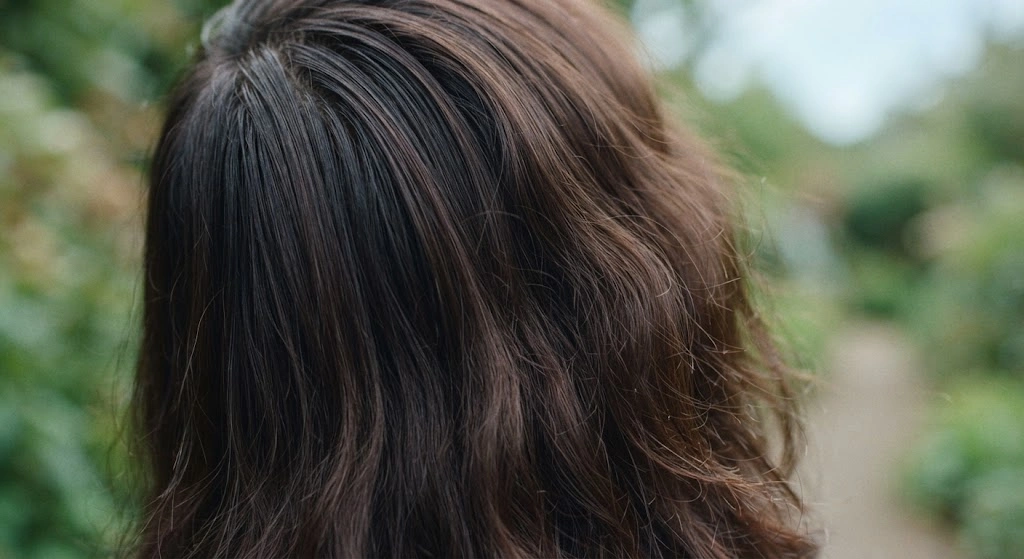
1C hair can feel unpredictable, but its behavior actually follows a clear, repeatable pattern. Three factors drive almost everything: oil distribution, strand thickness, and humidity.
Oil builds up at the roots but never reaches the ends. Natural scalp oil, or sebum, tends to sit close to the roots. This flattens the top of your hair while the ends stay dry and under-moisturized.
Coarse strands soak up moisture unevenly. Because 1C strands are thicker, they don’t absorb hydration consistently along their length. This creates the strange combination of oily roots and parched ends at the same time.
Humidity causes frizz — not damage. When the air gets humid, the outer layer of the hair (the cuticle) lifts slightly to let in moisture. On coarse strands, this reaction shows up as frizz. It’s a normal structural response, not a sign your hair is damaged or unhealthy.
Once you understand this, frizz stops feeling mysterious. It’s your hair reacting exactly the way coarse, straight strands are built to react.
How to Care for 1C Hair Without Losing Volume
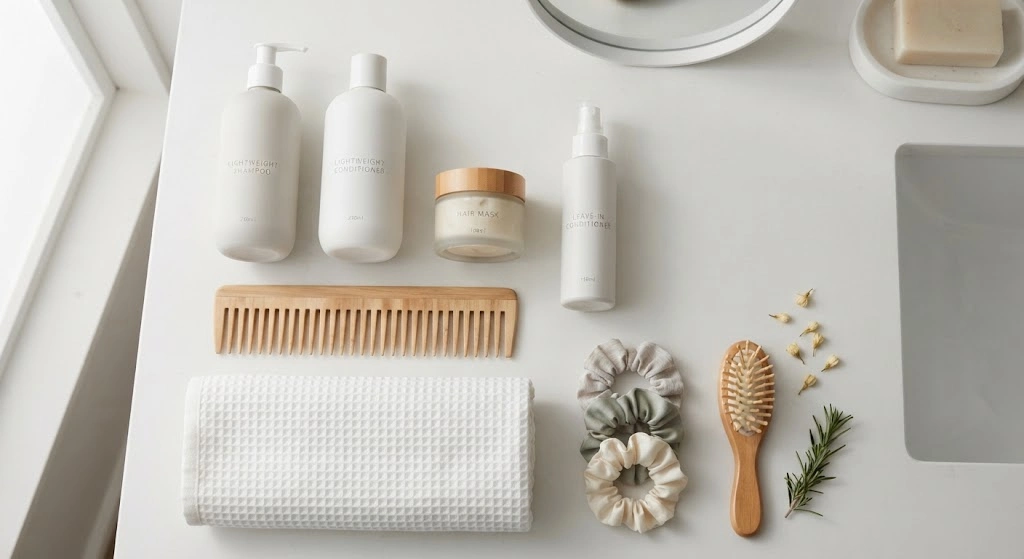
The biggest mistake with 1C hair care is treating the scalp and the ends the same way. This texture does best when you split your routine into two zones: oil control at the roots, and hydration at the ends.
Try this approach:
- Wash every 2 to 3 days to control sebum buildup without stripping moisture from your ends.
- Use a clarifying shampoo once a week to clear out product residue and excess oil.
- Apply conditioner only from mid-length to ends — never at the roots, where it can weigh hair down.
- Add a lightweight hair mask once a week to target dry, brittle ends.
- Use a small amount of leave-in conditioner to fight frizz without flattening your roots.
- Skip heavy layering of products. More product on 1C hair usually means less volume, not more.
This two-zone approach is the single most effective shift you can make if you’re tired of choosing between flat roots and frizzy ends.
Best Hairstyles for 1C Hair (and Why They Sometimes Fall Flat)
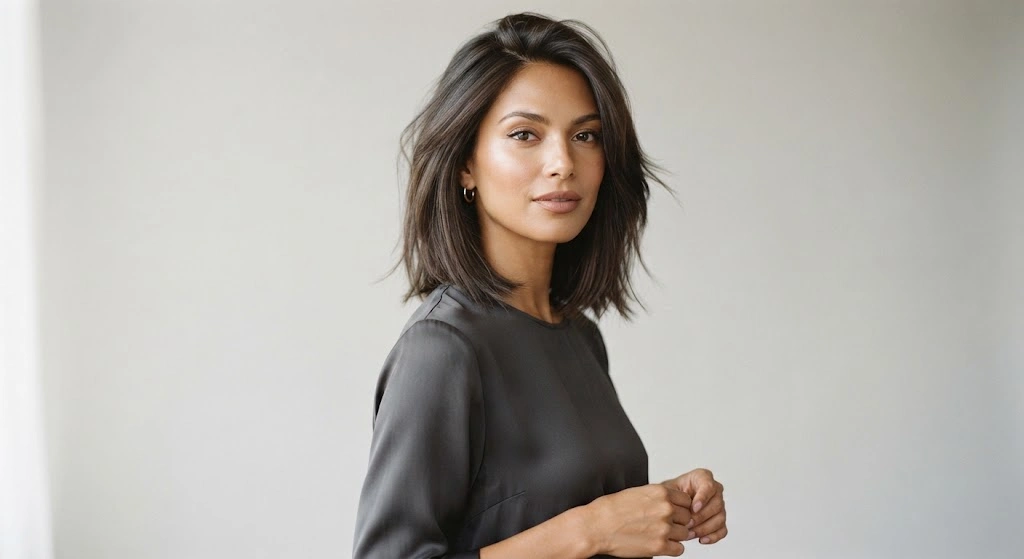
1C hair can pull off both sleek, polished looks and soft, textured styles. But three things tend to ruin a good hair day: product weight, humidity, and buildup.
Natural, air-dried styles A light volumizing foam adds shape without dragging your roots down. Go easy near the scalp — too much product there is one of the fastest ways to trigger flat roots and rebound frizz later in the day.
Heat styling 1C hair takes heat well, but curls and waves from a curling iron or wand tend to drop faster than they would on wavier or curlier hair types. That’s because the strands are heavier and simply can’t hold a curved shape as long.
Cuts and layers Adding layers removes bulk and lets the hair’s natural subtle bends show through. Without layers, the sheer weight of the strand tends to pull everything flat. A silk pillowcase also helps — it cuts down on friction overnight, so your style holds up better by morning.
When a hairstyle doesn’t last on 1C hair, it’s rarely a technique problem. It usually comes down to strand weight and how the cuticle reacts to moisture in the air — both of which respond well to lighter products and smarter cutting choices.
Is 1C Hair Rare?
1C hair isn’t as common as most people assume. Its rarity comes from a very specific genetic combination that has to line up just right.
| Factor | What It Determines |
|---|---|
| Follicle shape | Whether hair grows straight or curved |
| Strand diameter | Whether hair is fine, medium, or coarse |
| Genetics | How these two traits combine |
| 1C occurrence | Less common than 1A or 1B hair |
Thickness by itself doesn’t create 1C hair. The follicle shape, the strand diameter, and the genetic combination of both have to align for this specific texture to show up. That’s exactly why 1C hair is less frequently seen than its 1A and 1B counterparts.
Common Mistakes People Make With 1C Hair
Most 1C hair struggles trace back to one root cause: using a routine designed for finer or curlier hair types, rather than this coarse, straight structure.
Watch out for these habits:
- Over-moisturizing the roots. 1C hair needs hydration at the ends, not the scalp. Moisturizing roots just weighs hair down.
- Washing too infrequently. This lets sebum build up, flattening your roots while your ends stay dry and undernourished.
- Reaching for heavy anti-frizz creams. Thick products coat the cuticle unevenly, which collapses your roots and can actually make frizz worse.
The pattern tends to repeat itself: heavy products cause buildup, buildup flattens the roots, and frizz creeps back in anyway. The fix isn’t more product — it’s lighter product, applied only where it’s needed (usually just the ends). That one change breaks the cycle for good.
Final Thoughts
Once you understand the structure behind 1C hair, managing it stops feeling like guesswork. The frizz, the flat roots, and the dry ends all follow patterns tied directly to how coarse strands behave.
Most of the frustration comes from treating your whole head as a single zone, when it really needs two: a scalp that manages its own oil, and ends that need extra hydration. Humidity plays its part too, but it’s working with your hair’s natural structure, not against it.
The takeaway is simple. Treat your scalp and your ends differently, keep your products light, and choose styles that work with the natural weight of your strands. Small adjustments — washing on the right schedule, applying product only where it’s needed — add up to fuller roots and softer, healthier-looking ends over time.
Have a 1C hair routine that works for you? Share it in the comments below. Got a question we didn’t cover? Drop it below and we’ll help you out.
Frequently Asked Questions
Can 1C hair change texture over time?
Yes. Hormonal changes, aging, and years of heat styling can all shift strand thickness and how the cuticle behaves. Your core hair type stays genetic, but the texture and frizz pattern you see day to day can absolutely change over time.
Does 1C hair respond well to hair color?
Coarse strands tend to absorb color unevenly and often feel drier after a chemical treatment like dyeing or bleaching. Keeping your ends well-conditioned after coloring helps manage the extra frizz that can come with it.
Do men with 1C hair need a different care routine?
Shorter hairstyles mean scalp oil reaches the ends much faster, so buildup at the roots becomes the main issue. Washing every 1 to 2 days and steering clear of heavy styling products keeps shorter 1C hair looking clean and full.
For more hair care guides, beauty tips, and lifestyle inspiration, keep exploring faminaz.com.