
Scroll through your For You page long enough and you’ll see it everywhere. Two haircuts, both trending hard, both full of movement and layers, and both look completely different on every head of hair that tries them.
Butterfly cut. Wolf cut.
They get mentioned in the same breath so often that it’s easy to think they’re just two names for the same style. They’re not. They’re built with completely different techniques, and picking the wrong one for your hair type can leave you staring at a result that looks nothing like the photo you saved.
Here’s exactly how the butterfly cut vs wolf cut debate breaks down, which one fits your face shape and hair texture, and how to walk into your next salon appointment knowing precisely what to ask for.
What Is a Butterfly Cut?
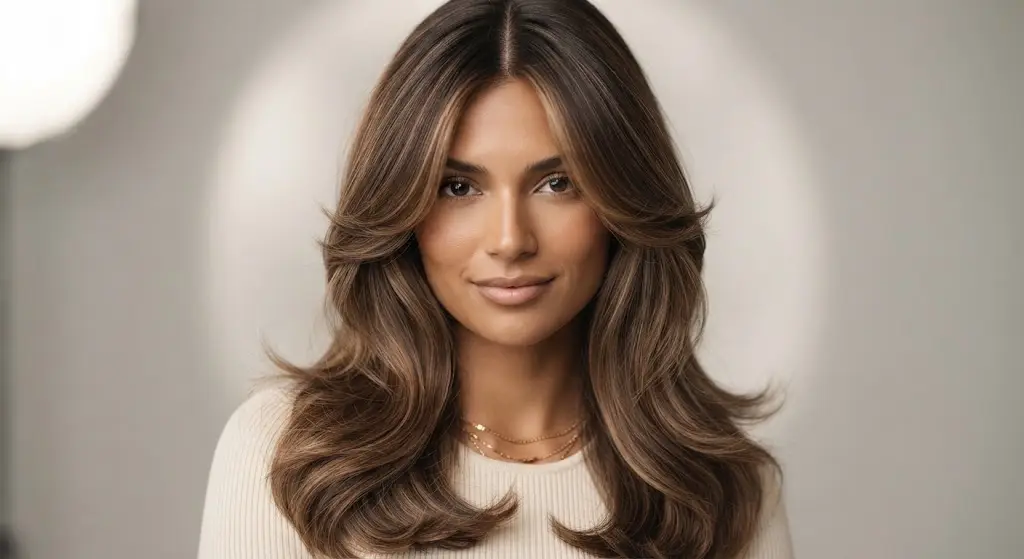
A butterfly cut is a long, heavily layered haircut with shorter pieces framing your face and longer, blended layers underneath. It shapes and lifts your hair without sacrificing length.
Stylists typically build this cut by sectioning hair into two ponytails at different heights. That technique creates a built-in contrast between lighter layers near the crown and heavier layers underneath. Because every layer graduates smoothly into the next one, the finished look is soft and polished instead of choppy or uneven.
Key Features of a Butterfly Cut
The butterfly haircut gets its name and its shape from layers that are placed with real precision. Each element works together to create volume, movement, and a soft, wing-like silhouette.
- Long, cascading layers – The underlayers stay full and heavy from root to tip.
- Short face-framing pieces – Shorter strands sit around your hairline and cheekbones to highlight your features.
- Mid-length volume – Most of the weight sits through the mid-shaft area, which is what gives the cut its signature bounce.
- Soft, feathered ends – Tips are lightly textured so the layers blend together instead of ending in a blunt line.
- Center-part styling – A center part mirrors the layers evenly on both sides, which is what makes the “butterfly wings” so visible.
What Is a Wolf Cut?
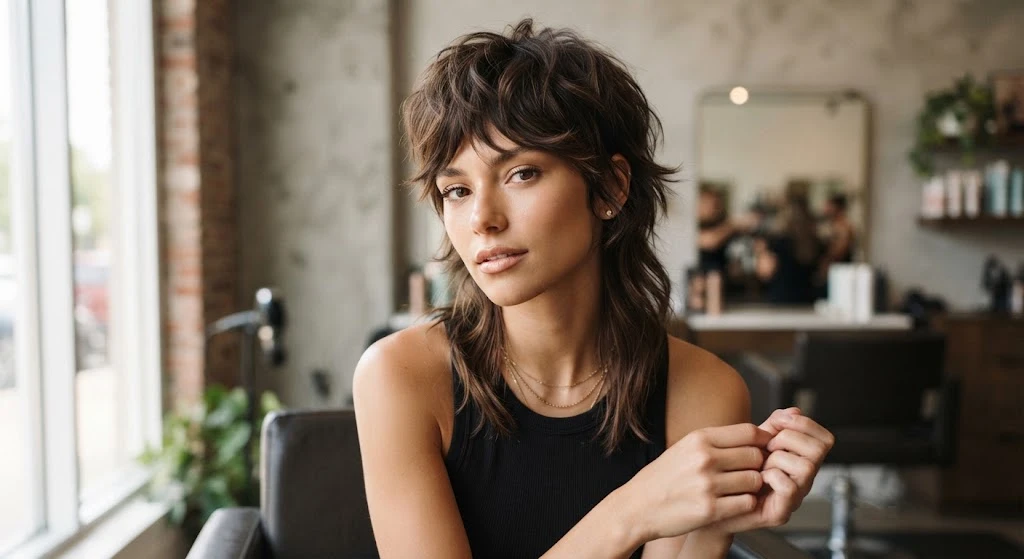
A wolf cut is a layered haircut with short, choppy layers piled at the crown and longer, wispy lengths trailing toward the bottom. It’s built for volume and texture, not for a polished blowout.
To create it, stylists usually gather your hair into one high ponytail and cut straight through it, concentrating the shortest layers right at the crown. Unlike a butterfly cut, these layers stay disconnected instead of blending, which is exactly why the finished style looks piecey, textured, and deliberately undone.
Key Features of a Wolf Cut
A wolf cut earns its name from bold layering and a shape that borrows heavily from two older trends: the shag and the mullet.
- Choppy crown layers – The shortest, most disconnected layers sit right at the top of your head.
- Wispy, feathered ends – Bottom lengths are thinned rather than cut blunt, giving the style its light, tapered finish.
- Shag and mullet influence – Crown-heavy layering borrowed from the shag, longer back lengths borrowed from the mullet.
- Texture-friendly build – Disconnected layers work with natural waves or curls to fill in visual gaps, creating that lived-in, tousled effect.
- Curtain bangs – The most common finishing touch paired with a wolf cut.
Butterfly Cut vs Wolf Cut: The Real Difference
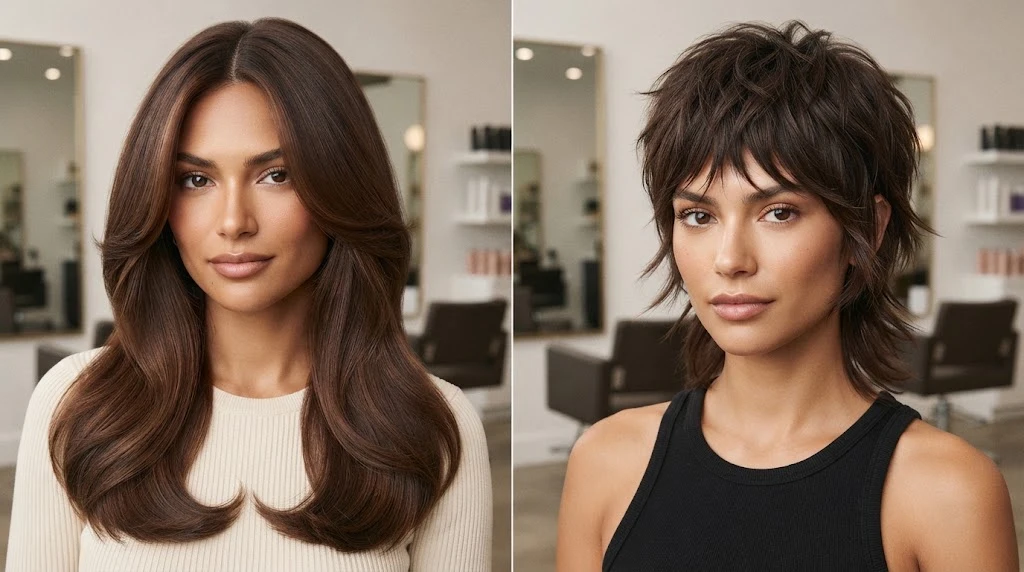
The core difference between these two styles comes down to where the layers sit and how they’re cut. A butterfly cut uses long, blended layers for soft movement. A wolf cut uses short, choppy, disconnected layers built purely for volume and texture.
| Feature | Butterfly Cut | Wolf Cut |
|---|---|---|
| Layer style | Long, blended layers that graduate into each other | Short, choppy layers that sit in separate, visible bands |
| Volume placement | Through the mid-lengths | At the crown |
| Shape | Rounded, flowing, wing-like | Triangular, piecey, mullet-adjacent |
| Styling feel | Polished and intentional | Undone and effortless |
| Maintenance | Lower trim frequency | Higher trim frequency |
Both cuts rely on layers, but the way those layers are placed changes the entire structure of the haircut, not just how much volume you end up with. A butterfly cut builds its shape by keeping weight in. A wolf cut builds its shape by taking weight out. They’re opposite techniques, not variations on the same idea.
Which Cut Works Better for Your Hair Type?
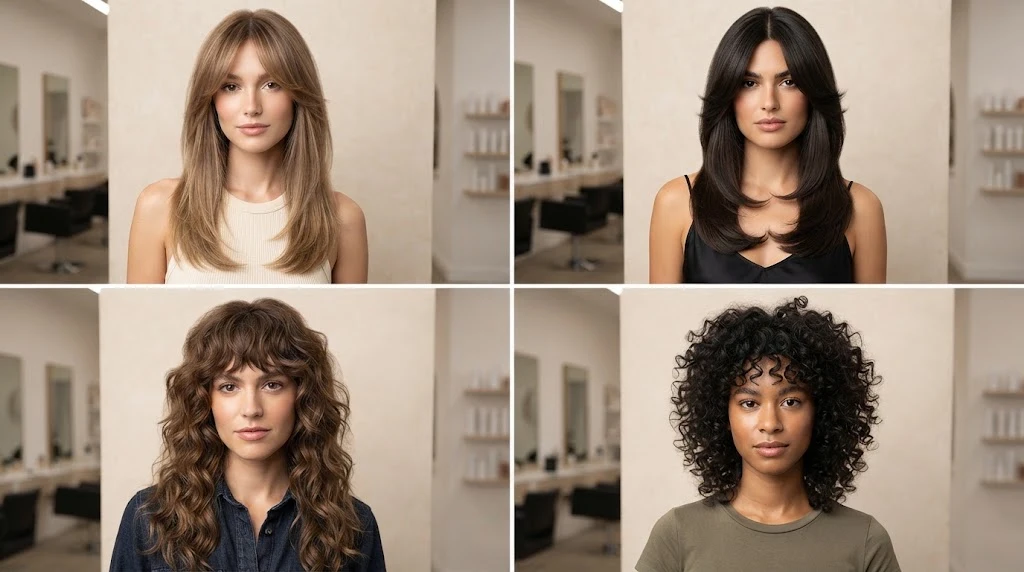
Your natural hair texture decides whether either cut delivers the look you saw online, or fights against you every time you style it. Density and texture control how the layers fall, how much volume shows up, and how much daily effort the cut demands.
- Fine hair – A butterfly cut is the safer bet. Blended layers add movement without thinning out what little density you have. A wolf cut on fine hair can expose sparse, patchy sections.
- Thick hair – Both cuts work well here, just for different reasons. Go with a wolf cut if you want to shed bulk, or a butterfly cut if you want shape and flow while keeping your weight.
- Straight hair – Cut lines show up clearly on straight strands. A butterfly cut blends seamlessly, while a wolf cut can look more separated and may need a texturizing spray to soften.
- Wavy or curly hair – Wolf cuts thrive here because natural texture supports the choppy layering. If your curls are fine, though, keep the layering minimal so you don’t lose density.
Both haircuts can technically work on any texture, but how they actually turn out depends heavily on thickness, natural movement, and how much styling you’re willing to put in.
Which Cut Suits Your Face Shape?
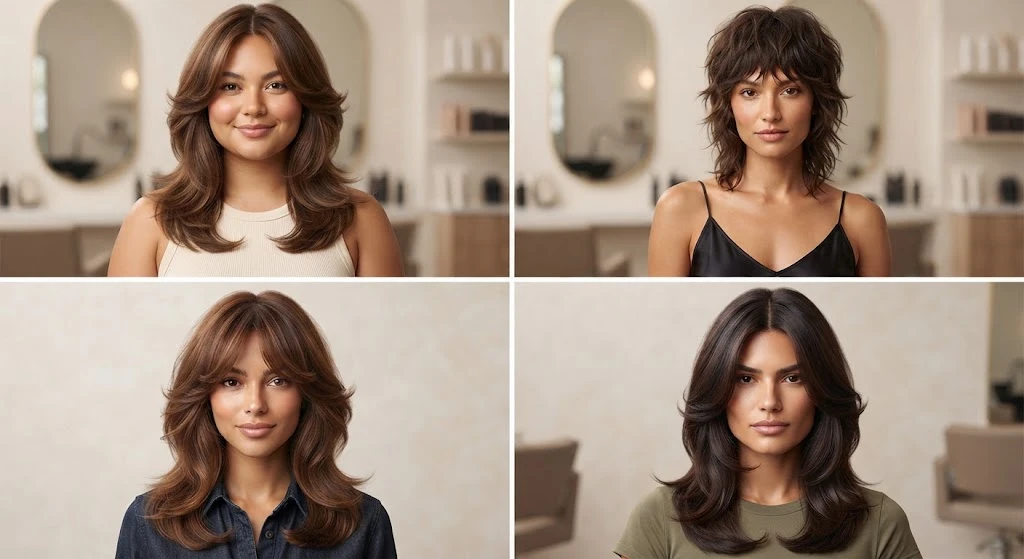
Face shape plays a role, but where the volume sits usually matters more. Wolf cuts pile volume at the crown, while butterfly cuts spread volume through the mid-lengths and frame your face with softer, longer pieces.
Round Faces
A butterfly cut tends to work best here. Longer face-framing layers pull the eye downward and create the illusion of extra length. A wolf cut can work too, but too much volume at the crown risks widening the face visually.
Stylist tip: Ask for layers that start below your cheekbone. That keeps volume away from the widest part of your face and adds length instead of width.
Oval Faces
Oval faces can carry either style well, since the balanced proportions suit soft blended layers just as easily as choppy, textured ones. The real decision comes down to your hair texture and how much time you want to spend styling.
Stylist tip: Let your texture lead. Wavy or curly hair naturally pairs with a wolf cut, while straight or fine hair usually looks better in a butterfly cut.
Heart-Shaped Faces
A butterfly cut softens a wider forehead and balances a narrower jaw, making it the generally safer pick. A wolf cut can still work if the crown and fringe stay light rather than heavy.
Stylist tip: Curtain bangs paired with either cut soften the forehead and bring extra balance without adding bulk at the crown.
Square Faces
Butterfly cuts usually suit square faces best, since they soften strong, angular lines. A wolf cut can also work, as long as the layers stay soft around the jaw and crown, and curtain bangs help ease the look around the face even further.
Stylist tip: Skip blunt ends or heavy bottom layers if you have a square face. Softly feathered ends throughout reduce how strong your jawline appears.
Styling and Maintenance: Which Cut Is Easier to Live With?
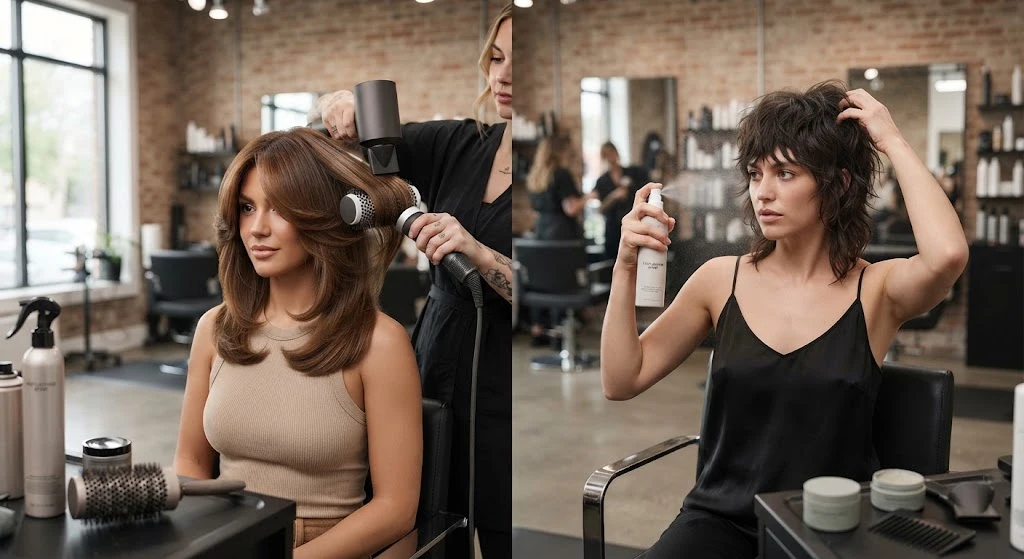
Neither cut is truly low-maintenance, but they demand different kinds of effort. One depends on shape-focused styling; the other depends on texture and volume.
Styling a Butterfly Cut
- Apply a volumizing mousse at the roots on damp hair before drying.
- Blow-dry with a round brush, directing layers outward and downward. This step is what activates the winged, bouncy shape.
- Finish with a light-hold spray to keep face-framing pieces lifted throughout the day.
Styling a Wolf Cut
- Apply a sea salt or texturizing spray to damp hair before air-drying or diffusing.
- Scrunch lightly while drying to separate the choppy layers and bring out that tousled, piecey finish.
- Finish with a small amount of lightweight oil or cream on the ends to control frizz without weighing the layers down.
Which is easier to style? The wolf cut wins here. A texturizing spray and an air-dry usually get the job done, while a butterfly cut needs a proper round-brush blowout every time to hold its shape.
Long-Term Maintenance
- Layer shape control – Butterfly cuts need regular trims to keep blended layers neat and face-framing pieces in the right spot.
- Uneven grow-out risk – Wolf cuts need more frequent trims, since choppy layers grow out unevenly and lose their structure faster.
- Daily styling needs – Butterfly cuts often need restyling after every wash, while wolf cuts mainly need product and diffusing to keep texture in check.
Which needs more upkeep? The wolf cut does. Choppy layers grow out faster and lose their shape sooner, which means more frequent salon visits.
Butterfly Cut vs Wolf Cut: Quick Decision Guide
Hair texture should drive your final decision more than aesthetic preference, since styling adjustments can usually get you closer to the look you want either way.
| Factor | Choose Butterfly Cut | Choose Wolf Cut |
|---|---|---|
| Hair density | Fine or fine-wavy hair | Wavy, curly, or thick hair |
| Length goal | Want to keep your overall length | Want volume and structure, not just length |
| Finish | Polished, soft, flowing | Textured, piecey, undone |
| Styling routine | Comfortable with a round-brush blowout | Prefer air-drying with minimal tools |
| Face shape | Round, square, or heart-shaped | Oval or heart-shaped with a light crown |
| Grow-out preference | Want a shape that holds longer between trims | Fine with more frequent salon visits |
| Movement style | Soft, blended, flowing layers | Bold, choppy, high-volume layers |
Still torn between the two? Ask your stylist about a hybrid cut that blends butterfly-style length with a softened, wolf-cut crown. It’s becoming a popular middle-ground request at consultations.
Final Thoughts
The butterfly cut vs wolf cut decision really comes down to knowing your hair, not just chasing a trend. Both cuts look incredible, and both can absolutely deliver the result you’re after. But only one is actually built for your texture, your face shape, and the amount of time you’re realistically going to spend styling it each morning.
Take everything here into your next salon appointment and describe exactly what you want, down to where the volume should sit and how much upkeep you’re willing to commit to. That single conversation will get you far closer to the right cut than any saved photo ever could.
Frequently Asked Questions
How long does your hair need to be for a butterfly cut?
Your hair should ideally reach collarbone length or longer. Anything shorter won’t give the layers enough room to create that signature contrast.
Can men get a wolf cut?
Yes. It works particularly well on men with wavy or thick hair who want volume and texture without a heavily structured style.
Can you get either cut on color-treated or bleached hair?
Both cuts work on color-treated hair, but bleached hair is more fragile and needs extra care. As a rule, the cut should always happen before the color, since chemical processing changes how hair behaves once it’s layered.