
Jeans can feel like a tricky subject once you hit your 50s. The pair that used to feel perfect may now sit wrong, stretch out fast, or bunch in places it never used to.
But here’s the good news: denim hasn’t given up on you. Your body has changed, styles have changed, and the way jeans are made has changed too. Once you know what to look for, jeans can go right back to being the easiest item in your closet.
This guide breaks down the fit rules, the styling tricks, and the shopping shortcuts that make jeans over 50 feel comfortable, modern, and completely like you — no trends required.
Why Jeans Feel Harder to Wear After 50

Denim today is not the denim you grew up with. Many jeans are made thinner and stretchier to chase fast fashion trends. That sounds nice in theory, but in practice it often means the fabric loses its shape within a few hours. You end up tugging at the waist, adjusting the thighs, or noticing sagging knees by the end of the day.
There’s also a mental habit at play. Many women still judge new jeans against an old favorite pair from years ago. But rise height, pocket placement, and fabric weight have all shifted since then. A jean that fit beautifully a decade ago won’t behave the same way today — and that’s not your fault.
The real fix isn’t a size change. It’s a fit approach that works with your body now, not the one from your closet’s history.
The One Rule That Changes Everything: Structure Over Tightness
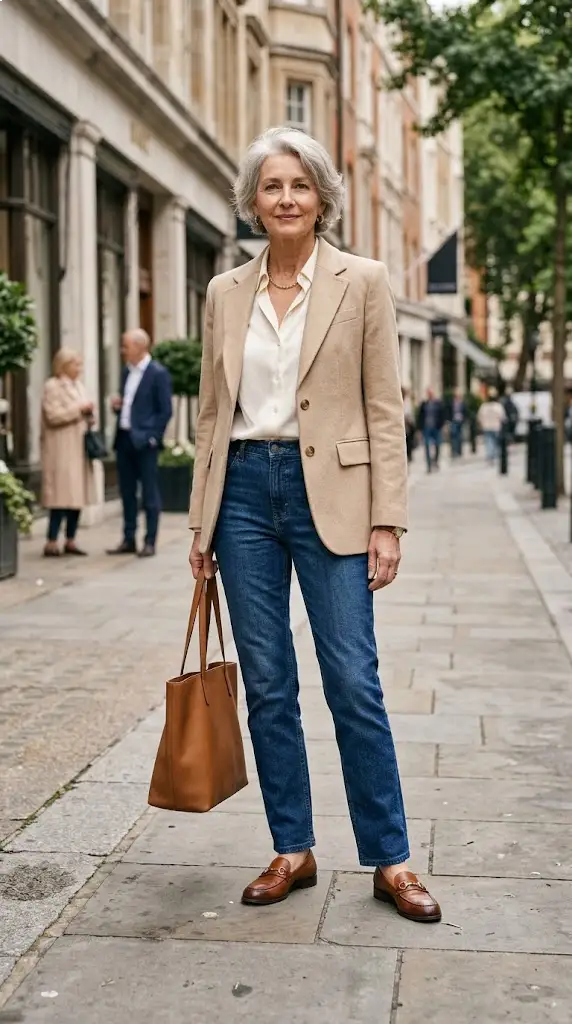
If you remember only one styling tip, make it this one: choose structure, not tightness.
Jeans don’t need to feel stiff, but they do need enough body to hold their shape through the day. Ultra-thin, overly stretchy denim tends to collapse around the hips, thighs, and knees — and that’s when an outfit starts looking tired instead of polished.
A jean with slightly more structure skims the body instead of clinging to it. That one difference changes how your tops, jackets, and shoes look too, because everything reads as more intentional.
Here’s a simple test: the jeans should feel secure at the waist, smooth through the hip, and easy enough through the leg that you can sit, walk, and move all day without constantly adjusting.
What to Look for When Buying Denim

The fit label on the tag matters far less than how the fabric actually behaves once you move in it.
- Rise: A mid-rise or comfortable high-rise creates a cleaner line and connects your top and bottom halves smoothly.
- Fabric: Look for denim with some structure and just a touch of stretch — enough to move with you, but not so much that it sags by afternoon.
- Leg shape: Straight, slim-straight, soft bootcut, or a relaxed taper all flatter without depending on one extreme silhouette.
- Length: Full length, ankle length, or a clean crop lets your shoes stand out instead of getting lost.
- Wash: Dark blue, medium blue, black, white, or soft gray all dress up or down easily.
Fit tip: Always sit down before deciding on a pair. Standing in front of a mirror only tells half the story. If the waistband digs in when you sit, the jeans aren’t comfortable enough for real life. If the back gaps badly, a different rise (or a quick trip to a tailor) will serve you better than sizing down.
How to Balance Proportions From Waist to Shoe
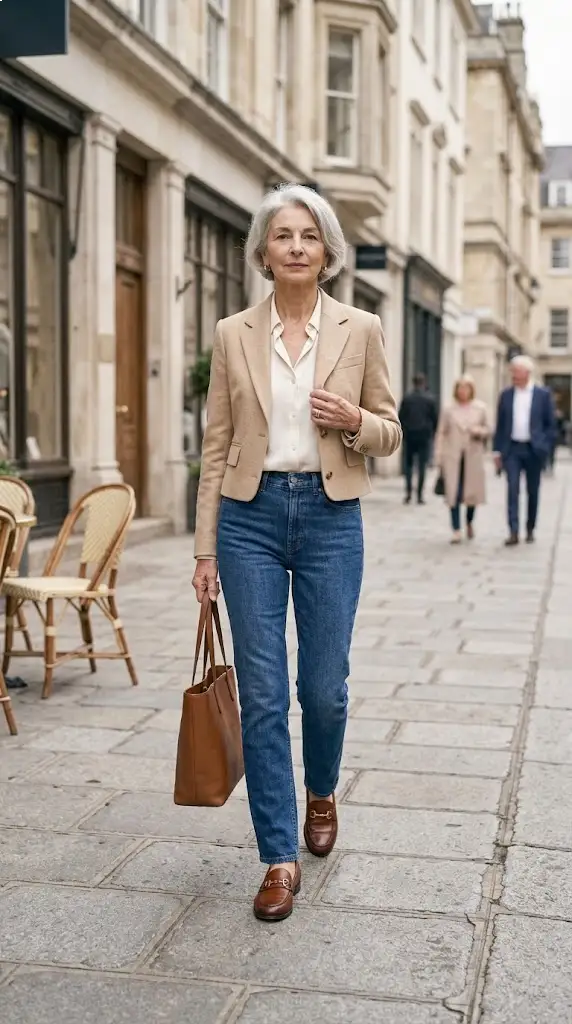
A great jeans outfit always has a clear shape. That doesn’t mean every piece has to be fitted — it means one part of the outfit should add structure while another part relaxes.
Pairing a long, loose tunic with wide-leg jeans can feel heavy, because both pieces move outward at once. A boxy sweater with baggy denim can blur your shape entirely. The fix is often small: a front tuck, a shorter jacket, a cleaner shoe, or a top that hits around the hip bone.
Here’s how to style each cut:
- Straight-leg jeans: Pair with a soft blouse, a fine knit, or a neat tee layered under a blazer. The straight leg keeps things calm while the top adds polish.
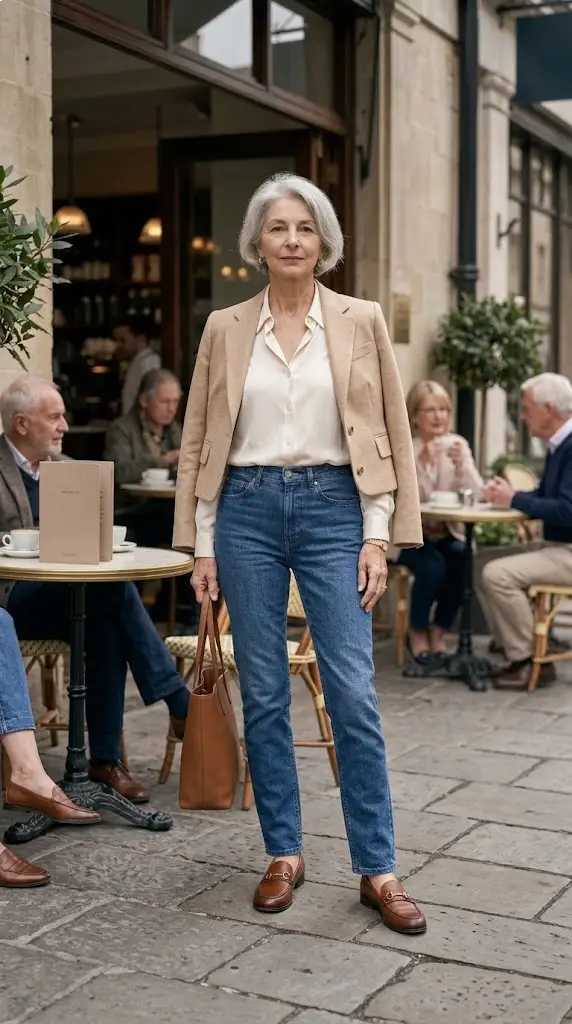
- Bootcut jeans: Let the hem nearly meet your shoe. The slight flare works beautifully with ankle boots, low-heel loafers, or pointed flats.

- Relaxed jeans: Add one sharper piece — a crisp shirt, a leather belt, a structured cardigan, or a sleek loafer — to keep the outfit from feeling too casual.
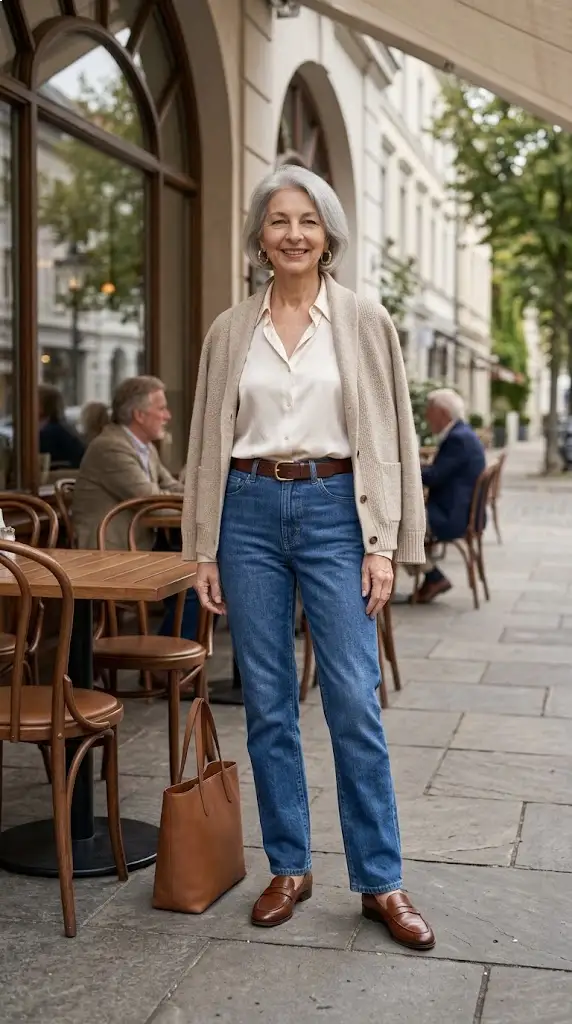
Color tip: Low contrast usually looks more refined than a busy mix of colors. Medium-blue jeans with a navy sweater, a soft gray tee, or an ivory jacket can look far more expensive than an outfit fighting for attention.
What to Wear With Jeans to Look Pulled Together
| Occasion | What to Wear | Why It Works |
|---|---|---|
| Errands | Straight jeans, cotton tee, open cardigan, clean sneakers | Comfortable and effortless |
| Lunch with friends | Dark jeans, soft blouse, cropped jacket, loafers | Polished without feeling overdressed |
| Travel day | Relaxed jeans, fine knit, trench or utility jacket, slip-on shoes | Easy to move in, never messy |
| Casual dinner | Bootcut jeans, silky shirt, ankle boots, simple earrings | The shoe and shirt add instant polish |
| Video call from home | Dark jeans, knit top, blazer | Looks sharp on camera, comfortable off it |
A plain tee can look surprisingly elevated when the neckline flatters and the fabric isn’t flimsy. A blazer feels relaxed instead of stiff when the shoulders fit properly. The goal isn’t to make denim formal — it’s to make it look considered.
Comfort upgrade: Swap a rigid belt for one with a little give, or choose jeans with a contoured waistband. Small changes like these can make a full day in denim feel effortless.
Common Mistakes and Easy Fixes
| Instead of This | Try This |
|---|---|
| Ultra-thin jegging denim with a shapeless long top | Slim-straight jeans with a hip-length knit or shirt |
| Jeans that gap at the back waist | A contoured waistband, tailoring, or a different rise |
| Heavy distressing on every pair | Clean denim, with texture added through knitwear or jewelry |
| Skinny jeans tucked into bulky boots | Straight jeans over ankle boots, or slim jeans with sleeker boots |
| Oversized top with oversized jeans | Relaxed jeans paired with a sharper jacket or neater neckline |
Shoe swap tip: When an outfit feels flat, check your shoes first. A loafer, ballet flat, pointed flat, sleek sneaker, or ankle boot can transform the entire look. A hem that puddles over your shoe can also drag an otherwise great outfit down — a clean hem gives the eye a natural stopping point and instantly looks more current.
A Simple Jeans Formula You Can Repeat All Year
Here’s a formula worth memorizing:
Straight-leg jeans + a soft structured top + a third layer + a polished flat shoe.
Each piece has a clear job. The jeans build the base, the top adds shape near your face, the layer brings structure, and the shoe finishes the line.
This formula flexes easily with the seasons. In spring, try straight jeans with a striped tee, a cropped trench, and loafers. In fall, swap in dark denim, a merino sweater, a long cardigan, and ankle boots.
Once this base works for you, you can rotate colors, textures, and accessories endlessly — without rebuilding your whole outfit from scratch every morning.
Build a Denim Wardrobe That Matches Your Real Life
You don’t need ten pairs of jeans to feel put-together. Most women can cover almost every occasion with two or three great pairs: one dark straight-leg, one relaxed everyday pair, and one dressier option in black, white, or a trouser-style denim.
Think about the life you’re actually dressing for:
- If you walk often, choose shoe-friendly lengths.
- If you travel a lot, prioritize stretch recovery so jeans bounce back after long flights.
- If you socialize often, darker denim and polished layers will earn the most wear.
Cost-per-wear beats excitement in the fitting room. A simple pair you reach for twice a week is worth more than a dramatic pair that only works with one top.
Before your next denim purchase, pull out the tops and jackets you already wear most. The right pair of jeans should fit right into that rotation — not force you to build a whole new wardrobe around it.
The Bottom Line
Jeans don’t stop working after 50 — they just need to catch up with your life now. Focus on structure over tightness, a rise that feels secure, and a leg shape that flatters without relying on extremes. Once the fit is right, everything else — the tops, the layers, the shoes — falls into place.
The best jeans over 50 aren’t about chasing trends. They’re about comfort, proportion, and a little bit of polish that makes getting dressed easy again.
For more style guides, wardrobe tips, and fashion inspiration, keep exploring faminaz.com.