
Every few months, a new “grow your hair 3 inches overnight” trend takes over the internet — rice water, onion juice, hanging your head upside down. And every few months, thousands of women try them and end up disappointed. So let’s start with the truth, because everything useful in this guide depends on it: you cannot dramatically change how fast your hair grows. But you absolutely can change how much of that growth you actually keep — and that difference, over a year, is enormous.
This guide is about how to grow hair faster in the only way that works: honest, science-backed strategies that maximize growth and minimize breakage. We’ll cover the real biology, scalp care, nutrition that matters, the retention routine that protects every inch, products with genuine evidence, the hype to skip, and a realistic timeline so you know exactly what to expect.
The Honest Science: What You Can and Cannot Change
Hair grows from follicles beneath your scalp, and the average rate is about half an inch (1.25 cm) per month — roughly 6 inches a year. That rate is set mostly by genetics and age. No oil, shampoo, or supplement has been shown to push healthy follicles far beyond their natural pace.
Each strand cycles through three phases: anagen (the growth phase, lasting 2–7 years — this is what determines your maximum length), catagen (a short transition), and telogen (resting, then shedding). You can’t extend your anagen phase with products. But here’s what most people miss: length is not just growth — it’s retention. If your hair grows 6 inches a year but breaks off 4 inches from damage, you only “gain” 2 inches. Almost everyone chasing length is actually fighting a retention problem, not a growth problem.
So the honest formula: protect the scalp so follicles work at their best, feed your body what hair is made of, and stop breaking off the length you’re already growing. Do that consistently, and a year from now your hair will be dramatically longer — not because it grew faster, but because you finally kept what it grew.
Scalp Care Is Hair Care
Think of your scalp as soil and your hair as the plant. Healthy growth starts there, yet most routines ignore the scalp entirely — or worse, suffocate it under heavy oils and dry shampoo for days.
Keep it clean, not stripped. Wash 2–3 times a week with a gentle shampoo massaged into the scalp (not the lengths). Product buildup, excess oil, and dead skin can clog follicles and trigger inflammation, which disrupts the growth cycle. If your scalp itches, flakes, or feels congested, a monthly clarifying wash or a salicylic-acid scalp scrub resets it.
Massage daily — it genuinely helps. Massage your scalp 4–5 minutes daily with your fingertips (not nails) to boost blood flow to the follicles. A small 2016 study found this increased hair thickness over 24 weeks. It’s free, relaxing, and one of the few “growth hacks” with actual data behind it.
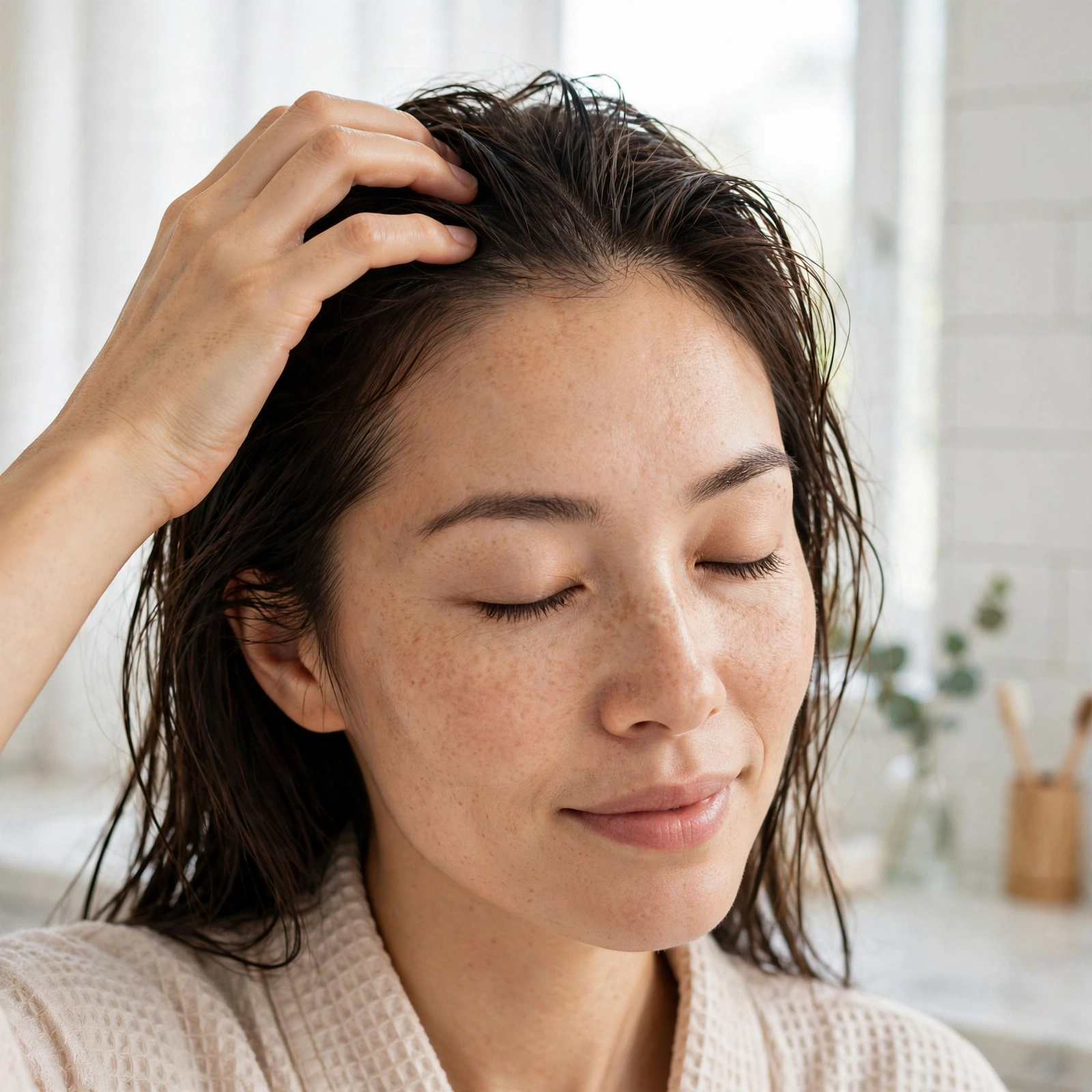
Exfoliate occasionally. Once or twice a month, use a scalp scrub or a salicylic-acid scalp serum before shampooing to lift dead skin and buildup. A clean, calm scalp is simply a better environment for growth — and it makes everything else you do work better.
Nutrition That Actually Matters
Hair is made of keratin, a protein — and your body treats hair as non-essential. When nutrients run short, hair is one of the first things sacrificed (your organs get priority). That’s why diet shows up in your hair before almost anywhere else.
Protein comes first. Aim for adequate protein at every meal — eggs, fish, chicken, lentils, beans, Greek yogurt, nuts — and avoid chronic deficits, especially when dieting.
Iron and ferritin matter enormously. Low iron is one of the most common correctable causes of shedding in women. If your hair is thinning or shedding heavily, ask your doctor for a ferritin test before buying any supplement — fixing a deficiency regrows hair; supplementing without one does nothing.
The biotin reality check. Biotin deficiency is rare, and there’s little evidence biotin supplements grow hair in people who aren’t deficient. Worse, high-dose biotin can interfere with lab tests (including heart and thyroid panels). Get biotin from food — eggs, nuts, sweet potatoes — and skip the mega-dose gummies unless a doctor tells you otherwise.
When supplements help: only when correcting a real deficiency (iron, vitamin D, zinc) or when your diet genuinely lacks something. A basic blood panel is cheaper than a year of “hair gummies” and tells you what you actually need.

The Retention Routine: Keeping Every Inch You Grow
This is where length is won or lost. Your hair already grows — your job is to stop breaking it off.
Trims don’t make hair grow — but skipping them costs length
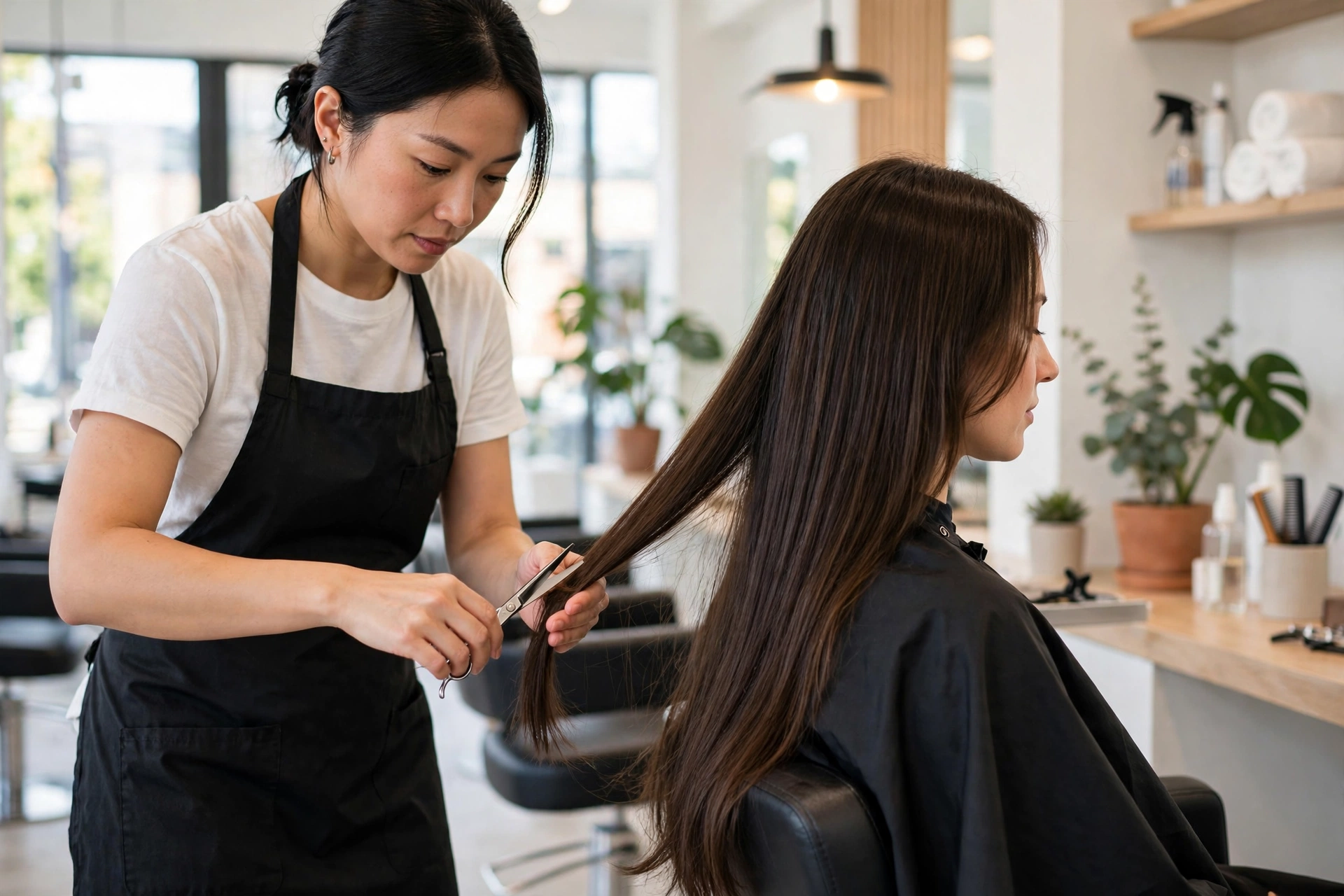
Let’s kill the myth clearly: cutting your hair does not make it grow faster (growth happens at the scalp, not the ends). But split ends travel upward, splitting the shaft further until the hair snaps off higher up. A light trim or “dusting” every 10–12 weeks removes damage before it spreads — you lose a quarter inch to save several inches of breakage. If you’re growing out damage from bleach or heat, our damaged hair care guide walks through the full repair routine.
Detangle like your length depends on it — because it does
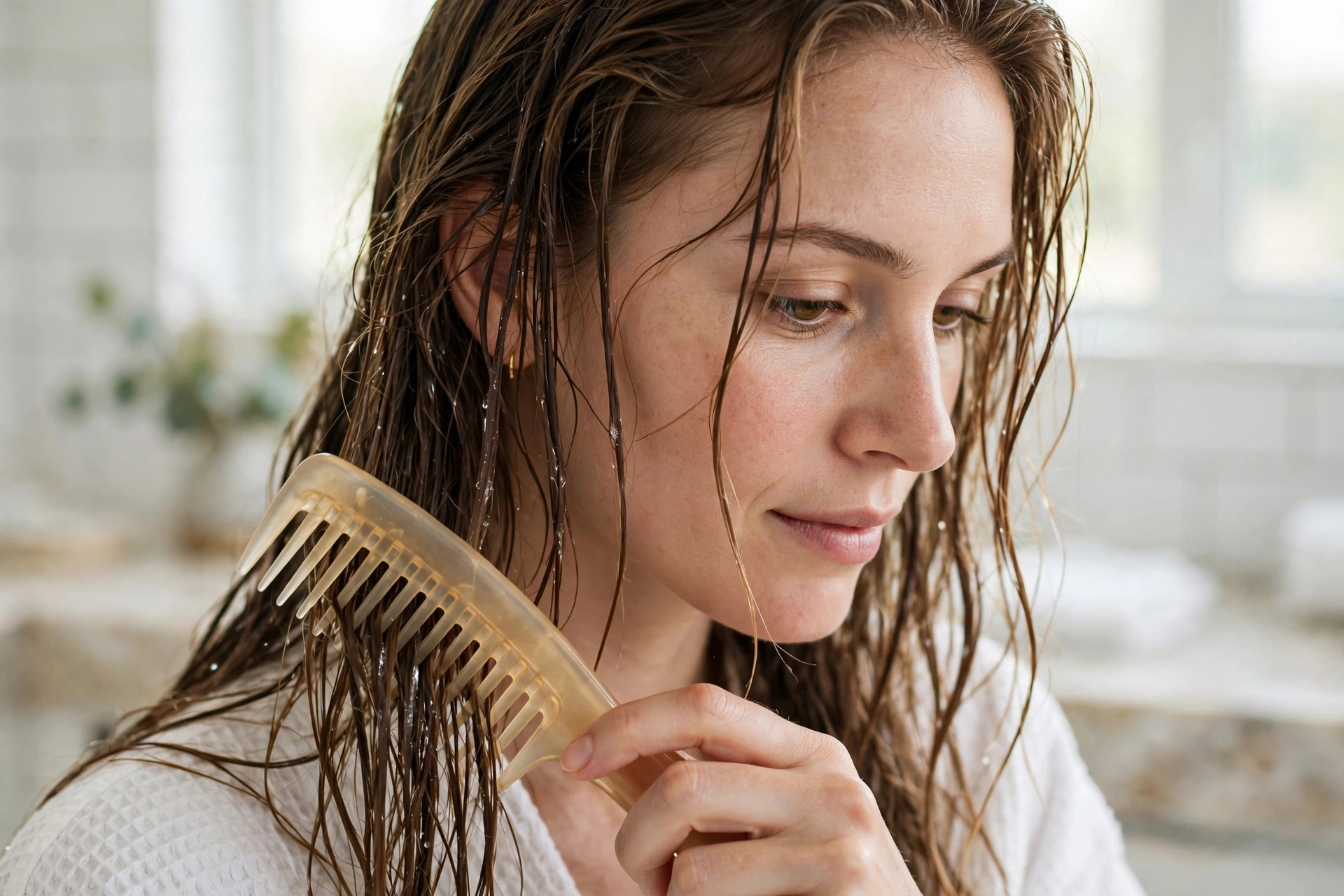
Most breakage happens during detangling. The rules: never rip through dry tangles, always detangle damp hair loaded with conditioner or leave-in, start from the ends and work upward in sections, and use fingers first, then a wide-tooth comb or a flexible detangling brush. If a knot won’t budge, add more slip (conditioner + water) — never more force.
Protective styles and nighttime protection
Loose braids, low buns, and twists tuck your fragile ends away from friction, wind, and snagging — the daily wear that silently eats length. Rotate styles so tension never sits on the same spot, and keep them loose: a style that hurts is damaging your follicles. Curly hair is especially fragile at the ends, so protective care matters even more — our curly hair care guide covers curl-specific retention in detail.

At night, switch to a silk or satin pillowcase — cotton creates friction for 8 hours straight, roughing up the cuticle and snapping fragile ends. A loose braid or pineapple plus silk is the cheapest length insurance you can buy.

What Sabotages Your Length
You can do everything right and still stall if these are in the picture:
- Daily high heat. Flat ironing at 450°F degrades keratin with every pass. If you heat style, keep it under 350°F, always use protectant, and take at least 2–3 heat-free days a week.
- Bleach overlap. Re-bleaching already-bleached hair is the fastest way to destroy length. Touch up roots only, and give chemically processed hair a serious protein-moisture routine.
- Constant tight styles. Sleek high ponytails, tight braids, and heavy extensions cause traction alopecia — breakage and thinning at the hairline that can become permanent. If you see tiny bumps or feel soreness, the style is too tight.
- Harsh brushing. Dry brushing with the wrong brush, brushing soaking-wet hair aggressively, and brushing from roots down through tangles all snap strands. Wet hair stretches and breaks — be gentlest when it’s wettest.
- Chemical + heat stacking. Bleach plus daily straightening plus tight ponytails isn’t three small problems — it’s a breakage avalanche. Fix the biggest offender first.
Products With Real Evidence (and Honest Limits)
Minoxidil. The only topical with strong clinical evidence for stimulating growth — but it’s a commitment: it works only while you use it, results take 3–6 months, and it’s primarily studied for thinning rather than “faster” growth. Consider it if you’re dealing with actual thinning; talk to a dermatologist first.
Rosemary oil. A 2015 trial found rosemary oil comparable to 2% minoxidil for hair count over 6 months, with less scalp itching. The evidence is promising but small — it’s a reasonable, low-risk addition (diluted in a carrier oil, massaged into the scalp a few times weekly), not a miracle.
Caffeine serums. Lab studies suggest caffeine counteracts DHT’s effects on follicles; human evidence is early but plausible. A caffeine scalp serum is a sensible supporting player, not a primary strategy.
What about “growth” shampoos? Shampoo sits on your scalp for 60 seconds — no shampoo meaningfully grows hair. Spend that money on a good conditioner and leave-in instead; those actually protect length.
Hype to Skip
- Overnight miracles. Rice water, onion juice, or any DIY promising inches overnight — hair biology doesn’t work on that timescale. Some of these irritate the scalp, which hurts growth.
- The inversion method. Hanging your head upside down daily to “rush blood” to follicles — no credible evidence, and it’s unpleasant. A normal scalp massage does the same job.
- Expensive “growth” oils and shampoos. If the main ingredient is fragrance and the main claim is speed, it’s marketing. Check for actual actives (minoxidil, caffeine, peptides) at real concentrations.
- Taking 10 supplements at once. More isn’t better — excess vitamin A and selenium can actually cause hair loss. Test, target deficiencies, stop.
- Comparing your month one to someone’s year three. Growth journeys on social media skip the awkward phases. Compare yourself to your own progress photos, not theirs.
A Realistic Timeline: What to Expect
Month 1–3: Less shedding and breakage as handling improves; ends feel thicker because you’re not snapping them off.
Month 3–6: Visible length gain (roughly 1.5–3 inches retained if breakage is controlled). New growth feels stronger; scalp issues calm down with consistent care.
Month 6–12: The transformation window. With minimal breakage, most people retain 4–6 inches in a year — which reads as dramatically longer hair. This is when strangers start asking what you did.
The unglamorous truth: consistency beats intensity. The person who massages, protects, and trims sensibly for 12 months will always beat the person who does an extreme “growth challenge” for 30 days and quits.
Hair Growth FAQs
How fast does hair actually grow?
About half an inch per month on average — 6 inches a year. Genetics, age, and health shift this slightly, but no product dramatically changes the rate in healthy people. Length gains come from retaining what grows.
Do trims really help hair grow faster?
Trims don’t speed up growth (that happens at the scalp), but they prevent split ends from traveling up and snapping off length. Regular light trims every 10–12 weeks mean you keep more of what grows.
Does biotin actually work for hair growth?
Only if you’re deficient, which is rare. There’s little evidence it helps people with normal biotin levels, and high doses can interfere with lab tests. Get it from food; supplement only on a doctor’s advice.
Can rice water really grow hair faster?
There’s no solid clinical evidence. Rice water contains some beneficial compounds (like inositol), but claims of dramatically faster growth are unproven — and leaving starchy mixtures on the scalp can cause buildup or irritation in some people.
How long until I see real results?
Less breakage within weeks; visible length in 3–6 months; a real transformation in 6–12 months of consistent care. Take monthly photos in the same lighting — gradual change is invisible day to day.
Should I see a doctor about slow growth or shedding?
Yes, if shedding is sudden, heavy, or patchy, or if your hairline is visibly receding. Get iron/ferritin, vitamin D, and thyroid checked — these are common, fixable causes that no product can address.
The bottom line: you can’t rewrite your genetics, but you can give your hair everything it needs — a clean stimulated scalp, real nutrition, gentle handling, and protection every single night. Grow it, keep it, repeat. A year of that beats any miracle product ever bottled.