
Walk into any barbershop and say “give me a fade” when what you actually want is a taper, and you might walk out disappointed. It happens all the time. These two haircuts get mixed up constantly, but they’re not the same thing — and the difference matters more than you’d think.
A taper blends your hair gradually, from longer on top to shorter near your neckline, without ever touching bare skin. A fade takes that same idea and pushes it further, blending your hair all the way down to the scalp for a sharper, more dramatic look.
Once you understand what separates them, you’ll never have to point at a photo and hope your barber gets it right. Here’s everything you need to know.
What Is a Taper Haircut?

A taper haircut keeps length on top and slowly shortens the hair as it moves down toward the neck and ears. The sides and back never go down to skin — they just get shorter and shorter until they blend smoothly into the neckline.
This is one of the most classic, low-key haircuts a man can get. It’s the style you’ll spot on actors like Ryan Gosling, Brad Pitt, and George Clooney, who tend to favor timeless, polished looks over anything too flashy.
Because a taper doesn’t rely on sharp lines against bare skin, it grows out evenly. That makes it a great pick for guys who don’t want to be back in the barber’s chair every couple of weeks.
Popular Taper Styles
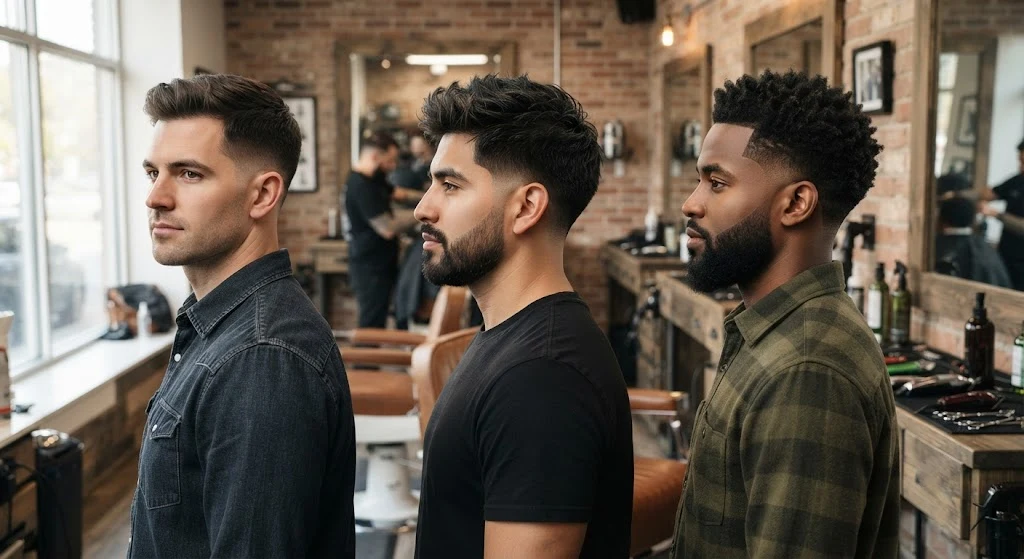
Classic Taper The classic taper is the most traditional version — a smooth, gradual shortening from the crown down to the neckline. It works with almost any face shape and any hair texture, which is part of why it’s stayed popular for decades.
Low Taper A low taper keeps the blending close to the ears instead of climbing up the sides of the head. Most of the length near the temples stays put, giving a subtle, understated finish that still looks sharp.
Temple Taper This version focuses the blend around the temples and sideburns. It’s especially popular with bearded men, since it creates a clean transition point between the beard and the haircut without any harsh lines.
What Is a Fade Haircut?

A fade takes the same top-to-bottom shortening concept as a taper but carries it all the way to the skin. Instead of stopping at “short,” the hair fades out completely, creating a crisp, high-contrast edge between the hair and the scalp.
This is the go-to style for celebrities who want a bolder statement — think Michael B. Jordan, Zayn Malik, and Chris Evans. It works equally well as a sporty, everyday cut or a sleek, red-carpet-ready look.
The tradeoff is upkeep. Because fades create such a defined line against the skin, they grow out faster than tapers and need more frequent trims to stay looking fresh.
Popular Fade Styles
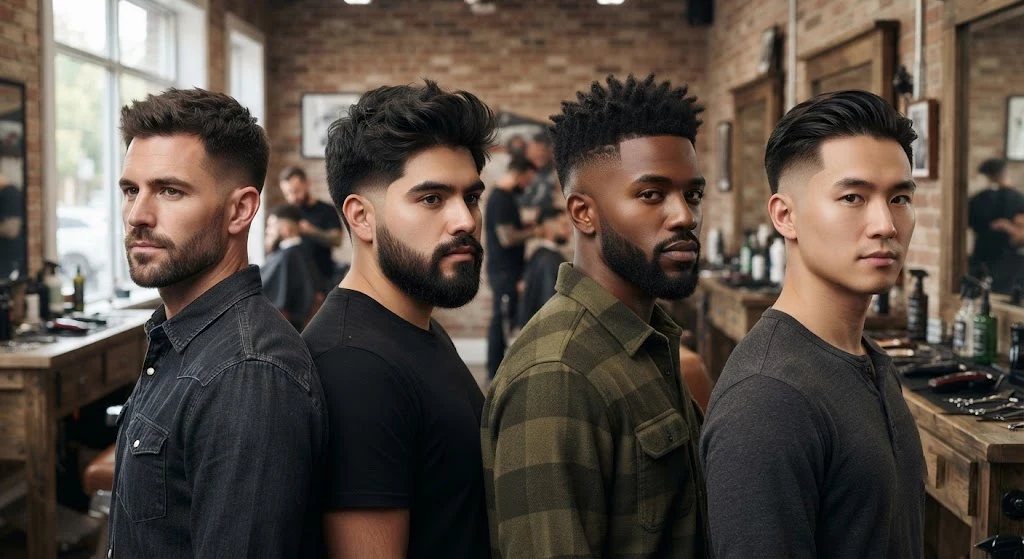
Low Fade The low fade keeps its blend close to the ears, leaving more length intact through the sides. It’s a good entry point if you want the fade look without going too extreme.
Mid Fade Starting around the temple, the mid fade splits the difference between subtle and bold. It’s flexible enough for the office and the weekend, which is why it’s one of the most requested fade styles right now.
High Fade The high fade starts near the top of the head and blends down quickly, creating strong contrast and a noticeably sharper silhouette than a low or mid fade.
Skin Fade Also called a bald fade, this version takes the blend all the way to bare skin for the boldest, cleanest look in the fade family. It pairs especially well with short, textured styles on top.
Taper vs Fade: Side-by-Side Comparison
| Factor | Taper | Fade |
|---|---|---|
| Length transition | Gradual and soft | Sharp and fast |
| Blend height | Stays low, near the neckline | Can start low, mid, or high |
| Finish at the bottom | Leaves some length | Goes down to bare skin |
| Maintenance | Low — grows out evenly | Higher — needs regular trims |
| Overall vibe | Natural, polished | Bold, modern |
| Best suited for | Formal settings, low-upkeep guys | Trend-forward, statement styles |
Which One Fits Your Face Shape?
The best haircut for your face depends on how much contrast you want and which features you’re trying to balance out.
Best face shapes for a fade:
- Oval — works with virtually any fade style
- Round — a high fade adds height and sharpens the silhouette
- Square — highlights a strong jawline for a bold, defined look
- Diamond — a low fade draws attention to the cheekbones
Best face shapes for a taper:
- Round — adds subtle length without harsh lines
- Square — softens strong angles while staying neat
- Heart — narrows the appearance of a wider forehead
- Diamond — keeps proportions smooth and balanced
Keeping It Fresh Between Barber Visits
Whichever style you pick, the right products make a real difference in how long it holds up.
- For daily styling: pomade or hair wax to shape and hold
- For sharp edges: an edge brush or edge control gel
- For hydration: leave-in conditioner or hair oil to prevent dryness
- For quick touch-ups at home: a reliable pair of trimmers, plus beard balm if you’re blending facial hair
A small amount of styling cream or matte pomade is usually enough for a taper — comb it through for a polished finish, or run it through with your fingers for something more relaxed. Fades tend to need a bit more attention to keep the blend crisp between appointments.
Final Thoughts
Both cuts do the same basic job — moving from longer hair on top to shorter hair below — but they land on opposite ends of the “subtle vs. bold” spectrum. A taper is the quieter, easier-to-maintain option that works almost anywhere. A fade makes more of a statement and asks for more upkeep in return.
Not sure which one suits you? Bring this guide with you next time you sit in the chair, and describe exactly the look you’re after — your barber will thank you for the clarity.
Frequently Asked Questions
Is a taper a type of fade?
No. A taper keeps some length throughout, while a fade blends the hair all the way down to bare skin for a sharper contrast.
Can you combine a taper with a beard fade? Y
es. Barbers often blend a taper haircut into a beard fade to create one smooth, connected look across the whole face.
How often do you need touch-ups for a taper vs. a fade?
A taper usually holds its shape for four to six weeks. A fade grows out faster and typically needs a trim every two to three weeks to stay sharp.
For more grooming guides, style breakdowns, and the trends worth knowing about, stay with faminaz.com.