
Struggling to breathe through your nose, or unhappy with how it looks in photos? You’re not alone, and the good news is that modern nasal surgery can fix both problems. But here’s where people get stuck: should you go for septoplasty or rhinoplasty?
These two procedures sound similar and both involve your nose, but they solve completely different problems. One fixes how you breathe. The other changes how you look. Mixing them up can lead to picking the wrong surgery, wasted money, and unmet expectations.
In this guide, we’ll break down exactly what each surgery does, who needs which one, how recovery compares, and how to pick a surgeon you can trust. By the end, you’ll know exactly which path fits your needs.
What Is Septoplasty?
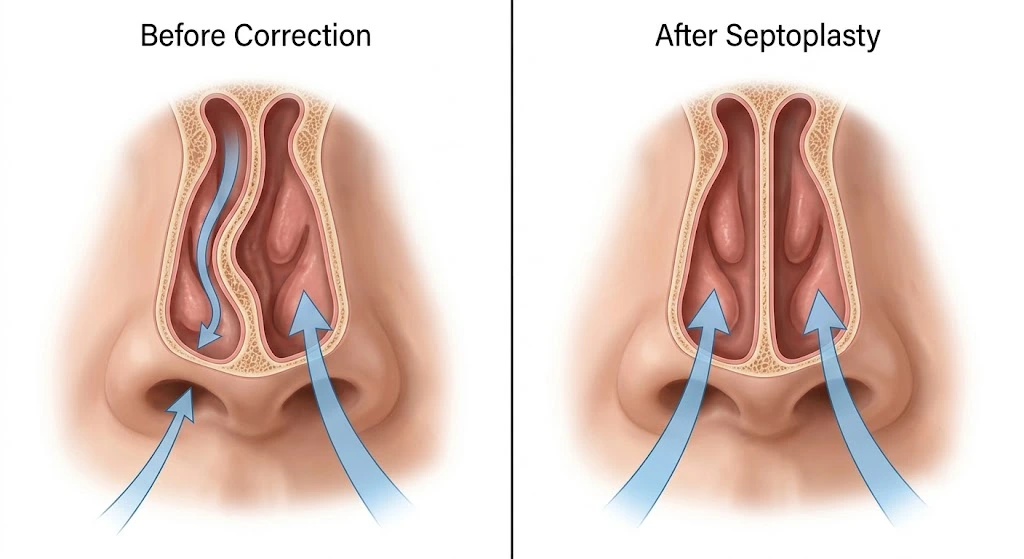
Septoplasty is a surgery that straightens the septum, the thin wall of cartilage and bone that splits your nose into two nostrils.
In a healthy nose, this wall sits roughly in the center. But in many people, it’s bent, crooked, or pushed to one side, a condition called a deviated septum. This can happen from birth, a sports injury, or even just normal growth over the years.
A crooked septum can block airflow and lead to:
- Constant nasal congestion, even without a cold
- Trouble breathing through one or both nostrils
- Frequent sinus infections
- Loud snoring or disrupted sleep
- Nosebleeds from dry, irritated nasal tissue
During the procedure, a surgeon repositions or trims the septum so air can flow freely through both sides. It’s usually done under local or general anesthesia and takes about 30 to 90 minutes. Most patients notice easier breathing within a few weeks.
What Is Rhinoplasty?
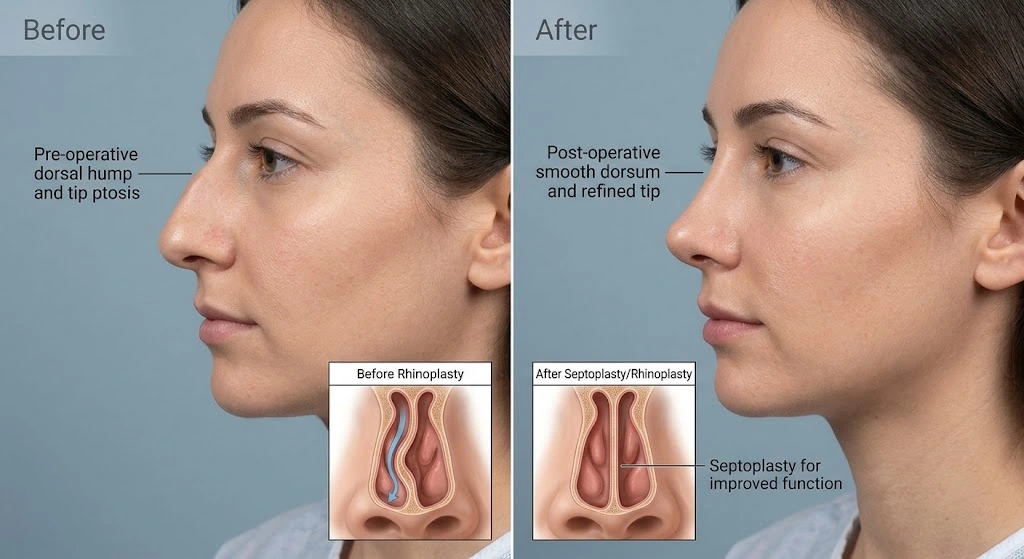
Rhinoplasty, often called a “nose job,” reshapes the outside of the nose. Instead of fixing internal airflow, it changes the bone and cartilage that give your nose its shape.
People choose rhinoplasty to:
- Reduce a bump on the bridge
- Narrow a wide nose
- Refine a bulbous or drooping tip
- Fix asymmetry from an old injury
- Correct birth defects affecting nose shape
Surgeons use one of two techniques: closed rhinoplasty, where cuts are hidden inside the nostrils, or open rhinoplasty, which involves a small incision across the strip of skin between the nostrils for more complex reshaping.
While rhinoplasty is mostly chosen for cosmetic reasons, it can sometimes improve breathing too, especially if the outer nasal structure is part of the problem. Swelling takes time to fully settle, so final results often take six months to a year to fully appear.
Septoplasty vs Rhinoplasty: The Core Differences

Here’s the simplest way to remember it: septoplasty is about function, rhinoplasty is about form.
1. What it fixes. Septoplasty corrects internal problems, mainly a crooked septum, to restore normal breathing. Rhinoplasty reshapes the external nose to change its size, shape, or symmetry.
2. Where the surgeon works. Septoplasty focuses entirely on the septum, the internal divider. Rhinoplasty works on the bone and cartilage that shape the bridge, tip, and nostrils.
3. The end goal. Septoplasty aims to improve airflow and reduce breathing-related symptoms. Rhinoplasty aims to create a nose shape that looks balanced and natural with the rest of the face.
4. Medical necessity vs personal choice. Septoplasty is often considered medically necessary, which means health insurance may cover part or all of the cost. Rhinoplasty is usually elective and cosmetic, so it’s typically paid out of pocket unless it’s combined with a functional repair.
5. Combining both. Some patients need both a functional fix and a cosmetic change. That’s where septorhinoplasty comes in, a single combined surgery covered in detail below.
When Should You Choose Septoplasty?
Septoplasty makes sense if breathing, not appearance, is your main concern. Signs you might need it include:
- Chronic stuffiness that doesn’t improve with allergy medication
- One nostril feeling permanently blocked
- Repeated sinus infections
- Snoring caused by restricted airflow rather than weight or sleep position
- Frequent nosebleeds from a dry, irritated septum
An ENT (ear, nose, and throat) specialist can confirm a deviated septum through a physical exam or imaging like a CT scan. If your septum is confirmed as the cause of your symptoms, septoplasty can offer long-term relief and is often one of the more straightforward nasal surgeries to recover from.
When Should You Choose Rhinoplasty?
Rhinoplasty fits best if your main goal is changing how your nose looks. Good candidates often want to:
- Smooth out a visible bump or hump
- Narrow a wide or flared nose
- Lift or refine a drooping tip
- Restore symmetry after a broken nose or injury
- Correct a birth defect affecting nasal shape
It’s worth noting that age and bone development matter here. Surgeons usually wait until facial growth is complete (around 15 to 16 for girls and 17 to 18 for boys) before performing cosmetic rhinoplasty.
A consultation with a board-certified plastic surgeon or facial plastic specialist is the best way to find out whether your goals are realistic and what technique would work best for your face shape.
Septorhinoplasty: Getting Both Done at Once
If you have both a breathing problem and a shape you’d like to change, you don’t necessarily need two separate surgeries. Septorhinoplasty combines septoplasty and rhinoplasty into a single operation.
This approach is common among people who, for example, broke their nose years ago and were left with both a crooked septum and a visibly bent nose. Instead of healing from two procedures months apart, the surgeon corrects internal structure and external shape in one trip to the operating room.
Because it’s more complex than either surgery alone, septorhinoplasty usually takes longer on the operating table and may come with a slightly longer recovery. Surgeons carefully plan the internal and external corrections together, since changes to the septum can affect the nose’s outer support structure, and vice versa.
Recovery Comparison: Septoplasty vs Rhinoplasty
Recovery timelines and experiences differ quite a bit between the two surgeries.
| Aspect | Septoplasty | Rhinoplasty |
|---|---|---|
| Main healing goal | Restore internal airflow | Reduce swelling, reveal new shape |
| Initial recovery | About 1–2 weeks | About 2–3 weeks |
| Visible bruising | Minimal, mostly internal | Common around eyes and nose |
| Pain level | Mild, manageable with medication | Moderate, can last several days |
| When results appear | Within a few weeks | Gradually over 6–12 months |
| Activity restrictions | 1–2 weeks of limited activity | 3–4 weeks, avoid strenuous exercise |
A few practical recovery tips apply to both procedures: sleep with your head elevated for the first week, avoid blowing your nose forcefully, skip strenuous exercise until your surgeon clears you, and stay away from glasses resting on the nose bridge if you had rhinoplasty.
How to Choose the Right Surgeon
The surgeon you pick matters just as much as the procedure itself. A skilled surgeon balances medical precision with aesthetic judgment, especially for combined surgeries.
Keep these points in mind during your search:
- Check board certification. Look for a surgeon certified in otolaryngology (ENT) or facial plastic surgery, with specific training in nasal procedures.
- Ask about case volume. Surgeons who perform these surgeries regularly tend to have more refined technique and fewer complications.
- Book a real consultation. Use this time to explain both your breathing issues and your appearance goals clearly, even if you think one matters more than the other.
- Review before-and-after photos. Look for patients with a nose shape or concern similar to yours, not just flattering angles.
- Pay attention to communication. A good surgeon listens, sets realistic expectations, and explains risks honestly rather than overpromising results.
Don’t be afraid to consult more than one surgeon before deciding. Most reputable practices expect this and won’t pressure you to commit on the spot.
Final Thoughts
Septoplasty and rhinoplasty solve two very different problems, even though they both involve the nose. Septoplasty restores healthy breathing by fixing internal structure. Rhinoplasty reshapes the outside of the nose for a more balanced look. And if you need both, septorhinoplasty offers a single solution for function and form together.
The right choice comes down to your specific symptoms and goals. Are you dealing with chronic congestion and poor sleep? Septoplasty is likely your answer. Want to change the shape of your nose? Rhinoplasty is the better fit. Dealing with both? Talk to your surgeon about combining them.
Whichever path you choose, working with an experienced, board-certified surgeon and following recovery instructions closely will give you the best shot at a smooth healing process and results you’re happy with.
Frequently Asked Questions
Can a deviated septum cause nausea?
Not directly. However, the sinus pressure and headaches that often come with a deviated septum can sometimes trigger mild dizziness or nausea, especially during sinus infections.
Is nasal surgery safe?
Generally, yes. Both septoplasty and rhinoplasty are considered safe when performed by qualified, experienced surgeons. As with any surgery, there are small risks like bleeding, infection, or an adverse reaction to anesthesia, which your surgeon will discuss before the procedure.
Can nasal surgery change your voice?
It’s possible, though uncommon. Since your nasal passages affect how sound resonates, improved airflow after surgery can subtly change your voice’s tone in some cases. Most patients don’t notice a significant difference.