
A nail appointment used to mean one decision: which color. That’s no longer true.
Salons now offer dozens of finishes, from a simple polish change to sculpted extensions that add inches of length. Each option comes with its own price, wear time, and upkeep routine. Pick the wrong one and you end up with nails that chip in two days or extensions that feel too heavy for daily life.
This guide walks through every major type of salon nail available today. You’ll learn how long each style lasts, what it costs to maintain, and which option fits your lifestyle best.
Quick Answer: Which Nail Type Should You Get?
If you want a fast answer before reading further, here’s the short version.
- Want low effort and low cost? Get a regular manicure.
- Want shine that lasts weeks? Get a gel manicure.
- Want extra length? Get acrylic or polygel extensions.
- Want something temporary for an event? Get press-ons.
- Want to protect weak nails? Get builder gel or a nail treatment.
Now let’s break down why.
Basic Nail Types That Need Little Upkeep
These options suit anyone who wants clean nails without a long salon visit or a big bill.
Regular Manicure
A regular manicure is the starting point for most people. The technician cleans your cuticles, shapes each nail, and applies standard polish.
This polish lasts around 3 to 5 days before chipping. It comes off easily at home with regular remover, so it’s a good fit if you like switching colors often. Choose this option when you want tidy nails without committing to a longer-wear formula.
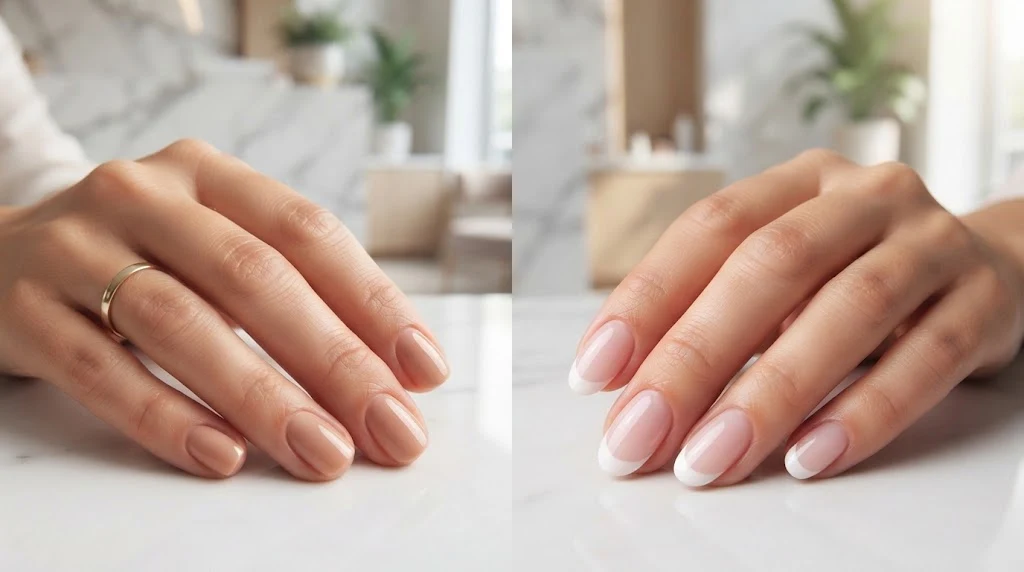
French Manicure
The French manicure has stayed popular for decades because it works with almost any outfit or occasion. A soft pink or nude base sits under crisp white tips.
This look suits both short and medium nails and reads as polished without looking flashy. It works for job interviews, weddings, or an ordinary Tuesday. If you want more structure than plain polish but nothing bold, this is the safer middle ground.
Long-Lasting Polish Options
These formulas trade a bit of extra time in the chair for weeks of chip-free wear.
Gel Manicure
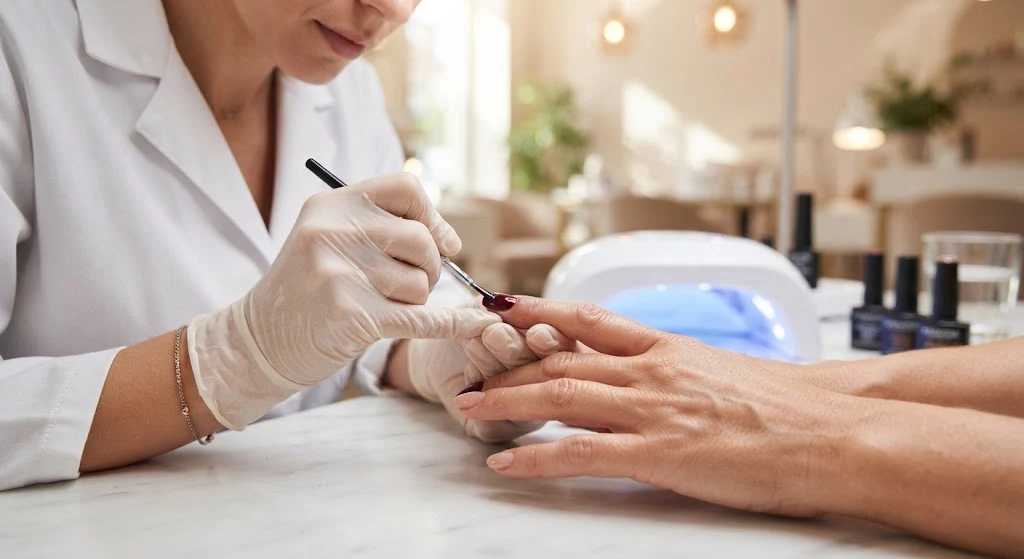
Gel polish cures under a UV or LED lamp, which locks in a glossy, chip-resistant finish. Most gel manicures hold up for 2 to 3 weeks before they need a refresh.
The shine tends to stay bright the entire time, unlike regular polish that dulls after a few days. The one catch: gel has to be soaked off or filed off correctly. Peeling it yourself can strip layers off your natural nail, so plan a removal appointment instead.
Shellac Nails
Shellac sits between gel and regular polish. It’s a hybrid formula that cures under a lamp like gel but goes on thinner.
Because the layer is lighter, shellac feels closer to your natural nail than a standard gel coat. It still resists chipping well and holds color for a similar stretch of time. Pick shellac if you like the durability of gel but want less thickness on your nails.
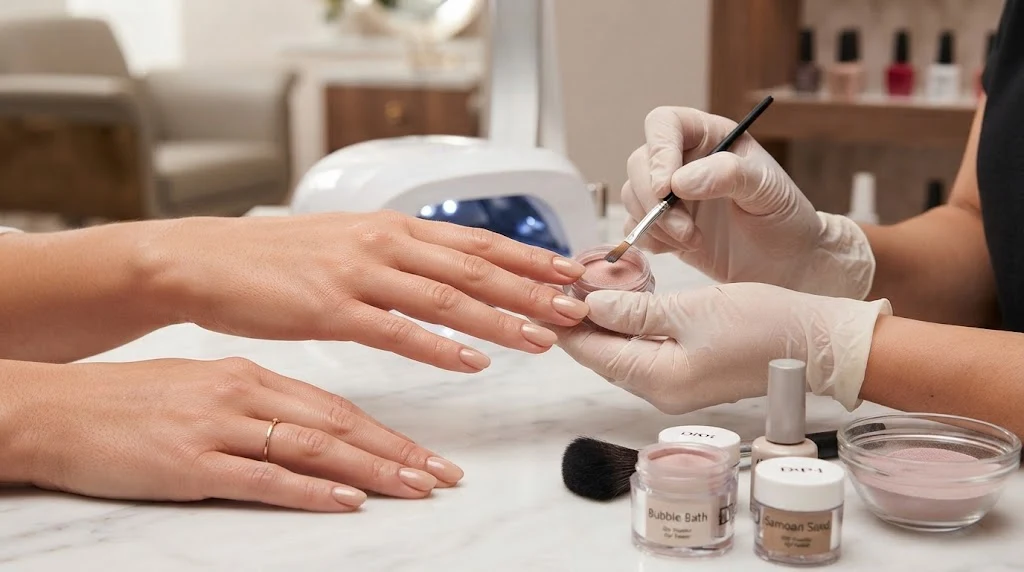
Dip Powder Nails
Dip powder nails skip the UV lamp entirely. A technician dips your nail into colored powder repeatedly, sealing each layer with an activator.
The result is one of the strongest finishes available, often lasting 3 weeks or longer. Because there’s no lamp involved, dip is worth asking about if you’re trying to limit UV exposure. The trade-off is technique-dependent: a rushed application can leave nails looking thick or uneven, so choose a salon with strong reviews for dip work specifically.
Nail Extensions for Length and Shape
Extensions add length your natural nail can’t grow on its own, plus room for more elaborate designs.
Acrylic Nails
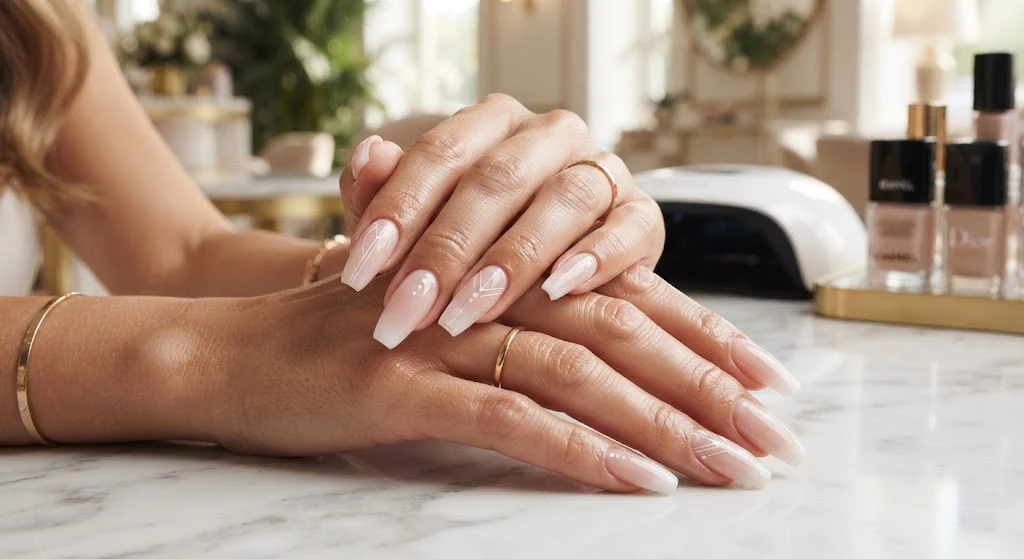
Acrylic is made by combining a liquid monomer with a powder polymer. The mixture hardens into a durable layer that a technician shapes over your natural nail or a tip extension.
Acrylic is the toughest option on this list and holds sharp, dramatic shapes better than any alternative. It’s the go-to choice for stiletto or coffin shapes at longer lengths. The downside is weight — acrylic can feel heavy on the hands, and improper removal is one of the most common causes of nail damage, so never pick it off at home.
Polygel Nails
Polygel borrows traits from both acrylic and gel. It arrives in a putty-like form that a technician molds by hand before curing it under a lamp.
Because it’s lighter than acrylic and has far less odor, polygel appeals to people who want extension strength without the bulk. It’s also more forgiving to shape, which can mean a smoother, more even set. Consider polygel if acrylic has felt too heavy in the past.
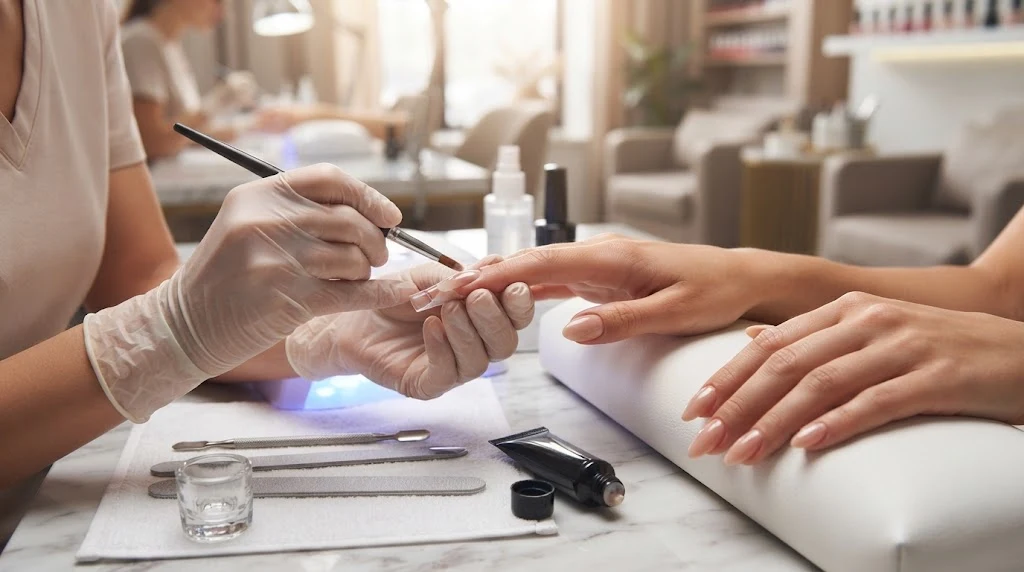
Gel Extensions (Hard Gel)
Hard gel extensions are built by layering thick gel over the nail and curing each layer under a lamp. The finished look tends to be glossy and close to a natural nail shape.
Hard gel flexes more than acrylic, which some people find more comfortable for daily tasks like typing. It’s lighter too. The one limit is durability at extreme lengths — for very long or heavily sculpted shapes, acrylic still holds up better over time.
Press-On Nails
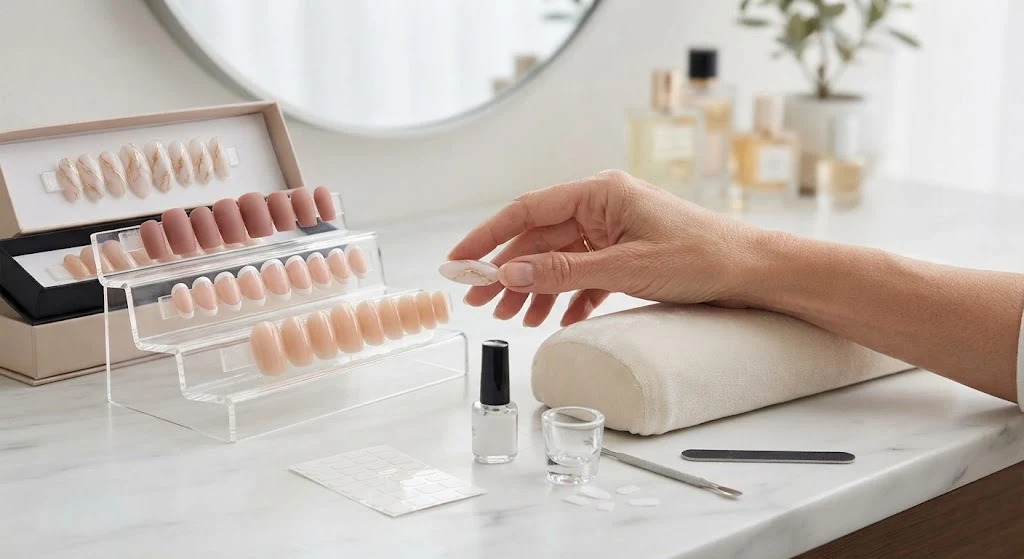
Press-ons are pre-shaped artificial nails applied at home with glue or adhesive tabs. No salon appointment is required.
They come in an enormous range of colors, shapes, and pre-printed designs, so you can match a specific event without booking ahead. Quality press-ons can last a week or more with careful wear. They’re the best option when you need nails ready in twenty minutes, not two hours.
Choosing a Nail Shape
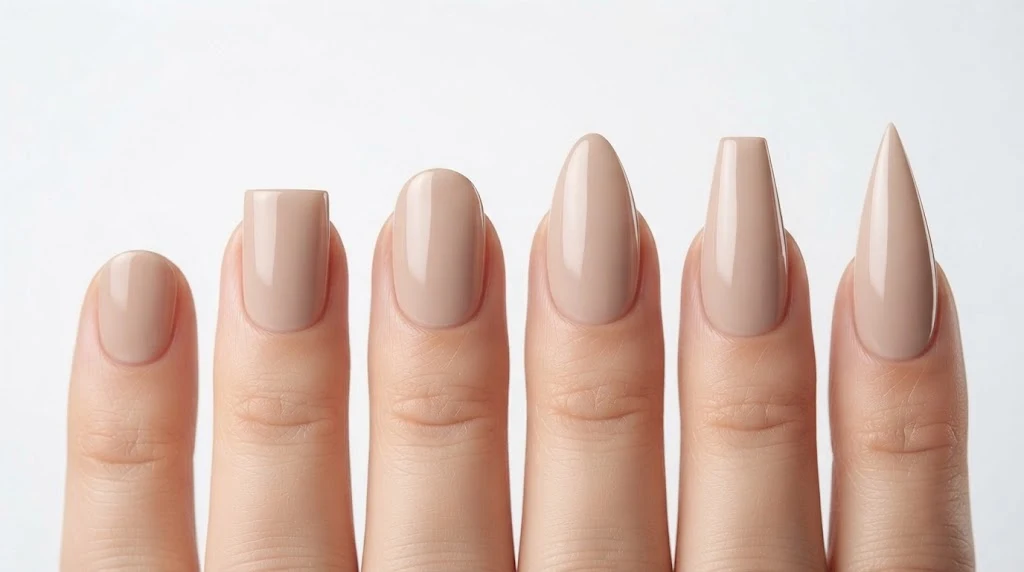
The shape you choose changes how your whole hand looks, sometimes more than the color does.
Round and square shapes are the most practical. They work well on short nails and need the least upkeep between fills.
Oval and almond shapes taper toward the tip, which makes fingers look longer and slimmer. This shape suits anyone who wants an elegant look without going dramatic.
Coffin (ballerina) and stiletto shapes are bold, statement styles best suited to extensions. They photograph well but need longer nails to hold their shape properly.
Nail Art and Design Styles
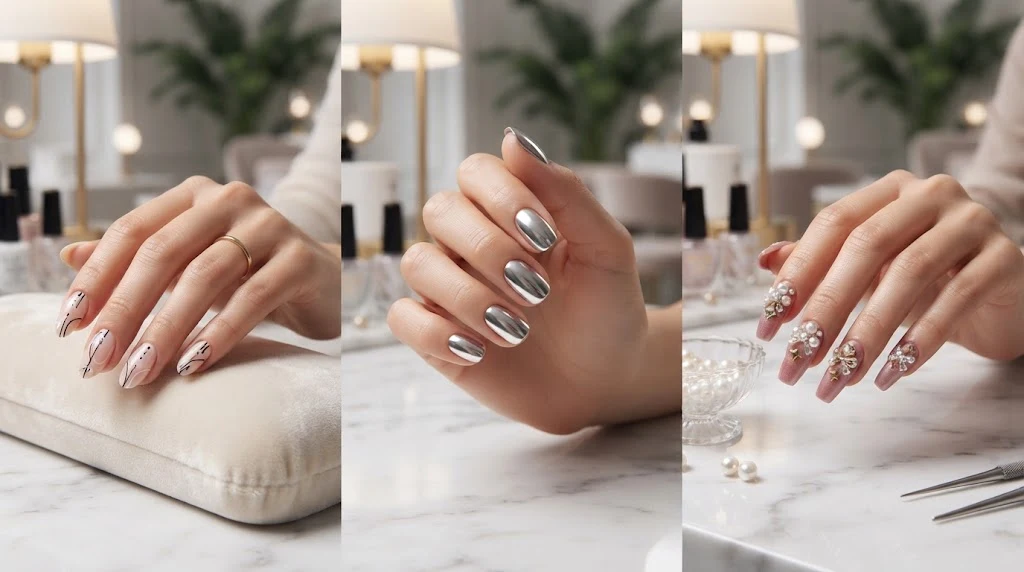
Nail art turns a manicure into a small piece of self-expression. Here are the three most requested categories right now.
Minimal nail art uses fine lines, small dots, and muted tones. It stays office-appropriate while still looking intentional, which is why it remains one of the most requested styles for everyday wear.
Chrome and metallic nails have a mirror-like finish in silver, gold, or holographic shades. They catch light in a way flat polish never can, making them a favorite for parties and photos.
3D and embellished nails use charms, pearls, or raised texture for a sculptural effect. They take longer to apply and need more careful handling, so save this style for special occasions rather than daily wear.
Healthier and Gentler Nail Options
Not every visit needs bold color or added length. These options focus on nail health first.
| Feature | Non-Toxic Manicure | Builder Gel | Nail Care Treatment |
|---|---|---|---|
| Focus | Chemical-free polish | Protective overlay | Repair and hydration |
| Feel | Light, natural | Smooth, slightly thicker | Clean, no coating |
| Best for | Sensitive skin | Weak or breaking nails | Brittle nails between sets |
| Chemicals | Skips formaldehyde and toluene | Minimal, nail-friendly | Nourishing ingredients only |
| Maintenance | Low | Medium | Low |
If your nails feel thin or you’ve had reactions to polish before, ask your salon about these options directly. Most technicians can point you toward a formaldehyde-free or “5-free” polish line without extra cost.
How to Choose the Right Nail Type for You
Four factors decide which style actually works for you day to day.
Lifestyle. Hands-on work or a busy routine calls for short, sturdy options like gel or dip powder. Save acrylics or press-ons for occasions where you can protect your hands a little more.
Budget and maintenance. Regular polish costs the least per visit but needs the most frequent touch-ups. Gel and dip cost more upfront but stretch out the time between salon trips. Extensions need fills every 2 to 3 weeks, which adds up over a year.
Nail health. Weak or thin nails do better with lighter options like builder gel or plain polish. Sensitive nails benefit from non-toxic formulas. Proper removal matters as much as the product itself — soaking off gel or having acrylic filed down professionally protects the nail bed underneath.
Length and look. Short, natural nails pair well with regular, gel, or shellac polish. Medium to long lengths usually need the support of gel extensions or acrylic. Dramatic shapes almost always require a stronger extension system underneath.
Nail Type Comparison Table
| Type | Durability | Cost | Maintenance | Best For |
|---|---|---|---|---|
| Regular Manicure | 3–5 days | Low | Very low | Quick grooming |
| French Manicure | Low–medium | Low–medium | Low | Classic everyday look |
| Gel Manicure | 2–3 weeks | Medium | Medium | Chip-free shine |
| Shellac Nails | 2–3 weeks | Medium | Medium | Lightweight, natural feel |
| Dip Powder Nails | 3+ weeks | Medium–high | Medium | Strength without UV |
| Acrylic Nails | Very high | Medium–high | High | Long, dramatic styles |
| Polygel Nails | High | High | Medium | Strength with less weight |
| Gel Extensions | High | High | Medium–high | Natural-looking length |
| Press-On Nails | Days–1 week | Low | Very low | Temporary, event-ready |
| Builder Gel | Medium | Medium | Medium | Strengthening weak nails |
Quick tip: Short on time? Go gel. Want length? Try acrylic or polygel. Prefer low effort? Stick with regular polish or press-ons.
Final Thoughts
No single nail type works for everyone. Some people want simplicity and low upkeep. Others want length, detail, and a bold shape that turns heads.
The right pick comes down to matching the style to your daily routine, your budget, and how much care your natural nails can handle. A regular manicure, a long-wear gel finish, and a full acrylic extension all serve different needs — none of them is objectively “better.”
Trends in nail art will keep shifting every season. What stays constant is this: nails that fit your actual life always look better than ones that don’t.
Frequently Asked Questions
Which lasts longer, dip or gel?
Dip powder generally lasts longer than gel. Gel manicures typically hold for 2 to 3 weeks, while dip powder can last up to 5 weeks with proper application and care.
What are the downsides of dip powder nails?
Dip powder is hard to repair if it chips or cracks — you’ll likely need a salon visit to fix it. Improper removal can also damage your natural nail underneath, so avoid picking it off at home.
Why have acrylic nails fallen out of favor with some people?
Acrylic systems can contain harsh chemicals, including methacrylic acid and methylene chloride, which have been linked to skin irritation and other health concerns. Many people now choose polygel or hard gel as a gentler alternative with similar strength.