
The right haircut after 50 doesn’t try to make you look 30. It does something better: it lifts your features, works with your hair’s actual texture, and makes you look like the most vibrant version of yourself right now. This guide to flattering haircuts for women over 50 covers the cuts that consistently earn compliments — organized by face shape and hair texture, with honest notes on maintenance, color, and what to ask your stylist.
Hair changes with age: it can thin, change texture, lose pigment, and grow more slowly. Fighting those changes with the same cut you’ve had for twenty years rarely works. Adapting to them — with a cut designed for the hair you have today — almost always does.
Why the Right Cut Matters More After 50
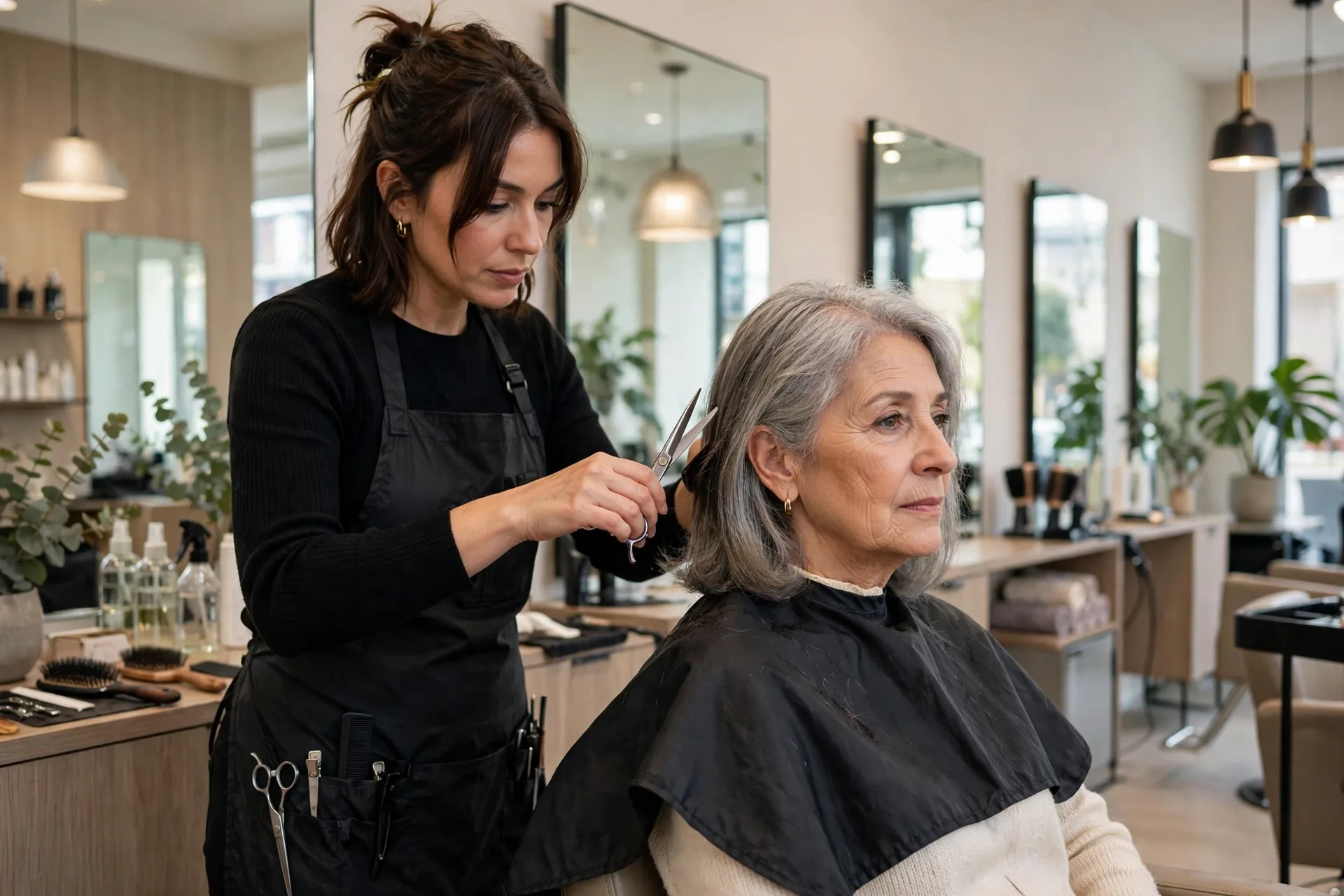
A haircut frames everything: it draws the eye up or down, softens or sharpens features, and sets the tone for your whole look. After 50, when faces naturally lose a little volume and definition, the frame matters even more. The right cut can lift the appearance of cheekbones, open up the eyes, and add the impression of fullness exactly where hair has thinned.
The most common mistake is inertia — keeping a cut out of habit rather than because it still serves you. Long, one-length hair that looked effortless at 40 can drag features downward at 55. A fresh assessment every few years, ideally with a stylist who specializes in mature hair, keeps your cut working for you instead of against you.
Not sure where to begin? Our face shape finder identifies your shape in seconds, and the hairstyle finder matches cuts to your features — both are free and take under a minute.
Cuts by Face Shape
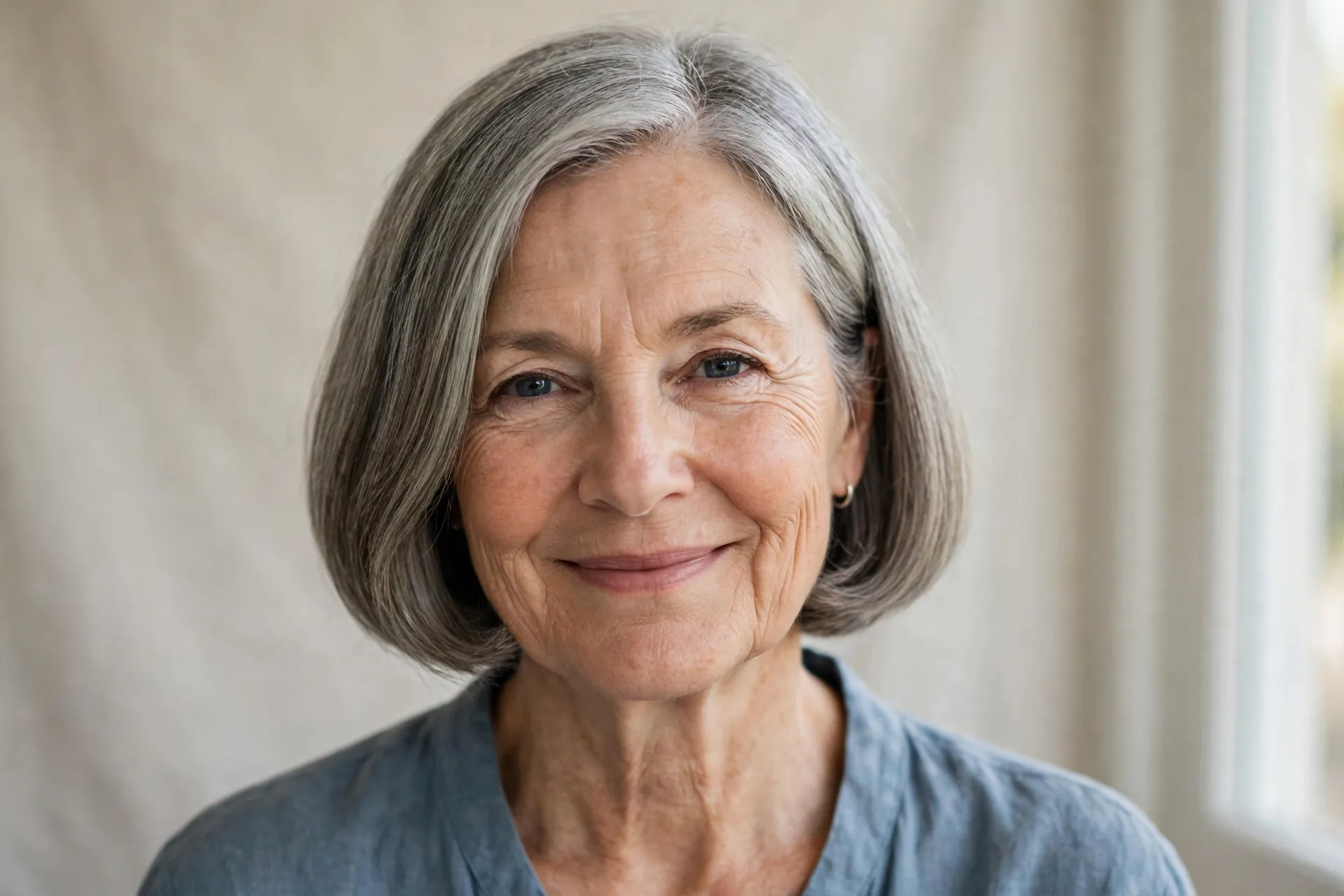
Face shape is the single most useful guide to choosing a cut. The general principle: add width where the face is narrow, add length where the face is short, and soften where it’s angular.
Oval faces suit almost everything — the blessing and the curse is choice. Shoulder-length cuts with layers, bobs, and soft pixies all work; the main caution is avoiding cuts that hide an oval face’s natural balance behind too much hair.
Round faces benefit from height and length: layered cuts that fall below the chin, side-swept bangs rather than straight-across, and volume at the crown. Avoid chin-length bobs with rounded edges, which echo the face’s roundness.
Square faces soften with texture and movement — layered lobs, wispy ends, side parts, and face-framing pieces that break up a strong jawline. Severe center parts and blunt chin-length cuts emphasize angularity.
Heart-shaped faces (wider forehead, narrower chin) balance beautifully with chin-length bobs, side-swept fringe that minimizes forehead width, and volume through the lower half. Long faces gain balance from width: bangs of any kind, shoulder-length cuts with body at the sides, and waves rather than poker-straight length.
Fine Hair: Cuts That Create Fullness
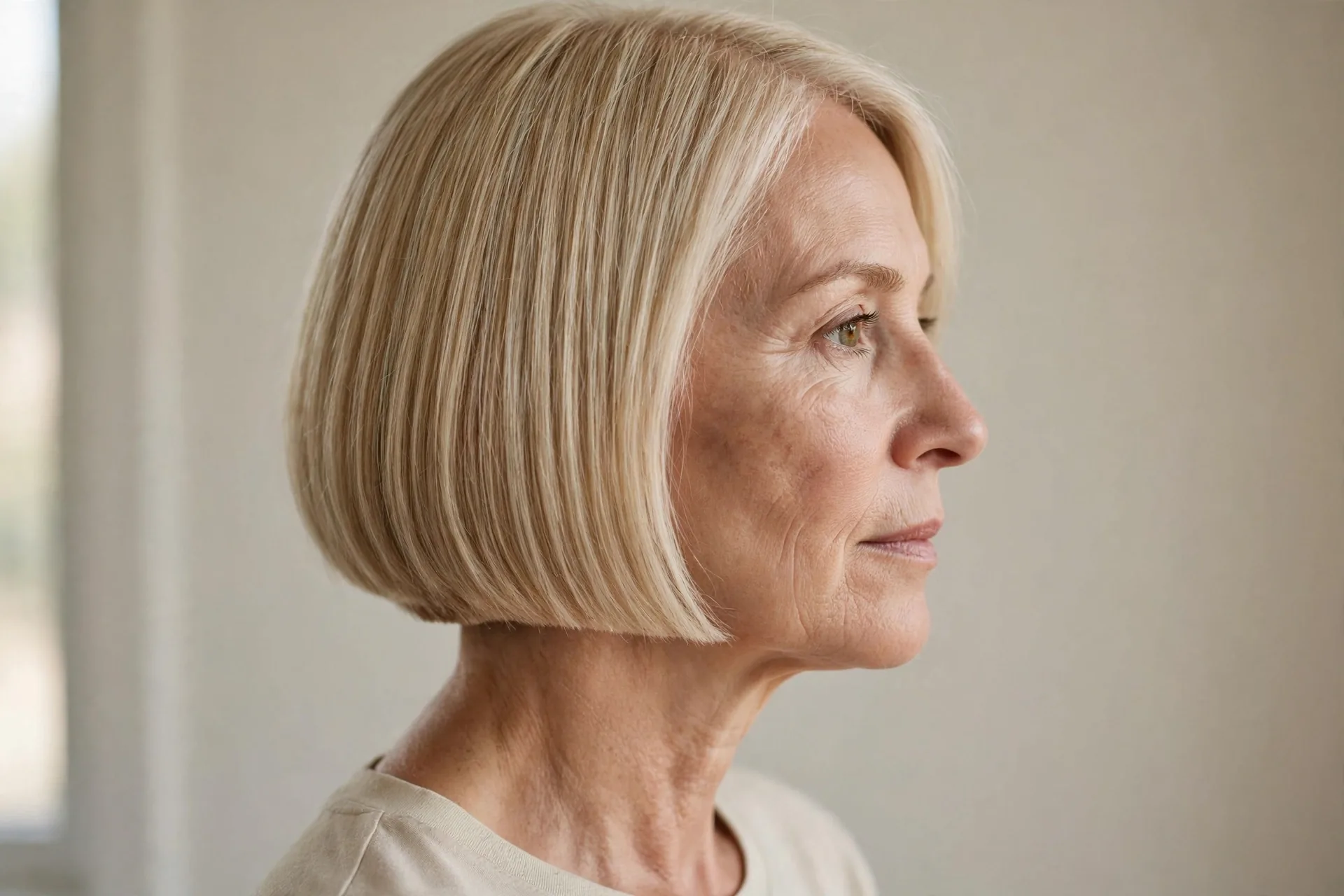
Fine hair is the most common texture change after 50, and the cut is the primary tool for managing it. The rules: shorter reads thicker; blunt edges read denser than wispy ones; layers should be strategic, not abundant.
- The blunt bob (chin to shoulder length) is the fine-hair champion — one clean edge makes ends look twice as thick.
- The textured pixie with piece-y layers creates the illusion of density on top while keeping styling to minutes.
- The collarbone lob with minimal layering — long layers only at the very ends preserve weight where fine hair needs it most.
What to avoid: long one-length hair (it separates and shows scalp), heavy layering throughout (it removes the little density you have), and razor-thinning, which frays fine ends. Ask your stylist for “weight at the perimeter” — that’s the phrase that protects thickness.
Thick and Coarse Hair: Cuts That Create Shape
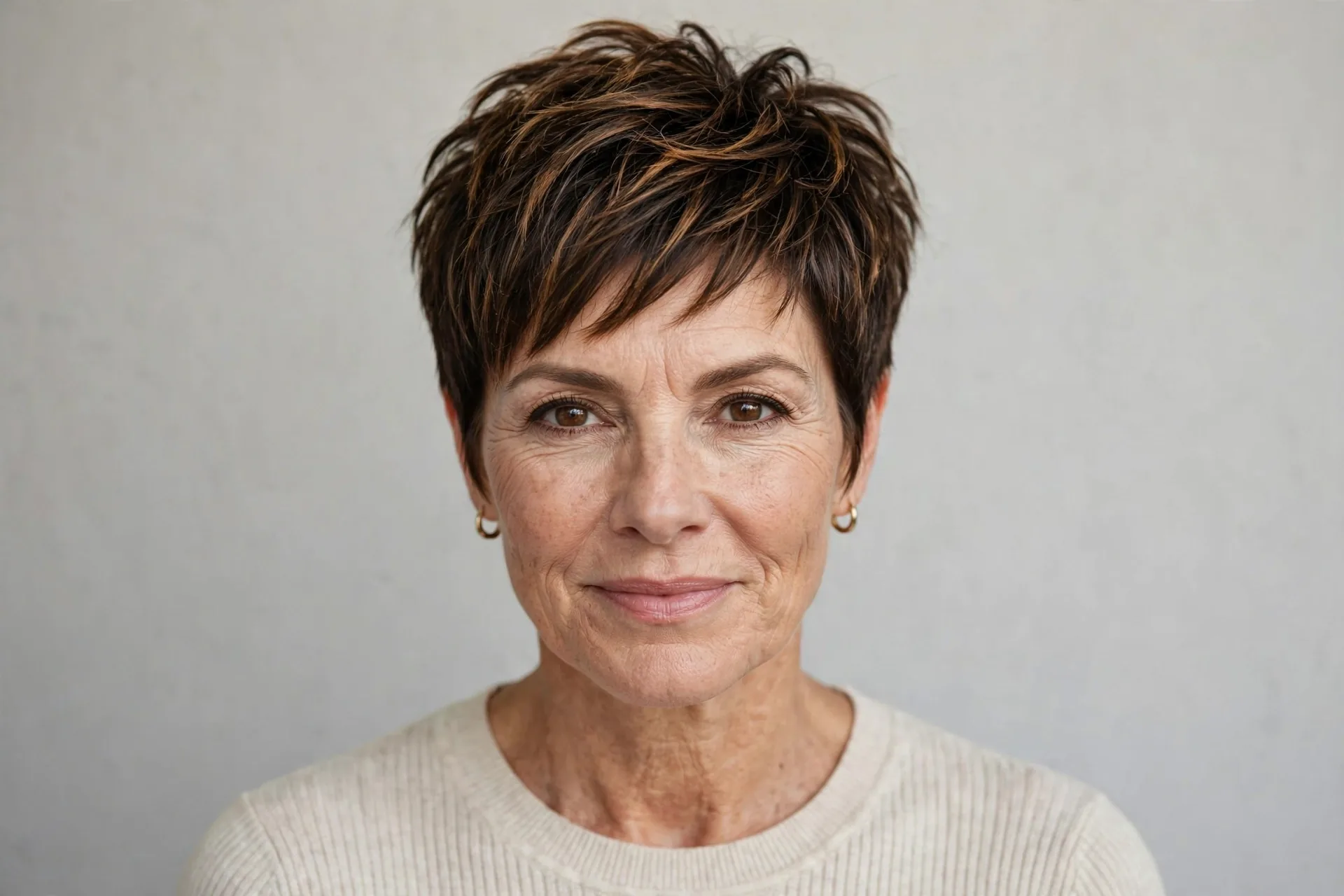
Thick hair’s challenge is the opposite: removing bulk without creating frizz or a triangle silhouette. Long layers are essential — they let the hair fall in a shape rather than a mass. A layered shoulder-length cut or a long bob with internal layering gives thick hair movement and manageability.
The pixie can be spectacular on thick hair if the stylist knows how to undercut and texturize properly — it becomes wash-and-go with natural volume. What to avoid: blunt one-length cuts at jaw level (the dreaded triangle), and cuts with no layering that just get wider toward the ends. For coarse or graying hair that’s gone wiry, a smoothing keratin treatment or simply a cut that works with the texture rather than against it makes daily life dramatically easier.
Curly and Wavy Hair: Working With Texture
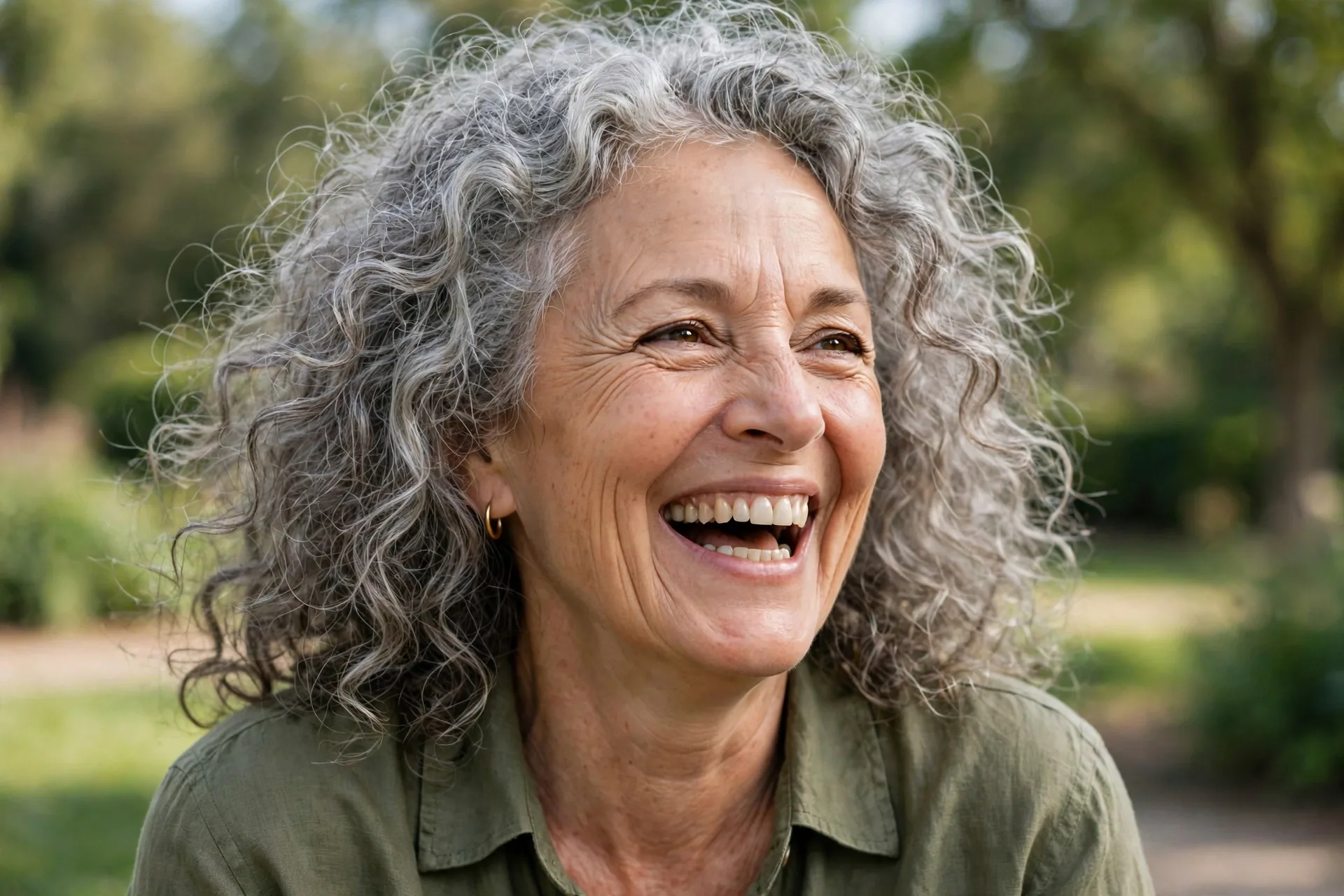
Curls after 50 deserve celebration, not straightening into submission. The key insight: curly hair must be cut dry or in its natural state — wet cuts spring up unpredictably and no two curls behave alike.
Layered cuts designed for curls (a curly shag, a rounded bob, or long layers) give shape without the pyramid effect. A Deva-style or curl-by-curl cut from a curl specialist is worth seeking out; generalist stylists often cut curls like straight hair, which is where most curl disasters begin.
Length is a personal choice, but many women find shoulder-length curls the sweet spot — long enough to show the curl pattern, short enough to keep volume distributed. For complete curl care guidance, see our curly hair care guide.
Thinning Hair and Hair Loss: Honest Strategies
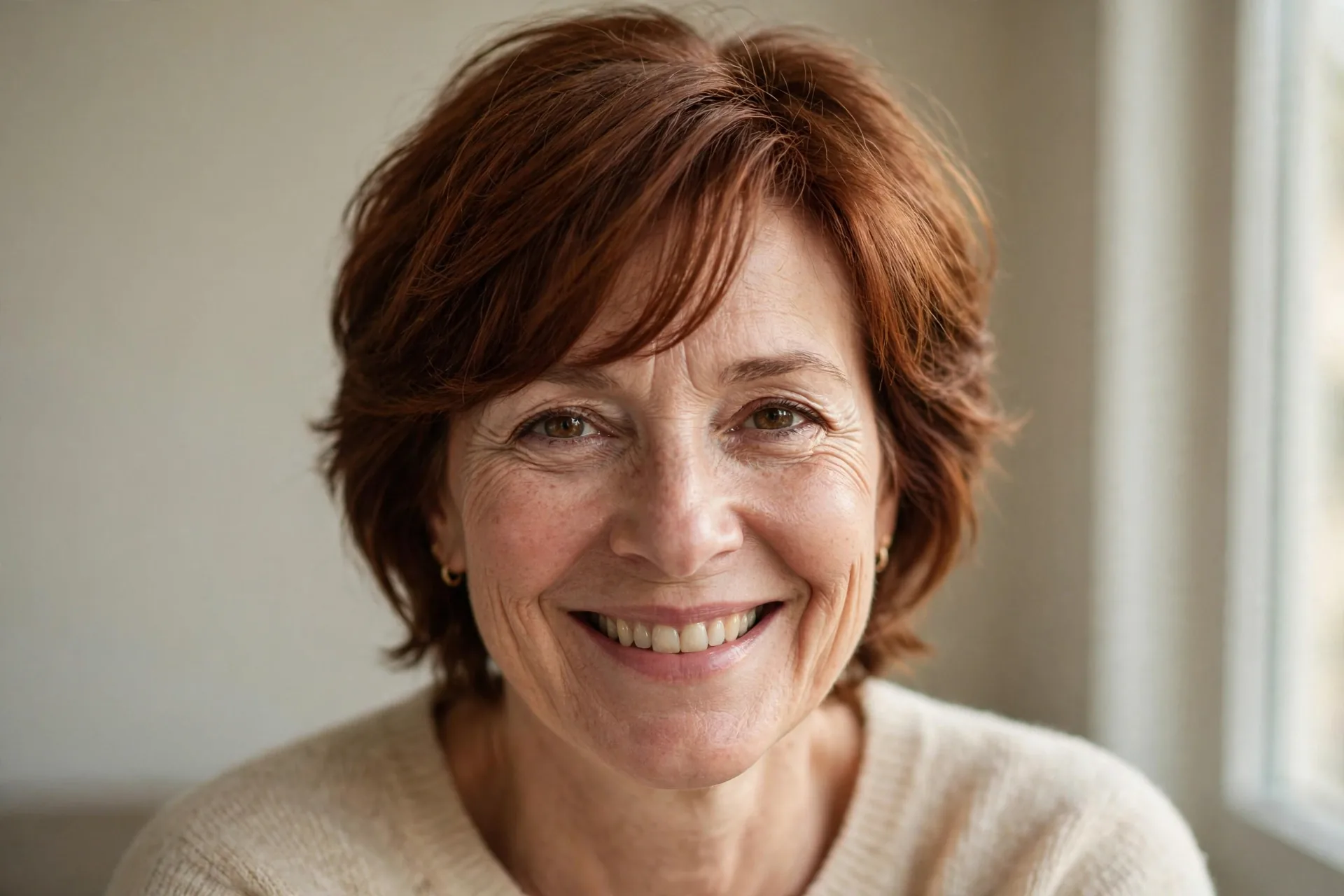
Thinning is normal — by 50, a large proportion of women notice reduced density, especially at the part and temples. The cut strategies that help most:
- Go shorter. Shorter hair has less weight pulling it flat, so it looks fuller. A pixie or short bob almost always reads thicker than long thin hair.
- Change the part. A deep side part or zigzag part disguises a widening center part instantly.
- Add root lift. Layers at the crown, root-lifting products, and blow-drying upside down create volume where thinning shows most.
- Consider fringe. Wispy bangs camouflage thinning temples and draw attention to the eyes.
- Strategic color. Slightly darker roots with lighter ends (or lowlights throughout) create depth that reads as density; scalp-matching root powder is a legitimate daily tool, not a gimmick.
See a dermatologist if shedding is sudden or severe — thyroid issues, iron deficiency, and hormonal shifts are common, treatable causes. For gradual age-related thinning, the right cut plus realistic expectations beats expensive miracle products every time.
Low-Maintenance Cuts That Still Look Polished

Not everyone wants a high-maintenance cut — and after 50, many women are done spending an hour on their hair. The best low-effort cuts:
- The wash-and-go pixie: a textured pixie with enough length on top to air-dry into shape. Five minutes with a little product, done.
- The air-dry lob: a long bob cut to work with your natural texture — waves air-dry into waves, straight air-dries sleek. The cut does the work, not the hot tools.
- The soft shag: layers throughout mean the cut looks intentional even when you do nothing to it. Ideal for wavy and curly textures.
- The sleek bob: one-length, chin to jaw, tucked or untucked. Looks deliberate with zero styling on straight hair.
Tell your stylist your real routine — “I air-dry and go” is essential information, not laziness. A good stylist cuts for the hair’s natural behavior, and the grow-out should be graceful: the best low-maintenance cuts still look good at eight weeks, not just week one.
Color After 50: Enhance, Don’t Fight
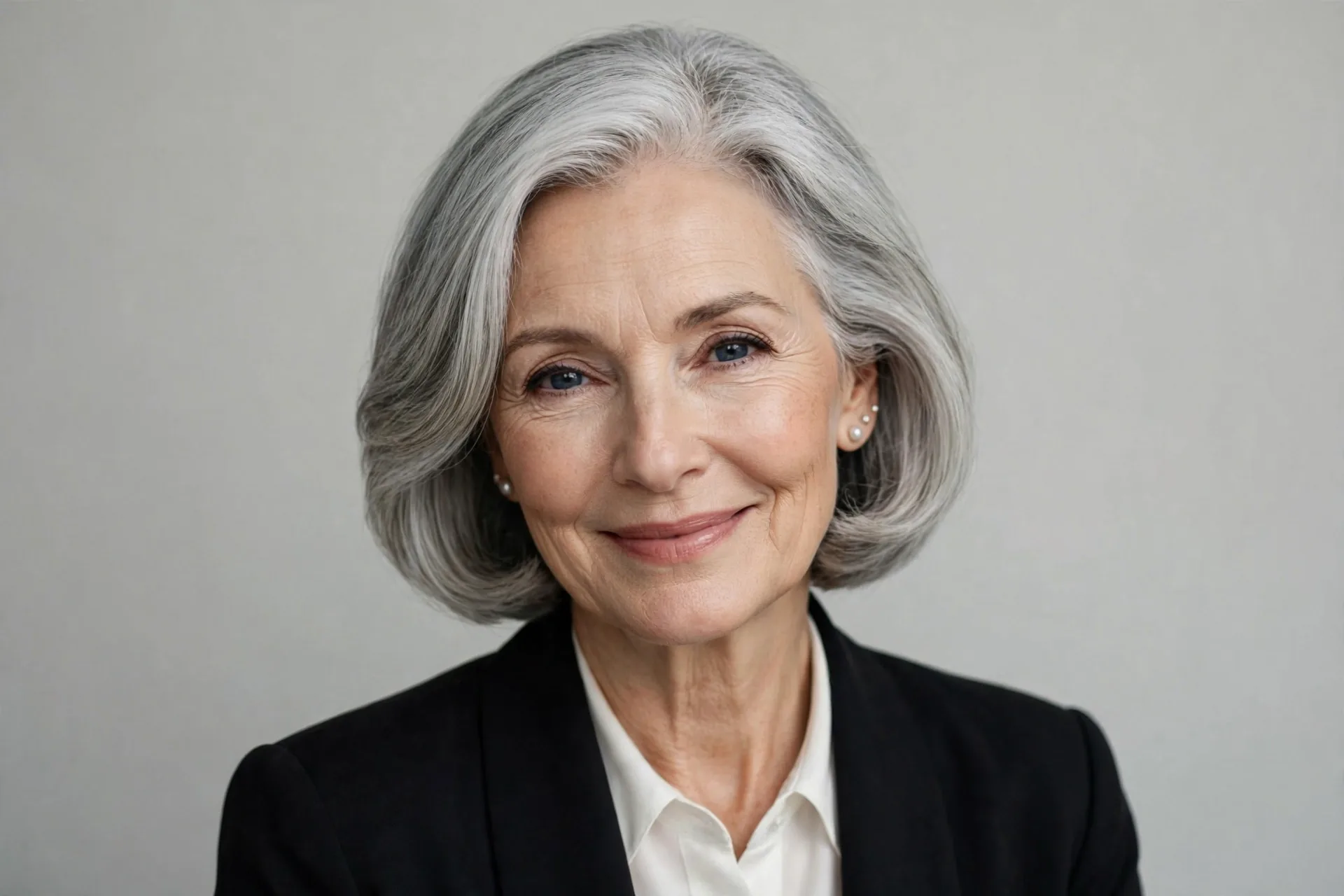
Color and cut work as a team. A few principles that hold up:
- Soften, don’t darken. Going too dark against lightening skin can look harsh. Most colorists recommend staying within one or two shades of your natural color, or going slightly lighter and warmer than you think.
- Dimension beats flat color. Highlights, lowlights, and balayage create the illusion of thickness and movement that single-process color can’t match.
- Embrace the gray strategically. Silver and gray are legitimately chic now — see our guide to going grey gracefully. The transition works best with a shorter cut and regular toning to keep the gray bright rather than dull.
- Mind the roots. High-contrast color with fast-growing gray roots means salon visits every three weeks. Lower-maintenance options: root smudging, balayage, or embracing the natural base.
What to Ask Your Stylist (and Red Flags)
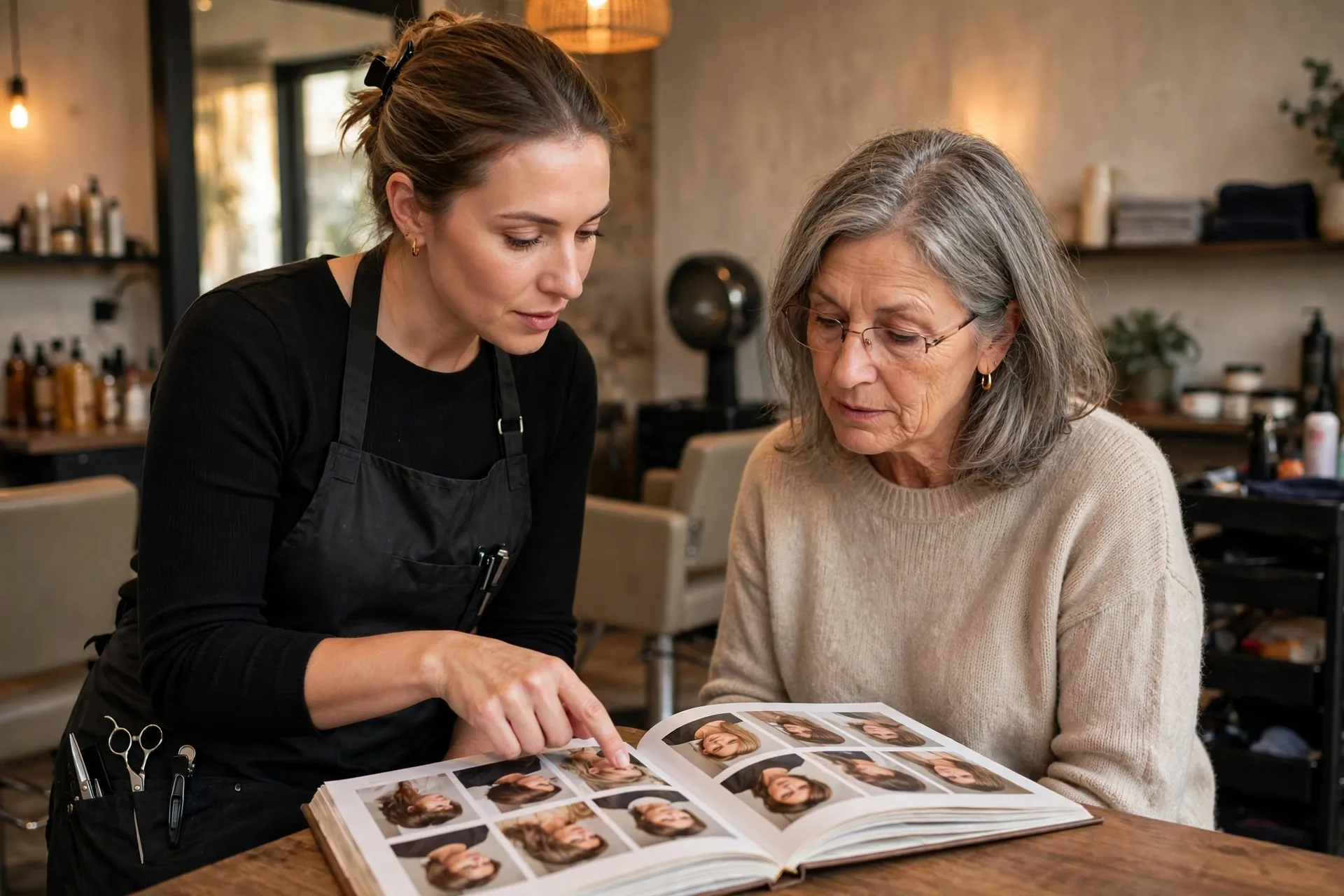
Bring photos — of cuts you love and cuts you hate, on people with similar hair texture to yours. Then ask:
- “What will this look like when I style it myself, air-dried?”
- “How will this grow out in six to eight weeks?”
- “What will this need — products, tools, salon frequency?”
- “Is my hair texture right for this, or would you adapt it?”
Red flags: a stylist who dismisses your maintenance limits, who cuts curly hair soaking wet without discussing spring factor, who suggests the same cut for every client, or who won’t explain what they’re doing and why. The right stylist for mature hair listens first and cuts second — find one who specializes in, or at least genuinely enjoys, working with women over 50.
Haircut FAQs
What is the most flattering haircut for women over 50?
There’s no single answer — it depends on face shape and texture. But the shoulder-length layered cut (lob) flatters the widest range of women: it’s long enough to feel feminine, short enough to add volume, and suits straight, wavy, and curly hair.
Should women over 50 have long hair?
Absolutely, if the hair is healthy and the cut has shape. Long hair needs layers, face-framing pieces, and movement after 50 — long, one-length, flat hair drags features down. Healthy long hair with a good cut looks wonderful at any age.
Do bangs work after 50?
Yes — soft, textured bangs (side-swept, curtain, or wispy) flatter most faces over 50, camouflage forehead lines, and draw attention to the eyes. Avoid heavy, blunt, straight-across bangs, which can look severe.
What haircut makes thin hair look thicker?
Shorter, blunter cuts: a chin-length blunt bob or textured pixie. Keep weight at the perimeter, avoid over-layering, and add root volume through cut and styling. Strategic color dimension also reads as density.
How often should I get a haircut after 50?
Every 6–8 weeks for short cuts (pixies lose their shape fast), every 8–12 weeks for bobs and lobs, every 10–12 weeks for longer hair. Regular trims keep ends healthy, which matters more as hair ages.
Is grey hair flattering after 50?
Very — when it’s intentional. Well-maintained silver (regular trims, purple toning shampoo, good conditioning) looks chic and modern. Neglected gray that has gone dull and yellow is what ages you, not the gray itself.