
Fashion usually follows the crowd. Trends rise, spread, and fade with the seasons.
Avant-garde fashion breaks that pattern completely.
It doesn’t chase trends. It challenges them.
In this world, clothes stop being just clothes. They become ideas. The runway turns into a stage for creative rebellion, and every collection asks a question instead of offering an answer.
This guide breaks down what avant-garde fashion really means, the key traits that define the avant-garde style, and how it stands apart from everyday fashion. You’ll also meet the designers who built this movement and see how it still shapes the way we dress today.
What Does Avant-Garde Fashion Mean?
The word avant-garde comes from a French military term meaning “advance guard.” It described soldiers who marched ahead of the main army, scouting new ground before anyone else got there.
In fashion, the meaning carries over perfectly. Avant-garde designers move ahead of the mainstream. They don’t wait for trends to tell them what’s next.
Instead of chasing seasonal styles, this movement values three things above all else:
- Innovation — trying what hasn’t been tried
- Individuality — standing apart from the crowd
- Boundary-pushing design — breaking rules on purpose
Commercial success isn’t the goal here. Provoking a reaction is. Every collection becomes a statement about society, beauty, or identity. The clothes carry ideas the way a painting or sculpture would, built around concepts rather than what will sell in stores.
5 Core Characteristics of Avant-Garde Style
There’s no single formula for avant-garde fashion. It’s a mindset, not a checklist. Still, most avant-garde pieces share a few defining traits.
1. Experimental Silhouettes
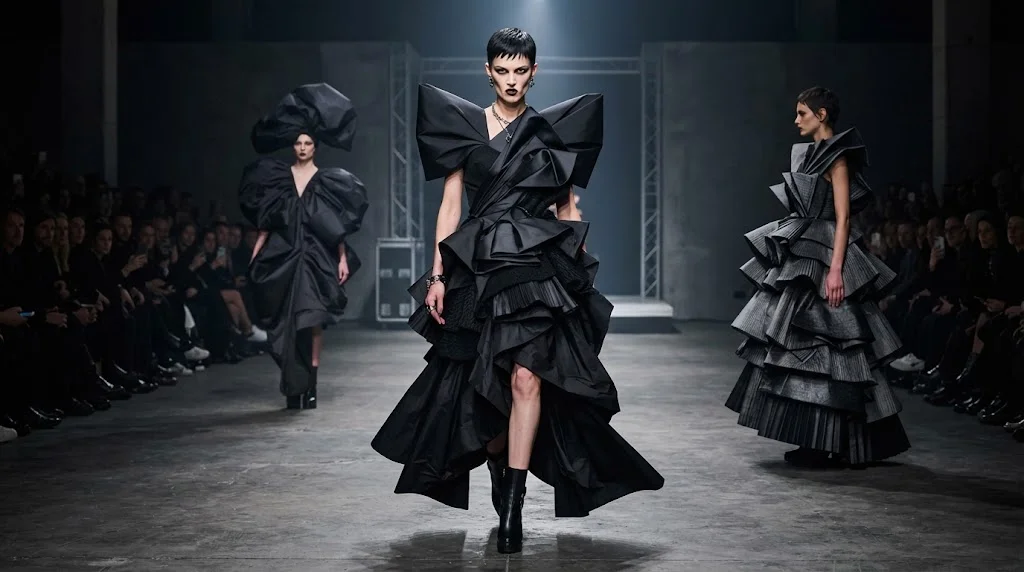
Avant-garde design often reshapes the human body entirely. Designers use exaggerated proportions, unexpected volume, and shapes that ignore natural symmetry on purpose.
The result feels less like clothing and more like wearable sculpture. These pieces ask viewers to see fashion as movement and structure, not just fabric draped over a body.
2. Unconventional Materials
Forget silk, cotton, and wool as the only options. Avant-garde designers reach for metal, industrial plastics, recycled scraps, and materials that traditional fashion would never touch.
Mixing rough, unexpected textures with soft, familiar ones creates tension. That contrast is often the whole point — it forces people to rethink what “wearable” even means.
3. Exposed Construction
Most fashion hides its seams. Avant-garde fashion puts them on display.
Raw hems, visible stitching, and exposed structural elements turn the building process into part of the finished look. Nothing is hidden. The craftsmanship becomes the design itself, not something tucked out of sight.
4. Concept-Driven Storytelling
Every strong avant-garde collection starts with an idea, not a mood board of last season’s bestsellers.
Designers use fabric, shape, and silhouette to express emotion, politics, identity, or memory. The finished collection reads like a visual essay — something meant to be interpreted, not just worn.
5. Restrained or Bold Color Choices
Color in avant-garde fashion works as structure, not decoration.
Many designers stick to black, white, and gray so nothing distracts from the shape and construction of the piece. Others go the opposite direction, using shocking color contrasts to hit an emotional note. Either way, the color choice is deliberate — never random.
How Avant-Garde Fashion Shapes Art and Culture
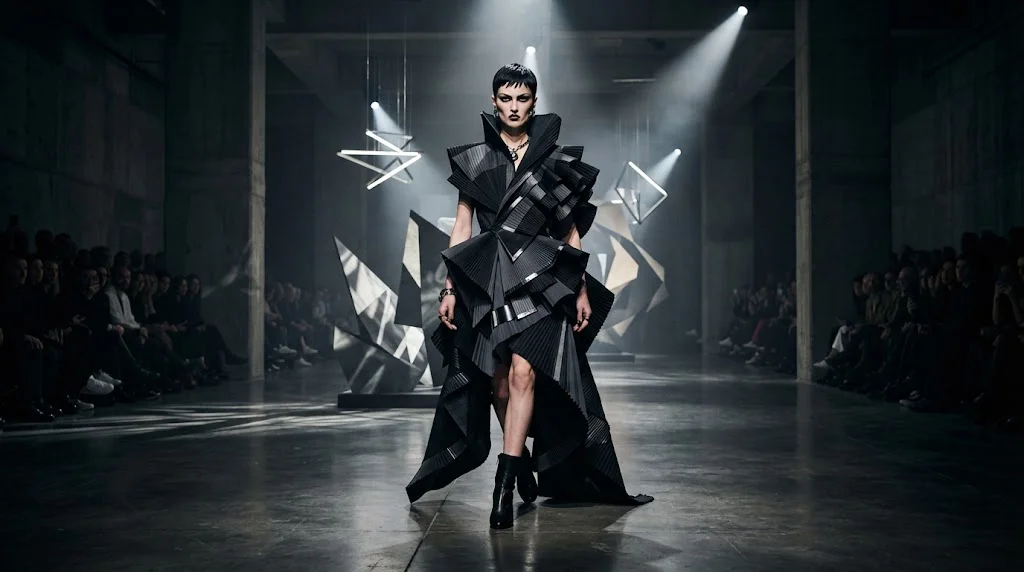
Avant-garde fashion does more than dress people. It starts conversations between fashion, art, and society.
Social commentary. Designers use extreme silhouettes and unusual materials to comment on politics, climate change, and inequality — communicating ideas that words alone can’t capture.
Crossover with other art forms. The avant-garde mindset spills into architecture and industrial design. Concepts like asymmetry and abstraction show up across creative fields that share this same experimental spirit.
Runway as performance. Modern avant-garde shows often feel more like theater than a typical fashion presentation. Sound, movement, and lighting combine with the clothing to create a full sensory experience.
A push toward sustainability. Many contemporary avant-garde designers build collections around reused and imperfect materials. Turning discarded fabric into new, striking pieces blends artistic vision with environmental responsibility.
Redefining “wearable.” Designs once dismissed as impractical or bizarre have become symbols of creative intent. Today, avant-garde fashion stands for originality — the belief that clothing should provoke thought, not just earn compliments.
The Designers Who Built Avant-Garde Fashion
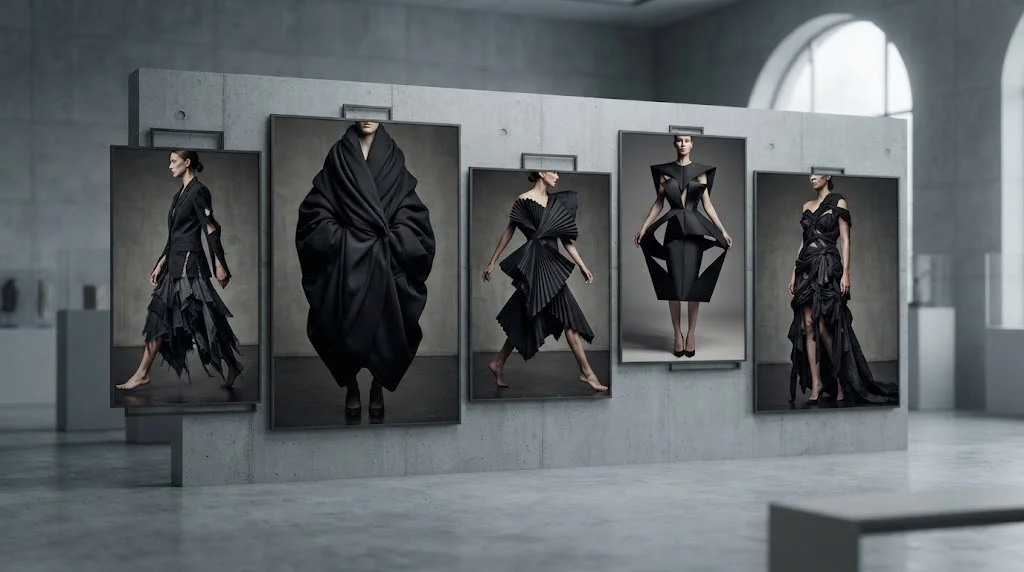
A handful of designers turned avant-garde fashion from a fringe idea into a lasting movement. Each one brought a completely different philosophy to the table.
Martin Margiela pioneered deconstruction and anonymity in fashion. He took garments apart to expose their inner workings — linings, seams, raw edges — and questioned what actually makes an outfit “finished.”
Ann Demeulemeester designs from emotion first. Her collections blend darkness with softness, exploring the tension between fragility and defiance in every piece.
Issey Miyake merged technology with traditional craft. His signature pleating techniques transform flat fabric into structures that move and breathe like living material — proof that avant-garde design can still be functional.
Yohji Yamamoto brings quiet power to minimalism. Known for architectural black draping, his garments carry strength and vulnerability at the same time, rebellious without ever being loud.
Rei Kawakubo, founder of Comme des Garçons, put concept ahead of convention. Her work often looks more like sculpture than clothing, using negative space and distortion to challenge the idea that beauty requires symmetry.
Together, these five designers proved avant-garde fashion isn’t a passing trend. It’s an ongoing dialogue between art and identity.
Avant-Garde Fashion Today
The movement hasn’t stood still. New materials, new technology, and shifting culture keep pushing it forward.
Modern avant-garde design blends sculptural shapes with sustainable fabrics and digital production techniques. Structure and movement still balance against each other, but now with craftsmanship meeting innovation in new ways.
The influence has spread beyond the runway too. Photography, gallery installations, and public exhibitions now showcase avant-garde ideas — minimal color, layered texture, and dramatic silhouette — as visual storytelling in their own right.
Avant-Garde vs. Ready-to-Wear vs. Haute Couture
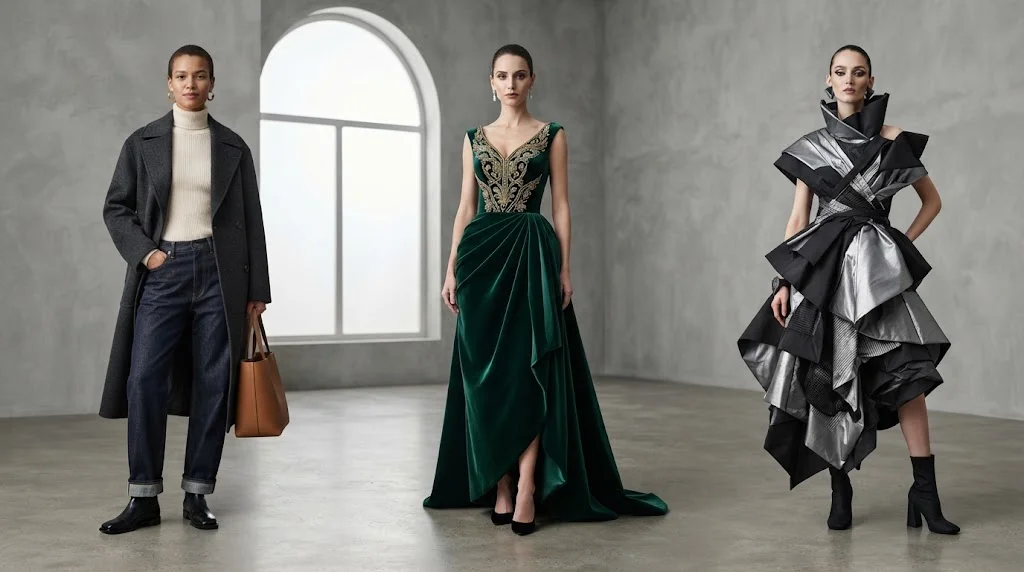
Avant-garde fashion doesn’t fit neatly into standard fashion categories. It exists for concept, not commerce.
| Aspect | Ready-to-Wear | Haute Couture | Avant-Garde |
|---|---|---|---|
| Purpose | Practical, market-driven clothing | Exclusive craftsmanship and luxury | Conceptual expression or critique |
| Design Focus | Comfort, fit, mass appeal | Precision tailoring, fine materials | Experimental form and meaning |
| Audience | General consumers | High-income clientele | Artistic and intellectual circles |
| Production | Mass or limited industrial runs | Handcrafted, client-specific | Limited, sometimes one-of-a-kind |
| Creative Direction | Guided by seasonal trends | Guided by tradition and prestige | Guided by imagination and challenge |
Avant-garde fashion was never built to chase approval. Ready-to-wear and haute couture aim to please. Avant-garde aims to provoke — and to start a conversation instead of ending one.
Final Thoughts
From experimental silhouettes to raw construction and concept-driven storytelling, avant-garde fashion celebrates individuality and creative freedom above everything else.
The designers behind this movement proved that clothing can question, provoke, and inspire — not just conform. Their influence still shapes modern design, sustainable fashion, and creative expression around the world today.
Avant-garde fashion isn’t just an aesthetic. It’s an invitation to think differently, and a reminder that originality remains the boldest statement anyone can make.
Frequently Asked Questions
What fabrics are most common in avant-garde fashion?
Designers often mix traditional natural fibers with experimental materials like rubber, metal mesh, or recycled textiles to create unique texture and structure.
Is avant-garde fashion sustainable?
Many avant-garde designers lean into sustainability, reusing materials and building timeless pieces that stand apart from fast fashion.
How does avant-garde fashion influence mainstream trends?
Avant-garde ideas often trickle down into everyday fashion over time. Experimental shapes and construction techniques that once seemed extreme frequently evolve into wearable styles years later.
For more style deep-dives and the trends shaping fashion’s edge, stick with faminaz.com.