
If you’ve ever stepped outside on a humid day only to watch your sleek blowout puff up into a cloud of flyaways, you already know the frustration of frizzy hair. It’s one of the most common hair complaints out there, and it can happen to almost any hair type — straight, wavy, curly, or coily.
The science behind frizz is actually pretty simple. Your hair strands are covered in tiny scales called cuticles. When those cuticles are smooth and flat, light bounces off evenly and hair looks shiny and sleek. But when cuticles are rough or raised — from sun damage, heat styling, or harsh chemical treatments — hair loses its natural oils. That makes each strand thirsty for moisture, so it soaks up humidity from the air and swells. The result? Frizz, flyaways, and a texture that feels impossible to control.
The good news is that frizz isn’t permanent, and you don’t need a salon budget to fix it. With the right hydration routine, gentler styling habits, and a few smart product choices, you can lock moisture in and keep humidity out — no matter what the weather is doing. Here’s exactly how to do it.
1. Seal In Moisture With a Hydrating Serum on Damp Hair

A good frizz-control serum is one of the simplest tools for beating humidity. Applied to towel-dried hair, a lightweight serum coats each strand and creates a barrier that blocks outside moisture from sneaking in and swelling the hair shaft.
For the best results, apply serum while hair is still damp, not soaking wet or fully dry. Damp hair absorbs the product more evenly, so it spreads smoothly from your mid-lengths down to your ends without leaving roots looking greasy. Look for a formula built with light oils, like argan or grapeseed, that smooth the hair without weighing down your natural volume.
Why a good serum makes such a difference:
- Blocks outside humidity by forming a light protective layer over each strand
- Locks in hydration so hair stays soft and manageable for longer
- Detangles easily, softening rough cuticles so a wide-tooth comb glides through
- Boosts shine by helping the hair reflect light evenly instead of scattering it
2. Wash With Warm Water, Then Rinse With Cold
Water temperature has a bigger effect on frizz than most people realize. Hot water strips away your scalp’s natural oils and forces the hair cuticle to lift open. Once those cuticles are raised, they act like tiny sponges, soaking up moisture from the air the moment you step outside — which is exactly what leads to frizz later in the day.
Instead, wash your hair with warm (not hot) water to protect your natural oils, then finish with a cool-water rinse. The cold water helps flatten the cuticle back down, sealing in moisture and giving your hair a smoother, glossier finish.
A few reasons this small switch pays off:
- Protects natural oils instead of stripping them away during washing
- Flattens the cuticle with a final cold rinse, locking in a smoother texture
- Improves shine, since flat cuticles reflect light more evenly than raised ones
- Supports scalp health, helping to prevent the dryness that leads to weak, brittle strands
3. Swap Your Towel for a Microfiber One

The towel you use to dry your hair matters more than you might think. Regular terrycloth towels are made from rough fibers that catch on strands and create friction. Over time, rubbing hair dry with one of these towels can lead to split ends, breakage, and a rougher overall texture — all of which make frizz worse.
A microfiber towel (or even an old cotton T-shirt) is a much gentler option. Instead of rubbing your hair, gently scrunch or blot out the excess water. This keeps the cuticle lying flat and helps preserve your hair’s natural pattern, whether that’s straight, wavy, or curly.
Why this small swap helps so much:
- Cuts down on friction, since microfiber glides over hair instead of snagging it
- Reduces breakage by avoiding harsh rubbing on fragile, wet strands
- Preserves natural texture, keeping waves and curls intact instead of triggering flyaways
- Dries hair faster, thanks to microfiber’s high absorbency, so you spend less time with a towel on your head
4. Never Skip Heat Protectant Before Styling
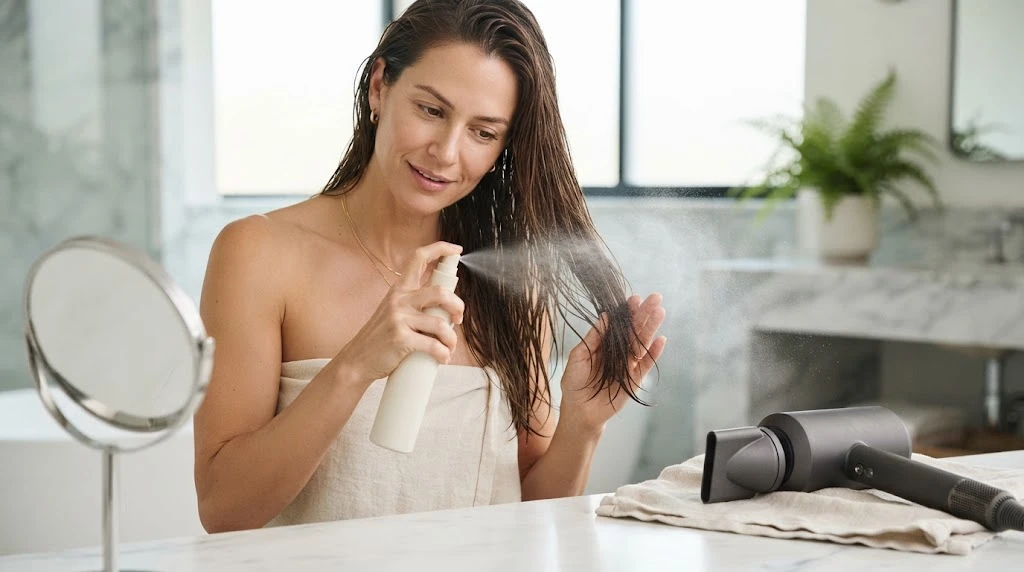
Blow dryers, flat irons, and curling wands can transform your hair in minutes, but that convenience comes at a cost if you skip protection. High heat pulls moisture out of the hair shaft, leaving strands dry, brittle, and far more likely to frizz up the moment they hit humid air.
A heat protectant spray or cream creates a buffer between your hair and the tool, helping distribute heat more evenly and reducing the damage that builds up over repeated styling sessions. Make this step non-negotiable, even on days when you’re only using a blow dryer for a few minutes.
Look for a protectant that also offers some humidity resistance, since many modern formulas do double duty — shielding hair from heat while adding a light anti-frizz coating at the same time.
5. Deep Condition With a Rich Hair Mask Weekly
Daily conditioner is a good start, but it usually can’t deliver the level of moisture that dry or frizz-prone hair actually needs. A weekly hair mask goes deeper, using concentrated oils, butters, and proteins that penetrate the hair shaft rather than just coating the surface.
This deeper treatment helps repair damage from heat, color, and environmental stress, filling in the porous gaps that let humidity sneak into your strands in the first place. Leave the mask on for five to ten minutes (or longer, if the label allows) to give the ingredients time to absorb fully.
Over a few weeks of consistent use, you should notice hair that feels softer, looks shinier, and holds up better against humidity than it did before.
6. Sleep on Silk or Satin to Protect Your Progress

All the hydration in the world won’t help much if your pillowcase undoes it overnight. Cotton pillowcases absorb moisture from your hair and create friction while you sleep, which can lead to tangles and frizz by morning.
Switching to a silk or satin pillowcase lets your hair glide instead of catching, which helps preserve both moisture and your style. If you don’t want to replace your pillowcase, a silk or satin bonnet works just as well and is an easy habit to build into your nightly routine.
7. Choose the Right Brush and Brush Less Often
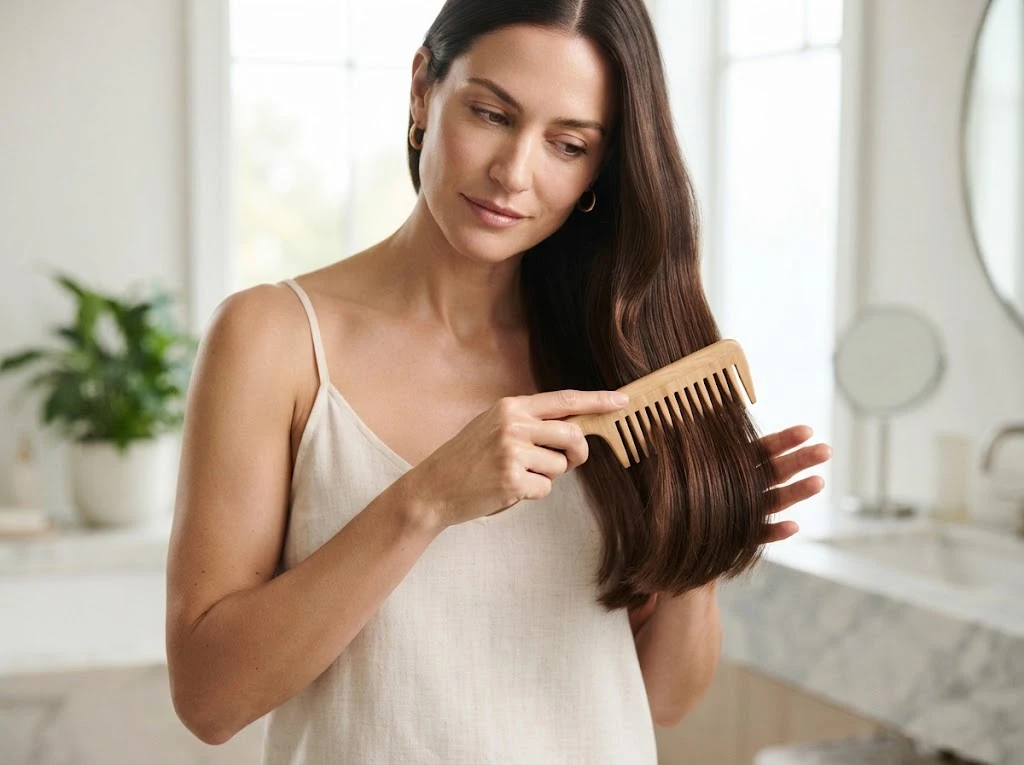
Over-brushing is a sneaky cause of frizz that many people overlook. Constantly running a brush through your hair, especially when it’s dry, roughs up the cuticle layer and can cause static, which makes flyaways worse.
A boar-bristle brush or a wide-tooth comb is gentler on the hair than a standard plastic brush. Try to limit brushing to once or twice a day, focusing on detangling rather than constant smoothing, and always start from the ends and work upward to avoid unnecessary breakage.
The Bottom Line: Smooth Hair Is a Routine, Not a One-Time Fix
Taming frizz isn’t about finding one miracle product — it’s about building a routine that protects your hair from every angle. Seal in moisture with a good serum, be gentle with heat and water temperature, dry your hair the right way, and give it a deep conditioning boost every week.
Stick with these habits consistently, and you’ll notice smoother, shinier, more manageable hair no matter what the weather has planned. Start with just one or two changes this week, and build from there — your hair will thank you.
For more beauty tips, lifestyle guides, and the latest celebrity trends, keep exploring faminaz.com