
Getting dressed can feel like a puzzle one day. Your favorite jeans feel tight. Your go-to blouse hangs oddly. A jacket you wore for years suddenly pulls across the chest.
If that sounds familiar, you are not alone. Bodies change with age, and clothes that once felt effortless can start to feel wrong. That can chip away at your style confidence over 50, even if you still love fashion and want to look put together.
Here is the good news. You do not need to hide your body, and you do not need a brand-new wardrobe. You just need to learn how to dress the body you have now. That means better fit, smarter proportions, comfortable fabrics, and a few outfit formulas you can count on.
Let’s walk through it step by step.
Stop Dressing for the Body You Had Ten Years Ago
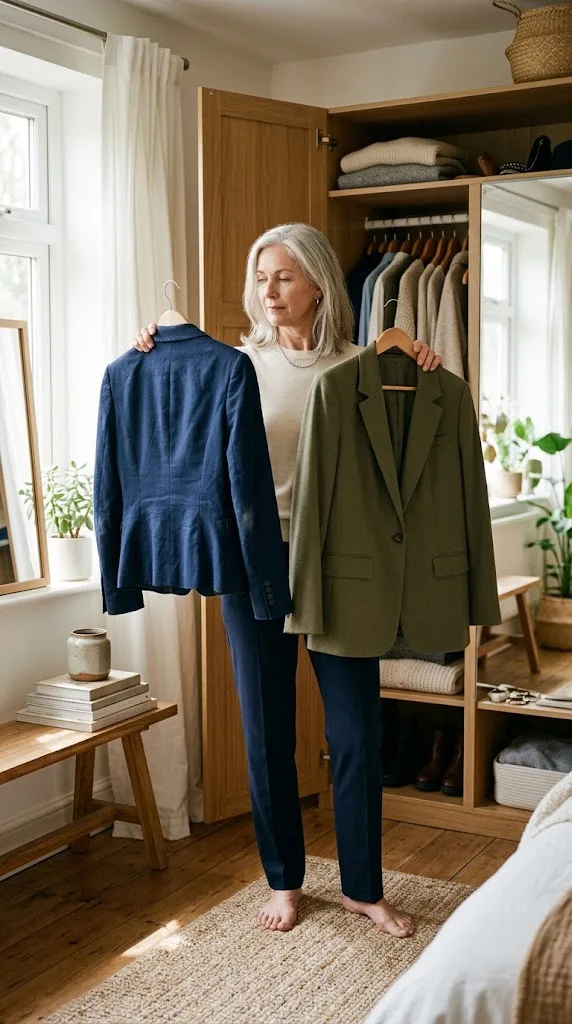
One of the biggest confidence drains is standing at your closet, trying to force old clothes onto a body that has changed. This is normal. It does not mean anything is wrong with you.
It only means the way clothes sit on your frame is different today.
Maybe a blazer that once closed easily now strains at the bust. Maybe your jeans press into your waist. Maybe a loose top that used to look relaxed now looks like a tent.
Many women assume their body needs to change before the clothes can look good again. In most cases, it is the other way around. The clothes need to change first.
So judge each piece by how it fits and feels today. Ignore the size on the tag and ignore how it looked years ago.
If a favorite item pinches, bunches, rides up, or slides down, it is working against you. Fixing that tug-of-war can lift your mood before you even walk out the door.
Old Wardrobe Rules vs. Smarter Ideas
| Old Rule | A Better Approach |
|---|---|
| Keep the smaller size as motivation | Wear the size that fits smoothly and lets you move |
| Baggy clothes hide changes | Use shape and structure so fabric doesn’t swallow you |
| Black hides everything | Pick colors that brighten your face |
| Trends are for the young | Borrow the details you like and make them yours |
| Comfort means giving up style | Choose soft fabrics, good cuts, and smart shoes |
Your closet should support the woman getting dressed today. It should never quietly judge her.
Fit Matters More Than the Size on the Label
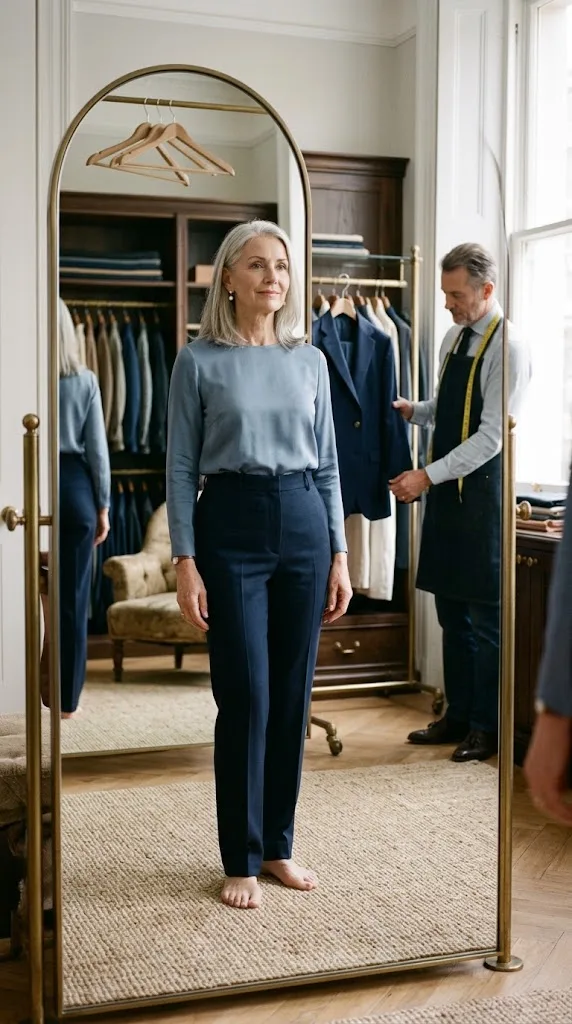
Clothes that fit well can boost your confidence almost instantly.
Sizing is wildly inconsistent. A medium from one brand can be a large from another. Even two items from the same store can fit differently. So the number on the label tells you very little.
Look at the garment itself instead. Use this quick checklist:
- Shoulders: The seam should sit near the edge of your natural shoulder.
- Tops: Fabric should skim your torso and not pull across the bust.
- Trousers: They should fall smoothly from the hip without deep horizontal creases.
- Dresses: You should be able to sit, walk, and breathe without fabric straining in one spot.
Tailoring tip: If something fits well everywhere except one area, a tailor can often fix it for far less than the cost of a new piece. Shortening sleeves, taking in a waist, hemming trousers, or moving a button can make even budget clothes look polished.
Also, do not size up by default when something feels off. Sometimes the cut is the real problem.
For example, a very straight shirt may feel tight at the bust but boxy at the waist. A shirt with a more shaped cut or a little give in the fabric will solve this better than simply adding extra material.
Choose Fabrics That Shape You Without Squeezing You
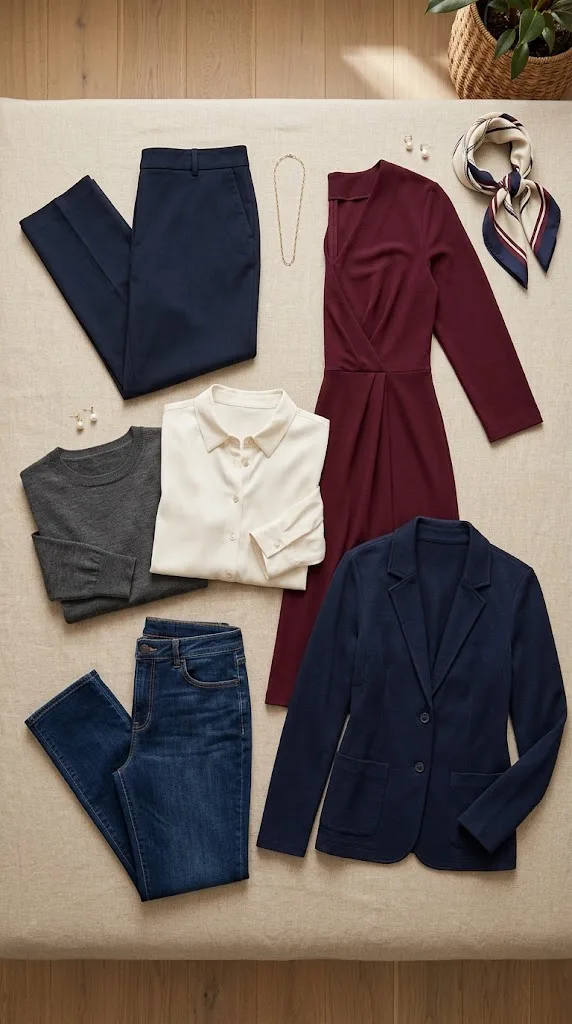
Fabric matters more as your body changes, because it controls how every piece hangs.
Very thin, clingy jersey can settle into spots you would rather it skim over. On the other hand, heavy, stiff fabric can feel bulky and hot.
The sweet spot is a fabric with enough weight to hold its shape that still moves with you.
Best Fabrics by Garment
| Garment | Look For | Why It Works |
|---|---|---|
| Trousers | Ponte, stretch twill, soft wool blends | Keeps its shape without feeling stiff |
| Tops | Cotton blends, viscose, lightweight knits | Skims instead of clings |
| Dresses | Crepe, weighty jersey, soft woven blends | Moves nicely without looking flimsy |
| Jackets | Soft tailoring, knit blazers, flexible twill | Adds structure without stiffness |
| Jeans | Denim with a touch of stretch | Offers support and easy movement |
Not every piece has to stretch. But if you want to sit, bend, and reach without thinking about it, a little flexibility goes a long way.
Create Shape Instead of Hiding Everything
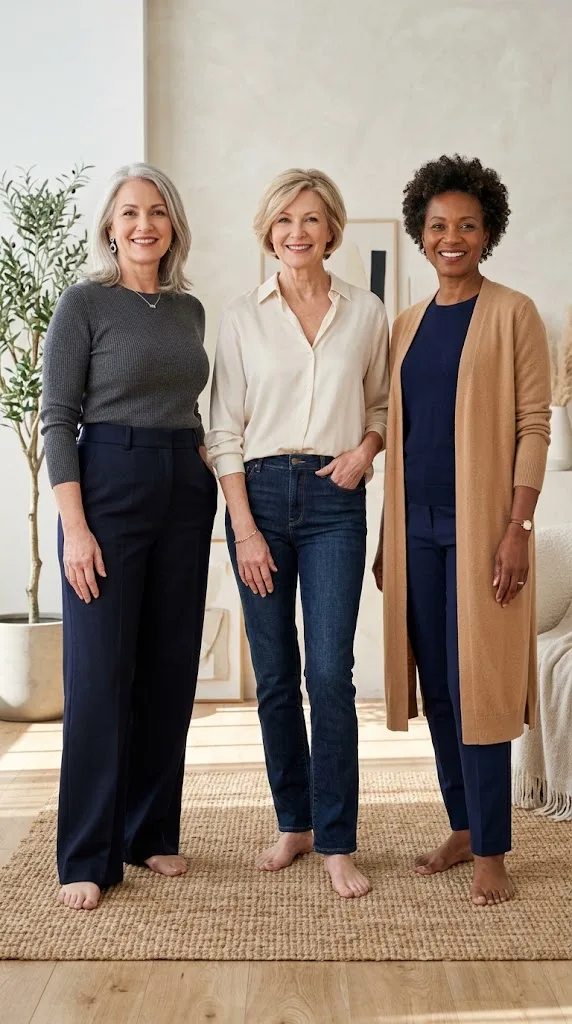
When body changes make us nervous, it is tempting to buy bigger, longer, looser clothes. It feels safe at first.
The problem is that too much fabric blurs your outline. Instead of feeling comfortable, you may end up feeling invisible.
You do not need tight clothes. You just need one clear point of shape in each outfit.
Here are easy ways to do it:
- Wide trousers? Add a neat knit or a partly tucked shirt on top.
- Roomy top? Pair it with straighter trousers or jeans.
- Want an easy win? Wear similar shades together, such as navy trousers and a navy knit, then add a camel cardigan or textured jacket.
- Layering heavily? Show a little skin at the wrist, ankle, or neckline to break up the bulk.
The goal is not to look smaller. The goal is to make your outfit look intentional.
Build One Outfit Formula You Can Trust
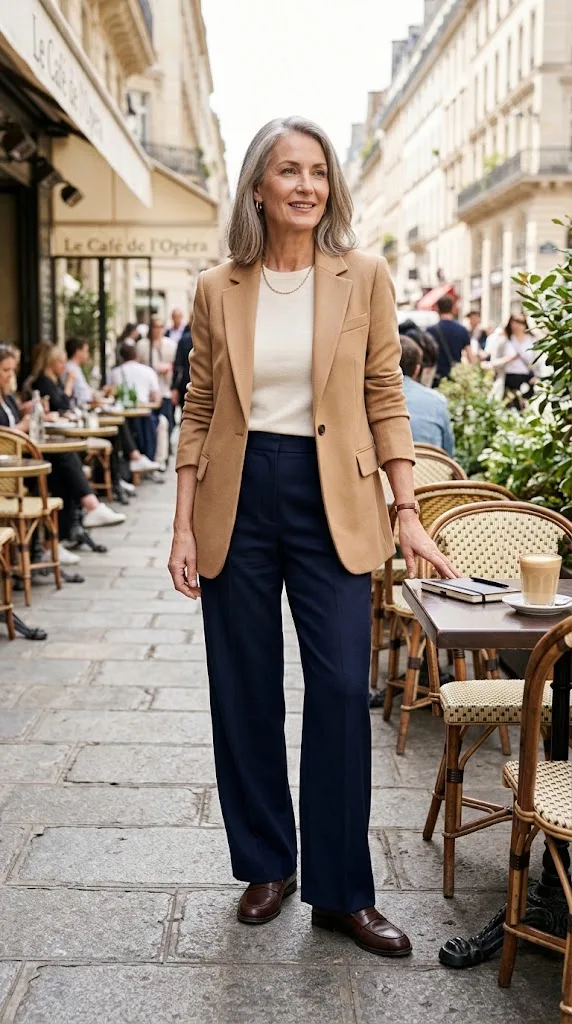
Confidence grows when getting dressed stops feeling like a daily experiment.
An outfit formula gives you a reliable starting point. You can swap colors, fabrics, shoes, and accessories, but the basic proportions stay the same.
A great formula for many women over 50 looks like this:
Straight or gently wide trousers + a simple, fitted or semi-fitted top + a structured open layer + comfortable, polished shoes
The trousers give you a clean base. The top adds a bit of shape. The open jacket or cardigan brings structure without pressing on your middle.
The Formula in Real Life
| Occasion | Outfit Idea | Why It Works |
|---|---|---|
| Errands | Straight jeans, striped knit, relaxed blazer, loafers | Easy, comfortable, and put together |
| Lunch with friends | Soft trousers, V-neck knit, cropped jacket, flats | Shapely without feeling dressy |
| Casual workday | Dark trousers, blouse, cardigan jacket, low heels | Polished but not stiff |
| Weekend | Wide-leg trousers, fitted tee, denim jacket, sneakers | Balances relaxed and structured |
Once you find two or three combinations that make you feel great, take a photo of each one. On rushed mornings when nothing seems to work, those pictures become your personal style cheat sheet.
Make Room at the Waist Without Losing Your Shape
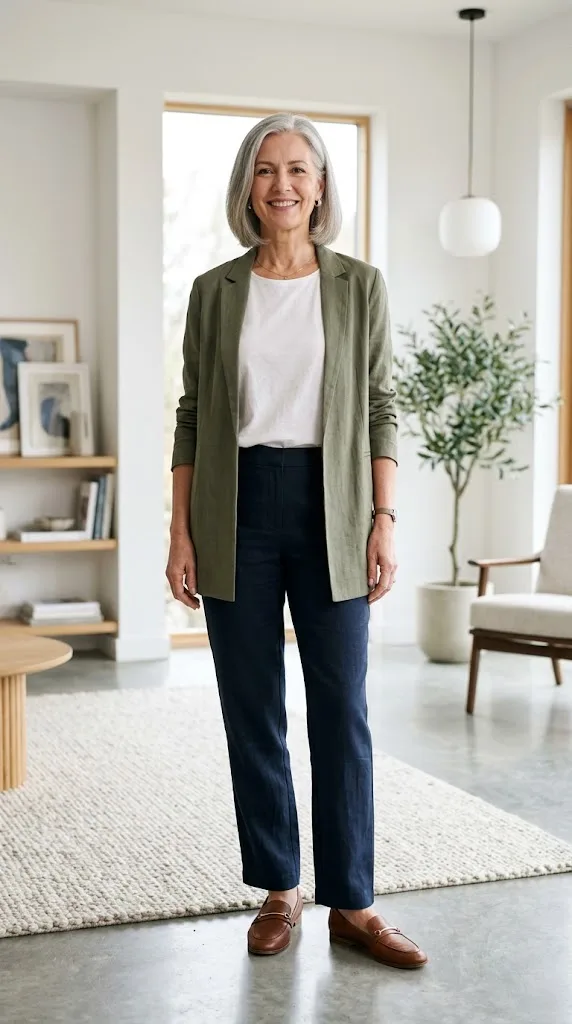
Changes around the midsection are one of the top reasons an old wardrobe suddenly feels strange.
Stiff waistbands may annoy you more. Tucked-in shirts may feel uncomfortable. High-rise pants may sit differently than they used to.
You have more choices than hiding behind long, shapeless tops. Try these:
- Choose trousers with a smooth front and hidden elastic at the back.
- Look for mid-rise or gently high-rise styles that sit comfortably instead of digging in.
- Wear a shorter top that ends near the upper hip.
- Try a loose “French tuck,” where you tuck in only the front corner of a shirt.
- Leave a blouse untucked and add an open jacket. The two vertical lines down the front create a long, lean effect.
Comfort test: Before you decide on a pair of trousers, sit down, walk around, and bend over. Standing still in front of a mirror only tells you half the story.
Balance Your Upper Body With Necklines and Layers
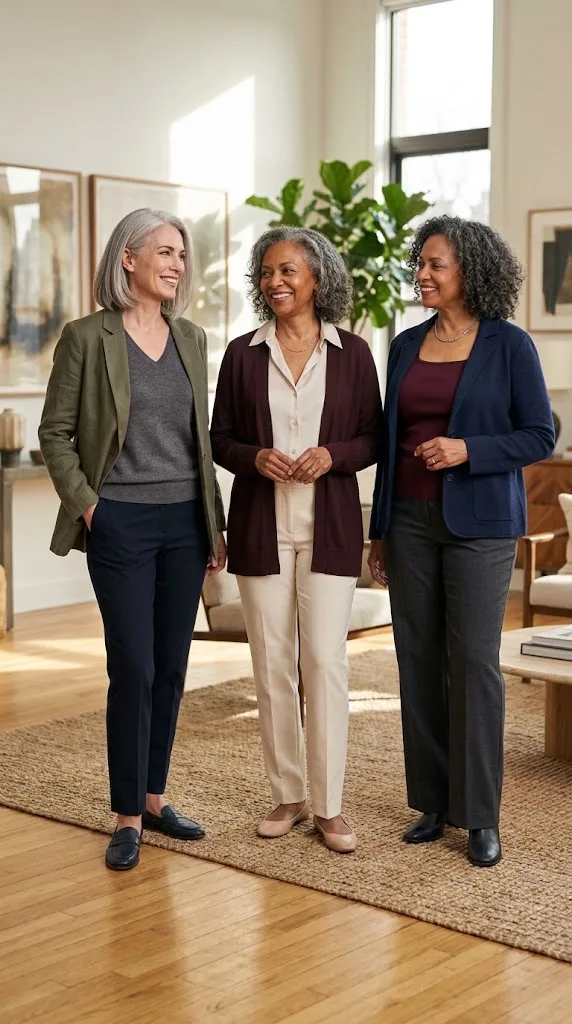
If your bust, shoulders, upper arms, or back have changed, your tops deserve extra attention.
The neckline makes a bigger difference than most people expect. A soft V-neck, open collar, scoop neck, or gentle square neck opens space around your face and neck. That makes the top half of an outfit feel lighter.
If you prefer more coverage, layering is your friend. It adds polish without adding bulk. Here are a few combos to try:
- An open button-front shirt over a simple tank
- A lightweight cardigan over a sleeveless shell
- A softly tailored blazer over a fine-knit top
Pay attention to where your layers end. A cardigan that stops at the widest part of your hips draws a strong horizontal line right there. Going a little shorter or a little longer can completely change the balance.
That is why testing different lengths usually works better than following strict rules about what women over 50 “should” wear.
Keep the Clothes That Make You Feel Good
Some clothes technically fit, but they still make you feel off.
You might keep tugging the hem down. You might avoid raising your arms. You might check your stomach in every shop window.
Pay attention to those habits. They are useful clues.
Confidence is partly about how you look, but it is also about how you move. When you can forget about your clothes, you stand taller and move more naturally. That is what looks good.
When you review your closet, ask yourself:
- Can I sit comfortably in this?
- Do I keep adjusting it?
- Does the fabric still feel good after several hours?
- Would I wear it on a day I want to feel capable and polished?
- Can I style it with at least two other things I own?
If the answer is no again and again, that piece no longer deserves prime closet space.
You do not have to throw it out right away. Put uncertain items in a separate spot for a month. You may be surprised how little you miss them.
Add One Modern Detail Instead of Chasing Every Trend
Feeling current does not mean rebuilding your wardrobe around every new trend.
One fresh detail is often enough. It could be:
- A slightly wider trouser leg
- A cleaner, more modern sneaker
- A shorter cardigan
- A relaxed blazer
- A new bag shape
- A richer color
Start with pieces that already feel like you.
If you love classic style, keep the classic base and update the silhouette. Straight jeans, a white shirt, and loafers can look totally current when the jeans fit well and the shirt has an easy, modern cut.
If you love feminine looks, keep your midi dress. Just swap an older fitted cardigan for a shorter jacket or a looser knit.
Color tip: You do not have to give up neutrals. Adding burgundy, forest green, cobalt, plum, teal, or soft red near your face can make a familiar outfit feel brand new.
The point is not to prove you follow trends. It is to avoid feeling stuck in a version of your wardrobe that no longer feels like you.
Stop Waiting for a Different Body to Dress Well
This is where many women get stuck.
You tell yourself you will buy nicer jeans after you lose weight. You will wear brighter colors once your arms look different. You will book the dinner, take the photo, or wear the dress later.
But the body you have today deserves clothes that fit right now.
You do not need a huge shopping trip. Start small and fix one problem area.
- Trousers a struggle? Find one pair that feels comfortable at the waist and hips.
- Tops frustrating? Find one neckline and sleeve shape you enjoy wearing.
Then build from there.
A small wardrobe of reliable pieces gives you more confidence than a packed closet full of clothes that almost work.
Try the Three-Outfit Test Today
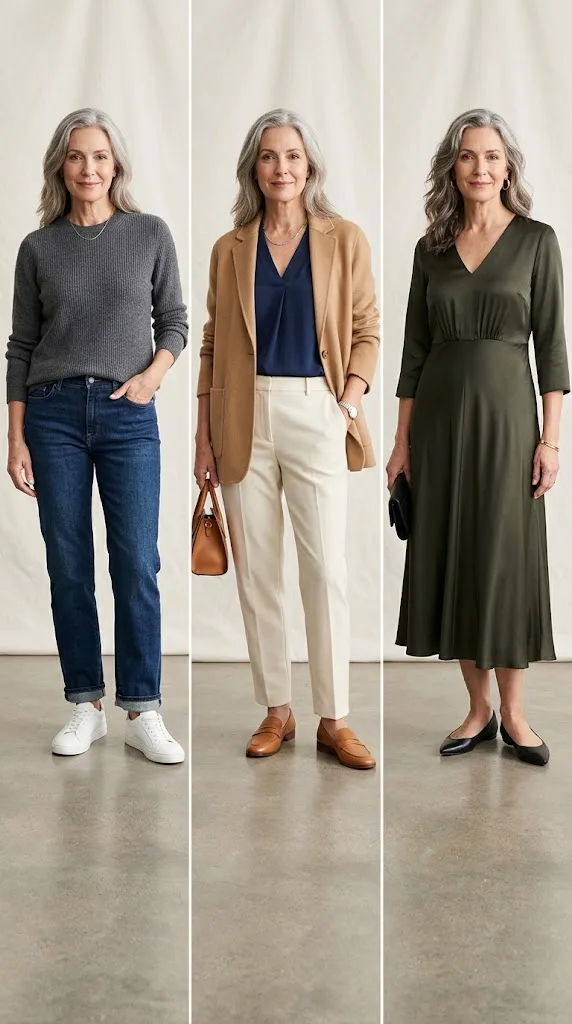
You can start rebuilding confidence without spending a penny.
- Pick three outfits from clothes you already own: one for an everyday day, one for a casual outing, and one for a slightly dressier occasion.
- Put each one on fully, including shoes.
- Take a quick photo from the front and from the side.
Now here is the key: study the clothes, not your body.
Notice where hems land, how the fabric falls, and whether the proportions feel balanced. Which outfit makes you want to adjust things the least?
That outfit holds clues about your best shapes right now. Maybe you love an open neckline. Maybe your jacket looks better a little shorter. Maybe straight jeans feel more balanced than skinny ones.
These small discoveries can grow into your own personal style formula.
Frequently Asked Questions
How can I feel stylish again after 50?
Start with fit, not trends. Find two or three outfits that feel comfortable and balanced, and repeat them often. Then refresh them slowly with new colors, shoes, accessories, or a modern cut.
Style confidence usually builds through repetition, not a dramatic makeover.
What clothes are most flattering for women over 50?
No single item flatters everyone. Clothes look best when they fit smoothly, create balanced proportions, and let you move freely.
Soft tailoring, clean trousers, well-fitting denim, simple knits, and easy layers are great places to start.
Should women over 50 wear loose clothes?
Loose clothes can look very chic. But head-to-toe volume can feel overwhelming when nothing gives the outfit structure.
Pair one relaxed piece with one cleaner or more fitted piece so your outfit keeps its shape.
How do I dress when my stomach has changed?
Choose smooth, comfortable waistbands and trousers that sit without digging in. Pick tops that skim rather than cling.
Open layers, shorter tops, gentle front tucks, and vertical lines can add balance without hiding you.
How can I update my wardrobe without buying everything new?
Change your combinations first. Try new tucks, roll your sleeves, swap shoes, or switch jacket lengths. Pair familiar pieces in fresh ways.
Then shop only for real gaps, such as better-fitting jeans or a jacket that works with many outfits.
Final Thoughts: Dress the Body You Have Today
A changing body does not mean your sense of style is gone.
Often your old clothes just stop saying what you want them to say. Better fit, softer fabrics, balanced proportions, and a few trusted outfit formulas can help you feel like yourself again.
When comfort and confidence work together, getting dressed becomes enjoyable again.
So this week, put together one outfit that fits your body exactly as it is today. Notice what makes it feel good, then build on that.
For more practical style guides, fashion tips, and lifestyle inspiration, keep reading faminaz.com.