
If you’ve ever envied someone else’s perfect ringlets while fighting your own frizz, here’s the truth: most hair advice is written for straight hair. The classic lather-rinse-brush-blow-dry routine is practically a recipe for frizz when your hair grows in spirals. Curly hair isn’t difficult — it’s just different. It craves moisture, hates rough handling, and rewards gentle care with definition and shine you can’t get any other way.
This guide covers it all: identifying your curl type, the Curly Girl Method in plain steps, a full wash-day routine, styling techniques that work, drying, multi-day refreshing, frizz fixes, and nighttime protection.
Know Your Curl Type: From 2A to 4C
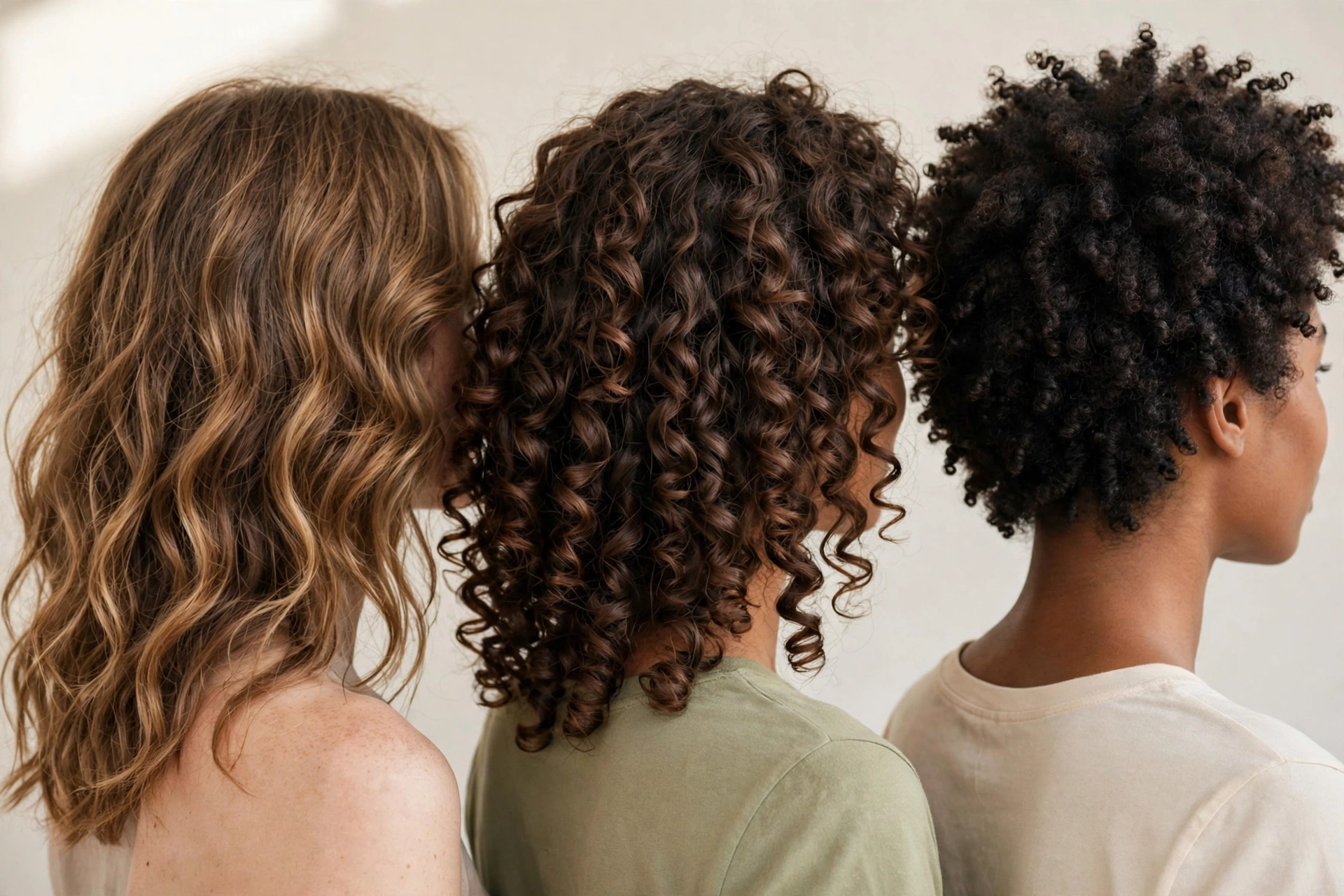
Not all curls are equal, and products that work on loose waves can leave tight coils dry. Knowing your type helps you choose products instead of guessing.
- Type 2 — Wavy (2A–2C): Loose S-waves. Fine 2A hair is easily weighed down; thicker 2C frizzes readily. Stick to lightweight products.
- Type 3 — Curly (3A–3C): Springy ringlets and corkscrews, from large shiny 3A curls to dense 3C coils. Needs real moisture plus gels and curl creams.
- Type 4 — Coily (4A–4C): Tight coils and zigzag patterns with the most shrinkage. Rich butters, the LOC method (leave-in, oil, cream), and protective styling work best.
Your type can vary across your own head — 3A at the crown and 3B underneath is completely normal. Work with the majority pattern.
Equally important is porosity — how easily your hair absorbs moisture. Drop a clean shed hair in water: floating means low porosity (use lighter products), sinking fast means high porosity (layer richer products and seal with oil), slow sinking means medium.
The Curly Girl Method, Explained Simply
The Curly Girl Method (CGM), created by hairstylist Lorraine Massey, boils down to this: stop doing what damages curls, start doing what nourishes them.
- No sulfates. Harsh shampoos strip the oils curly hair needs. Switch to sulfate-free shampoo or co-wash.
- No silicones. They coat hair for fake shine but build up and block moisture — and need sulfates to wash out. Avoid ingredients ending in -cone, -conol, or -xane.
- No dry brushing. It shatters curl clumps into frizz. Detangle only when wet and full of conditioner.
- Condition generously. Scalp oils can’t travel down spirals, so conditioner is the main event, not an afterthought.
- Minimize heat. High heat damages the curl pattern over time. When you use it, keep temperatures low and always use protectant.
Treat CGM as a framework, not religion — many wavies do fine with an occasional gentle sulfate wash, and some curlies need periodic clarifying. Adapt it to what your hair tells you.
Your Wash-Day Routine, Step by Step
- Pre-poo (optional). Work a light oil — jojoba or sweet almond — through dry mid-lengths and ends for 15 to 30 minutes before showering, so shampoo cleanses without stripping.
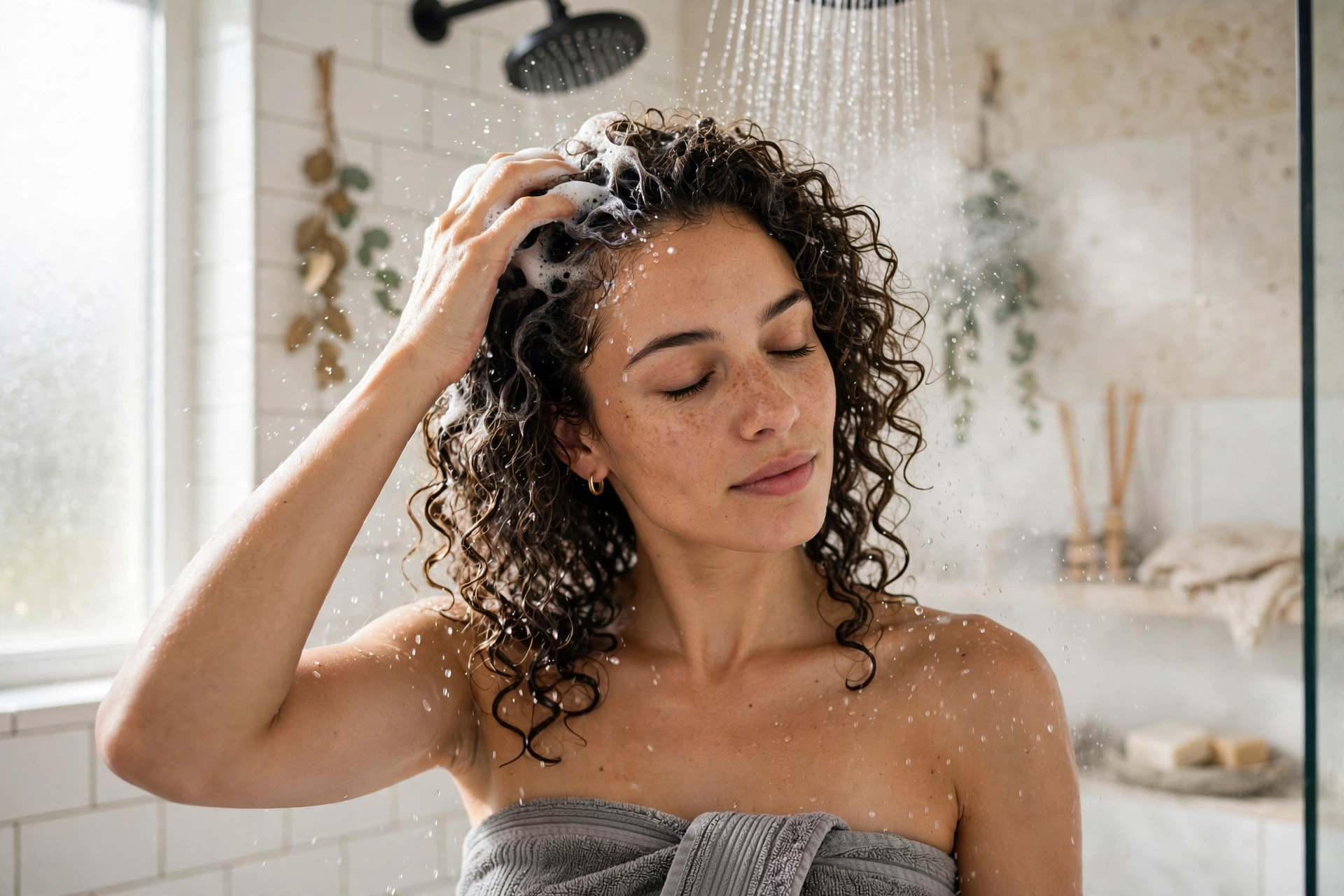
- Cleanse the scalp. Use sulfate-free shampoo or co-wash, massaging with fingertips (not nails) for 60 seconds. Let suds run down the lengths as you rinse — that’s enough for your ends.
- Clarify monthly. Even gentle products build up. A clarifying shampoo every 3 to 4 weeks resets everything; curls visibly spring back afterward.
- Condition and detangle. Apply conditioner generously from mid-lengths down, then detangle with fingers first, then a wide-tooth comb — ends first, working upward. Add more conditioner rather than forcing knots.
- Rinse strategically. Fine wavies usually rinse fully; thicker curls can leave a little conditioner in as a moisture base.
Wash 1 to 3 times a week depending on your type — wavy hair every 2 to 3 days, coily hair often just once a week. Itchy scalp or flat roots mean you’re waiting too long.
Conditioning and Deep Conditioning
Deep condition weekly (every other week for fine hair): apply a treatment to damp hair, clip it up, and leave 15 to 20 minutes under a shower cap — body heat helps it penetrate.
This is where the protein-moisture balance matters. Hair is keratin protein; damage depletes protein and moisture unevenly. Curls that stretch like gum and feel mushy need protein; curls that snap instantly and feel rough need moisture. Alternate treatments based on that strand test. If your curls are also recovering from heat or bleach damage, our damaged hair care guide covers the full repair routine.
Styling Products and Techniques That Work
Style on soaking wet hair, layering lightest to heaviest:
- Leave-in conditioner — your moisture base. Don’t skimp.
- Curl cream — defines and softens, especially for type 3–4. Wavies can use a tiny amount or skip it.
- Gel or mousse — gives hold that lasts for days. The stiff “cast” is normal; you scrunch it out once dry for soft, defined curls.
- Oil (optional) — a drop on the ends seals everything in.
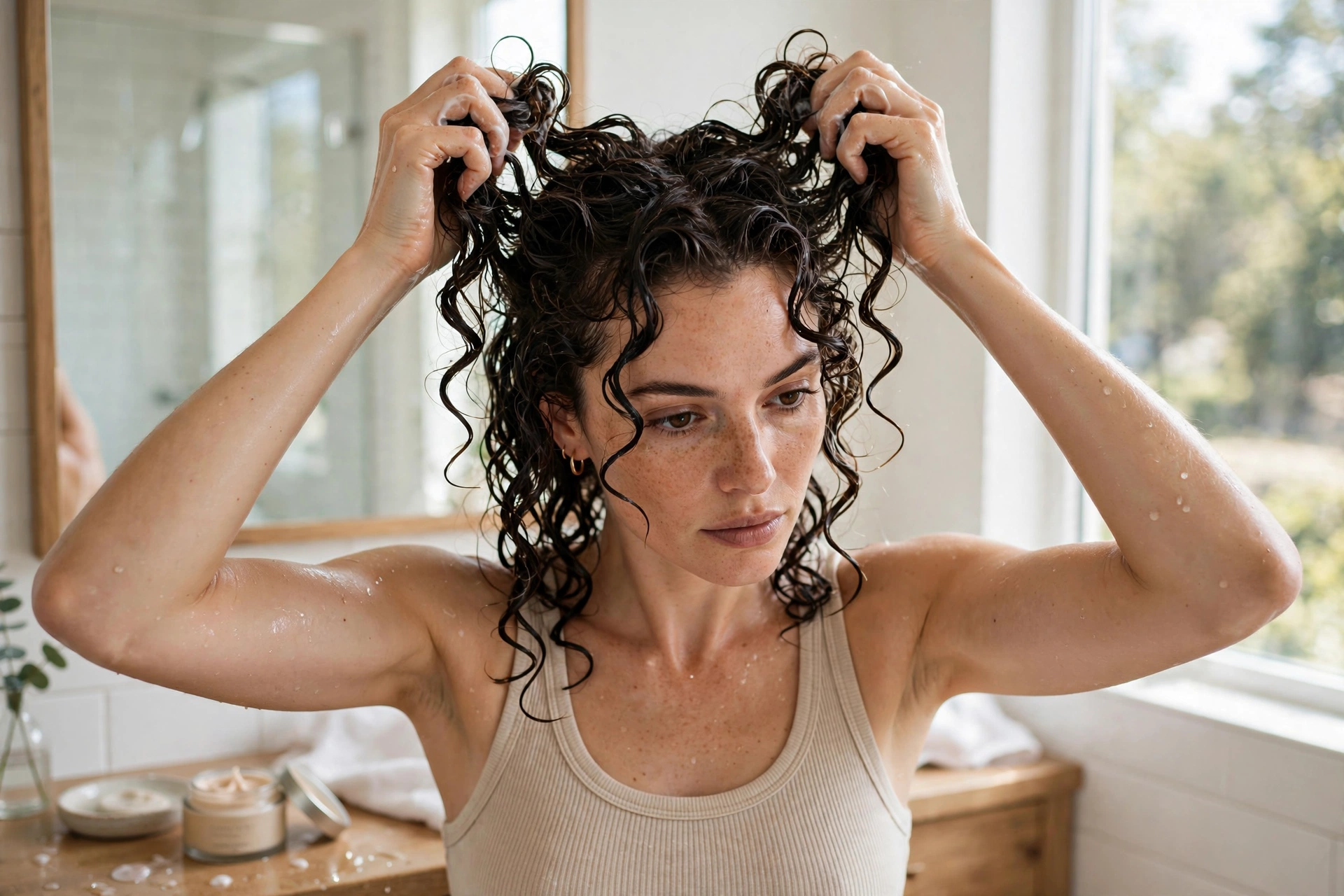
Technique matters as much as product. Squish to condish: cup sections upward and squish — that squelching sound means water and conditioner are entering the shaft. Praying hands smooths product evenly down sections. Finger coiling — twirling stubborn pieces around your finger — fixes frizzy spots nothing else will.
Plopping: The Game-Changer
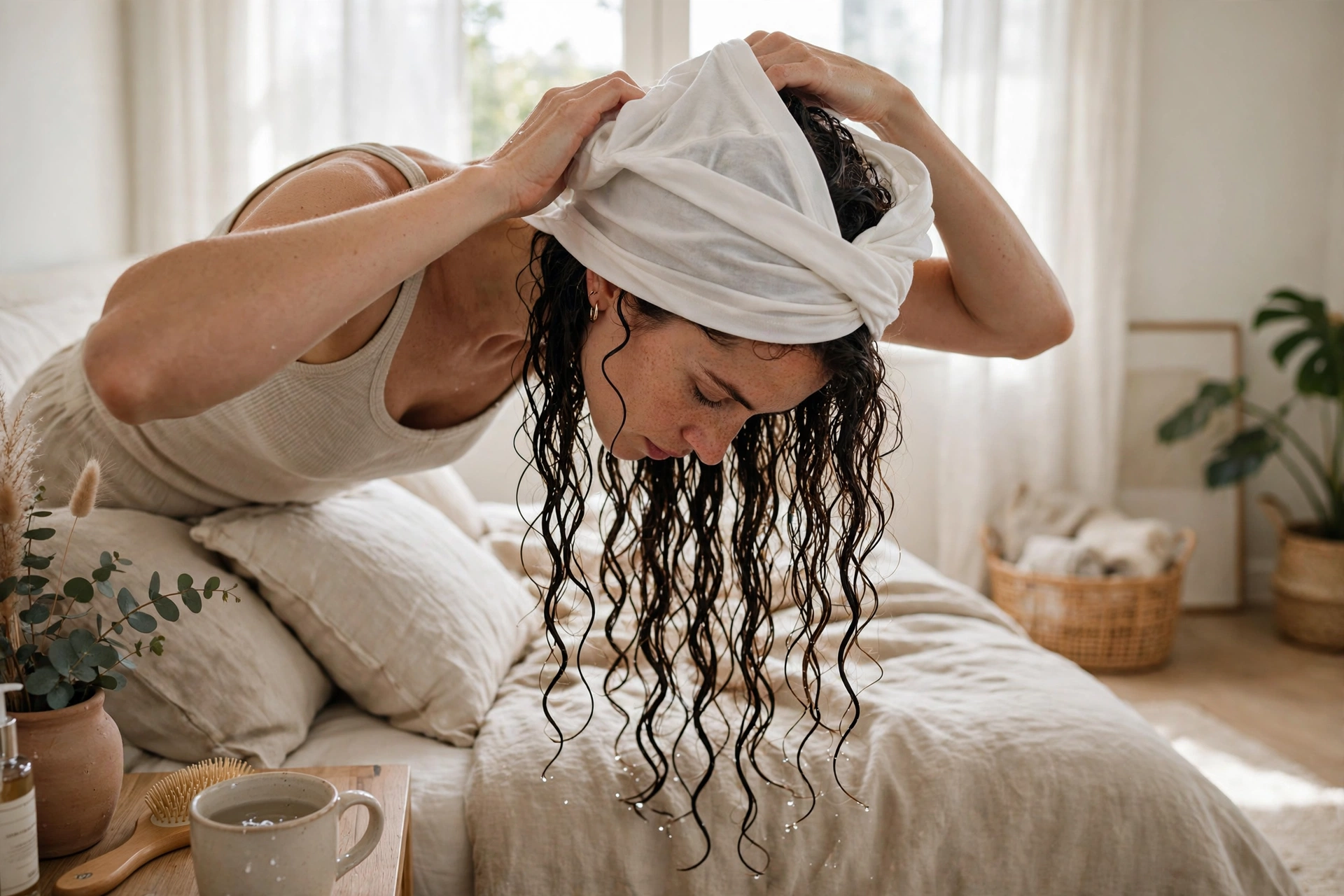
Forget terry towels — they rough up the cuticle and create frizz. Instead, lay a cotton T-shirt flat, flip your head forward so curls pile onto the center, and wrap it into a turban. Leave 15 to 30 minutes. When you unwrap, curls are scrunched into defined clumps, excess water is absorbed, and drying time is cut. Once you plop, you’ll never go back.
Drying: Diffusing vs. Air-Drying
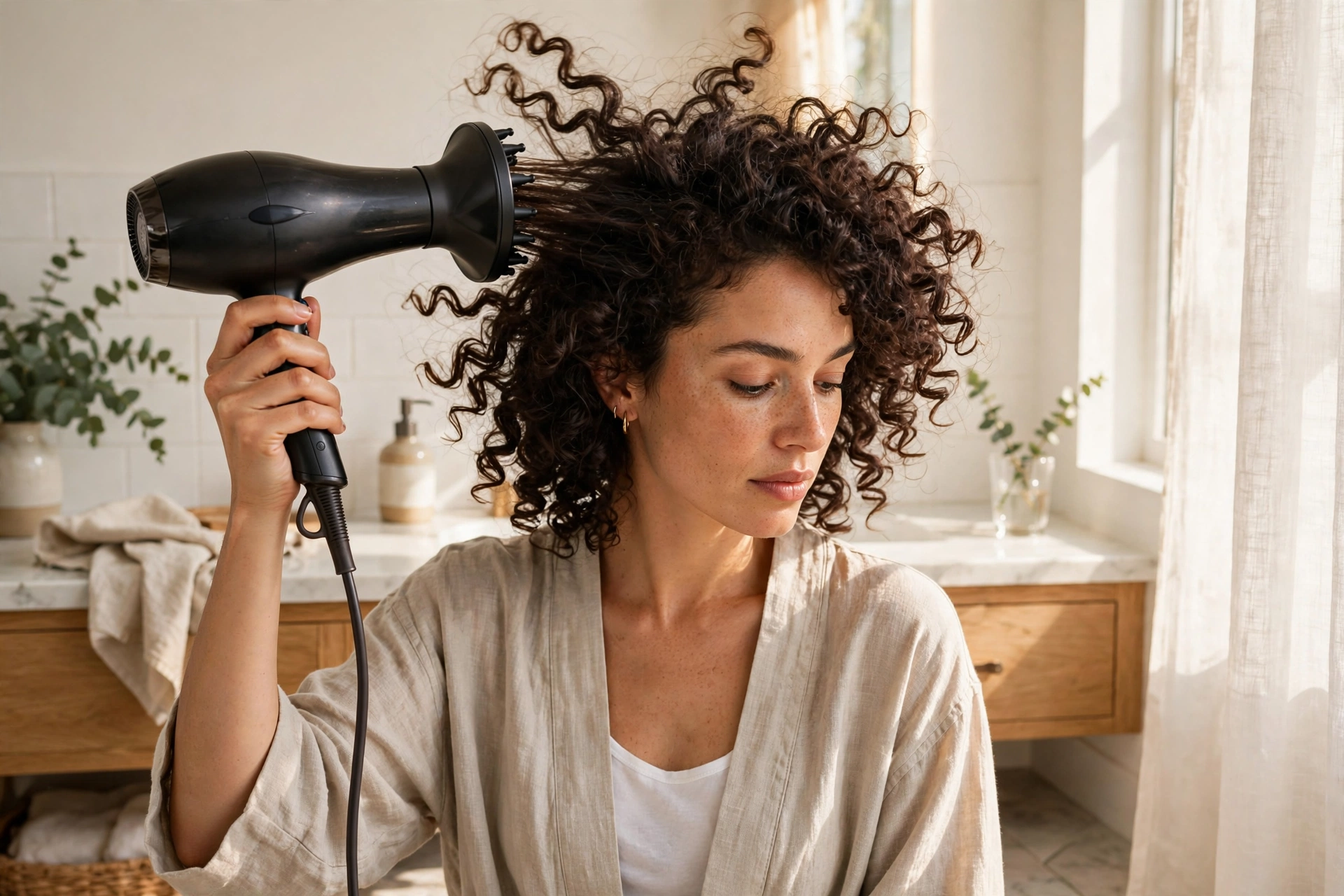
Diffusing gives volume and speed: low heat, low-to-medium speed, hover around roots first, then scoop sections into the diffuser bowl and press toward the scalp. Flip upside down for root volume. Once you start, stop touching your hair — every touch before it’s dry creates frizz.
Air-drying is gentlest and gives elongated, defined curls, but takes hours. A good compromise: hover-diffuse 5 to 10 minutes to set the cast, then air-dry the rest.
Whichever you choose, scrunch out the crunch only when hair is 100% dry. Scrunching damp hair is one of the sneakiest frizz causes.
Refreshing Curls on Day 2 and 3
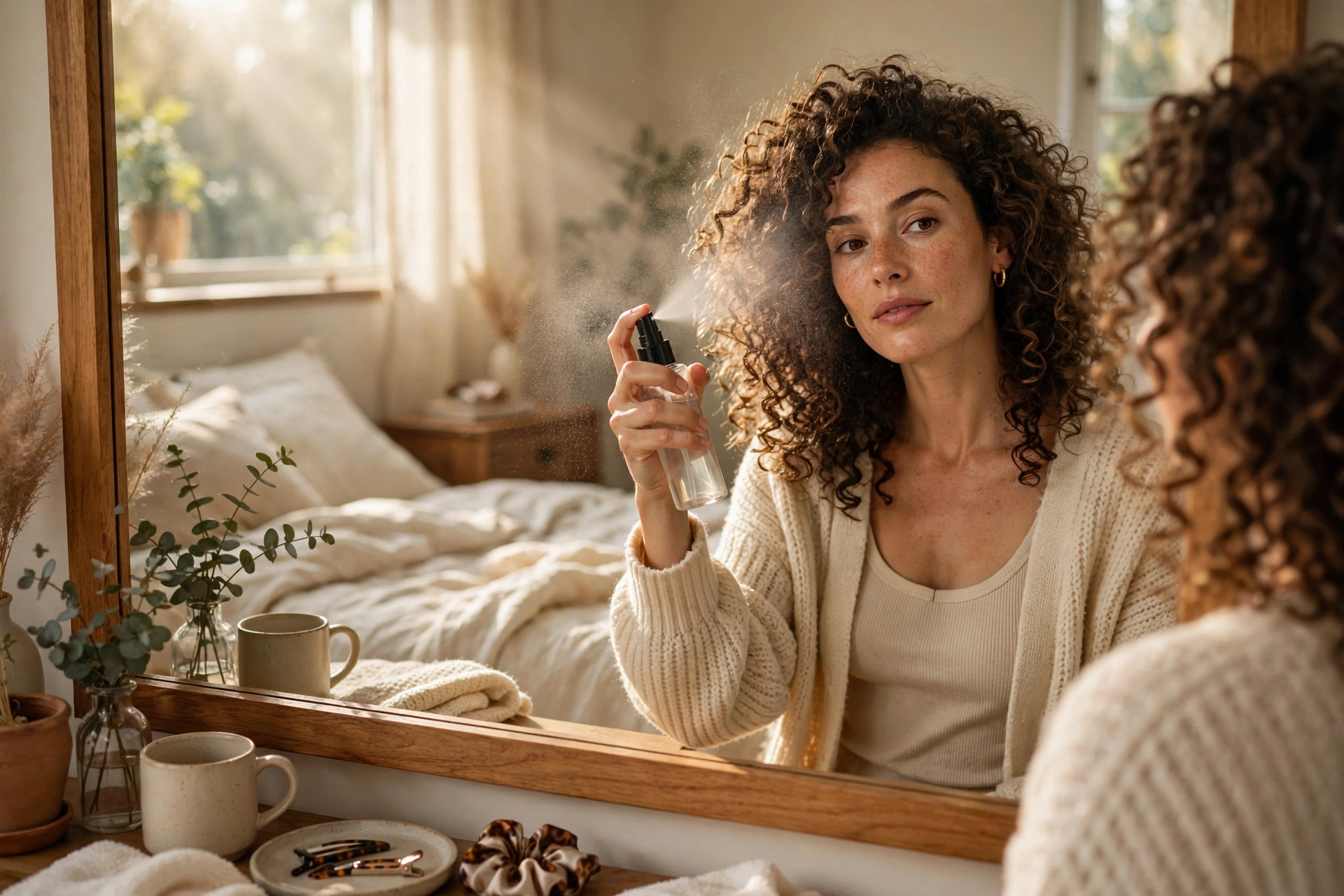
- Mist lightly with water — damp, not soaked.
- Smooth a pea-sized amount of leave-in or refresh spray over frizzy sections with praying hands.
- Scrunch upward to reactivate the pattern; leftover gel cast re-forms.
- Spot-fix stubborn pieces by finger coiling with a dab of water and cream.
If curls fall flat by day three regardless, you need stronger-hold gel on wash day — refreshing can only revive what’s there.
Frizz: Causes and Fixes
Frizz is a symptom, not a curl type. The usual causes:
- Dryness — the top culprit. Under-moisturized cuticles lift to grab moisture from the air. Fix with more conditioning, not more styling product.
- Rough handling — terry towels, dry brushing, tossing hair while damp. Switch to microfiber and keep hands off while drying.
- Humidity — high-porosity hair swells in damp air. Use stronger-hold gel and consider an anti-humectant sealant.
- Buildup — silicones and heavy butters block moisture over time. Monthly clarifying resets it.
Fast fixes: style on soaking wet hair, use enough gel for a real cast, scrunch out crunch only when fully dry (with oiled hands), and sleep on silk or satin.
Common Curly Hair Mistakes
- Brushing dry curls — the single most damaging habit. Wet, conditioned hair only.
- Skipping gel. Cream moisturizes; gel holds. Without gel, definition vanishes by noon.
- Protein/moisture imbalance. Too much protein turns hair stiff; too much moisture turns it limp. Alternate based on the strand test.
- Chasing someone else’s curls. Your 3B will never look like her 2C — learn your own pattern instead.
- Skipping trims. Split ends travel upward and frizz every curl from mid-shaft down. A dusting every 3 to 4 months keeps ends healthy.
Protecting Curls While You Sleep
Cotton pillowcases create friction and absorb moisture all night. Instead: pineapple your hair — a loose high ponytail with a silk scrunchie keeps curls from crushing. Or wear a silk or satin bonnet, the gold standard for type 3C–4 hair. A silk pillowcase is the next best thing if bonnets aren’t for you. In the morning, take it down, shake at the roots, and do your two-minute refresh.

Curly Hair Care FAQs
How often should I wash curly hair?
One to three times a week. Fine wavy hair may need every 2 to 3 days; thick coily hair often thrives on a single weekly wash. An itchy scalp or flat roots means you’re stretching it too long.
Can I brush my curly hair?
Only when wet and full of conditioner, with a wide-tooth comb or detangling brush, working ends-up. Brushing dry curls shatters the pattern into frizz.
Why is my hair frizzy even with curly products?
Usually: not enough water (style soaking wet), too little gel for a real cast, touching hair while it dries, or product buildup. Clarify once, then restyle on wetter hair with stronger gel — that fixes most stubborn frizz.
How do I know my hair’s porosity?
Drop a clean shed hair in water: floating is low porosity (lightweight products), sinking fast is high porosity (rich products sealed with oil), slow sinking is medium. Your hair’s behavior — products sitting on top versus vanishing instantly — confirms it.
Does the Curly Girl Method work for wavy hair?
Yes, modified: lighter products, minimal heavy cream, and usually a gentle sulfate-free shampoo instead of full co-washing, which can leave fine waves limp. The core principles — no dry brushing, plenty of moisture, gentle handling — suit every curl type.
How long until I see results?
Better definition within two to three wash days. Full recovery from years of heat or chemical damage takes two to three months of consistent care. Take progress photos — the change is gradual enough to miss day to day.
The bottom line: great curls come from understanding your pattern, locking in moisture, handling hair gently, and keeping a routine you can stick to. Nail your wash day, protect your hair at night, and your curls will do the rest.