
The 1920s changed the way men dressed forever.
After the chaos of World War I, men wanted freedom. They wanted comfort. They also wanted to look sharp doing it.
Jazz clubs filled up. Movie theaters boomed. Cities buzzed with energy. Suits got sleeker. Fabrics got lighter. Accessories got bolder.
This guide breaks down everything that made 1920s men’s fashion so iconic. You’ll see how working men dressed, how movie stars dressed, and how you can bring that same style into your closet today.
Why 1920s Men’s Style Still Matters
The 1920s weren’t just about clothes. They were about a whole new attitude.
The war had ended. The economy was growing. Nightlife was thriving. Men wanted to show off their success without looking stiff or old-fashioned.
Jazz musicians, athletes, and Hollywood stars became the trendsetters of the decade. Men copied what they saw on screen and on stage. Heavy Victorian fabrics gave way to soft wool and light cotton. Rigid silhouettes relaxed into something more natural.
One more thing changed everything: ready-to-wear clothing. For the first time, a man didn’t need a personal tailor to dress well. Off-the-rack suits made sharp style available to nearly everyone, from bankers to factory workers.
That mix of comfort and confidence is exactly why 1920s fashion still inspires designers today.
Formal Fashion in the 1920s: Suits Built for Confidence
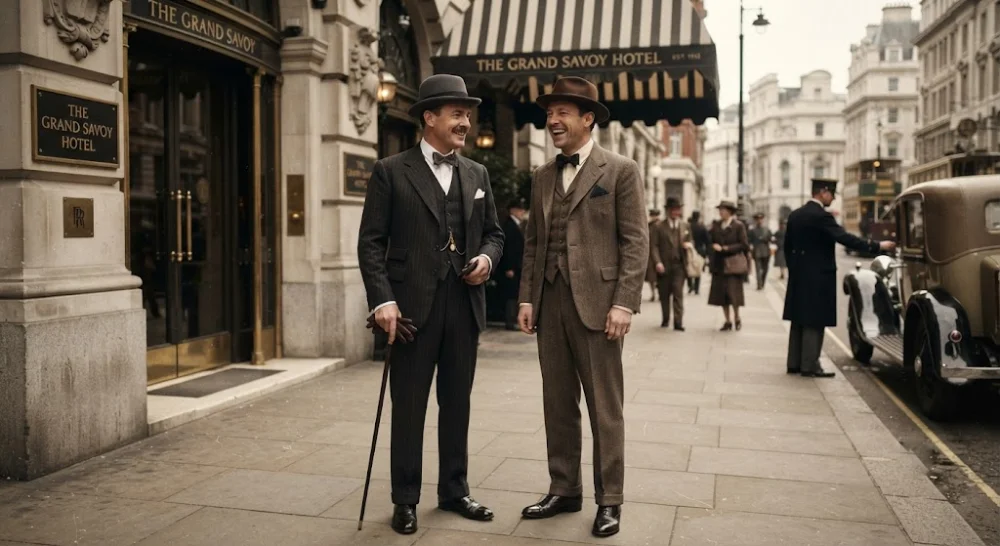
For a closer look at suit styles, fabrics, and construction, see our guide to 1920s men’s suits.
Formal wear in the 1920s was all about structure.
Men favored three-piece suits with:
- High-waisted trousers
- Fitted waistcoats
- Tailored jackets in wool, tweed, or flannel
For evening events, a tuxedo with a bow tie was the gold standard. It signaled class without saying a word. For more on tuxedos, evening suits, and formal accessories, read our guide to 1920s men’s formal wear.
Pinstripes and double-breasted jackets became popular with professionals who wanted to stand out in the office and at dinner parties. Color palettes shifted too. Instead of plain black, men reached for navy, brown, and grey, giving the whole decade a fresher, more modern feel.
Casual Style: How Men Relaxed in the 1920s
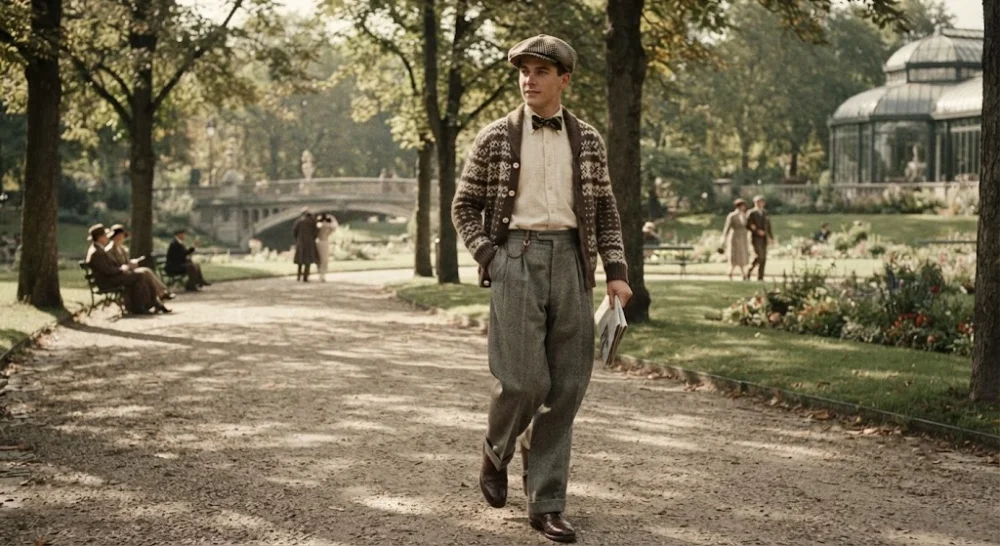
Not every day called for a full suit. As the decade went on, casual dressing became its own art form.
Men started wearing:
- Sweaters and cardigans
- Pleated trousers
- Knickers and plus-fours for sport
- Lightweight cotton shirts
- Flat caps and casual jackets
This laid-back look proved something important: a man could dress down without looking sloppy. Weekend style became just as thoughtful as office style, just softer around the edges. For more examples of everyday clothing, see our guide to 1920s men’s casual fashion.
Working-Class Fashion: Function First
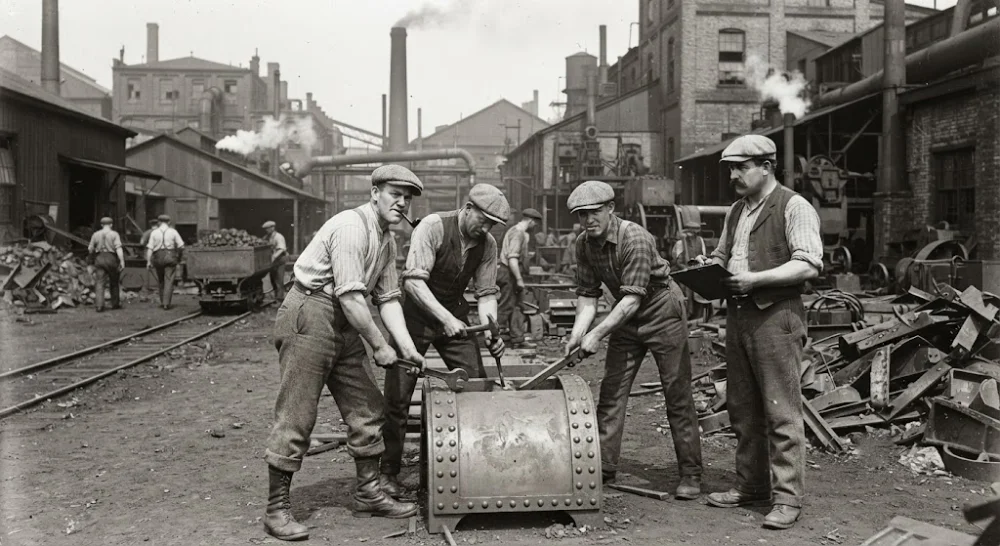
Not everyone was heading to the jazz club or the office. Working-class men needed clothes built to last through hard, physical days.
Their wardrobe was simple and tough:
- Wool or denim trousers
- Button-up shirts
- Suspenders instead of belts
- Overalls for factory or outdoor labor
- Vests or wool jackets for warmth
- Flat caps or newsboy caps worn almost daily
This style prioritized comfort and durability over fashion statements. Shows like Peaky Blinders capture this look well, showing how working men managed to look sharp and put-together even in tough, practical clothing.
The Essential Pieces of a 1920s Man’s Wardrobe
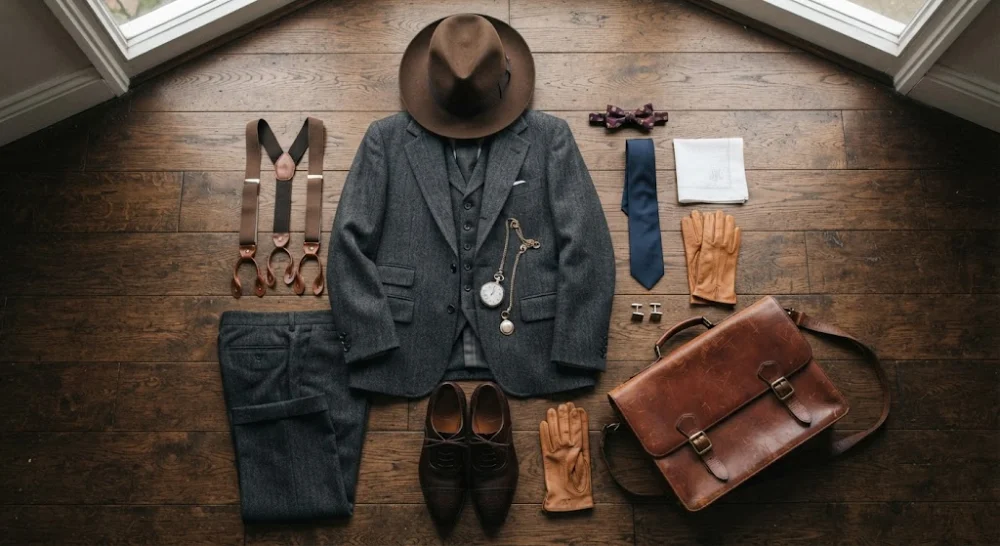
Every well-dressed man in the 1920s built his look from a set of core pieces. Here’s what made up the full outfit, from head to toe.
1. Suits
The suit was the foundation of everything. Most men owned at least one three-piece suit with a matching jacket, trousers, and vest.
Jackets featured wider shoulders and a shorter cut, creating a sharper silhouette than the boxy styles of earlier decades. Dark, versatile colors like navy, brown, and grey were the safest and most popular choices.
2. Shirts and Collars
Shirts were made from breathable cotton or linen, usually in white or soft pastel shades.
Early in the decade, detachable collars were the norm. These stiff collars could be removed and cleaned separately from the shirt, saving money and effort. By the mid-1920s, men shifted toward attached collars, which felt softer and more comfortable for everyday wear.
3. Trousers
Trousers sat high on the waist and hung loose through the leg, often finished with cuffs at the ankle.
Since belts weren’t common yet, suspenders did the job of keeping trousers in place. Wool and tweed fabrics made these pants durable enough for daily wear, whether at the office or out on the town.
4. Waistcoats and Vests
A waistcoat, or vest, pulled the whole outfit together. It added shape, warmth, and a tidy finish to any suit.
Most vests matched the suit fabric exactly and included small pockets, perfect for tucking away a pocket watch or a few coins.
5. Ties and Neckwear
Neckwear was where men could really show off some personality.
Slim ties in stripes, checks, or geometric patterns matched the modern, energetic mood of the decade. Bow ties were reserved for formal evening events, while tie pins and clips kept everything neat and polished throughout the day.
6. Hats and Caps
No 1920s outfit was complete without a hat. Every social class had its go-to style:
- Fedoras, homburgs, and trilbies for city life and business
- Flat caps and newsboy caps for outdoor work and casual days
Made from wool, felt, or tweed, these hats did double duty: practical sun protection and instant polish.
7. Shoes
Leather shoes finished the look from the ground up. Oxfords and brogues were everyday staples, usually crafted in rich black or brown leather.
For something bolder, younger men turned to two-tone spectator shoes. These stood out at dances and social outings, adding a playful edge to an otherwise classic outfit.
8. Pocket Squares
A pocket square was a small detail with a big impact. Made from silk or fine cotton, these squares came in simple colors or subtle patterns.
Folded neatly into the jacket’s breast pocket, a pocket square balanced formal tailoring with a touch of personal flair.
9. Watches
Early in the decade, pocket watches were the standard, usually tucked into a vest pocket with a short chain.
By the late 1920s, wristwatches took over as the more modern and practical choice, a shift that still shapes how men wear watches today.
The Style Icons Who Defined the Decade
Some men didn’t just follow 1920s fashion. They defined it.
Clark Gable
Clark Gable brought clean, confident tailoring to the big screen. Fitted suits, sharp ties, and slicked-back hair made him one of the most copied looks of the era, setting a standard for masculine elegance that still holds up.
Rudolph Valentino
As a leading silent film star, Rudolph Valentino added drama and sophistication to menswear. Tailored suits, wide-brimmed hats, and silk neck scarves gave his look a romantic, larger-than-life quality.
Fred Astaire
Fred Astaire made formal wear look effortless. Tuxedos, tailcoats, and patent leather shoes moved with him on the dance floor, proving that comfort and elegance could coexist perfectly.
Duke Ellington
As one of the era’s greatest jazz musicians, Duke Ellington matched his music with equally sharp style. Tailored suits, satin lapels, and pocket squares gave his stage presence the same creative energy as his sound.
How to Bring 1920s Style Into Your Wardrobe Today
You don’t need a costume to channel this era. A few smart choices can bring real 1920s charm into a modern outfit.
Try pairing:
- High-waisted trousers with a crisp white shirt
- Suspenders instead of a belt for a vintage touch
- A structured vest under a blazer
- A wool fedora for a polished finishing touch
These pieces add vintage character without looking like a costume.
Women can borrow from this era too. Structured blazers, pinstripe trousers, and vest-inspired pieces bring the same confident, tailored look into modern womenswear.
Final Thoughts
The 1920s reshaped menswear in ways that still matter today.
Sharp suits, clean hairstyles, and thoughtful accessories gave men a look that was both practical and confident. What started as a cultural shift after the war became a lasting foundation for modern fashion.
The fit, the fabric, the attention to detail — all of it still holds up nearly a century later.
Which piece of 1920s style would you bring back first: the classic tuxedo or the relaxed cardigan? Let us know in the comments.
Frequently Asked Questions
Which 1920s accessories are still popular today?
Pocket squares, cufflinks, suspenders, and fedoras remain wardrobe staples. Each one still carries the same polished, refined feel that made 1920s style so admired.
Can women wear 1920s men’s fashion?
Yes. Many women wear suits, tailored trousers, and structured vests inspired by 1920s menswear, creating a sharp, confident look for modern occasions.
Why is 1920s men fashion still admired?
It struck a rare balance between comfort and class. That balance created timeless designs that still influence both men’s and women’s fashion around the world.
For more timeless style stories and fashion history, keep exploring faminaz.com