
1920s men’s suits represented a major change in the way men dressed.
The decade moved away from the stiff clothing styles of earlier years and introduced softer fabrics, wider trousers, lighter colors, and more relaxed tailoring.
Suits were still an important part of daily life, but men had more choices for work, travel, social events, sports, and evenings.
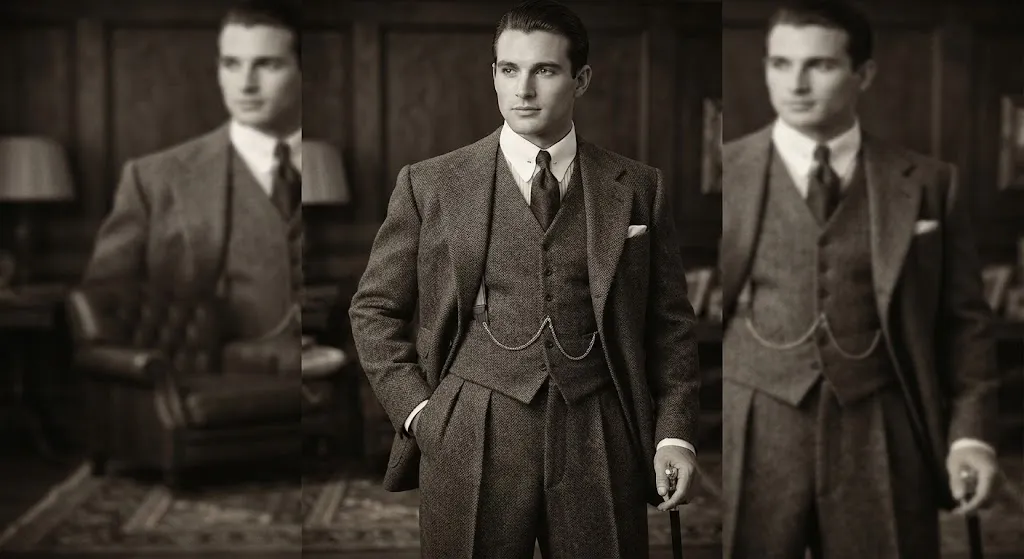
Three-piece suits remained popular, while double-breasted jackets, striped fabrics, waistcoats, and high-waisted trousers gave men a sharper and more confident appearance.
In this guide, you will find the main styles of 1920s men’s suits, the fabrics and colors they used, how suits were worn, and the accessories that completed the look.
The Rise of 1920s Men’s Suits
The 1920s changed men’s clothing in many ways.
After World War I, men began looking for clothing that offered both comfort and style. Growing cities, new entertainment, sports, automobiles, and Hollywood all helped shape this change.
Suits remained a normal part of everyday dressing, especially for office workers and professionals.
However, they no longer had to look heavy or overly formal.
Tailors began using lighter materials and more relaxed cuts. Trousers became roomier, jackets became shorter, and waistcoats helped create a neat shape without making the entire outfit feel too stiff.
This balance between comfort and polish became one of the defining features of 1920s men’s fashion.
Popular 1920s Men’s Suit Styles
1920s men’s suits came in several styles, depending on the occasion and the man wearing them.
Some were designed for business, while others were made for evenings, weekends, sports, or social gatherings.
1. Three-Piece Suits
Three-piece suits were among the most recognizable styles of the decade.
A traditional three-piece suit included:
- A matching jacket
- High-waisted trousers
- A waistcoat or vest
The waistcoat added structure to the outfit and helped keep the shirt and trousers looking neat.
Men often wore these suits with a tie, dress shirt, pocket square, and polished leather shoes.
For many professional men, the three-piece suit was a dependable choice for work and important social occasions.
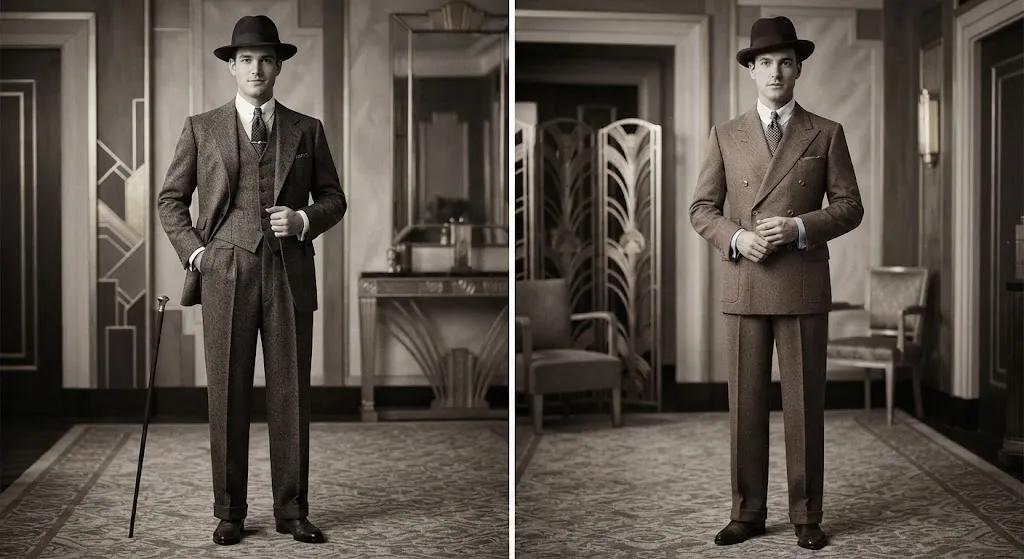
2. Double-Breasted Suits
Double-breasted suits became another stylish choice during the decade.
These jackets had two rows of buttons and a wider front that created a strong, structured appearance.
They were often worn by men who wanted a more noticeable and confident look.
Double-breasted jackets could be paired with matching trousers and a waistcoat, although some versions were worn without one.
Their wider shape also worked well with the relaxed tailoring that became popular during the 1920s.
3. Pinstripe Suits
Pinstripes were especially popular among professional men.
Thin vertical stripes added visual length to the body and gave a suit a clean appearance.
Dark navy, charcoal, and gray were common choices, while lighter versions could be worn during warmer weather.
Pinstripe suits were often associated with business and city life, but they could also be styled for evening gatherings.
4. Lounge Suits
The lounge suit was becoming an important part of everyday menswear.
Compared with older formal clothing, lounge suits offered a more practical design for daily activities.
A typical outfit could include a jacket, trousers, shirt, tie, and leather shoes.
This style worked well for office settings, travel, shopping, and other daytime activities.
Its practical design helped make the suit a lasting part of modern men’s wardrobes.
1920s Men’s Suit Fabrics
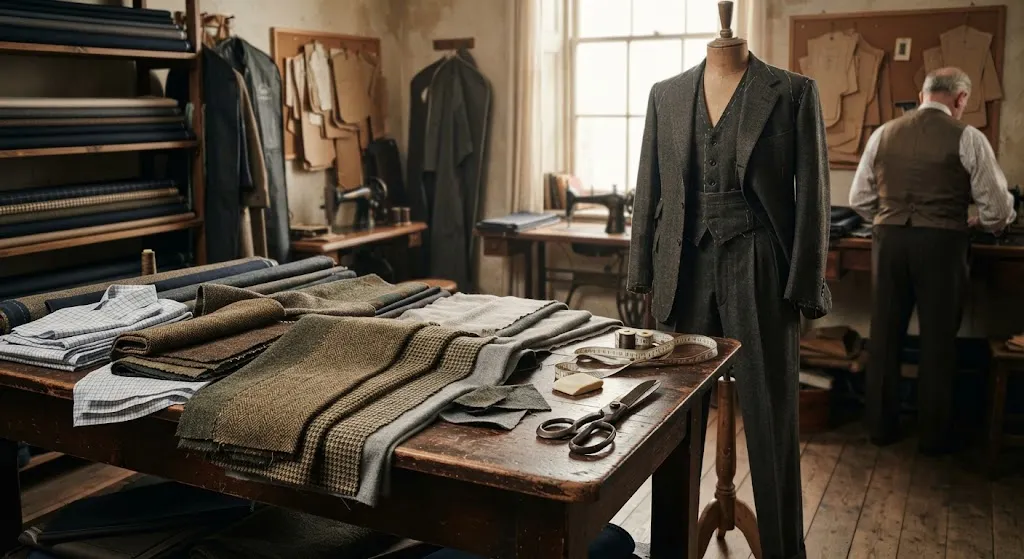
Fabric played an important role in how a suit looked and felt.
Men needed clothing that could handle different seasons and social situations.
Wool
Wool was one of the most useful fabrics for men’s suits.
It was durable, comfortable, and suitable for cooler weather.
Different weights of wool allowed tailors to create suits for different seasons.
Wool also held its shape well, making it a practical choice for structured jackets and trousers.
Tweed
Tweed was popular for country clothing, outdoor activities, and casual dressing.
Its heavier texture gave suits a more relaxed appearance than smooth business fabrics.
Brown, gray, green, and other earthy shades were common choices for tweed clothing.
Tweed suits could be paired with flat caps, leather shoes, and simple shirts for a classic countryside look.
Flannel
Flannel offered a soft and comfortable option for trousers and suits.
Gray flannel trousers were especially useful because they could be combined with different jackets.
This created a less formal appearance while still keeping the outfit neat.
Linen and Lightweight Fabrics
Lighter materials were useful during warmer weather.
Linen and lightweight cotton helped men stay more comfortable in summer.
These fabrics were often seen in lighter-colored clothing and casual outfits.
1920s Men’s Suit Colors
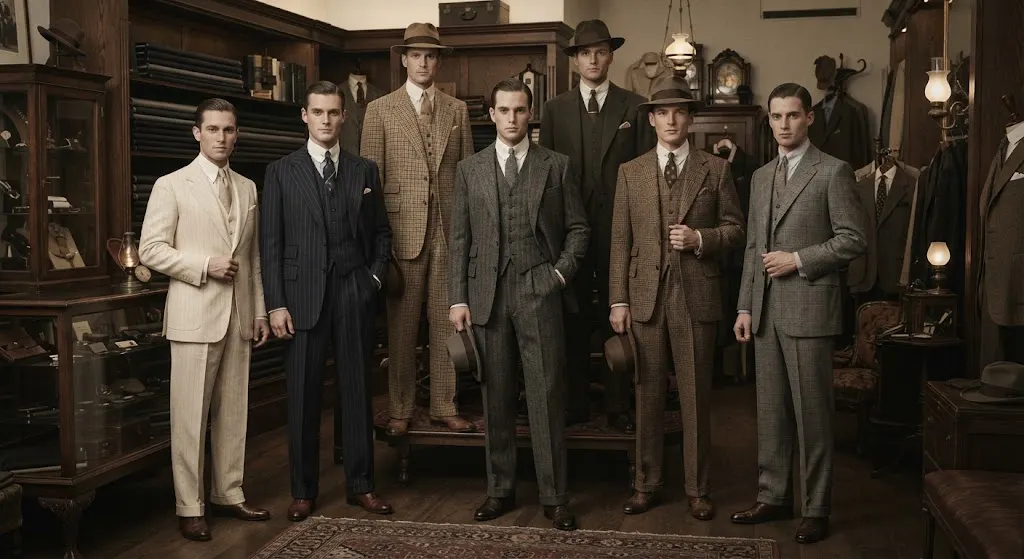
The 1920s gave men more variety in suit colors than previous generations had commonly enjoyed.
Black remained important for formal occasions, but everyday suits were available in many other shades.
Popular choices included:
- Navy
- Gray
- Brown
- Charcoal
- Tan
- Cream
- Olive
- Light gray
Dark colors worked well for business and formal settings.
Lighter shades were more suitable for summer, travel, sports, and relaxed social events.
Patterns also added variety.
Pinstripes, checks, windowpanes, and subtle textured fabrics allowed men to create a more personal appearance.
How Were 1920s Men’s Suits Worn?
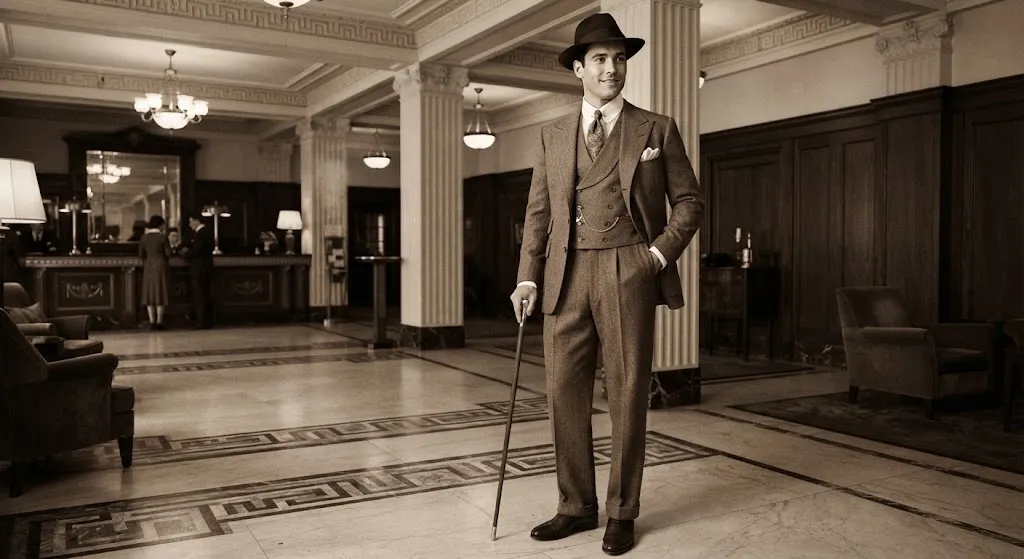
A suit was rarely worn by itself.
The shirt, tie, waistcoat, shoes, and hat all helped create the finished outfit.
A common daytime combination included a suit jacket, high-waisted trousers, a shirt, tie, waistcoat, and leather shoes.
Men could also wear suspenders underneath their jackets to hold trousers in place.
For formal evening occasions, the outfit became more refined.
A dark suit or tuxedo could be paired with a white shirt, bow tie, polished shoes, and other formal accessories.
The goal was not simply to wear expensive clothing.
Fit, neatness, and coordination were important parts of the overall appearance.
1920s Suit Trousers
Trousers had a very different shape from many modern styles.
1920s men’s trousers were generally high-waisted and roomier through the legs.
They often had cuffs at the bottom, which added weight and shape to the trousers.
Belts were not the main choice for keeping trousers in place.
Suspenders were widely used instead, especially with high-waisted trousers.
This created a clean line around the waist and allowed the shirt and waistcoat to sit properly.
Some trousers also featured pleats, giving men additional room and comfort while sitting or moving.
1920s Waistcoats and Vests
A waistcoat could completely change the appearance of a suit.
It covered the shirt front and created a smooth transition between the jacket and trousers.
Many three-piece suits used a matching waistcoat, while some men also wore contrasting vests.
Waistcoats usually had several buttons and small pockets.
A pocket watch could be carried in one of these pockets, with a chain extending toward the other side.
This small detail added both function and character to the outfit.
Shirts and Collars for 1920s Suits
Shirts were another important part of a 1920s suit.
White shirts remained a classic choice, but soft colors and subtle patterns were also available.
Early in the decade, detachable collars were still common.
These collars could be removed and cleaned separately, making them practical for everyday use.
As the decade progressed, softer attached collars became more common.
Men could choose different collar shapes depending on their personal style and the type of suit they were wearing.
Ties and Bow Ties
Neckwear added color and personality to a suit.
Men commonly wore ties with stripes, checks, and geometric patterns.
For daytime outfits, a traditional necktie worked well with a shirt and suit.
Bow ties were more closely associated with formal evening clothing.
Tie pins and clips could also be used to keep neckwear in place.
These small details helped create the polished appearance expected from a well-dressed man.
Shoes That Completed a 1920s Suit
Shoes were an important finishing touch.
Leather Oxfords and brogues were common choices for suits.
Black and brown were practical colors that worked with many different outfits.
Two-tone spectator shoes were another recognizable style of the era.
These shoes had contrasting colors and were especially suited to social events, dancing, and more relaxed fashion.
The right shoe helped balance the entire suit and gave the outfit a finished appearance.
Hats and 1920s Suits
A well-dressed man often completed his suit with a hat.
Fedoras, homburgs, flat caps, and newsboy caps were among the styles worn during the decade.
The choice depended on the occasion and the man’s social setting.
A fedora could create a polished city look, while a flat cap worked well with casual or working clothing.
Hats were practical as well as stylish.
They offered protection from the weather and became an important part of men’s everyday appearance.
1920s Men’s Formal Suits
Formal dressing became more refined during the Jazz Age.
For evening events, men could wear dark formal suits or tuxedos with crisp shirts and bow ties.
Black remained an important color for formal occasions.
Patent leather or highly polished shoes helped complete the outfit.
For especially formal events, tailcoats and other traditional evening garments could still be worn.
However, the growing popularity of the tuxedo helped create a more modern form of evening dressing.
1920s Men’s Casual Suits
Not every suit was designed for business or formal events.
Men also wore more relaxed suits and sports-inspired clothing during weekends and leisure activities.
Lighter fabrics, softer jackets, textured materials, and wider trousers created a comfortable appearance.
A tweed jacket could be paired with trousers in a different shade, creating a less formal combination.
This growing separation between formal and casual clothing helped shape the modern idea of dressing for different occasions.
How to Create a 1920s-Inspired Suit Today
You do not need to copy an entire historical outfit to enjoy 1920s style today.
A few carefully chosen pieces can create the same vintage feeling while still looking modern.
Try combining:
- High-waisted trousers
- A fitted or relaxed vintage-inspired jacket
- A simple white shirt
- A patterned tie
- Leather Oxford shoes
- A pocket square
- A classic waistcoat
For a stronger vintage look, add suspenders and a fedora.
For a more modern outfit, skip the hat and choose a simple jacket with high-waisted trousers.
The goal is to borrow the best details of 1920s men’s suits without making the outfit look like a costume.
Why 1920s Men’s Suits Still Matter Today
The influence of 1920s tailoring can still be seen in modern menswear.
High-waisted trousers, three-piece suits, waistcoats, pinstripes, spectator shoes, and vintage-inspired tailoring continue to appear in fashion collections.
The decade also helped establish a useful idea that still matters today: a suit can be smart without being uncomfortable.
The combination of practical fabrics, relaxed trousers, structured jackets, and carefully chosen accessories created a style that was both functional and distinctive.
Conclusion
1920s men’s suits combined traditional tailoring with a new sense of freedom.
Three-piece suits, double-breasted jackets, pinstripes, high-waisted trousers, waistcoats, and polished leather shoes helped define the decade.
At the same time, lighter fabrics, casual suits, and sports-inspired clothing gave men more freedom to dress for different occasions.
What made the decade special was not one single suit style.
It was the way men began to combine structure, comfort, color, and personal taste.
Today, a high-waisted trouser, classic waistcoat, or vintage-inspired jacket can still bring that 1920s character into a modern wardrobe.
The best way to wear 1920s style today is to take inspiration from the era while keeping the outfit natural, comfortable, and suited to the occasion.
Frequently Asked Questions
What Type of Suits Did Men Wear in the 1920s?
Men commonly wore three-piece suits with jackets, high-waisted trousers, and waistcoats. Double-breasted, pinstripe, lounge, and more relaxed suits were also popular.
What Color Were 1920s Men’s Suits?
Common colors included navy, gray, brown, charcoal, tan, and cream. Black was especially important for formal evening clothing.
What Fabric Was Used for 1920s Men’s Suits?
Wool was a common suit fabric, while tweed and flannel were also popular. Linen and other lightweight materials were useful for warmer weather.
Did Men Wear Belts With 1920s Suits?
Suspenders were more common with high-waisted trousers. They helped keep trousers in place without changing the clean shape of the suit.
Were Three-Piece Suits Popular in the 1920s?
Yes. Three-piece suits were an important part of men’s fashion during the decade. The matching jacket, trousers, and waistcoat created the neat and structured appearance associated with the era.