
1920s men’s formal wear represented the elegance and confidence of the Jazz Age.
As nightlife, dancing, theaters, private clubs, and social gatherings became more popular, men had more reasons to dress carefully for evening occasions.
Dark suits, tuxedos, crisp shirts, bow ties, waistcoats, polished shoes, and carefully chosen accessories created the refined appearance associated with formal dressing during the decade.
Formal clothing was not only about looking impressive.
Fit, fabric, color, and small details all helped create a balanced appearance that reflected the changing attitude toward men’s fashion.
In this guide, you will find what men wore for formal occasions in the 1920s, from tuxedos and dinner jackets to bow ties, pocket squares, formal shoes, and evening accessories.
The Rise of 1920s Men’s Formal Wear
The 1920s brought a fresh attitude toward formal clothing.
Men still followed traditional dress rules for important events, but formal fashion gradually became more modern and varied.
The growing popularity of restaurants, dance halls, jazz clubs, theaters, and evening parties created more opportunities for men to dress up.
Formal clothing also became closely connected with Hollywood and popular entertainment.
Tailored jackets, neat trousers, white shirts, and polished accessories created a sharp appearance without the heavy feeling associated with some earlier styles.
This combination of tradition and modern style helped define 1920s men’s formal wear.
1920s Formal Suits
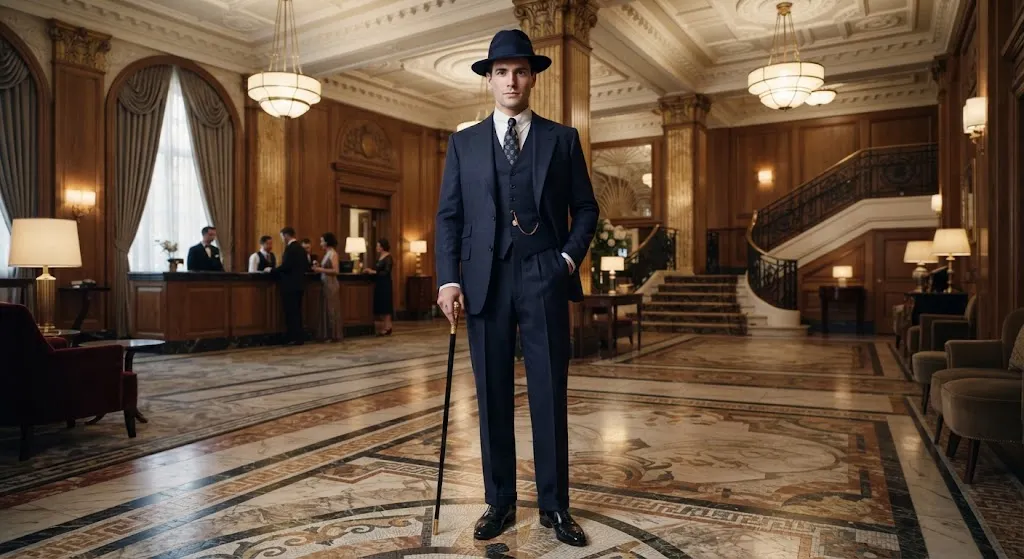
Formal suits were an important part of a well-dressed man’s wardrobe.
Three-piece suits were particularly useful because they included a jacket, trousers, and waistcoat.
For formal daytime occasions, men could choose darker colors such as navy, charcoal, brown, or gray.
The fit was structured but generally more relaxed than the clothing of previous decades.
Trousers were high-waisted and often had a generous cut through the legs.
A matching waistcoat helped create a smooth and complete appearance.
Men commonly finished the outfit with a dress shirt, tie, leather shoes, and a hat.
For a broader look at the decade, see our 1920s Men’s Fashion Style Guide.
1920s Tuxedos
The tuxedo became an important choice for evening events.
It offered a cleaner and more practical alternative to some of the traditional formal garments that men had worn for very formal occasions.
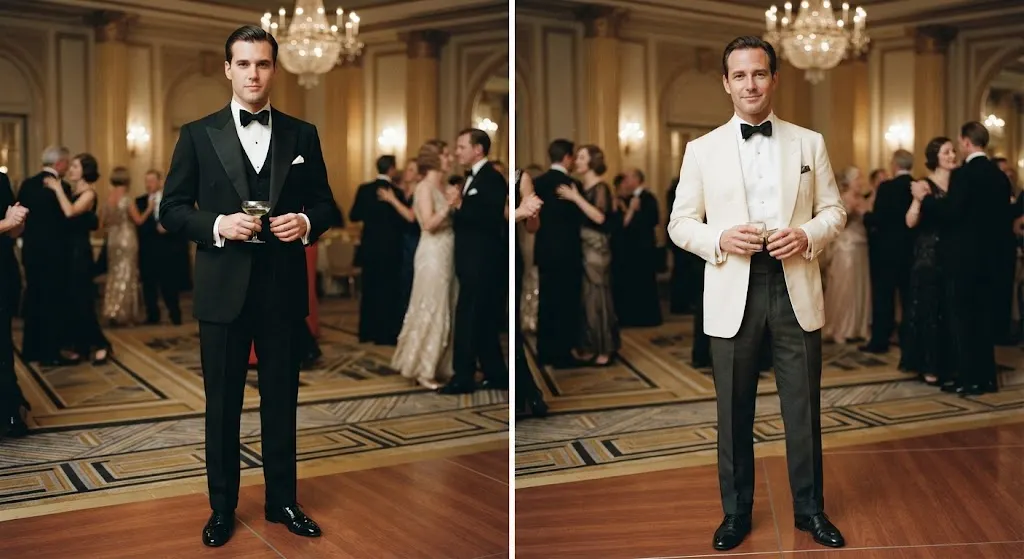
A typical tuxedo outfit included a dark jacket, matching trousers, white dress shirt, and bow tie.
The jacket could feature satin or silk details around the lapels, creating a noticeable contrast against the darker fabric.
Black was a classic choice for evening dressing.
Men also paid close attention to their shoes and accessories because formal clothing left little room for careless details.
Dinner Jackets
Dinner jackets provided another option for evening dressing.
They were particularly useful for social gatherings where men needed to look formal without wearing the most traditional evening clothing.
A dinner jacket could be combined with dark trousers, a white shirt, and a bow tie.
Some evening jackets featured contrasting colors or lighter fabrics, especially in warmer settings.
This created a slightly more relaxed appearance while maintaining the polished character of formal clothing.
1920s Three-Piece Formal Suits
The three-piece suit remained one of the most recognizable styles of the decade.
It consisted of:
- A tailored jacket
- High-waisted trousers
- A matching waistcoat
The waistcoat helped create a structured appearance and covered much of the shirt front.
Some men preferred a matching waistcoat, while others used a contrasting vest to add more personality.
Pocket watches were also commonly carried in waistcoat pockets.
The chain provided a small decorative detail while keeping the watch easy to access.
1920s Formal Shirt Styles
The shirt was an important part of formal dressing.
White was the safest and most traditional choice, especially for evening events.
Formal shirts were usually made from clean, high-quality fabrics and were designed to create a crisp appearance beneath the jacket.
Collars could vary in shape and construction.
Detachable collars were still seen during the early part of the decade, while attached collars became increasingly common as men looked for softer and more comfortable clothing.
A clean white shirt created a strong contrast against a dark tuxedo or formal suit.
Bow Ties and Formal Neckwear
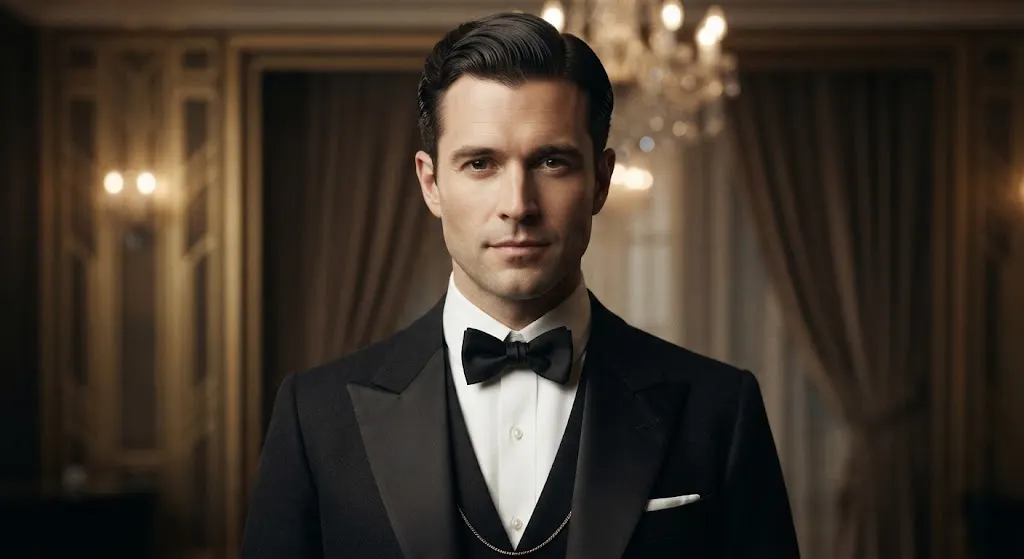
Bow ties were closely associated with evening formal wear.
Black bow ties were a natural choice with tuxedos and other dark evening clothing.
For less formal occasions, men could also choose traditional neckties with stripes, checks, or subtle patterns.
Tie pins and clips helped keep neckwear in position.
Although small, these details contributed to the neat appearance expected from formal dressing.
1920s Waistcoats and Vests
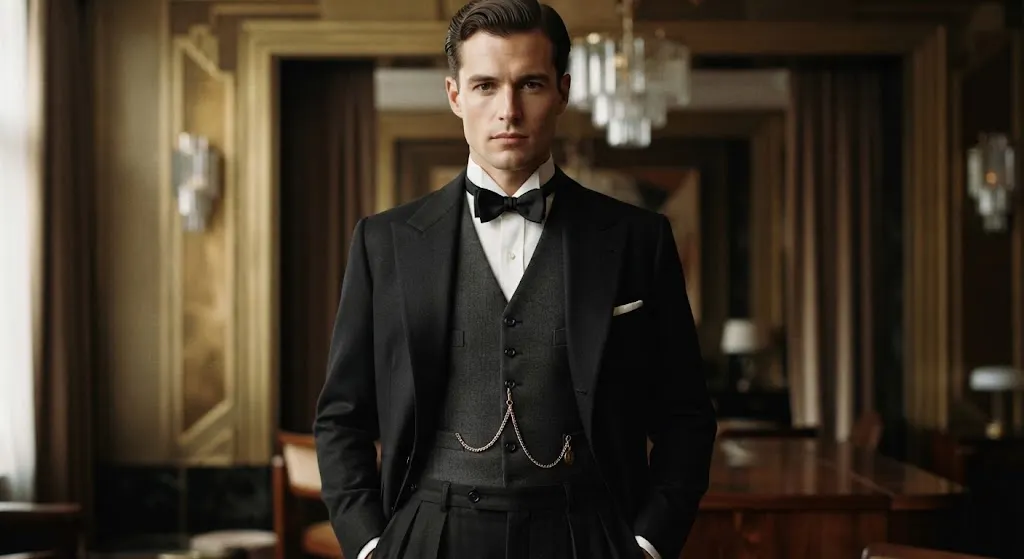
Waistcoats added both structure and character to formal clothing.
A matching vest could make a three-piece suit look complete, while a contrasting waistcoat could add visual interest.
Formal waistcoats generally had several buttons and small pockets.
They were often worn beneath a jacket, although the waistcoat could become more visible during social gatherings when a man removed his jacket.
The extra layer also provided a useful place to carry a pocket watch.
Pocket Squares
Pocket squares were another small detail that could make a formal outfit look more polished.
A white pocket square worked well with dark suits and tuxedos.
Some men chose subtle patterns or colors that complemented their ties.
The square could be folded in different ways depending on the desired appearance.
A simple fold offered a clean and formal look, while a more noticeable fold added personality.
The important point was that the pocket square should complement the rest of the outfit rather than compete with it.
1920s Formal Shoes
Formal shoes completed the evening outfit.
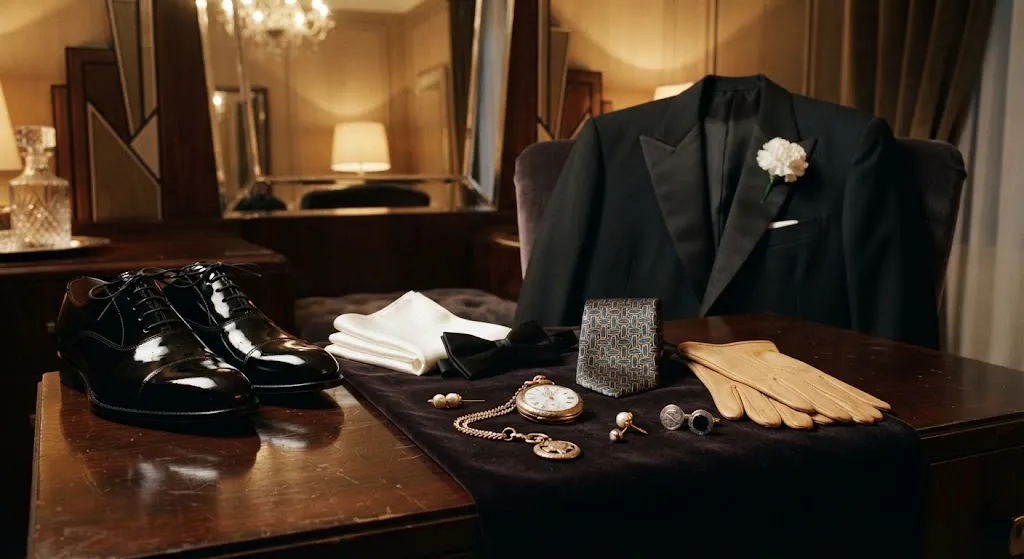
Black leather Oxfords were a dependable choice for formal occasions.
Some men also wore highly polished leather shoes with evening clothing.
The shoes needed to be clean and well maintained because formal dressing placed attention on every part of the outfit.
Two-tone spectator shoes were fashionable during the decade, but they were generally better suited to social, daytime, or leisure outfits than the most formal evening occasions.
Formal Hats in the 1920s
Hats remained an important part of men’s clothing during the decade.
Fedoras, homburgs, and other structured hats could be worn with formal daytime suits.
The choice depended on the occasion, location, and level of formality.
For evening events, hats were often coordinated carefully with the rest of the outfit.
A dark hat could work well with a dark formal suit, creating a consistent appearance from head to toe.
1920s Evening Colors and Fabrics
Dark colors were especially suitable for formal evening clothing.
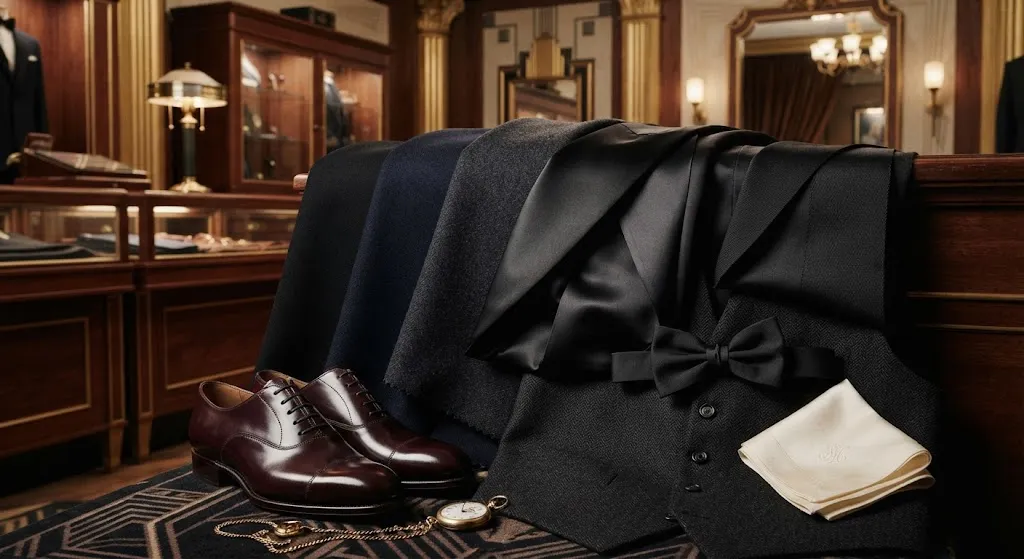
Black, dark navy, charcoal, and deep shades created a refined appearance under artificial lighting.
Wool was a common choice for suits because it was durable and held its shape well.
Evening garments could also feature smoother and more luxurious materials for lapels, waistcoats, and accessories.
Satin and silk details were particularly noticeable on formal jackets and bow ties.
The combination of dark fabric and subtle shine helped create the elegant appearance associated with Jazz Age evenings.
1920s Formal Wear for Different Occasions
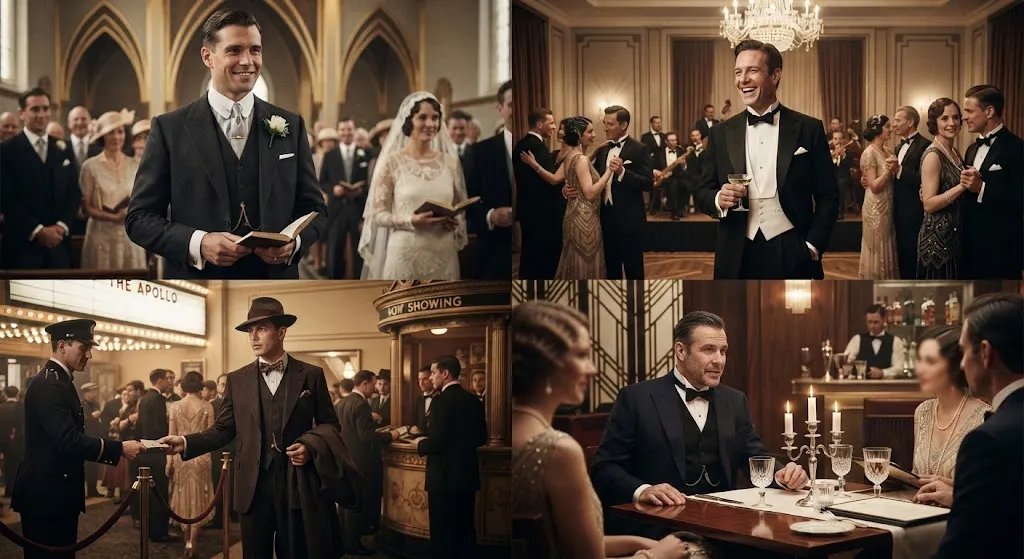
Men did not wear exactly the same outfit to every formal event.
Weddings
A wedding could call for a dark three-piece suit, crisp shirt, tie, polished shoes, and carefully chosen accessories.
The exact outfit depended on the time of day and level of formality.
Evening Parties
Evening parties provided an opportunity to wear a tuxedo or formal dark suit.
A bow tie, pocket square, and polished shoes helped complete the look.
Theater and Dancing
Theaters, dance halls, and social clubs encouraged men to dress well.
A formal suit or tuxedo could be combined with a crisp shirt and evening accessories.
Formal Dinners
For formal dinners, men could choose a dark suit or evening outfit depending on the setting.
The goal was to look polished without using unnecessary accessories.
1920s Formal Wear vs. Casual Fashion
The biggest difference between formal and casual clothing was the level of structure.
| Formal 1920s Style | Casual 1920s Style |
|---|---|
| Tuxedos | Sweaters |
| Three-piece suits | Sports jackets |
| Bow ties | Knitted cardigans |
| White dress shirts | Casual shirts |
| Waistcoats | Plus-fours |
| Polished Oxfords | Casual leather shoes |
| Pocket squares | Flat caps |
| Formal hats | Newsboy caps |
Casual clothing gave men greater freedom and comfort, while formal wear focused on neatness, coordination, and presentation.
If you want to explore the relaxed side of the decade, see our 1920s Men’s Casual Fashion guide.
How 1920s Formal Wear Changed Men’s Fashion
Formal clothing during the 1920s helped establish a more modern approach to menswear.
Traditional pieces remained important, but men gained more freedom to choose between different levels of formality.
The tuxedo became an increasingly useful evening option.
Three-piece suits remained popular for formal daytime occasions.
At the same time, softer fabrics and more comfortable tailoring made formal clothing easier to wear.
This combination of elegance and practicality helped influence men’s fashion for decades afterward.
How to Wear 1920s Formal Style Today
Modern men can take inspiration from 1920s formal wear without recreating an entire historical outfit.
A dark three-piece suit is one of the easiest ways to capture the style.
Pair it with:
- A crisp white shirt
- A simple bow tie or necktie
- Polished leather shoes
- A pocket square
- A classic watch
For a stronger vintage appearance, add a waistcoat, high-waisted trousers, or a traditional fedora.
The key is to keep the outfit balanced.
Too many vintage elements can make the clothing look like a costume.
A few carefully selected pieces can create a classic appearance while still feeling appropriate for modern events.
For more detail on the suit construction, fabrics, and styles of the decade, see our 1920s Men’s Suits guide.
Why 1920s Formal Wear Still Looks Stylish
The appeal of 1920s formal clothing comes from its clean structure.
Dark suits, crisp shirts, polished shoes, and simple accessories create a balanced appearance that does not depend on fast-changing trends.
Many modern formal outfits still use the same basic ideas.
A well-fitted jacket, high-quality fabric, clean shirt, and carefully selected accessories can create an elegant look without excessive decoration.
The decade also showed that formal clothing could combine tradition with a more relaxed attitude.
That balance continues to make 1920s formal wear interesting today.
Conclusion
1920s men’s formal wear captured the confidence and elegance of the Jazz Age.
Tuxedos, three-piece suits, dinner jackets, waistcoats, bow ties, pocket squares, and polished leather shoes all played an important role in creating the formal appearance of the decade.
Men also had more opportunities to dress according to the occasion, whether they were attending a wedding, formal dinner, theater performance, dance, or evening gathering.
The decade did not completely abandon traditional tailoring.
Instead, it adapted formal clothing to a changing society.
Today, the clean lines, dark colors, classic accessories, and thoughtful details of 1920s formal wear can still inspire modern outfits.
The best way to use this style today is to take its strongest elements and combine them with comfortable, modern clothing.
Frequently Asked Questions
What Did Men Wear to Formal Events in the 1920s?
Men commonly wore dark three-piece suits, tuxedos, or other formal evening clothing. These outfits were usually paired with crisp shirts, bow ties or neckties, polished shoes, and accessories.
Were Tuxedos Popular in the 1920s?
Yes. Tuxedos became an important choice for evening events and offered men a refined alternative to some traditional formal garments.
What Color Were 1920s Formal Suits?
Black, dark navy, charcoal, and other deep colors were common for formal occasions. Lighter colors were more suitable for daytime and casual settings.
Did Men Wear Bow Ties in the 1920s?
Yes. Bow ties were especially common with tuxedos and evening formal wear. Black was a classic choice for formal occasions.
What Shoes Did Men Wear With Formal Suits?
Black leather Oxfords and other polished leather shoes were common choices. Shoes were kept clean and well maintained to complete the formal appearance.
Are 1920s Formal Suits Still Popular Today?
The exact historical styles are not everyday clothing today, but three-piece suits, waistcoats, bow ties, high-waisted trousers, and vintage-inspired tailoring continue to influence modern formal fashion.