
Tattoos are more than ink on skin. They’re a lasting form of self-expression that blends art, culture, and personal history into one design you carry for life.
Every tattoo style follows its own set of rules. Some rely on bold lines and bright color. Others use soft shading or tiny details you can barely see from across the room. Knowing what separates these styles can help you pick a design that actually fits your personality, your story, and your skin.
In this guide, you’ll find a breakdown of the most popular tattoo styles in 2026, what each one means, and expert-backed tips for making sure your tattoo looks great now and years from now.
What Makes a Tattoo Style Unique?
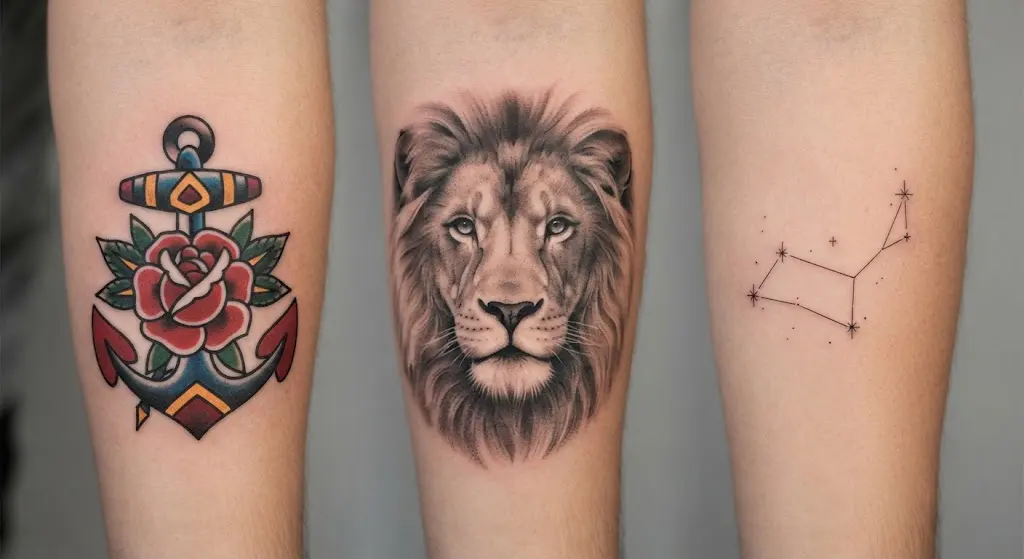
A tattoo style is defined by three things: line work, shading, and color use. Traditional styles favor bold, thick outlines. Realism styles focus on smooth gradients that mimic real life. Minimalist styles strip everything down to a few clean lines.
The style you choose affects more than looks. It also affects:
- How long the tattoo stays sharp — bold lines age better than fine ones
- How much it costs — detailed styles take more time in the chair
- Where it should go on your body — some styles need more space to shine
The Most Popular Tattoo Styles Right Now
1. American Traditional (Old School)
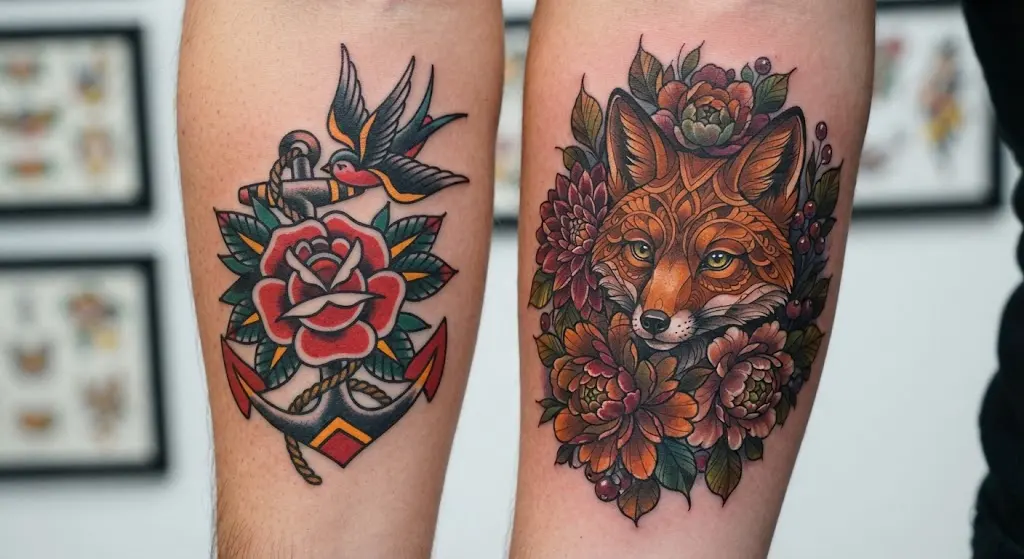
This is the style most people picture when they think “classic tattoo.” Bold black outlines, a small color palette (usually red, green, and yellow), and simple subjects like anchors, roses, and swallows define this look.
Traditional tattoos are built to last. The thick lines and solid color blocks hold up well over decades, which is why sailors and soldiers trusted this style generations ago.
Symbolism: Strength, loyalty, and resilience.
2. Neo-Traditional
Neo-traditional takes the bold outlines of old school tattoos and adds richer colors, deeper shading, and more realistic detail. Think traditional roots with a modern, illustrated finish.
This style works well for people who love vintage tattoo culture but want something with more depth and personality.
Symbolism: Individuality and a blend of classic values with modern creativity.
3. Realism (Black & Grey or Color)
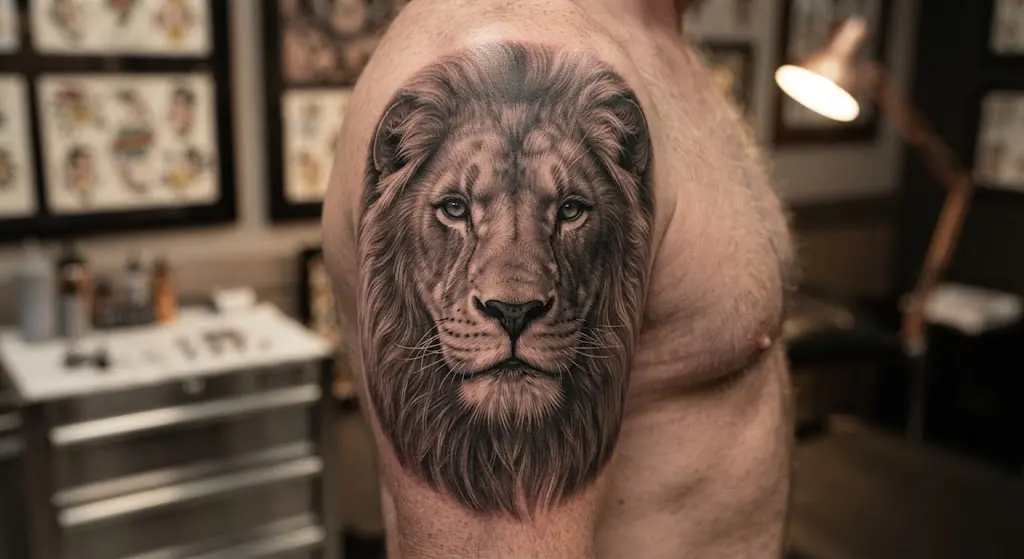
Realism tattoos aim to look like photographs. Artists use careful shading and layering to recreate portraits, animals, and nature scenes with lifelike detail.
This style demands serious skill from the artist. A single misplaced shadow can throw off the whole image, so it’s worth researching an artist’s realism portfolio closely before booking.
Symbolism: Authenticity and preserving a memory or moment in time.
4. Japanese (Irezumi)
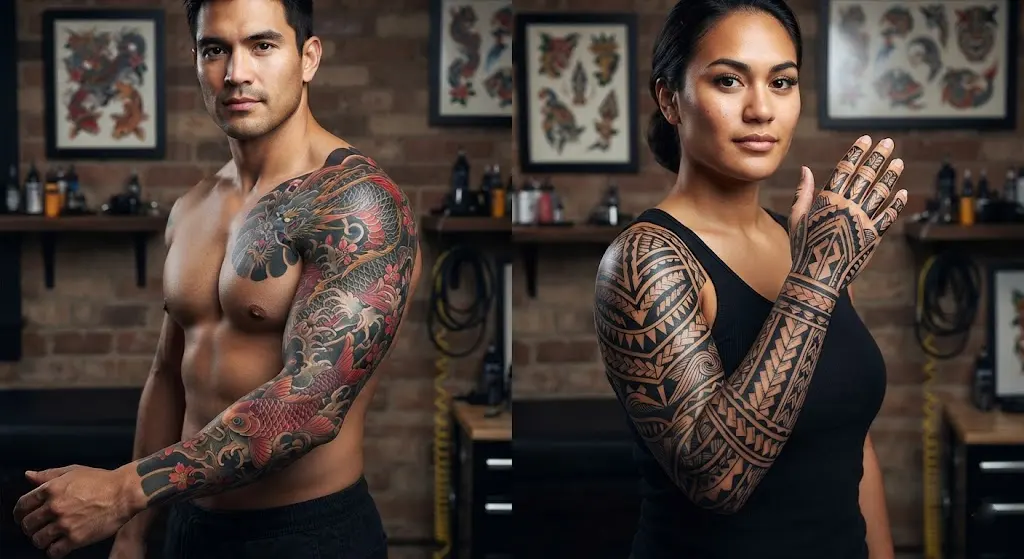
Irezumi tattoos are large, flowing pieces featuring koi fish, dragons, waves, and samurai. They’re designed to follow the body’s natural shape, often wrapping around an arm, leg, or entire back.
This style carries centuries of cultural meaning, and many artists who specialize in it study its history and symbolism for years before tattooing it professionally.
Symbolism: Honor, courage, and harmony between people and nature.
5. Tribal
Tribal tattoos use bold black shapes and geometric patterns rooted in Polynesian, Maori, and African traditions. Each pattern historically marked things like family lineage, achievements, or social status.
Because of its deep cultural roots, it’s worth researching the specific tradition behind a tribal design before getting one, so the piece is chosen with respect and understanding.
Symbolism: Strength, heritage, and spiritual connection.
6. Watercolor
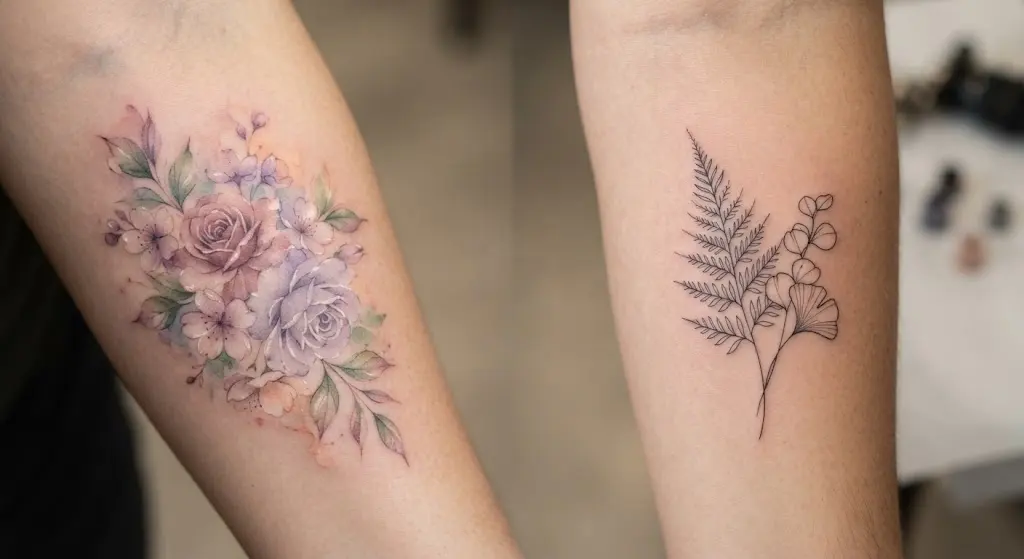
Watercolor tattoos mimic the soft, blended look of a painting. Instead of hard outlines, colors bleed into one another for a dreamy, artistic effect.
The trade-off is durability. Because this style skips bold outlines, it can fade faster than others, so it needs an experienced artist and diligent aftercare to hold up over time.
Symbolism: Creativity, freedom, and emotional expression.
7. Minimalist & Fine Line
Minimalist tattoos use thin lines and small, simple designs. They’re popular for first tattoos and for people who want something meaningful without a big visual statement.
Because the lines are so fine, this style ages faster than bold traditional work. Placement on areas with less friction, like the forearm or shoulder, helps it stay crisp longer.
Symbolism: Simplicity and mindfulness.
8. Geometric & Dotwork
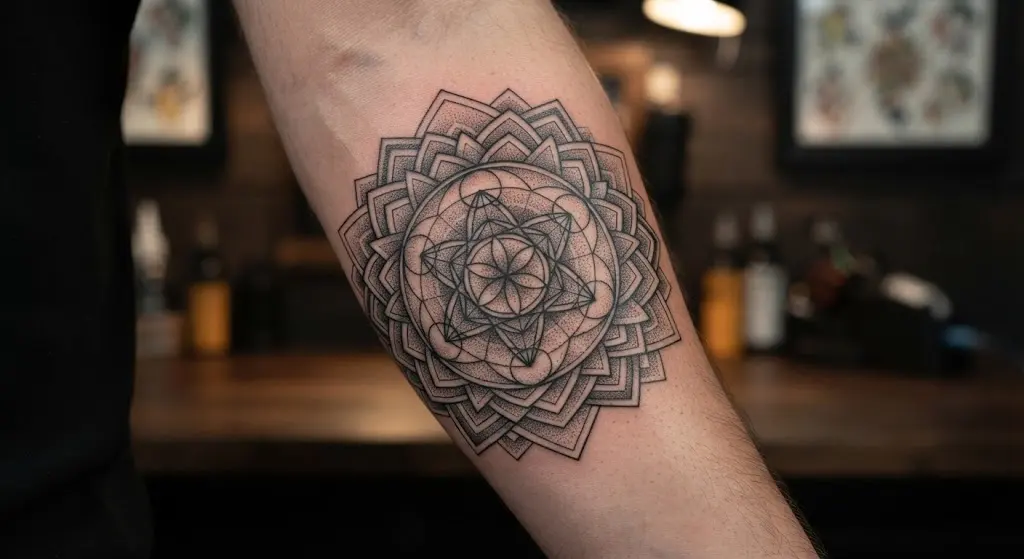
Geometric tattoos use symmetry, precise lines, and repeating shapes. Dotwork builds images entirely out of small dots, creating soft shading without any solid black fill.
Both styles require a steady hand and a lot of patience, making them some of the most technically demanding tattoo forms.
Symbolism: Balance and the natural order found in nature and mathematics.
9. Blackwork
Blackwork uses solid black ink to create bold, high-contrast designs. Some pieces use abstract shapes, others use negative space to form the image itself.
This style is a strong option for anyone who wants a tattoo that reads clearly from a distance and holds its shape for years.
Symbolism: Confidence and personal transformation.
10. Modern Hybrid Styles
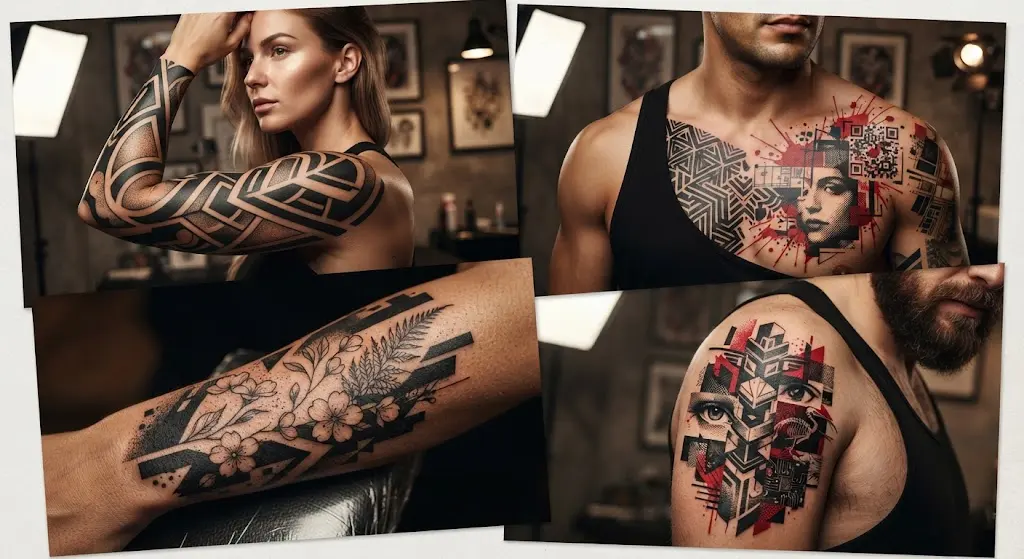
Newer styles like Trash Polka, Biomechanical, Chicano, and Microrealism blend traditional technique with experimental ideas. Trash Polka mixes bold red and black with abstract, collage-like designs. Biomechanical tattoos blend machinery with human anatomy for a sci-fi effect.
These styles suit people who want something that doesn’t fit neatly into one category.
Symbolism: Individuality and breaking creative boundaries.
Aesthetic Tattoo Styles
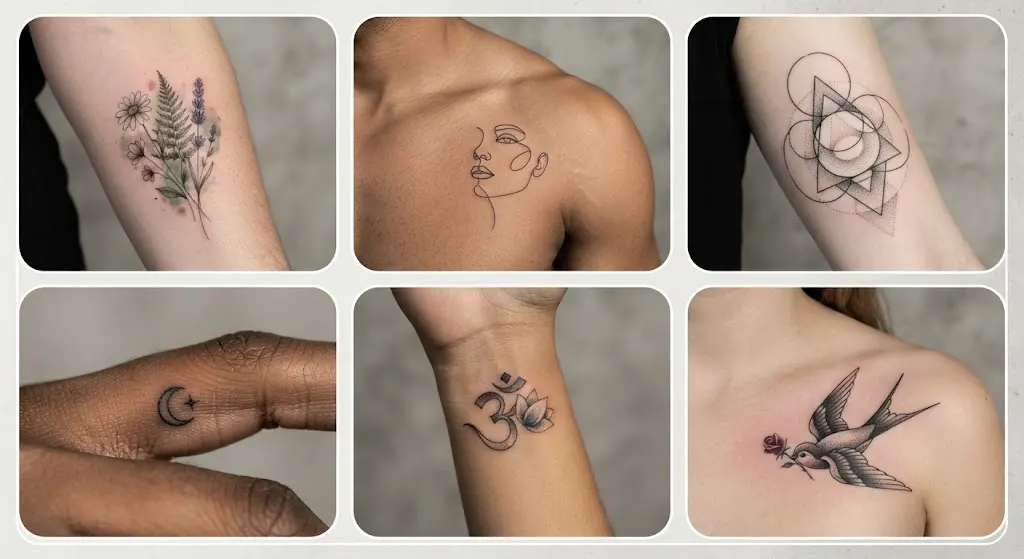
Aesthetic tattoos prioritize beauty and flow over boldness. They’re designed to complement the body rather than dominate it. Popular types include:
- Floral tattoos — soft petals or vines that symbolize growth
- Line art tattoos — clean, minimal outlines of figures or faces
- Abstract tattoos — shapes and gradients that express emotion
- Micro tattoos — tiny designs with personal meaning
- Symbolic tattoos — small icons representing beliefs or memories
- Color accent tattoos — mostly black and grey with one small pop of color
How to Choose the Right Tattoo Style for You
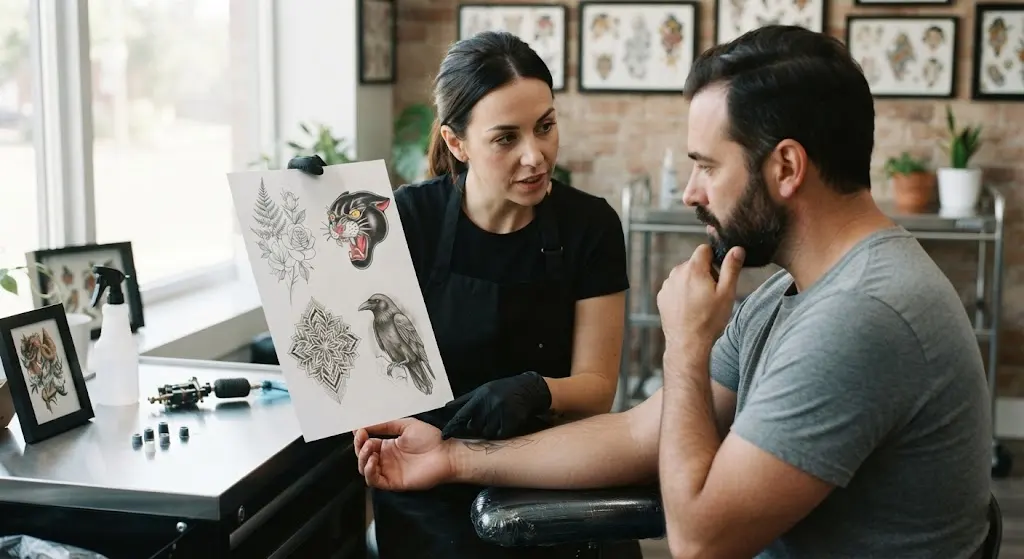
The best tattoo style depends on what you want the piece to say and how you want it to age. Here’s a quick way to match a style to your priorities.
| Priority | What to Consider | Best Style Examples |
|---|---|---|
| Meaning | Symbolism or personal story | Japanese, Tribal, Realism |
| Look | Bold, colorful, or minimal | Traditional, Watercolor, Minimalist |
| Placement | Size and visibility needed | Geometric, Fine Line, Neo-Traditional |
| Lifestyle | Workplace or social visibility | Minimalist, Blackwork, Realism |
Skin tone, body placement, and the artist’s experience all affect how a tattoo heals and looks over time, so it’s worth reviewing an artist’s portfolio and asking questions before committing.
Tips From Professional Tattoo Artists
Getting a tattoo that looks good for decades takes more than picking a nice design. Artists consistently recommend these steps:
- Prep your skin. Keep it hydrated and avoid sunburn in the weeks before your appointment.
- Pick a specialist. Choose an artist who has a strong portfolio in the exact style you want.
- Check healed photos, not just fresh ones. Fresh tattoos always look sharp — healed photos show you the truth.
- Confirm the studio’s hygiene standards. Needles and tools should be sterile and single-use.
- Follow aftercare closely. Clean gently, moisturize, and resist the urge to scratch or pick.
- Plan for the long term. Sunscreen and occasional touch-ups keep color and lines looking fresh for years.
Final Thoughts
Every tattoo style carries its own history, technique, and meaning. Bold traditional pieces are built to last. Fine line and watercolor styles trade some durability for a softer, more artistic look. Realism and Japanese styles demand serious skill and patience from both artist and client.
Take the time to research styles, review artist portfolios, and ask questions before your appointment. A little planning now means a tattoo you’ll still love decades from now.
Frequently Asked Questions
Which tattoo styles fade the fastest?
Fine line, watercolor, and light-color tattoos tend to fade faster than bold, dark traditional styles because they rely on thinner ink application.
Where do tattoos hurt the most?
Areas with thin skin or bone close to the surface hurt the most, including the ribs, ankles, spine, and elbows.
What is the pinch test for tattoos?
The pinch test checks how much loose, flexible skin is available in a spot, which helps determine whether that area is a good fit for a tattoo.