
Your gel manicure looked flawless. Then, out of nowhere, your fingers started itching.
That itch, redness, or swelling isn’t just “sensitive skin.” It could be a real allergic reaction to gel polish.
It’s easy to assume gel polish is safe. After all, salons use it every single day. But your skin can still react, even when the manicurist does everything right.
Here’s the surprising part: this can happen even if you’ve worn gel polish for years without a single problem. Below, you’ll learn what causes these reactions, the symptoms to watch for, and why they can appear seemingly out of nowhere.
You’ll also find simple steps for treating a flare-up, tips for preventing the next one, and clear signs that mean it’s time to call a dermatologist.
What Is a Gel Polish Allergy?
A gel polish allergy happens when your immune system mistakes certain chemicals in the polish for a threat. This is different from simple irritation caused by friction or dry skin.
The most common reaction is called allergic contact dermatitis. It usually develops after your skin has been exposed to the same ingredient multiple times.
Symptoms tend to show up around the nails, fingertips, and the skin folds nearby, since these areas get the most direct contact during application and wear.
Here’s the key difference: simple skin sensitivity fades once the irritant is gone. A true allergy builds over time, and repeated exposure to the same ingredient raises your risk of developing one.
Signs of a Gel Polish Allergy
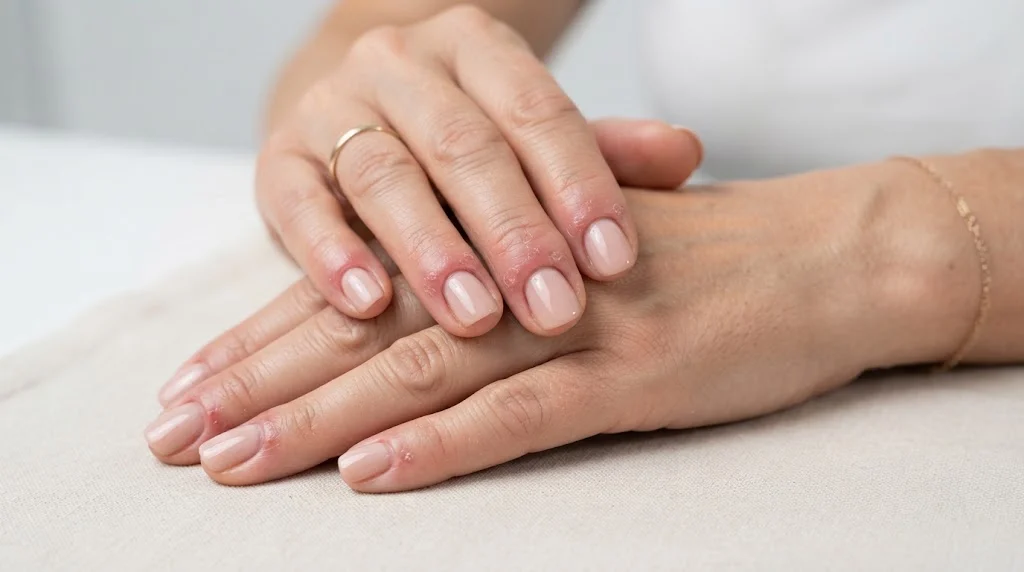
Symptoms can show up within hours, or they might take a few days to appear after your manicure.
Itching and redness around the nails. This is often the first warning sign. The skin around your cuticles and fingertips turns red or feels irritated soon after application.
Swelling, rash, or blisters. Stronger reactions bring visible swelling, a rash, or small blisters. The irritation can spread beyond just the nail area.
Changes to the nail itself. The nail plate may start lifting away from the skin underneath. Nails can also become weak or brittle near the nail bed over time.
Reactions in other places. Your eyelids, face, or neck can react too, especially if you touch them after handling the polish. Even tiny, invisible traces left on your fingers can trigger a reaction somewhere else on your body.
Good news: most symptoms improve within one to two weeks after you remove the polish. Full healing can take longer if the nail bed itself was affected.
Why Does a Gel Polish Allergy Show Up Suddenly?
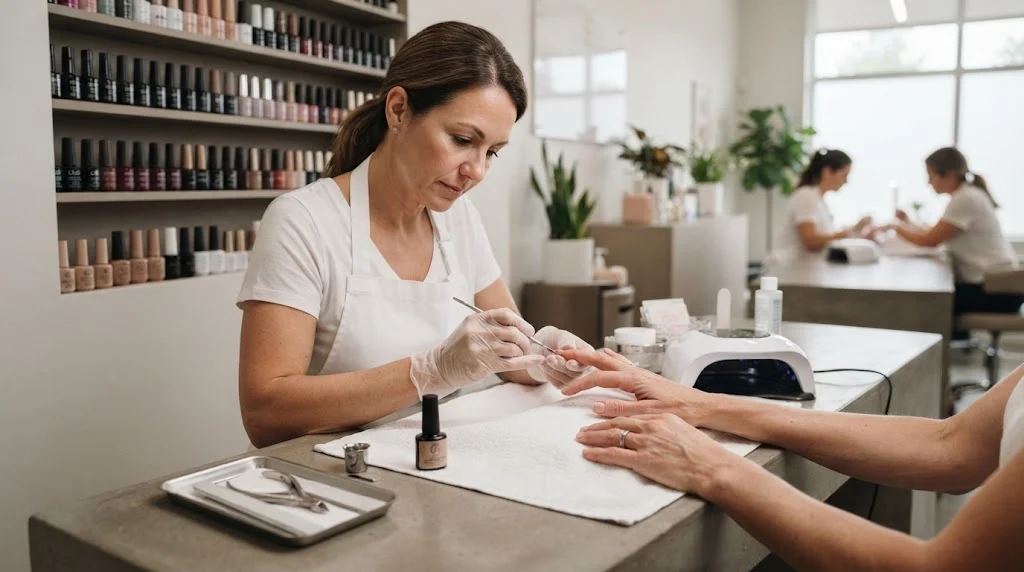
This is the part that catches people off guard. You can use gel polish safely for months, or even years, and then develop symptoms with zero warning.
Your immune system can become sensitized after repeated exposure. In plain terms, it starts reacting to an ingredient it used to tolerate just fine.
Repeated Exposure Adds Up
- Frequent manicures increase contact. The more often you get gel polish, the more chances your skin has to encounter the allergens inside it.
- Past safety doesn’t guarantee future safety. Sensitization can build quietly in the background. Just because you’ve never reacted before doesn’t mean you never will.
Gel Polish Ingredients Linked to Allergic Reactions
- HEMA (Hydroxyethyl Methacrylate). This is one of the most common triggers behind gel polish allergies.
- Acrylates and methacrylates. These bonding agents show up in most gel formulas and are known to cause skin sensitization.
- Other additives. Pigments, solvents, and stabilizers in gel systems can also play a role in triggering a reaction.
- Uncured product. Any polish that doesn’t fully harden under the lamp stays chemically reactive, which raises your risk of exposure.
Application and Curing Mistakes
- Skin contact during application. Polish that touches the skin around your nail increases your chances of a reaction.
- Under-curing leaves residue. Gel that isn’t cured properly leaves reactive chemicals sitting directly on your skin.
- Lamp and DIY issues. Using the wrong lamp wattage, or applying gel carelessly at home, can make curing problems (and allergy risk) worse.
Paying closer attention to ingredients, curing time, and application technique can lower your risk, even if you’ve been getting gel manicures for years.
How to Treat a Gel Polish Allergy
Once symptoms appear, don’t wait around to see if they go away on their own. Act quickly.
Step 1: Stop wearing the polish. Remove it as soon as you can instead of leaving it on.
Step 2: Wash the area gently. Use mild soap and lukewarm water to clear away any leftover residue.
Step 3: Avoid further contact. Skip more gel applications until your skin has fully healed.
Step 4: Soothe your skin. A fragrance-free moisturizer or a mild cream can calm redness and dryness.
Step 5: Watch for changes. Keep an eye on the area over the next few days to see if it’s improving or getting worse.
Acting early gives your skin the best chance to recover quickly, before a mild reaction turns into a bigger problem.
What People Are Saying Online
Gel polish allergies come up often in online communities, where people share real experiences instead of just clinical advice.
In one online discussion, a commenter said she was grateful the community had warned her before she bought an at-home gel kit. She hadn’t realized skin contact could cause lasting damage.
Others described sudden reactions after months of trouble-free use, including itching, blistering, and nail lifting that took months to fully heal.
Several people pointed out that even professional manicures don’t remove the risk entirely. Many said switching to press-on nails or regular polish helped their skin recover.
These stories are a reminder that gel polish allergies are more common, and more underreported, than most people realize.
How to Prevent a Gel Polish Allergy
- Keep polish off your skin. Skin absorbs chemicals faster than nails do, so contact with the polish raises your allergy risk.
- Use properly cured gel. Fully cured polish leaves behind far fewer reactive chemicals.
- Follow lamp instructions closely. The correct wattage and cure time help each layer harden completely.
- Check ingredient lists. This helps you spot common allergens like HEMA before you apply anything.
- Avoid known allergens. Repeated exposure to the same trigger usually makes future reactions worse, not better.
None of these steps guarantee you’ll never react. But together, they significantly lower your risk and support healthier nails overall.
When to See a Doctor
Most mild symptoms clear up on their own. But some signs mean it’s time to stop waiting and book an appointment.
- Pus, increasing pain, or fever around the nail, which can signal an infection
- Symptoms that stay the same or get worse after one to three days without the polish
- Redness or rash that spreads to your hands, arms, face, or neck
- Difficulty breathing, hives, or swelling beyond your hands, which needs urgent medical care
Knowing these warning signs helps you act at the right moment, not too soon, and not too late. A quick visit to the doctor can stop a small issue from turning into a much bigger one.
Final Thoughts
If any of these signs show up, a dermatologist can run a patch test to pinpoint the exact ingredient behind your gel polish allergy.
Nail reactions can catch anyone off guard, even after years of trouble-free manicures. Paying attention to the early signs helps your skin bounce back faster.
If you notice itching or redness, stop wearing the gel and give your skin a break. Proper curing and checking product labels can lower your risk going forward.
Your nails go through a lot. Treat them with a little extra care, and if something feels off after a manicure, trust that instinct and act on it early.
Frequently Asked Questions
Can a gel polish allergy spread to other parts of the body?
Yes. If traces of the product touch other areas of skin, like your eyelids, face, or neck, the reaction can spread beyond your nails.
Can wearing gloves during a manicure help prevent a reaction?
Yes. Nitrile gloves with fingertip holes reduce skin contact during application, which lowers your exposure to allergens like HEMA.
Can you be allergic to gel polish but not regular nail polish?
Yes. Gel polish contains bonding agents like HEMA and acrylates that regular polish doesn’t have. You can tolerate regular polish just fine while still reacting to gel formulas.
Got a question or a gel polish story of your own? Share it in the comments below — and for more beauty and lifestyle guides, keep exploring faminaz.com.