
You wake up one morning and something just feels… off. Your skin feels tight and dry even though you moisturized last night. Your jeans fit differently than they did six months ago. Your arms feel weaker at the gym. And you can’t quite put your finger on why.
Here’s the thing — none of this is in your head, and none of it is your fault.
These shifts all trace back to one root cause: your estrogen levels are dropping. And estrogen, it turns out, has been quietly doing a lot of heavy lifting for your body all these years.
The good news? Once you understand what’s happening and why, you have real options. Let’s walk through each change one by one.
Your Skin Starts to Look and Feel Different
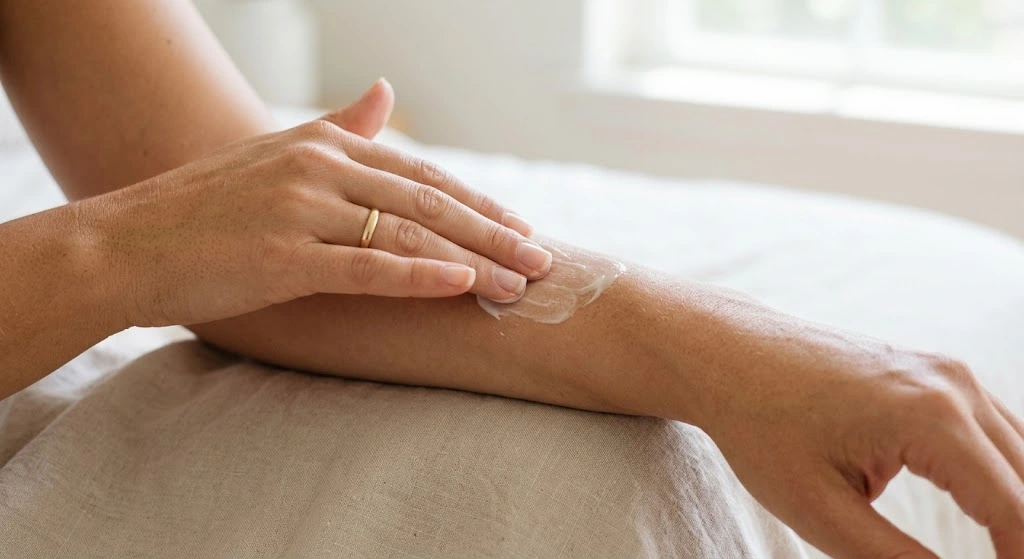
If your skin suddenly feels drier, looks thinner, or has developed fine lines that weren’t there before, estrogen is the reason.
Estrogen plays a direct role in keeping your skin firm and plump. It helps your body produce collagen — the protein that gives skin its structure and bounce — and it also helps your skin hold on to moisture. When estrogen levels fall, collagen production slows down, the skin loses thickness, and that natural glow starts to fade.
What you’re left with is skin that can look crepe-paper thin, especially on the arms, neck, and chest.
What Helps
- Eat more antioxidant-rich foods like berries, leafy greens, and nuts. These protect skin cells from damage.
- Add healthy fats to your diet — think avocado, olive oil, and fatty fish. Your skin barrier needs them.
- Prioritize sleep. Skin repairs itself while you rest. Poor sleep speeds up visible aging.
- Look for topical treatments that include estriol, peptides, or hyaluronic acid. These ingredients target hydration and firmness directly at the skin’s surface.
You won’t reverse every change, but you can absolutely make a visible difference with the right habits and products.
Your Weight and Body Shape Start to Shift

Maybe your eating habits haven’t changed. Maybe you’re still working out just as often. But somehow, your body looks and feels different — especially around your midsection.
This is one of the most frustrating parts of menopause for a lot of women, and it’s completely real.
Before menopause, estrogen encourages the body to store fat in the hips and thighs. Once estrogen drops, that pattern changes. The body starts storing more fat around the belly instead. At the same time, muscle mass begins to decline — and muscle tissue burns more calories than fat even while you’re at rest. So with less muscle, your metabolism naturally slows down.
Add in sleep disruptions and the appetite changes that come with hormonal shifts, and weight management gets a lot harder than it used to be.
What Helps
- Move more throughout the day, not just during formal workouts. Walking, taking the stairs, light stretching — it all adds up.
- Cut back on processed foods, excess sugar, and saturated fats. These make belly fat worse.
- Eat more protein. It helps protect muscle mass and keeps you feeling full longer.
- Don’t skip strength training. Building muscle directly fights the metabolic slowdown.
The goal here isn’t a number on the scale. It’s keeping your body strong, functional, and healthy.
Your Muscles Feel Weaker Than Before
Have you noticed that lifting grocery bags feels harder than it used to? Or that a workout you’ve been doing for years suddenly leaves you more sore and tired?
You’re not imagining it. Muscle strength really does decline during menopause.
Estrogen helps the body repair and maintain muscle tissue. As levels fall, muscle recovery slows and the body becomes less efficient at holding on to lean muscle mass. This condition — where muscle is lost gradually with age — is called sarcopenia, and menopause can accelerate it.
The practical effect is that everyday tasks start to require more effort. Strength that felt effortless before now has to be actively maintained.
What Helps
- Resistance training is the single most effective tool here. Lifting weights, using resistance bands, or doing bodyweight exercises like squats and push-ups all signal the body to hold on to muscle.
- Eat enough protein — aim to include a good source (eggs, legumes, lean meat, dairy) at every meal.
- Get quality sleep. Muscle repair happens overnight. Sleep deprivation makes muscle loss worse.
- Be consistent. Even two to three strength sessions a week make a meaningful difference over time.
Bone Loss Is the Change You Can’t See — But Shouldn’t Ignore
This one tends to surprise people because it doesn’t come with obvious symptoms — at least not at first.
During the first five to seven years after menopause begins, women can lose a significant portion of their bone density. Estrogen helps regulate the cells that break down old bone. When estrogen drops, that breakdown process speeds up while bone rebuilding slows down. Over time, this leads to lower bone density, a condition called osteopenia, and eventually osteoporosis — where bones become fragile and fracture more easily.
It’s a slow process, but it’s also a serious one. Hip fractures and spine fractures in later life are often linked directly to bone loss that started during menopause.
What Helps
- Calcium and vitamin D are non-negotiable. Dairy products, fortified foods, leafy greens, and sunlight exposure all help. Talk to your doctor about supplements if your diet falls short.
- Weight-bearing exercise — walking, jogging, dancing, strength training — helps stimulate bone growth and slow bone loss.
- Avoid smoking and limit alcohol. Both accelerate bone loss significantly.
- Ask your doctor about a bone density scan (DEXA scan) if you’re in or approaching menopause. Catching early bone loss gives you more options.
Putting It All Together
Menopause isn’t something that happens to you — it’s something you move through. And the more you understand about the changes happening in your body, the more power you have to manage them.
Dry, thinning skin? Targeted skincare and a nutrient-rich diet can help. Shifting weight and a slower metabolism? Strength training, more protein, and better sleep. Weaker muscles? Resistance exercise and consistency. Bone loss? Calcium, vitamin D, and weight-bearing movement.
None of these fixes happen overnight. But small, steady changes to how you eat, move, and care for your body add up to real, lasting results.
Conclusion
Menopause changes your body. That’s true. But it doesn’t have to define how you feel about yourself.
The women who come out of this chapter feeling strong, confident, and healthy are the ones who got curious instead of defeated — who learned what was happening inside their bodies and responded with intention.
You now know what’s driving these changes. You know what works. The next step is simply starting.