
Remember the days of standing at a makeup counter, testing five different foundation shades on your hand and hoping one of them worked? Or spraying six perfumes on paper strips, sniffing each one, and still walking out unsure?
That whole ritual is fading fast.
Beauty shopping has entered a new era. Skin-scanning apps, virtual try-on tools, and AI-powered recommendation engines have replaced much of the guesswork that once defined the experience. For today’s shoppers, technology doesn’t just make buying beauty products faster — it makes it smarter, more personal, and far less wasteful.
Here’s a closer look at how this shift happened, and what it means for anyone shopping for skincare, makeup, or fragrance today.
Say Goodbye to Trial and Error
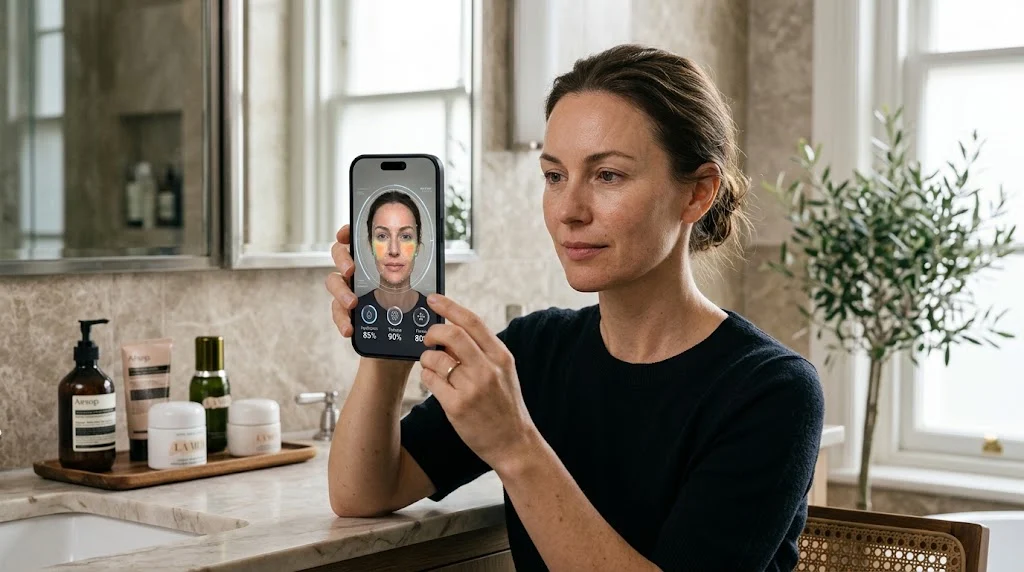
Buying beauty products used to be a gamble. Shoppers routinely bought two or three foundations before finding a shade that matched their skin. Perfume shopping was even trickier, since scent preferences are so personal and hard to describe.
Smart technology has changed that equation. AI-powered skin analysis tools can now scan a photo of your face and recommend foundation, concealer, or powder shades that genuinely match your undertone. Fragrance quizzes use your answers about mood, lifestyle, and past favorites to suggest scent families you’re likely to love, instead of leaving it to chance.
This isn’t just a nice convenience. Getting the right match on the first try:
- Saves money on products that would otherwise go unused
- Cuts down on returns and packaging waste
- Reduces the pile of half-used bottles sitting in the bathroom cabinet
For brands, better-informed customers also mean fewer refunds and stronger loyalty — a win on both sides of the counter.
Virtual Try-On: Testing Products Without Touching Them
Augmented reality (AR) has become one of the biggest game-changers in beauty retail. Using nothing more than a smartphone camera, shoppers can now see how a lipstick shade, an eyeshadow look, or even a bold new hair color would appear on their own face — all before spending a cent.
This technology has moved from novelty to necessity. It’s especially popular among shoppers who prefer browsing from home over standing in line at a beauty counter, and it has become a standard feature on most major beauty retail apps and websites.
Fragrance brands have found their own version of this trend. Instead of relying on vague descriptors like “woody” or “floral,” modern scent-matching tools now ask about your mood, the season, and even memories tied to certain smells. The algorithm then builds a shortlist of fragrances designed around that emotional profile, not just a category label.
Personalization Has Become the Standard, Not the Exception
Perhaps the biggest shift in beauty shopping is how personal the entire industry has become.
Skincare brands now build formulas around individual concerns — acne, dryness, sensitivity, or fine lines — rather than selling a single product meant to work for everyone. Haircare has followed the same path, with online quizzes helping customers find the right blend of ingredients for their specific hair type, porosity, and goals.
Fragrance has joined this movement too, and the results are striking. Instead of choosing from a wall of pre-made scents, customers can now build a custom perfume layer by layer, selecting individual notes until the final blend feels entirely their own. For anyone who has spent years searching for a signature scent that never quite existed on a shelf, this kind of tailored experience is a genuine breakthrough.
Smarter Shopping, Not Just Faster Shopping
It’s tempting to assume all this technology is simply about speed. In reality, it’s doing something more valuable: it’s helping shoppers make better decisions.
Modern recommendation engines look beyond past purchases. They factor in details like:
- Climate and season — because skin and hair behave differently in humidity versus dry heat
- Lifestyle habits — such as how often someone works out, wears makeup, or travels
- Changing skin needs throughout the year
The result feels less like an advertisement and more like advice from someone who actually knows your routine.
Sustainability has become part of this story too. When shoppers buy the right product on the first attempt, it means fewer returns, less shipping waste, and less packaging ending up in landfills. For a growing number of consumers who care about the environmental impact of their routines, this matters just as much as getting the right shade.
What This Means for the Everyday Shopper
None of this technology replaces human expertise entirely. A knowledgeable in-store consultant or a trusted friend’s recommendation still carries real weight, and probably always will.
What technology has done is give shoppers more confidence and more information before they ever walk into a store or open an app. Beauty shopping today feels more thoughtful, more personal, and far less like a guessing game than it did even five years ago.
If you haven’t tried a skin-matching app, a virtual try-on tool, or a custom fragrance builder yet, your next skincare refresh or scent search is a good time to start. You might be surprised at how accurately it understands what you’re looking for — and how much time and money it can save along the way.
As these tools continue to improve, one thing is clear: the beauty industry isn’t slowing down, and neither is the technology reshaping how we shop for it.
Stay with faminaz for more on the trends shaping beauty, lifestyle, and everything in between.