
A soft, rosy tint on your lips can save you minutes every morning. That’s the appeal of lip blush, a semi-permanent tattoo that adds natural color and shape without a single swipe of lipstick.
But the results don’t show up right away. Your lips go through several stages before the true color appears. Some days they’ll look darker than you expected. Other days they’ll look pale and patchy. That’s all part of the plan.
This guide breaks down the lip blush healing process day by day, plus the aftercare steps that help your color last for years instead of months.
What Is Lip Blush?
Lip blush is a form of semi-permanent makeup. A trained technician uses a fine needle to place pigment just under the surface of the lips. The goal isn’t a bold, solid color like a traditional tattoo. It’s a soft wash of tone that makes your natural lip shade look fuller and more even.
Done well, lip blush can:
- Even out uneven or patchy lip pigmentation
- Add subtle definition to the lip border
- Cut down on daily lipstick application
- Last two to three years with good care
The technician’s skill matters as much as the pigment. A steady hand and clean technique lead to smoother healing and truer color.
Lip Blush Healing Process: Day-by-Day Breakdown
Healing happens in stages over about six weeks. Each stage plays a role in how the pigment settles into your skin.
Day 1–2: Swelling and Bold Color
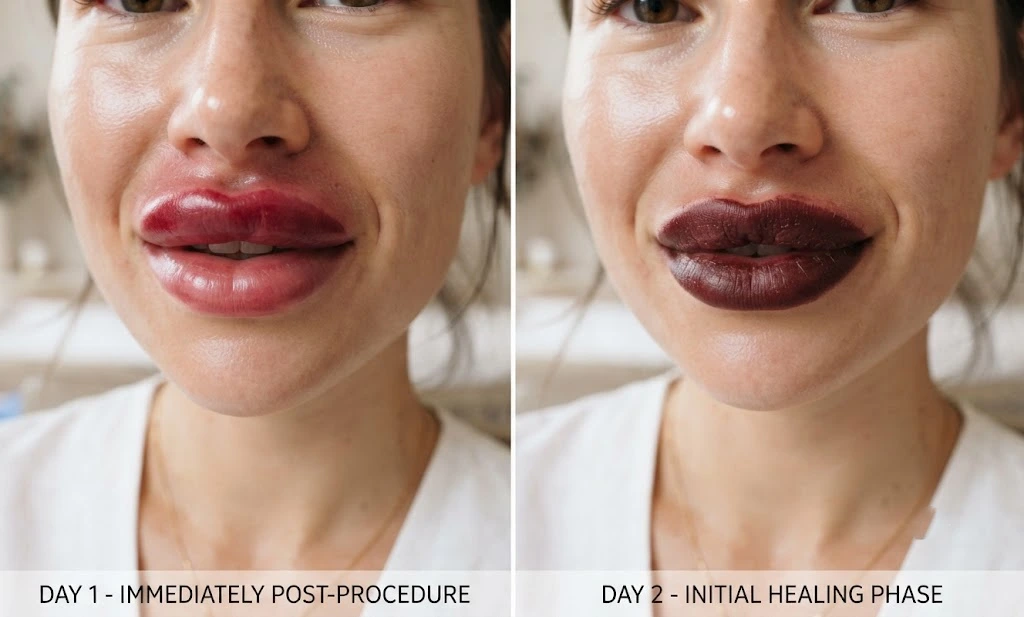
Right after your appointment, your lips will look darker and fuller than you expected. Some swelling is normal too. This happens because the pigment sits close to the surface and the skin is still irritated from the procedure.
What to do:
- Blot gently with a clean tissue if needed
- Apply the healing balm your technician recommends
- Skip hot drinks, spicy food, and anything that requires wide mouth movements
Don’t panic if the color looks too intense. It will fade significantly over the next two weeks.
Day 3–4: Peeling Begins
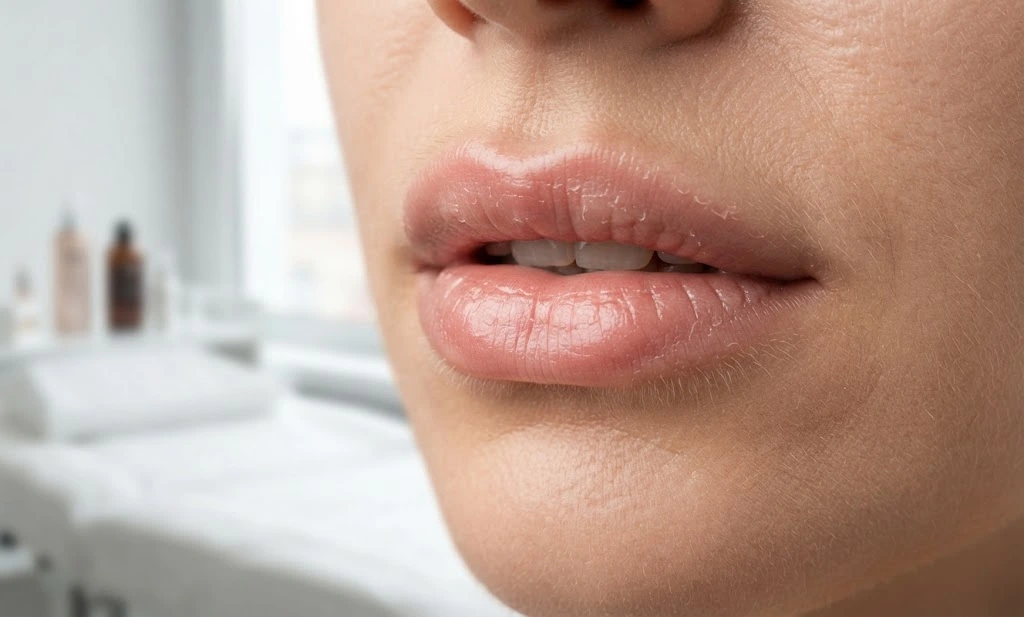
Light flaking or scabbing shows up around day three. This is your skin shedding the top layer as it heals. The color can look blotchy or uneven during this stage — that’s completely normal.
What to do:
- Keep lips moisturized with a thin layer of balm
- Never pick or peel the flakes yourself
- Let the skin shed on its own timeline
Picking at this stage is the single biggest cause of patchy, uneven lip blush results. Be patient.
Day 5–7: Peeling Subsides
By the end of week one, most of the flaking has stopped. Your lips will feel softer, but the color often looks lighter or faded. This is temporary — the pigment is still settling beneath the new skin.
What to do:
- Continue light moisturizing
- Avoid harsh soaps or exfoliating products near the mouth
- Stay consistent with sun protection
Week 2–3: The Color Blooming Phase
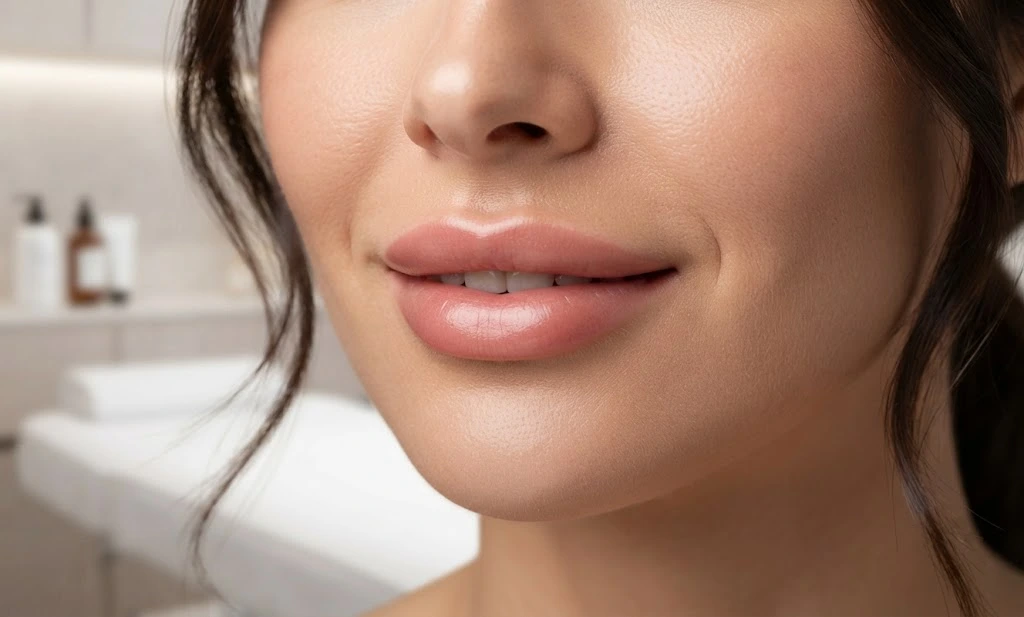
As fresh skin finishes forming, the pigment starts to reappear. Technicians call this the “blooming” phase. The color softens and becomes more balanced than the intense shade from day one.
Healing speed varies from person to person, so don’t compare your timeline to someone else’s photos. Your final shade depends on your skin type, how your body responds to pigment, and how closely you follow aftercare.
Week 4–6: Final Healing
By six weeks, your lips are fully healed. The color has settled into its true, final shade — usually softer and more natural-looking than it appeared in the first few days.
If you notice light spots or slightly uneven color, don’t worry. Most technicians recommend a touch-up appointment around this time to fill in any gaps and boost long-term pigment retention.
Lip Blush Aftercare: What to Do and What to Avoid
Good aftercare is the difference between a soft, even tint and a patchy, fast-fading result.
| What to Do | What to Avoid |
|---|---|
| Use only the healing balm your technician recommends | Picking, peeling, or rubbing your lips |
| Drink through a straw for the first few days | Saunas, swimming pools, and heavy workouts |
| Eat soft, mild foods and drink plenty of water | Spicy or salty foods, alcohol, and smoking |
| Wash your face with a gentle cleanser | Exfoliants or acid-based products near the lips |
| Apply SPF lip balm once peeling stops | Direct sun exposure during healing |
How Long Does Lip Blush Last?
Most people see their lip blush last two to three years, though this depends on your skin type, sun exposure, and aftercare habits.
People with faster skin cell turnover or frequent sun exposure tend to see fading sooner. Smoking also speeds up pigment loss. On the other hand, high-quality pigment and a skilled technician can stretch the results out longer.
To keep the color looking fresh, most artists suggest a refresh session every 12 to 18 months. Between refreshes, daily SPF and gentle skincare go a long way toward protecting your investment.
Recommended Aftercare Products
Stick to fragrance-free, dermatologist-tested products while your lips heal.
| Product Type | Options to Try | Why It Helps |
|---|---|---|
| Healing Ointment | Aquaphor Healing Ointment, Vaseline Lip Therapy | Locks in moisture and prevents scabbing |
| Hydrating Lip Balm | Burt’s Bees Unscented Balm, Eucerin Aquaphor Lip Repair | Softens lips after peeling |
| SPF Lip Protection | EltaMD UV Lip Balm SPF 36, Sun Bum Mineral SPF 30 | Shields pigment from UV fading |
| Gentle Cleanser | CeraVe Hydrating Cleanser, Neutrogena Ultra Gentle Cleanser | Cleanses without stripping moisture |
When Can You Wear Lipstick Again?
Most technicians recommend waiting 10 to 14 days before applying lipstick. Putting makeup on too soon can irritate healing skin and pull pigment out before it sets.
Once the peeling and dryness are gone, ease back in with hydrating or tinted balms rather than matte or long-wear lipsticks, which tend to dry out healing lips. Always use a clean or disposable applicator to avoid introducing bacteria.
Factors That Affect Healing and Results
A few things influence how smoothly your lip blush heals and how long it lasts:
- Artist skill: Experienced, certified technicians create more even results and smoother healing.
- Pigment quality: High-grade pigments fade more evenly than cheaper alternatives.
- Aftercare routine: Skipping aftercare steps raises the risk of infection and blotchy fading.
- Skin type: Dry or sensitive skin may take longer to heal; well-hydrated skin holds pigment better.
- Lifestyle habits: Sun exposure, smoking, and frequent exfoliating all speed up fading.
After Healing: What to Expect and When to Touch Up
Once your lips fully heal, here’s what a successful result looks like:
- Final color: Soft, balanced, and natural by around week six
- Texture: Smooth with no dryness or flaking
- Color stability: Even tone with no daily shifts
- Touch-up window: 6–8 weeks after your first session
- Ongoing care: Daily SPF lip balm and hydration
- Follow-up: Book a visit with your artist if you spot uneven fading later on
Final Thoughts
Lip blush healing takes patience, but the payoff is worth it — a natural, low-maintenance tint that can last for years. Sticking to your aftercare routine, avoiding the urge to pick at peeling skin, and choosing a certified technician all play a role in how your final color turns out.
Frequently Asked Questions
Does lip blushing hurt?
Most people feel mild discomfort at most. Technicians apply numbing cream before starting to keep the procedure comfortable.
Can I get lip blush if I have lip fillers?
Yes, but most experts recommend waiting at least four weeks after filler injections before booking a lip blush session.
Can lip blushing trigger cold sores?
It can, especially in people prone to outbreaks. Many technicians recommend taking antiviral medication before your appointment as a precaution.
For more beauty guides and lifestyle tips, keep exploring faminaz.