
Winter dressing for men does not have to mean one heavy coat over everything. The smartest way to stay warm is layering: wearing several lighter pieces that work together, trap heat, and let you adjust when you move from cold streets to warm rooms. Good layers also look better than one bulky jacket, because each piece adds shape, texture, and color to the outfit. In this guide, you will learn how to build winter outfits layer by layer, from a warm base to the right coat, plus easy ideas for work and weekends. You will also see which pieces are worth spending more on, and which simple items do the same job for less.
Start With a Warm Base Layer

Every good layered outfit starts next to the skin. A base layer keeps your body heat in and moves sweat away, so you stay warm without feeling damp.
Choose a thermal top or a thin merino wool top that fits close to the body. It should feel snug but not tight, and the sleeves should be long enough to reach your wrists. Merino wool is a great choice because it stays warm even when slightly damp, and it does not get smelly as fast as synthetic fabrics. Avoid plain cotton as a base layer, because cotton holds sweat and can leave you feeling cold once you stop moving.
Tuck the base layer into your trousers so cold air cannot sneak in at the waist. On very cold days, thermal leggings under your trousers add warmth without changing how your outfit looks. This hidden first layer does most of the warming work, which means the layers on top can be lighter and smarter. If you run hot indoors, choose a lighter base layer and let your sweater do more of the work. If you feel the cold easily, a heavier merino top is worth the small extra cost, because it keeps you warm without adding visible bulk. Wash base layers in cool water and let them dry flat, so they keep their close fit and warming power for many winters.
Add a Sweater or Knit Mid-Layer

The mid-layer is where most of the warmth and most of the style comes from. A good sweater or knit sits over your base layer and under your coat, and it is often the piece people actually see indoors.
A crew neck sweater is the easiest choice and works with almost everything. A V-neck is useful when you want a shirt collar to show, and a cardigan is handy because you can open it when you get warm. Stick to medium-weight knits for layering. A very chunky knit looks cozy, but it can make coats fit too tight and add bulk around the shoulders.
Neutral colors like navy, grey, charcoal, and camel are the most useful, because they match many coats and trousers. One patterned or brightly colored knit can lift a dark winter wardrobe, but keep the rest of the outfit simple when you wear it. Good knitwear lasts for years, so choose wool or wool blends over thin acrylic, which loses its shape quickly. Roll the sleeves of a chunky knit slightly at the wrist to show a shirt cuff, which adds a neat detail and stops sleeves from covering your hands.
Choose the Right Winter Coat
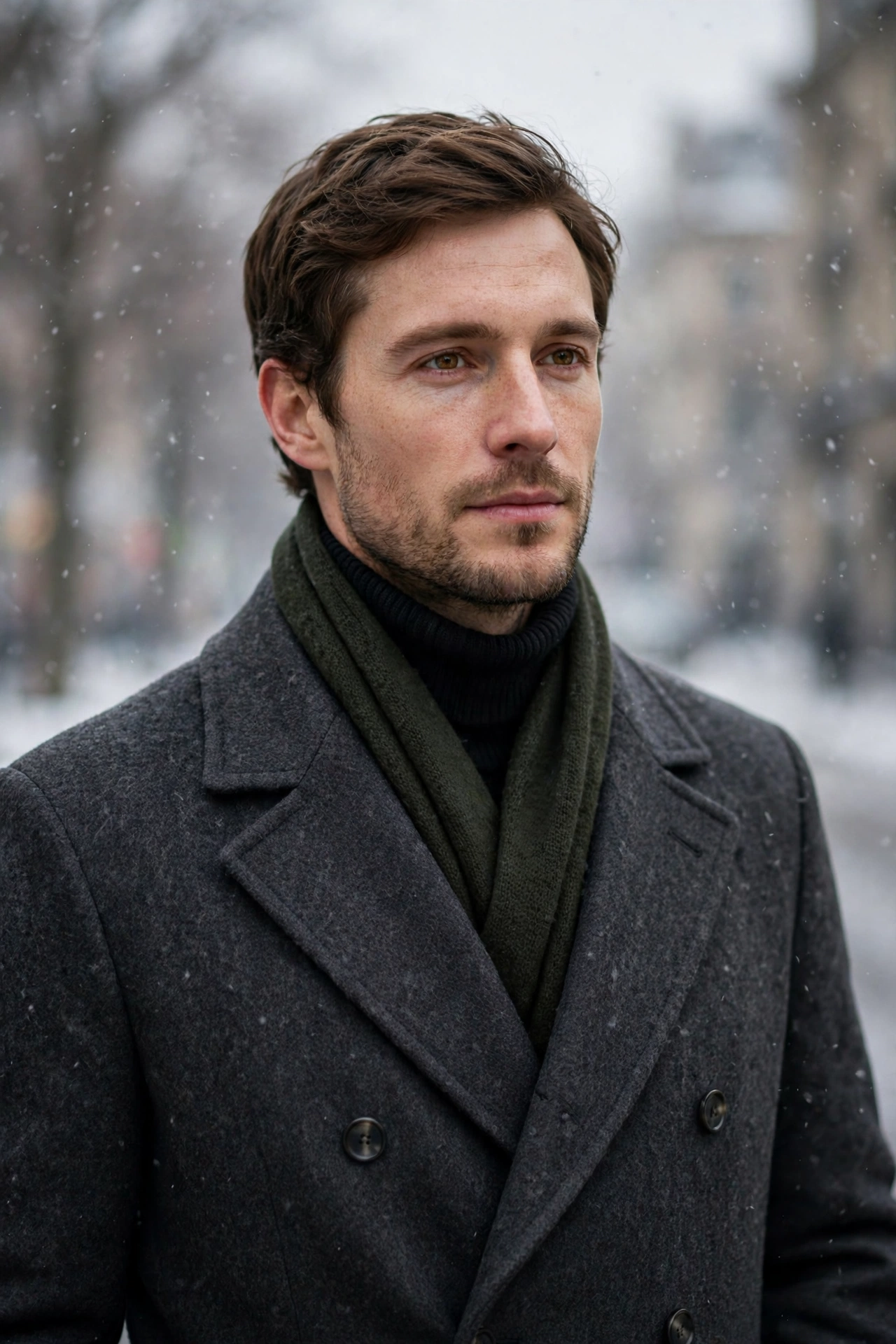
Your coat is the outer shell that faces wind, rain, and snow, so it needs to be warm, weather-ready, and roomy enough to fit over your other layers.
A classic wool overcoat is the smartest all-round choice. It looks sharp, keeps out the wind, and works for both office days and evenings out. For very cold or wet weather, a parka with a hood or a padded puffer jacket is more practical. Check the length too: a coat that covers your hips keeps you warmer than a short jacket, and a knee-length overcoat looks elegant over smart clothes.
Always try a coat on while wearing a sweater, not just a T-shirt, so you know it fits over real layers. The shoulders should sit neatly, and you should be able to close it without pulling. A classic overcoat is also the easiest choice for a winter wedding, and our guide on what to wear to a wedding for men explains how to style it for formal days. Check the pockets too. Deep pockets keep your hands warm on short walks, and an inside pocket safely holds your phone and wallet. A coat with a storm placket over the buttons blocks wind better than an open button front on cold days.
Layer Without Looking Bulky

The biggest fear with layering is looking bulky, but that usually happens when pieces are too thick or too loose. A few simple rules keep layers slim and neat.
First, use thin layers. Two thin layers trap more heat than one thick one, and they sit flatter under a coat. Second, keep each layer close to the body, especially around the shoulders and waist, so the shape stays clean. Third, limit yourself to one thick piece in an outfit: if your sweater is chunky, choose a lighter coat, and if your coat is padded, wear a finer knit underneath.
Dark colors and simple patterns also help layers look slimmer, and a half-zip top under a sweater adds warmth without a bulky collar. A good pair of jeans makes a solid base for most layered looks, and our guide on how to style jeans shows which fits work best. When you look in the mirror, you should see one clean silhouette, not a stack of separate pieces. Try the full outfit on at home before a cold day out, and sit down in it, so you know it stays comfortable when you move.
Winter Accessories That Finish the Look
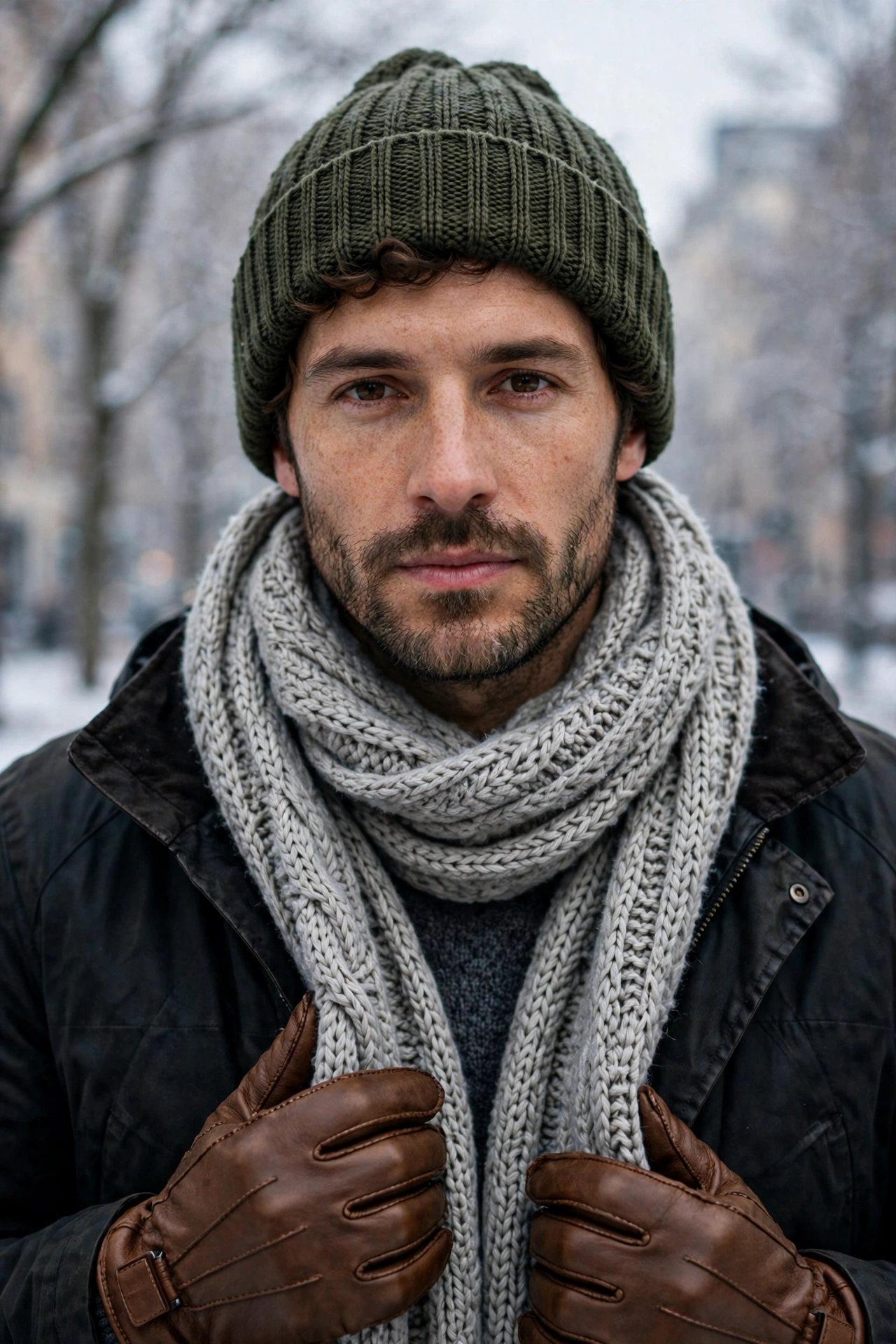
Accessories are small, but they make a big difference in winter. A lot of heat escapes from your head, hands, and neck, so covering them keeps you comfortable and completes the outfit.
A wool scarf is the most useful winter accessory. Drape it once around the neck for a relaxed look, or loop it twice on very cold days. Choose a scarf in a solid color or a simple pattern that matches your coat. Leather gloves look smart and block the wind well, and many pairs now work with phone screens, so you do not have to take them off outdoors. A simple knitted beanie keeps your head warm, while a flat cap suits smarter outfits.
Do not forget warm socks and solid boots. Thick wool socks stop cold feet, and leather boots with a good grip handle icy streets better than dress shoes. Match your belt and gloves in color when you can, and keep accessories simple: two or three pieces are enough to finish a layered winter outfit. On wet winter days, waterproof boots matter more than style alone. Look for sealed seams and a rubber sole with grip, and keep a spare pair of dry socks in your bag for long days out.
Smart Casual Layering for Work

Work outfits need layers that look professional indoors and still keep you warm outside. The trick is to build layers you can remove one at a time during the day.
Start with a base layer, then a shirt, then a fine sweater or a blazer. Let the shirt collar peek out over the sweater for a polished detail, and keep the blazer dark and simple so it matches your coat. Dark trousers or chinos complete the look, and your overcoat goes on top for the journey to work. In a warm office, you can remove the coat and still look smart in the sweater and blazer.
For office parties or dressier evenings, swap the sweater for a blazer over a shirt, or add a tie for a sharper finish. Our guide on what cocktail attire for men means explains the dress code for those smarter events. With the same coat and base layers, small changes take you from a normal workday to a polished evening without a full outfit change. Keep a spare tie or pocket square in your coat pocket for days that turn into evenings, so you can smarten up without going home.
Weekend Layers for Cold Days Out
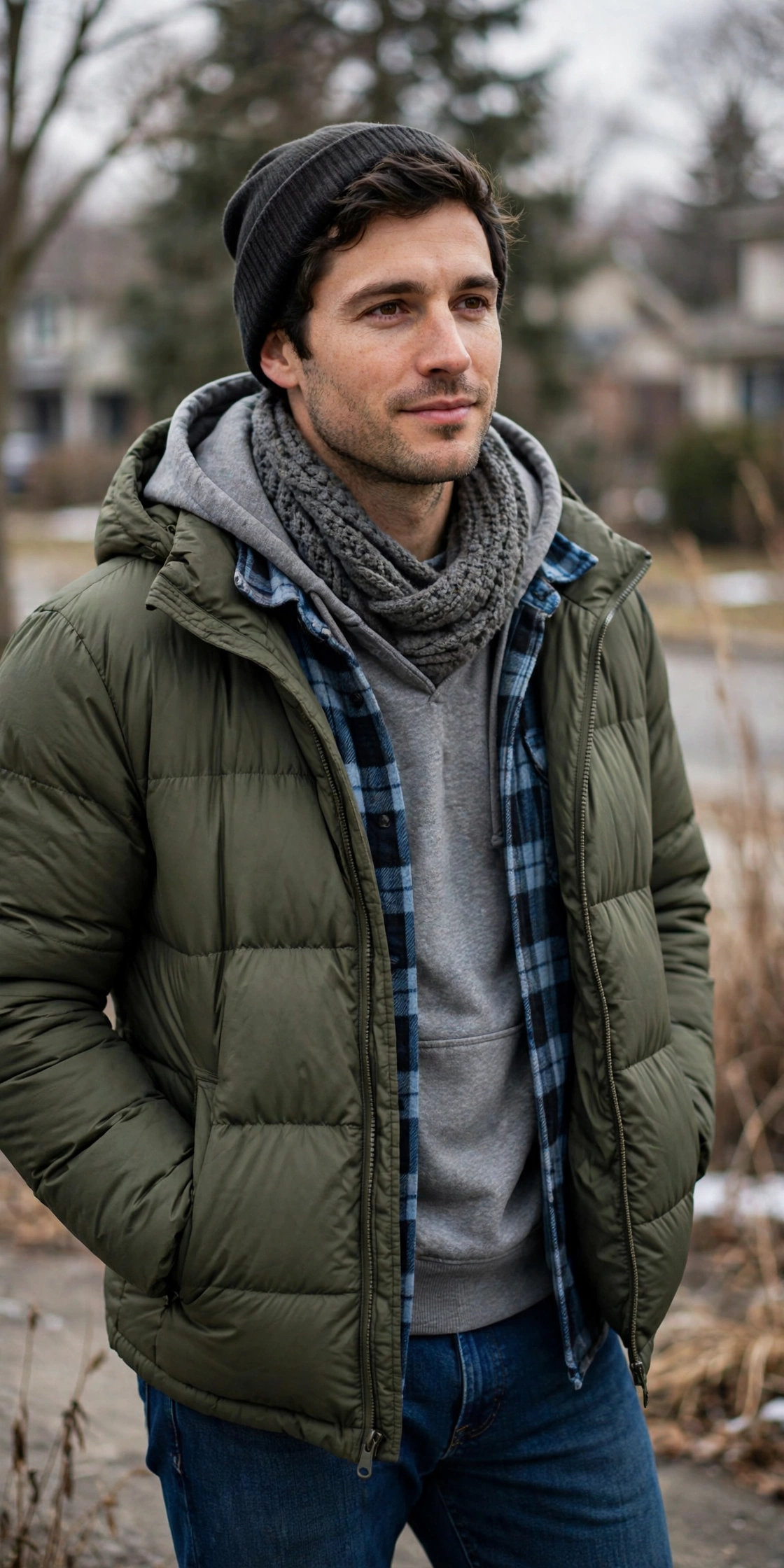
Weekends call for layers that are warm, comfortable, and easy to move in. You do not need to look formal, but a little thought still keeps the outfit looking good.
A simple weekend formula is a thermal top, a hoodie or crew neck sweatshirt, and a puffer jacket or parka on top. Pair it with jeans and sturdy boots or clean sneakers, and you are ready for walks, markets, and casual lunches. A puffer jacket is ideal here because it is light, very warm, and easy to pack away when you go indoors.
Keep colors relaxed but coordinated: navy, grey, olive, and black mix easily, and one brighter piece, like a rust-colored beanie or a checked scarf, adds personality. Avoid wearing every warm thing you own at once. Three good layers beat five random ones, and you will feel freer and look neater. With a few reliable pieces, weekend winter dressing becomes quick, comfortable, and always ready for cold weather. A crossbody bag or a coat with secure pockets keeps your hands free for coffee, shopping bags, and photos on winter days out.