
Jeans are the hardest-working item in your closet — and the easiest to get wrong. Most of us own five pairs and reach for the same one every time, while the other four sit there making us feel guilty. The problem is rarely the jeans themselves. It’s that nobody ever taught us how to style jeans beyond “t-shirt and sneakers.”
Here’s the truth: the right jeans, styled with intention, work for a work meeting, a date night, brunch, and a red-eye flight. This guide covers fit, washes, occasion formulas, shoe pairings, mistakes to avoid, and denim care.
Find Your Fit First
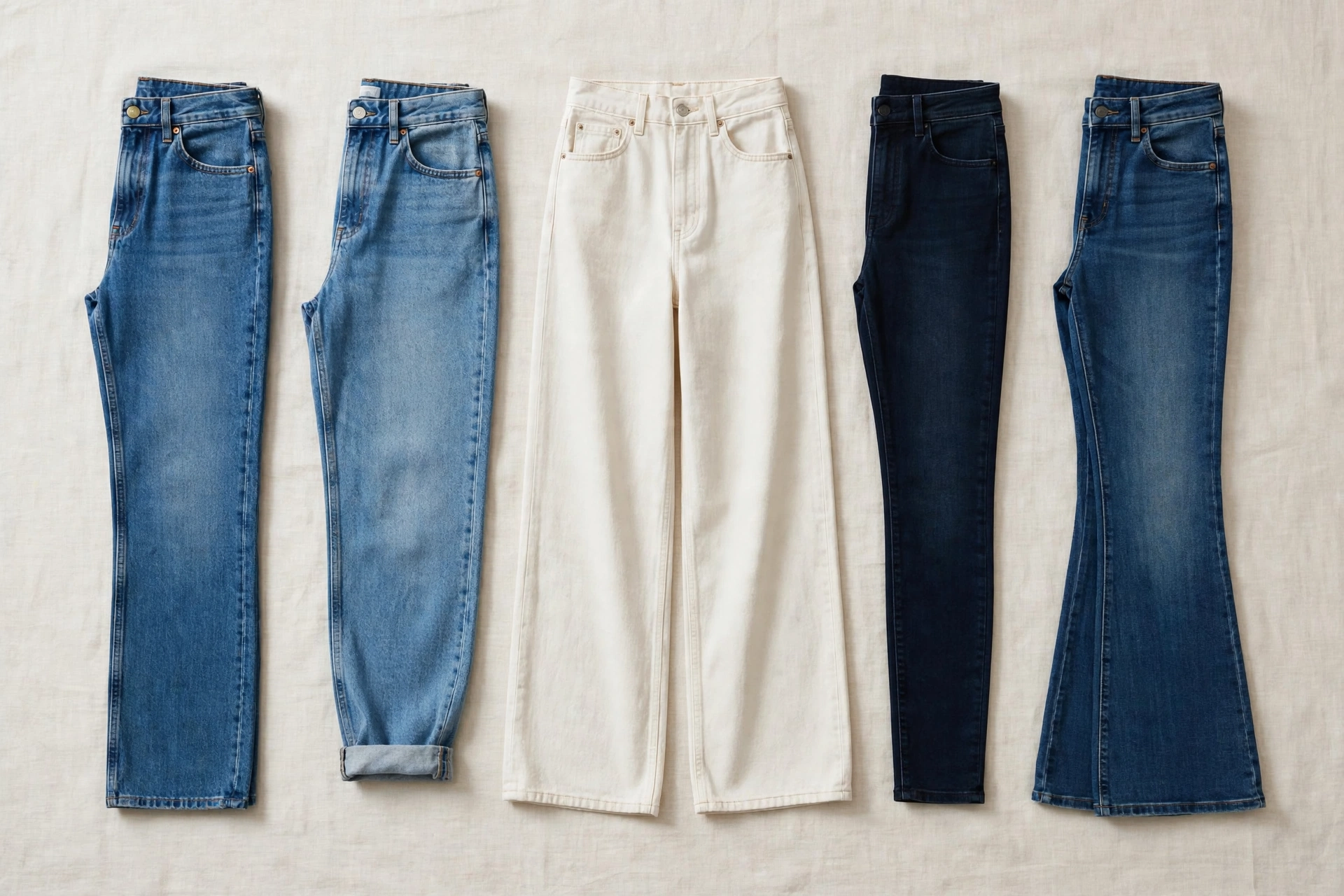
Before a single outfit, get the fit right — because no styling trick rescues jeans that don’t fit. Here’s an honest rundown of the five cuts that matter:
- Straight-leg. The universal soldier. Fitted through the hip and thigh, straight from knee to ankle. Suits nearly every body type, works with every shoe, and never looks dated. If you buy one pair this year, make it this.
- Mom jeans. High-rise, relaxed through the hip, tapered at the ankle. Brilliant on hourglass and pear shapes because the high waist defines the smallest part of the torso. Tuck your top in — the silhouette only works when the waistband is visible.
- Wide-leg. Dramatic, breezy, and surprisingly elongating when the rise is high and the hem grazes the floor. Best on taller frames or with heels; petites should choose a cropped wide-leg to avoid being swallowed.
- Skinny. Not dead, just demoted — still best for tucking into knee-high boots and balancing oversized tops. Choose dark rinse, minimal stretch; faded whiskered skinnies read dated.
- Bootcut. The quiet comeback: slight flare from the knee balances wider hips and loves heeled boots. The hem should kiss the shoe top — too long drags, too short breaks the proportion.
Fit checks: pinch an inch of fabric at the thigh (skinnies excepted), no waistband gaping when you sit, no pulling at the back rise. Size for your hips and tailor the waist — a $15 alteration transforms off-the-rack jeans. Our guide to dressing for your body type matches silhouettes to shapes.
Washes Decoded: When to Wear Each
Wash is the dress code of denim. Get it right and jeans read intentional; get it wrong and the whole outfit feels off.
- Dark rinse (unwashed indigo). The dressiest denim. Reads almost like trousers, which is why it works for smart-casual offices and dinners. Keep them dark by washing rarely.
- Medium wash. The everyday workhorse. Relaxed, friendly, perfect for weekends, errands, and casual Fridays. The most versatile wash you can own.
- Light wash. Pure weekend energy — brunch, vacations, summer days. Avoid for anything requiring polish; light wash plus a blazer still reads casual.
- Black jeans. The evening jean. Black denim with a silk top and heels goes to dinners and events where blue denim would feel underdressed. Choose a true black, not faded charcoal.
- White and ecru. Crisp, fresh, and trickier than they look. Best in structured fits (straight or wide-leg) with substantial fabric — thin white denim shows everything. Ground them with tan or metallic shoes.
One rule governs all of it: the darker and more uniform the wash, the dressier the jean. Distressing, whiskering, and heavy fading all push jeans firmly into casual territory.

How to Style Jeans for Every Occasion
Same jeans, different occasions — it’s all in what you pair them with. Here are the formulas that actually work:
Casual Weekend
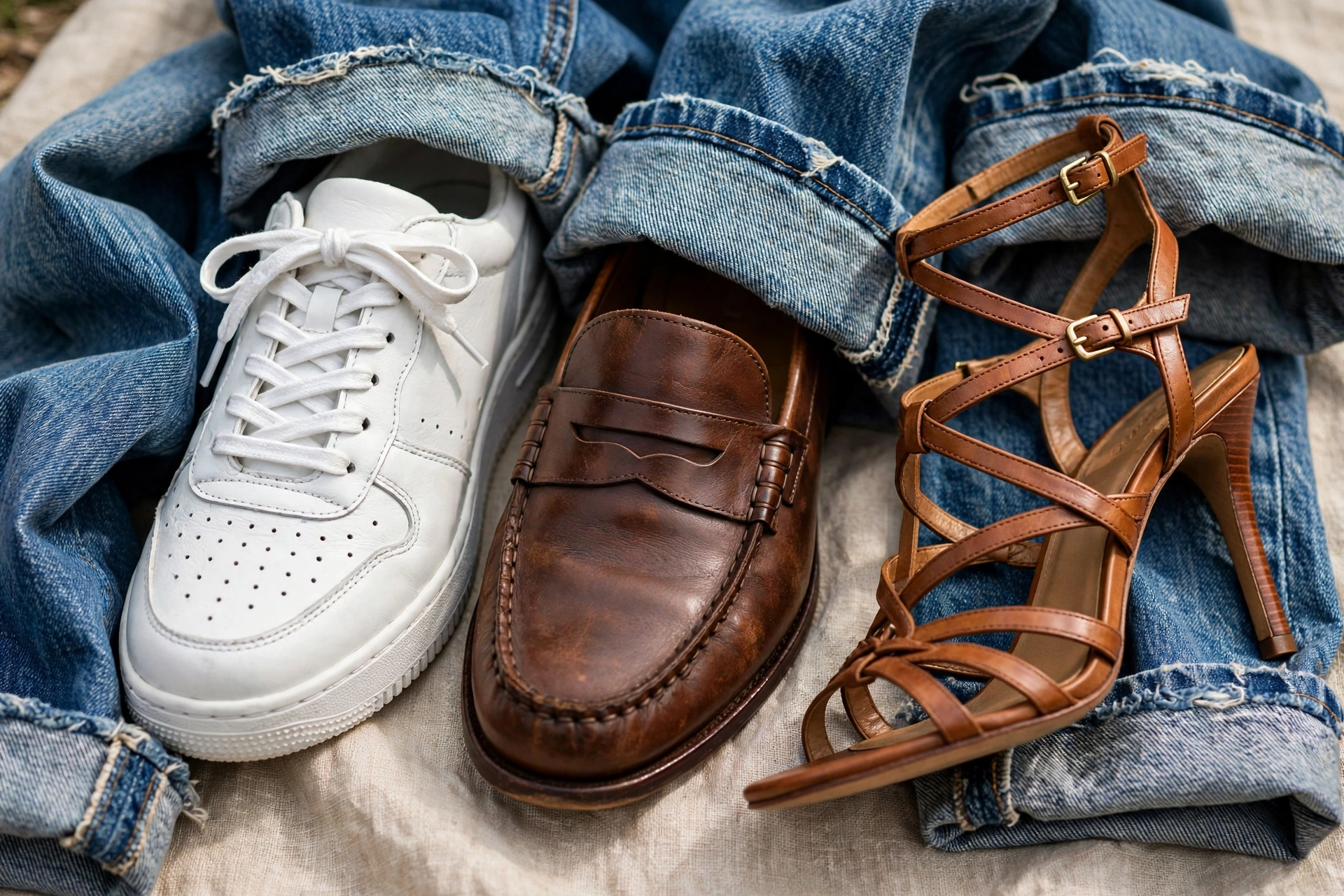
Medium-wash straight jeans, a Breton striped top half-tucked, white sneakers, and a canvas tote. This is the off-duty uniform for a reason — it looks put-together with zero effort. Roll the cuffs once to show some ankle; it instantly sharpens the silhouette.
Smart Casual Office
Dark-rinse straight or slim jeans, a tailored blazer, a simple shell top or fine-knit sweater, and pointed flats or loafers. The dark wash is doing the heavy lifting here — it keeps the whole look office-appropriate. Skip distressing entirely and keep the hem clean. When the office dress code allows denim, this formula is indistinguishable from trousers at a glance.
Date Night
Black skinny or dark straight jeans, a silk camisole or off-shoulder top, heeled ankle boots, and one statement earring. Black denim after dark reads sleek with luxe fabrics on top. A red lip completes it — see our French girl style guide for proof.
Brunch With Friends
Light-wash mom jeans, a tucked-in floral blouse or puff-sleeve top, strappy flat sandals, and layered delicate necklaces. Brunch is the one occasion where playful denim shines — lean into the relaxed wash and have fun with the top.
Evening Out
Dark wide-leg jeans that graze the floor, a fitted black bodysuit or corset-style top, heeled mules, and a clutch. The long, unbroken line of the wide leg plus heels creates serious drama. Keep the top fitted to balance the volume below.
Travel Days
Black or dark straight jeans with stretch, a soft knit sweater, slip-on sneakers or loafers, and a crossbody bag. Dark stretch denim is the frequent flyer’s secret weapon — comfort without looking like you gave up. Avoid low-rise for long sits.

Shoe Pairings: What Works With Which Cut
Shoes make or break a jeans outfit more than any other element. The rules are simple once you know them:
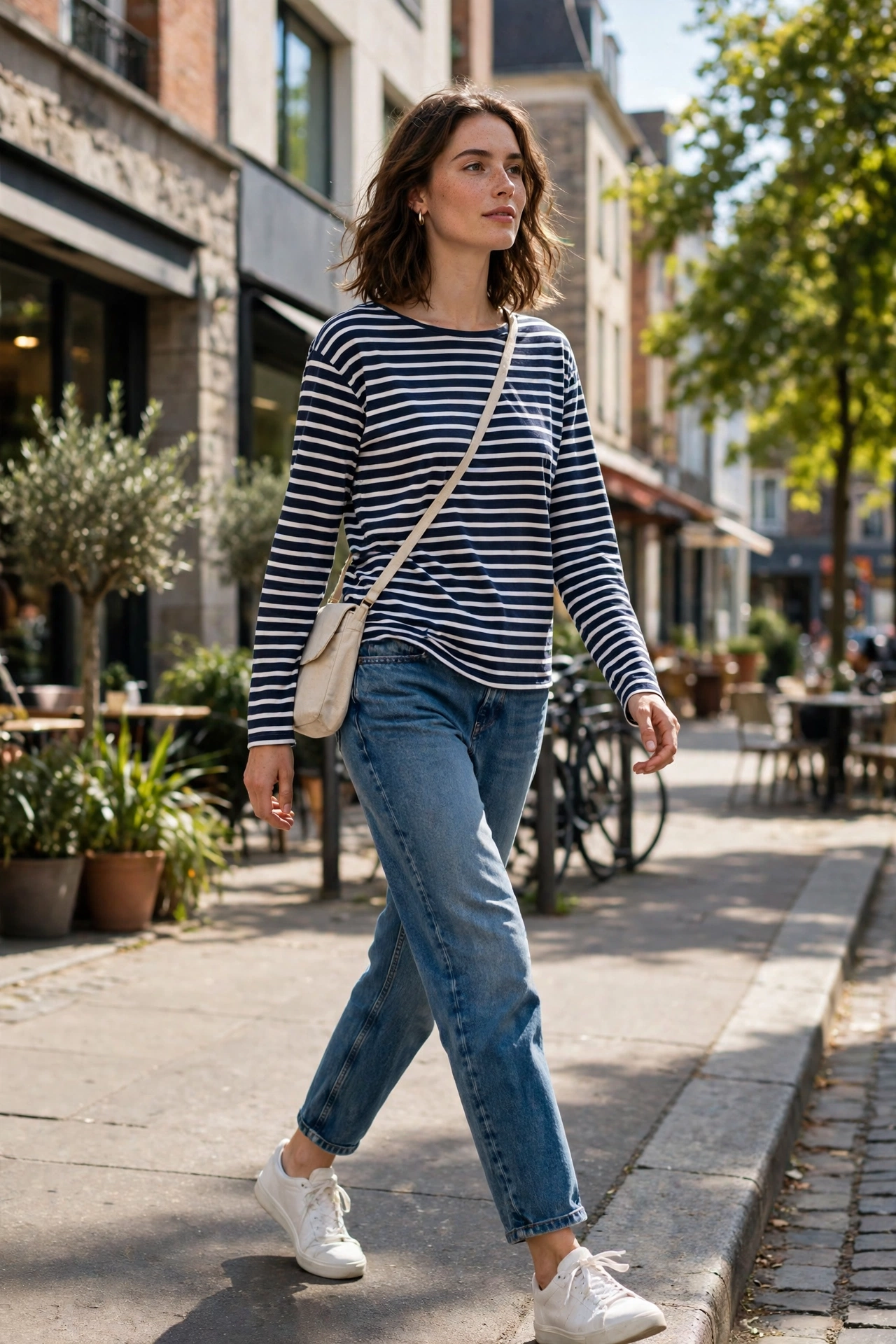
- White sneakers go with everything except floor-grazing wide-legs (the hem swallows them). They’re the default for straight, mom, and cropped cuts.
- Loafers instantly elevate medium and dark washes — the preppy polish contrasts beautifully with denim’s ruggedness. Best with straight, slim, and cropped cuts that show ankle.
- Heeled ankle boots are the skinny jean’s best friend (tuck the hem in) and add edge to mom jeans. With bootcut, the hem should cover the boot shaft.
- Pointed flats elongate the leg line under straight and slim jeans — ideal for petites and for smart-casual settings.
- Strappy heeled sandals dress up any dark or black jean for evening. The delicacy of the shoe against sturdy denim is the whole contrast that makes it work.
- Knee-high boots demand skinnies or tucked-in slim cuts — never try to stuff wide-legs into them.
Golden rule: show ankle with flats (cuff or crop); let the hem meet the shoe with heels and boots. A clean jean-to-shoe junction makes the whole outfit look deliberate.
Tops That Elevate Denim
The fastest way to make jeans look expensive is what you put on top. Denim is a neutral canvas — the top sets the register.
- A crisp white shirt (half-tucked) turns any jeans into a classic. It works because of the contrast: refined cotton against rugged denim.
- Silk or satin camisoles instantly dress up dark and black jeans for evening — the fabric contrast does all the work.
- Fine-knit turtlenecks tucked into high-rise jeans create a sleek, elongated line perfect for fall and winter.
- Structured blazers are the single most transformative layer for jeans — they add shoulders, structure, and intention in one move.
- Chunky knits in cream or camel balance the casualness of medium-wash denim for an effortlessly cozy look.
Avoid shapeless oversized tees with relaxed jeans (volume on volume reads sloppy) and anything too fussy — denim’s charm is ease, so let the top bring polish, not stiffness.
The Third-Piece Rule for Jeans
Jeans plus a top looks fine; add a third piece and it looks styled. That layer — blazer, trench, denim jacket, long cardigan — separates “thrown on” from “styled.”
The easiest version: a classic denim jacket over a white tee and black jeans. Denim on denim works with contrasting washes — medium over dark creates depth; matching washes risk the Canadian tuxedo.
Other winning third pieces: a camel trench over dark skinnies, an oversized blazer over mom jeans, a longline cardigan over straight-legs. Each one adds vertical lines and structure that jeans alone can’t provide.

Denim Mistakes to Avoid
These are the small errors that quietly cheapen an otherwise good jeans outfit:
- Hem pooling. Fabric puddling over your shoes looks careless, not relaxed. Hem, cuff, or crop — pick one and commit.
- Waistband gaping. If you can fit a fist behind the waistband, the jeans don’t fit. Size for hips, tailor the waist.
- Whiskers in the wrong place. Fading and whiskering draw the eye — make sure they’re highlighting areas you want emphasized.
- Too much stretch, too thin. Ultra-stretchy jegging-style denim bags out at the knees by noon. Look for denim with 1–2% elastane max and real substance.
- All-denim overload. Jacket, jeans, and chambray shirt in the same wash is a costume. Contrast your washes or break it up with non-denim pieces.
- Wearing them out. Jeans with thinning knees, blown-out crotches, or permanent knee bags have retired — let them go to the DIY pile, not dinner.
Fit Tips for Petite and Plus Frames
Great jeans exist for every body — the search just needs a strategy.
Petites: high-rise cuts elongate legs; cropped hems show shoe without overwhelming your frame. Love wide-legs? Choose cropped ones with heels. Petite inseams save constant hemming.
Plus frames: choose contoured waistbands (higher at the back, no gaping), stretch with recovery, and dark uniform washes. Wide-leg and bootcut balance beautifully; skip low-rise.
Everyone benefits from the same golden rule: fit the largest part of you and tailor the rest. A $15 waist alteration is the cheapest upgrade in fashion.
Caring for Your Denim So It Lasts
Good jeans are an investment — treat them like one. The denim-head mantra is simple: wash less, wash cold, wash inside out.
- Wash every 8–10 wears (spot-clean stains in between). Over-washing is what fades dark rinses and kills stretch.
- Cold water, inside out, gentle cycle — and skip the dryer. Hang dry away from direct sun to prevent fading.
- Never use fabric softener on stretch denim; it breaks down elastane over time.
- Freeze the myth: putting jeans in the freezer doesn’t clean them — it just makes cold dirty jeans. Wash them when they smell.
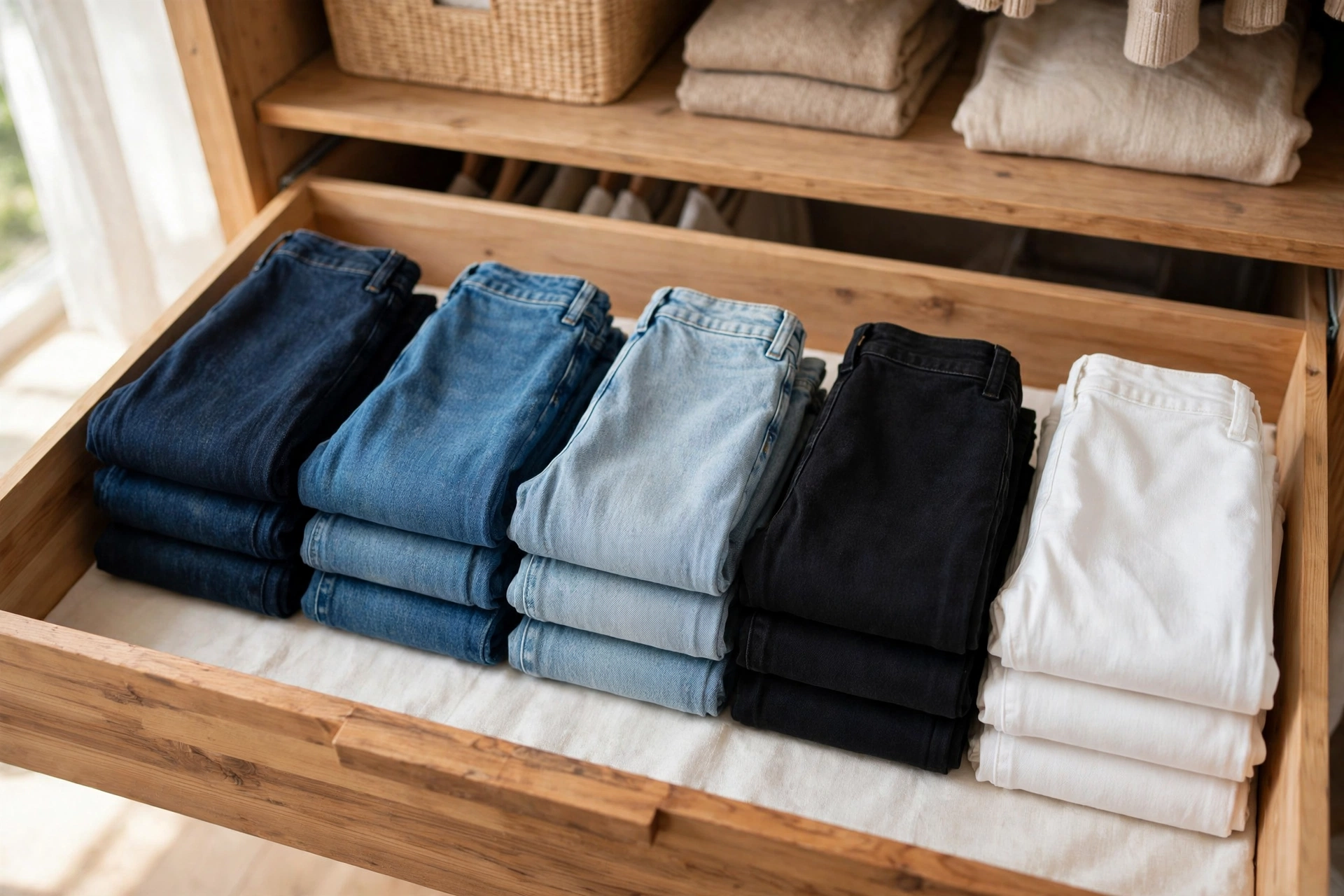
- Rotate your pairs. Denim needs 24–48 hours to spring back after wearing. A two-pair rotation doubles the life of both.
Store jeans folded, not hung — hanging stretches the waistband over time. And when the knees finally give out after years of faithful service, that’s not failure; that’s a jean that earned its retirement.
How to Style Jeans FAQs
How many pairs of jeans do I actually need?
Three covers it: dark-rinse straight-legs (dressy), medium-wash relaxed (casual), black skinnies (evening) — a complete denim wardrobe that slots into a minimal closet (see our capsule wardrobe guide). Add white or light wash only if worn weekly.
Are skinny jeans really out of style?
They’re no longer the default, but they’re not “over” — they’re a tool now rather than a uniform. Dark, clean skinnies still excel tucked into boots and under long coats. What’s dated is the faded, whiskered, low-rise skinny. Keep the silhouette, upgrade the wash and rise.
Can I wear jeans to the office?
If your dress code allows it: dark rinse, no distressing, tailored fit, polished shoes, and a blazer or structured top. The jeans should read as “dark trousers” at a glance. When in doubt, go one step dressier than you think necessary.
What jeans make legs look longer?
High-rise cuts (the waistband sits at your natural waist, lengthening the leg line), hems that graze the top of your shoes with heels, and monochromatic dark washes top-to-bottom. Pointed-toe shoes add the final inch visually.
How do I stop jeans from stretching out?
Buy denim with 1–2% elastane (not 4–5%, which bags faster), size them snug in the store — they relax about half a size — and rest them 24–48 hours between wears. A cold wash and hang-dry also restores shape.
The bottom line: jeans reward intention. Find your fit, learn your washes, pair shoes deliberately, and always add the third piece. Do that, and the hardest-working item in your closet finally works as hard as you do.