
Tattoos tell stories — but sometimes the story changes. Maybe it’s a name that no longer belongs, a design you’ve outgrown, or ink that just didn’t age well. Whatever the reason, you’re not alone. Millions of people seek tattoo removal every year, and thanks to a major leap in laser technology, erasing unwanted ink is now safer, faster, and more comfortable than ever before.
Enter PicoWay tattoo removal — a next-generation laser system that’s changing the game for dermatologists and patients alike. With ultra-short energy pulses, multi-wavelength precision, and a safety profile that works across all skin tones, PicoWay has become the gold standard in modern tattoo removal.
This guide covers everything you need to know: how it works, what to expect, how many sessions you’ll need, aftercare tips, costs, and how it compares to other treatments.
What Is PicoWay Tattoo Removal?
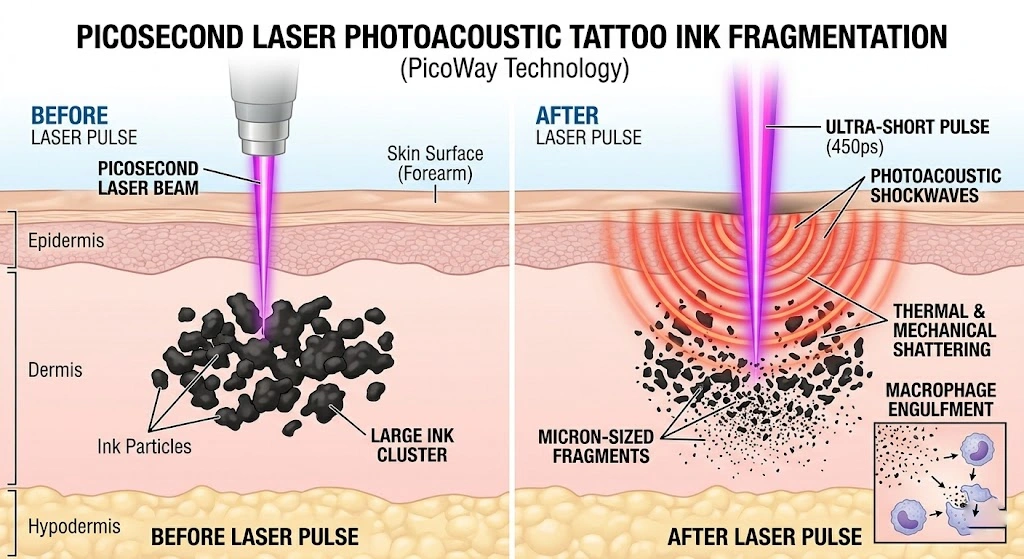
PicoWay is an advanced laser system developed by Candela Medical and cleared by the FDA, CE, and TGA for both tattoo removal and the treatment of benign pigmented lesions.
What makes it different from older lasers? Speed — and physics.
Traditional Q-switched lasers rely on heat (nanosecond pulses) to break down tattoo ink. PicoWay operates in picoseconds — that’s one trillionth of a second per pulse. At this speed, the laser doesn’t primarily generate heat. Instead, it produces photoacoustic energy: powerful pressure waves that shatter ink particles into microscopic fragments without significantly heating the surrounding skin.
Those tiny fragments are then cleared naturally by the body’s immune system over the following weeks.
The result? Effective ink removal with less pain, faster healing, fewer sessions, and a dramatically lower risk of scarring or skin damage — especially for people with darker complexions where older lasers often fell short.
Key Benefits of PicoWay Laser Tattoo Removal
Dermatologists consistently recommend PicoWay over older laser technologies for several compelling reasons:
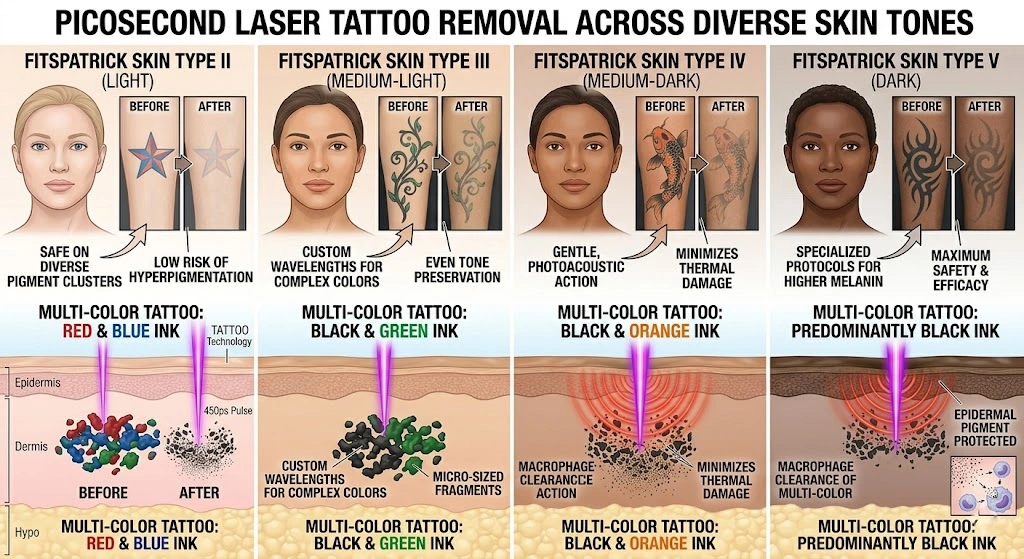
Works on virtually all ink colors. Thanks to three selectable wavelengths, PicoWay can target everything from black and brown to the notoriously stubborn blues, greens, reds, and yellows. Multi-colored tattoos that once required different devices can now be treated in one system.
Safe for all skin tones. PicoWay’s photoacoustic mechanism means it targets pigment without excessive heat buildup, dramatically reducing the risk of post-inflammatory hyperpigmentation (dark spots) or hypopigmentation (light spots) — a serious concern with older lasers on medium-to-dark skin.
Fewer sessions required. Most patients achieve significant fading — or complete clearance — in fewer visits than traditional laser methods require. This means less time, less cost, and less waiting.
Minimal downtime. Most patients resume daily activities within a day or two of each session. Compare that to older thermal lasers, which often caused significant redness, swelling, and blistering that lasted a week or more.
Lower discomfort. Picosecond pulses generate far less heat than nanosecond pulses. While no tattoo removal is completely painless, patients consistently report PicoWay sessions as more tolerable.
Reduced scarring risk. Because the laser protects surrounding tissue instead of burning through it, long-term skin texture changes are rare — a major concern with older removal methods.
How Does PicoWay Tattoo Removal Work? A Step-by-Step Breakdown
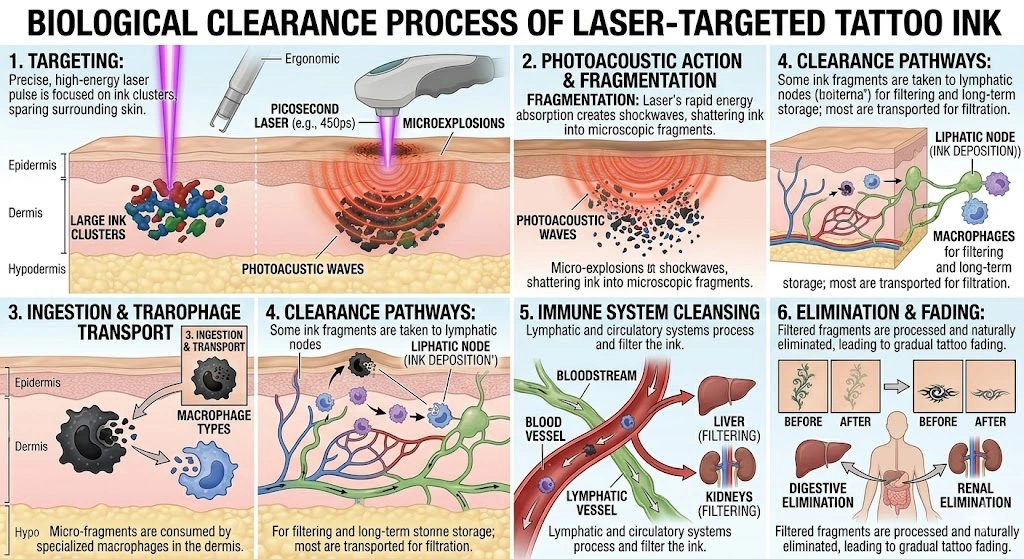
PicoWay isn’t just a powerful laser. It’s a carefully engineered system that works with your body’s biology. Here’s what happens at each stage of treatment:
Step 1: The Laser Precisely Targets Tattoo Ink
The PicoWay handpiece emits ultra-fast bursts of light energy tuned to specific wavelengths that ink absorbs. Because the pulses are so short, the energy doesn’t have time to spread into surrounding tissue — it’s concentrated directly on the pigment below the skin’s surface.
This precision means healthy skin is left largely untouched, reducing the redness, irritation, and recovery time that characterize older thermal laser methods.
Step 2: Photoacoustic Energy Shatters Ink Particles
When PicoWay’s energy hits a tattoo ink particle, it doesn’t burn it — it explodes it. The rapid energy delivery creates a shockwave effect (photoacoustic pressure) that physically fractures pigment into particles so small that the body’s immune cells can carry them away.
This is fundamentally different from heat-based removal, which vaporizes pigment but can also damage collagen and skin tissue in the process.
Step 3: Multiple Wavelengths Target Different Ink Colors
One of PicoWay’s biggest clinical advantages is its multi-wavelength platform. Different ink colors absorb light at different wavelengths, so a single-wavelength laser will always leave some colors behind.
| Wavelength | Target Ink Colors |
|---|---|
| 532 nm | Red, orange, yellow |
| 785 nm | Blue, green |
| 1064 nm | Black, dark brown |
By switching wavelengths, a trained provider can address virtually every color in a complex multi-color tattoo — something that was nearly impossible with older single-wavelength systems.
Step 4: Your Immune System Does the Rest
After the session, the shattered ink fragments don’t disappear instantly. Over the following weeks, your immune system’s white blood cells (macrophages) gradually engulf these tiny particles and transport them through the lymphatic system to be safely eliminated.
This is why fading happens progressively between sessions — and why spacing sessions 6–8 weeks apart gives your body enough time to clear the treated ink before the next round.
Step 5: The Skin Heals and Rebuilds
Beyond ink clearance, PicoWay’s photoacoustic energy gently stimulates collagen production in the treated area. This means that as the tattoo fades, the skin can actually improve in texture and firmness — a bonus you won’t get from older removal methods.
Redness and mild swelling typically resolve within 24–72 hours, and most patients are back to their routine the next day.
PicoWay Tattoo Removal Aftercare: What To Do (and What To Avoid)
How you care for your skin between sessions has a direct impact on how quickly you heal and how well the treatment works. Follow these guidelines after every session:
Do These Things
- Cleanse gently. Wash the area with mild, fragrance-free soap and lukewarm water. Pat dry — don’t rub.
- Moisturize consistently. Apply a thin layer of healing ointment (like Aquaphor or plain petroleum jelly) two to three times daily until the skin has fully healed.
- Protect from the sun. Apply SPF 30 or higher every day, even on cloudy days. UV exposure can trigger pigment changes in healing skin, which may complicate your results.
- Use cool compresses. If redness or swelling develops, a clean cold pack applied gently for a few minutes can help.
- Stay hydrated. Drinking plenty of water supports your lymphatic system, which is actively working to clear treated ink particles.
Avoid These Mistakes
- Don’t pick or scratch. Scabs and peeling skin protect healing tissue. Removing them early can cause scarring.
- Avoid heat exposure. Hot showers, saunas, and swimming pools can irritate treated skin and introduce infection risk during the healing window.
- Skip the actives. Pause retinoids, exfoliants, AHAs, BHAs, and alcohol-based toners for at least a week post-treatment.
- Don’t work out intensely right away. Heavy sweating can irritate and inflame recently treated skin.
- Avoid tanning and smoking. Tanning creates pigment risk, and smoking slows the body’s healing process significantly — both will extend your recovery time and compromise results.
Pro tip: Always follow your specific provider’s post-care instructions. Every tattoo and every patient is different, and a board-certified dermatologist’s guidance should take priority over general advice.
PicoWay vs. PicoSure: Which Laser Wins?
PicoWay and PicoSure are the two most recognized picosecond tattoo removal systems on the market. Both are significant upgrades from Q-switched lasers, but they’re not identical.
| Feature | PicoWay | PicoSure |
|---|---|---|
| Manufacturer | Candela Medical | Cynosure |
| Pulse Duration | 300–450 picoseconds | ~750 picoseconds |
| Wavelengths Available | 532 nm, 785 nm, 1064 nm | 755 nm, 532 nm |
| Best For | All skin tones; all major ink colors | Light-to-medium skin; limited on deep blues/greens |
| Comfort & Recovery | Minimal heat; faster healing | More heat-based; may cause more sensitivity |
The bottom line: PicoWay’s shorter pulse duration and broader wavelength range give it an edge for multi-colored tattoos and patients with darker skin tones. PicoSure remains a solid option, but its wavelength limitations mean some colors — particularly deep blues and greens — may not clear as effectively.
For most patients, especially those with darker complexions or vibrant, multi-colored tattoos, PicoWay offers a more complete and safer solution.
Potential Side Effects: What’s Normal vs. What to Watch For
PicoWay is one of the safest tattoo removal systems available, but like any medical procedure, it can cause mild side effects. Knowing what’s expected helps you feel confident during recovery.
Redness and swelling are the most common reactions and typically resolve within 1–3 days. A clean cold compress helps.
Skin sensitivity and warmth in the treated area is normal for a few hours post-session. Keep the area moisturized and avoid tight clothing or friction.
Temporary pigment changes — slight lightening or darkening of the skin — can occur, particularly with sun exposure. These almost always resolve on their own as the skin regenerates over the following weeks.
Blistering can occasionally occur and is part of the normal healing response. Don’t pop blisters — let them resolve naturally and keep the area clean.
Serious or long-lasting complications are rare with PicoWay when treatment is performed by a qualified, experienced provider. If you notice signs of infection (increasing pain, warmth, pus, or spreading redness), contact your provider promptly.
Costs, Sessions, and What to Expect
How Much Does PicoWay Tattoo Removal Cost?
PicoWay sessions typically range from $250 to $500 per session in the United States, depending on:
- The size and complexity of the tattoo
- The number of colors involved
- Your geographic location and the clinic you choose
- The number of sessions required
While PicoWay costs slightly more per session than older Q-switched lasers, patients often require significantly fewer total sessions — which can make the overall cost comparable or even lower in the long run.
Always get a consultation with a board-certified dermatologist or licensed provider before committing to treatment. Be cautious of deeply discounted offers at unqualified clinics; laser tattoo removal requires clinical expertise to be both safe and effective.
How Many Sessions Will You Need?
There’s no universal answer — every tattoo and every body responds differently. That said, most patients need between 4 and 10 sessions, spaced 6 to 8 weeks apart.
Factors that affect the total number of sessions include:
- Ink density and layering — Professional tattoos with heavy ink deposit take longer than amateur work
- Color complexity — Single-color tattoos clear faster than multi-color designs
- Tattoo age — Older, faded tattoos often respond faster
- Skin tone — Requires careful calibration but PicoWay handles all tones effectively
- Location on the body — Areas with better circulation (like the chest) tend to clear faster than extremities (like ankles)
- Your immune system health — Smoking, poor hydration, and certain medical conditions can slow results
You’ll typically see visible fading after the first or second session, with progressive improvement at each visit.
PicoWay for Tattoo Fading vs. Full Removal
Not everyone wants their tattoo completely erased. If you’re planning a cover-up, partial fading may be all you need — and it takes fewer sessions.
A skilled tattoo artist can work over a lightened (not necessarily fully removed) tattoo much more easily than over a dark one. If you’re considering a cover-up, talk to your tattoo artist first about how light they need the existing ink to be, then work backward with your removal provider to plan the appropriate number of sessions.
Final Thoughts: Is PicoWay the Right Choice for You?
PicoWay tattoo removal represents the current pinnacle of laser ink removal technology. Its combination of ultra-short pulse duration, multi-wavelength capability, and photoacoustic mechanism makes it effective on a broader range of tattoos — and safer for a broader range of patients — than any previous system.
If you have a multi-colored tattoo, darker skin, or have struggled with results from other lasers, PicoWay is worth considering seriously. Even for straightforward black ink removal, its speed and comfort make it an excellent choice.
The most important step is finding a qualified, experienced provider who uses genuine PicoWay equipment and takes a customized approach to your treatment plan. A proper consultation, realistic expectations, and consistent aftercare will give you the best possible results.
Ready to start your removal journey? Schedule a consultation with a board-certified dermatologist to see whether PicoWay is the right fit for your skin and your goals.
Frequently Asked Questions
How long after tattoo removal can I get a cover-up tattoo?
You should wait 6 to 8 weeks after your final removal session, once the skin has fully healed and fading has reached the level your cover-up artist needs. Always get clearance from both your removal provider and your tattoo artist before proceeding.
Is tattoo fading better than full removal?
For cover-up purposes, fading is often the smarter choice. It costs less, requires fewer sessions, and gives your tattoo artist a lighter canvas to work with. Full removal makes more sense if you simply don’t want any ink in that area at all.
How often can you have PicoWay laser sessions?
PicoWay treatments should be spaced 6 to 8 weeks apart. This interval gives your skin adequate time to heal and allows your immune system to clear the fragmented ink particles before the next session. More frequent treatment doesn’t accelerate results — it just increases the risk of irritation or complications.
Does PicoWay work on all skin tones?
Yes. PicoWay is one of the few tattoo removal systems specifically designed to be safe and effective across the full Fitzpatrick skin type scale, including darker skin tones (Types IV–VI). Its photoacoustic energy delivery significantly reduces the risk of post-inflammatory pigment changes that older lasers commonly caused in patients with melanin-rich skin.
Is PicoWay tattoo removal painful?
Discomfort is generally described as similar to the snap of a rubber band — less intense than getting a tattoo for most people. The ultra-short pulse duration means significantly less heat buildup compared to older lasers, which translates to a more tolerable experience. Topical numbing cream can be applied before sessions to further minimize discomfort.