
You walk into the barbershop with a photo saved on your phone. You point at it. You say “this one.” Forty minutes later, you’re looking in the mirror at something that doesn’t quite match what you had in mind.
This happens more often than it should, and it’s rarely the barber’s fault. A mid fade looks different on every head, because curl pattern, hair density, and shrinkage all change how the final cut sits once you leave the chair.
This guide breaks down exactly what a mid fade is, how it stacks up against low and high fades, which version fits your hair type best, and how to talk to your barber so you get the cut you actually asked for — the first time.
What Is a Mid Fade?
A mid fade is a haircut where the hair fades down to bare skin starting at the temple, then gradually gets longer as it moves up toward the crown.
The temple is the starting point for the whole cut. Your barber works down from there with progressively smaller clipper guards, building a smooth blend from full length to skin.
Here’s the part that trips a lot of guys up: on 4C hair, curls shrink upward after the cut is finished. That means the fade can look noticeably higher on your head than where the clippers actually worked. This shrinkage effect is the biggest thing separating a mid fade from a low fade, a high fade, or a simple taper — and it’s also why so many mid fades look “off” a day or two after leaving the shop.
Mid Fade vs. Low Fade vs. High Fade
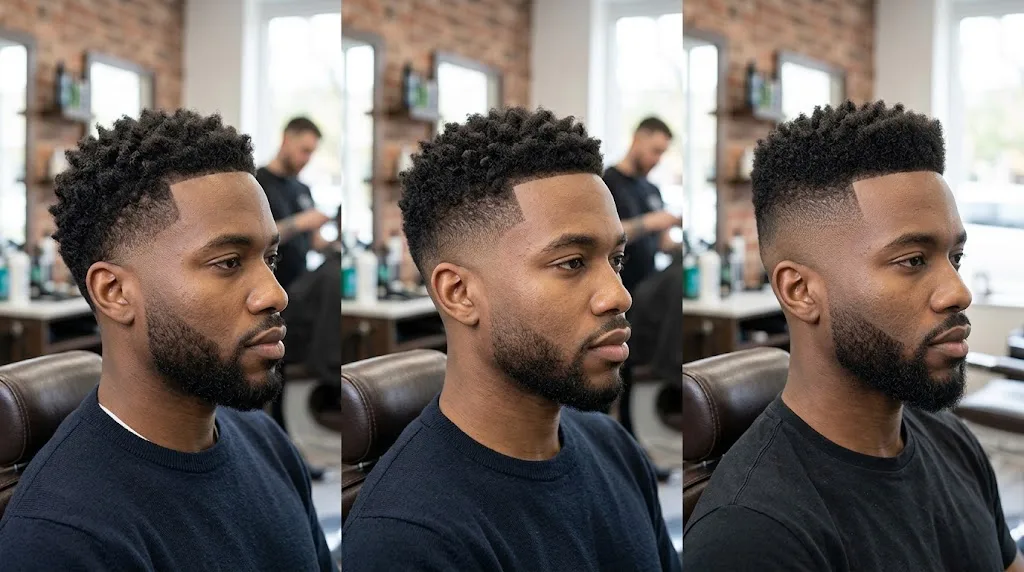
Where a fade starts changes the whole feel of the haircut. A fade that begins near your ear reads very differently from one that starts near your crown, even with the same guard work underneath.
| Feature | Low Fade | Mid Fade | High Fade |
|---|---|---|---|
| Starting point | Just above the ear | At the temple | Near the crown |
| Contrast level | Soft and subtle | Balanced | Sharp and bold |
| Effect on face length | Adds width | Stays neutral | Adds height |
| Best face shapes | Oval, round | Works for most shapes | Oblong, narrow |
| Overall vibe | Clean, understated | Structured without going extreme | Bold, high-definition |
If your hair is curlier or coilier, fade height matters even more. Contrast becomes much more visible the higher up the fade sits, so a high fade on 4C hair will read a lot bolder than the same height would on straighter hair.
Which Mid Fade Works Best for Your Hair Type?
Picking the right mid fade for black men isn’t just about which style looks coolest in a photo. Your curl pattern, hair density, and daily routine all affect how long the cut stays sharp between visits.
1. Tight Coils and 4C Hair
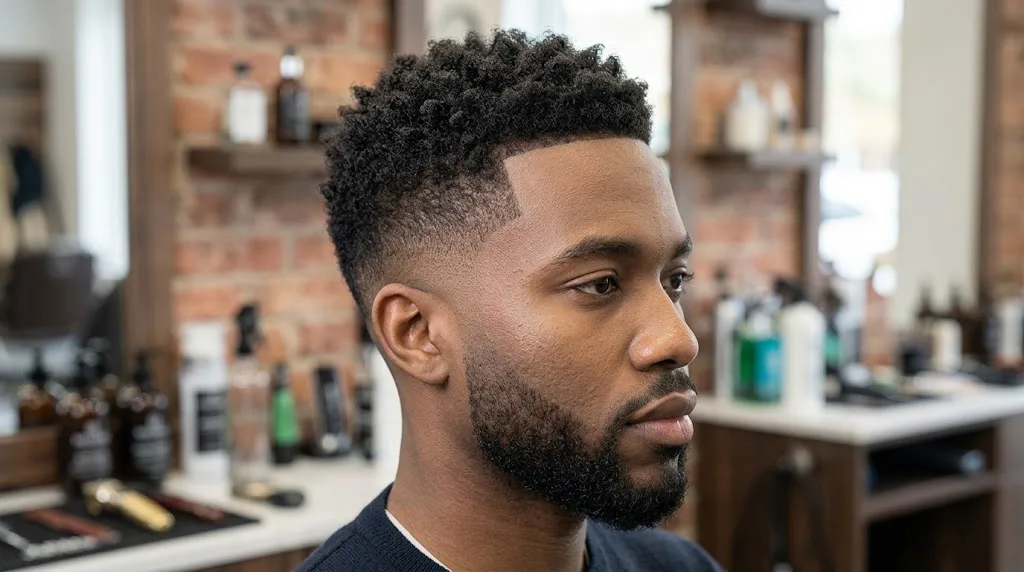
A skin mid fade is the strongest option for 4C hair, since it creates real contrast against dense, tightly coiled curls. Because shrinkage pulls hair upward after cutting, the fade line needs to sit slightly lower than you’d expect — otherwise it reads too high once your curls settle.
Skip that adjustment, and the grow-out phase shows up fast. Booking a touch-up every two weeks keeps a skin mid fade looking sharp instead of overgrown.
2. Waves and 360 Patterns
If you’re rocking 360 waves, a mid fade paired with a hard part works well because it frames the wave pattern instead of cutting across it. The fade stays tight at the temple while the top keeps enough length to hold the wave shape.
Waves naturally lie flatter, so shrinkage isn’t as big a factor here. For this hair type, a tapered mid fade tends to hold its shape the longest between cuts.
3. Curls and Volume Styles
For 3C-range curls worn with volume, a drop mid fade is usually the better call. It follows the natural curve of your head instead of running in a straight line, which keeps the back from looking top-heavy compared to the sides.
Curls in this range still shrink after cutting, so your barber needs to plan for that when setting the fade line. For volume-focused styles, a drop mid fade gives the most balanced overall shape.
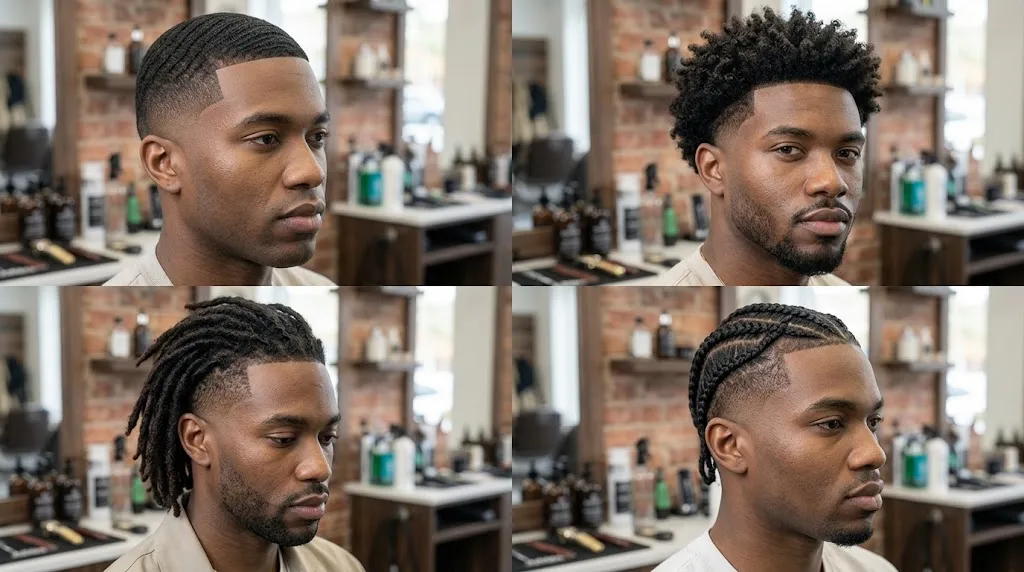
4. Locs, Braids, and Protective Styles
A mid fade with locs or braids keeps the sides clean while letting your top style take the spotlight. Since the fade sits at the temple, it doesn’t interfere with the base of most protective styles.
One thing to watch: as locs or braids grow out, the fade grows out faster in comparison, which can throw off the balance on the sides. A fade-only touch-up every three weeks keeps things even.
5. Choosing Based on Your Lifestyle
- Corporate settings: A tighter skin mid fade holds its shape longer and needs less daily maintenance.
- Active or athletic lifestyle: Sweat speeds up frizz right at the fade line, so shorter gaps between cuts help more here.
- Flexible schedule: A longer mid fade with a gradual blend buys you more time before the grow-out becomes obvious.
The real key is matching how tight your fade is to how often you can realistically get back in the chair.
How to Ask Your Barber for the Right Mid Fade
Before the clippers even turn on, walk your barber through four specific details: fade height, guard numbers, top length, and edge shape. Skip any one of these on textured hair, and there’s a good chance the final cut misses the mark.
- Fade height: Say exactly where you want it to start. Try: “Start the fade at the temple and bring it down to skin.”
- Guard numbers: Guards control how much length the clipper leaves behind — a #0 goes closest to the skin, while a #3 or #4 leaves noticeably more. Try: “Use a #1 at the base, then blend into a #2 and #3 moving up.”
- Top length: A very short top can look out of proportion with a mid fade on coily hair. Try: “Leave about two inches on top and keep the fade tight at the temple.”
- Edge shape: Decide in advance whether you want a hard line or a beard connection. Try: “Keep the edges sharp, but don’t arc them inward.”
A saved photo alone won’t cut it. On 4C hair especially, a reference photo from someone with straighter or looser curls won’t translate the same way — your verbal instructions matter just as much, if not more.
How a Mid Fade Grows Out (Week by Week)
A mid fade changes shape faster than most people expect. Knowing what happens at each stage helps you plan your next touch-up before things start looking messy.
| Week | What Happens | What to Do |
|---|---|---|
| Week 1 | Fade looks sharp, blend is fully intact | Nothing needed |
| Week 2 | Temple regrowth starts to soften the line | Optional edge tidy-up |
| Week 3 | Blend starts breaking down, outline gets heavier | Touch-up recommended |
| Week 4+ | Fade symmetry is lost on both sides | Full reset recommended |
If your hair is curlier, booking your refresh a little earlier keeps the fade looking clean for longer stretches between full cuts.
Common Mid Fade Mistakes to Avoid
Most mid fade problems start before the clippers ever come out. Here are the three that trip people up most often:
- Not specifying temple placement. Just saying “mid fade” leaves the exact height up to the barber’s interpretation, which can land wrong on textured hair.
- Using a mismatched reference photo. A photo from someone with a different curl pattern creates a gap the barber can’t fix once the cut is underway.
- Skipping the guard number conversation. Without clear guard numbers, the blend depth becomes guesswork — and the result often doesn’t match what you pictured.
Getting specific up front solves all three. On 4C hair, where every detail is visible, that little bit of prep is what separates a clean mid fade from one you’ll need to fix within the week.
Final Thoughts
A sharp haircut starts with the right conversation. Once you understand how fade height works, which variation suits your texture, and how to communicate that clearly, you’re in control of the outcome every time you sit down.
There’s no single “correct” mid fade for every guy. Curl density, face shape, and how often you can get back to the barbershop all shape which version actually works for you.
Bring the guard numbers and the four-point checklist to your next appointment — that one habit changes the entire conversation with your barber.
Frequently Asked Questions
Can you get a mid fade with an afro?
Yes. A mid fade pairs naturally with an afro, since the clean, tapered sides make the volume on top look more deliberate and balanced.
Does a mid fade look different on darker vs. lighter skin tones?
The fade line shows up with sharper contrast on lighter skin tones and reads a bit softer on deeper tones, but the underlying structure of the cut stays the same either way.
Can you get a mid fade with an uneven or receding hairline?
Yes. A skilled barber follows your natural hairline instead of forcing a straight edge across it, which keeps the cut looking clean without drawing attention to any unevenness.
Looking for more grooming guides tailored to your hair type and lifestyle? Explore more style breakdowns and haircare tips on faminaz.com.