
You know the feeling: you stand in front of a closet stuffed with clothes and think you have nothing to wear. It’s not a lack of options — it’s a closet full of maybes, almosts, and not-quites burying the pieces you actually love. The fix isn’t buying more. It’s a proper closet detox, and one focused weekend is all it takes.
This guide gives you a complete two-day plan to declutter your wardrobe without the overwhelm: what to gather, how to sort every single item, the decision rules that cut through the “but what if I need it someday” spiral, and how to put everything back so it stays that way. By Sunday evening, you’ll open your closet doors and feel calm instead of chaos.
Before You Start: Mindset and Supplies
A closet detox works best when you treat it like a project, not a punishment. You’re not throwing away your identity — you’re making room for the version of your style that actually fits your life right now. Give yourself permission to let go of the aspirational jeans, the guilt purchases, and the “someday” dresses. If a piece doesn’t serve the life you live today, it’s just expensive clutter.
Gather your supplies on Friday evening so Saturday morning starts smoothly:
- Four large bags or boxes — label them KEEP, MAYBE, DONATE/SELL, and TOSS.
- A full-length mirror near your sorting area — you’ll be trying things on.
- Trash bags for the true toss pile (stained, ripped, stretched-out items).
- A notebook or your phone — you’ll jot down gaps you notice as you sort, which becomes your intentional shopping list later.
- Snacks, water, and a good playlist. This is a marathon, not a sprint. Plan for three to four hours on Saturday and two to three on Sunday, with real breaks.
One more mindset rule: do this alone or with one honest friend. A committee of opinions will slow you down and talk you into keeping things out of nostalgia. This is between you and your wardrobe.
Saturday Morning: Empty Everything
Yes, everything. Every hanger, every drawer, every shelf, the chair in the corner holding the “I’ll deal with it later” pile. Pull it all out onto your bed. This step feels dramatic, and that’s the point — you can’t honestly evaluate what you own while half of it is hiding in drawers.
Seeing the full mountain is confronting, but it’s also motivating. Most people discover they own far more than they thought — and wear a fraction of it. Once everything is out, give your empty closet a quick wipe-down. You’ll be putting far less back in, so start with a clean slate.

The 4-Pile Sorting Method
Now pick up every single item, one at a time, and assign it to a pile. No “I’ll decide later” pile — that’s how clutter survives. The four piles:
- KEEP: You wear it regularly, it fits well right now, and you feel good in it. Instant yes.
- MAYBE: You’re unsure. It almost works, or you haven’t worn it in a while but can’t say why. You’ll revisit this pile with the decision rules below.
- DONATE/SELL: Good condition, but not for you anymore. Someone else will love it.
- TOSS: Stained, torn, pilled beyond saving, missing buttons you never replaced, stretched-out elastic. Be honest — if you wouldn’t give it to a friend, don’t donate it.
Work quickly through the obvious keeps and tosses first. Momentum matters. The maybes will take longer, and that’s fine — set them aside in one spot and move on. By the time you’ve sorted everything, the keep pile is usually smaller than expected, and that’s a good sign.
Decision Rules That Actually Work
Now comes the hard part: the maybe pile. These rules cut through emotional dithering:
- The one-year rule. Haven’t worn it in the last twelve months? It’s going. The exceptions are genuine occasion wear (a formal gown, ski gear) — not the “nice top” you’ve been saving for a hypothetical dinner.
- The fit rule. If it doesn’t fit your body today, it doesn’t stay. Not the “when I lose five pounds” jeans, not the blazer that’s tight across the shoulders. Keeping clothes for a different body is a daily reminder that stings. Dress the body you have — our guide to dressing for your body type can help you spot the silhouettes that flatter you right now.
- The lifestyle test. Ask: “Where would I wear this in the next month?” If you can’t name a real occasion, it’s fantasy wardrobe, not real wardrobe. Your closet should reflect your actual life — office, weekends, errands — not a life you imagine.
- The duplicate rule. Five black t-shirts? Keep the two best and release the rest. Duplicates are where closets silently double in size.
- The timeless test. Before letting go of a classic — a good trench, a well-cut blazer, quality leather shoes — pause. These are the timeless pieces worth keeping for decades. The rule targets trendy impulse buys, not genuine wardrobe anchors.
Try on anything you’re unsure about. Clothes look different on a hanger than on a body, and the mirror doesn’t lie. If you feel amazing, it stays. If you’re tugging, adjusting, or making excuses — it goes.

What to Do With Sentimental Pieces
The concert tee from 2012. Your grandmother’s scarf. The dress you wore to your first big interview. Sentimental items are the hardest, so give them their own process instead of letting them hijack the whole detox.
First, separate true keepsakes from guilt keeps. A true keepsake sparks a specific, happy memory every time you see it. A guilt keep just makes you feel bad for considering letting it go. Keep a small memory box — one box, with a lid — for genuine keepsakes. When it’s full, something has to leave before anything new enters.
For the rest, try the photo trick: take a picture of the item, write down the memory it holds, and let the physical piece go. You keep the story, which is what actually mattered. And if you’re keeping a sentimental piece to wear, it has to pass the same fit and lifestyle rules as everything else — a memory doesn’t earn a hanger if the garment itself is unwearable.
Sunday: The Big Reset
Saturday was about subtraction. Sunday is about designing the closet you actually want to live with. Start by cleaning the empty space properly — vacuum the floor, wipe shelves, check that rods and hooks are sturdy. Then bring back only the keep pile.
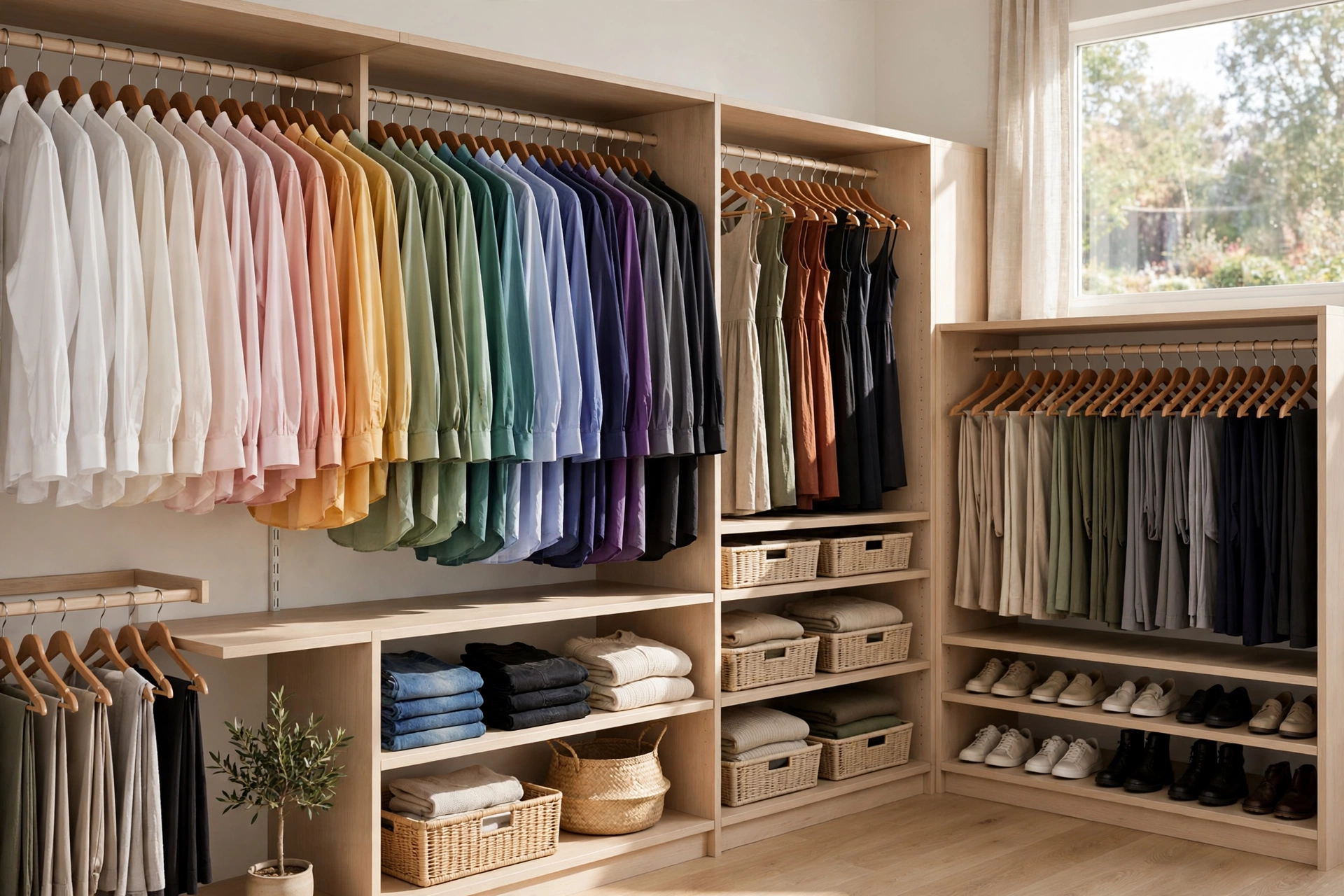
Organize by category first, then by color within each category: all tops together (sleeveless, short-sleeve, long-sleeve), then pants, then dresses, then jackets. Within each group, arrange light to dark. It sounds fussy, but this single habit makes getting dressed dramatically faster — you can see everything, and outfits practically assemble themselves.
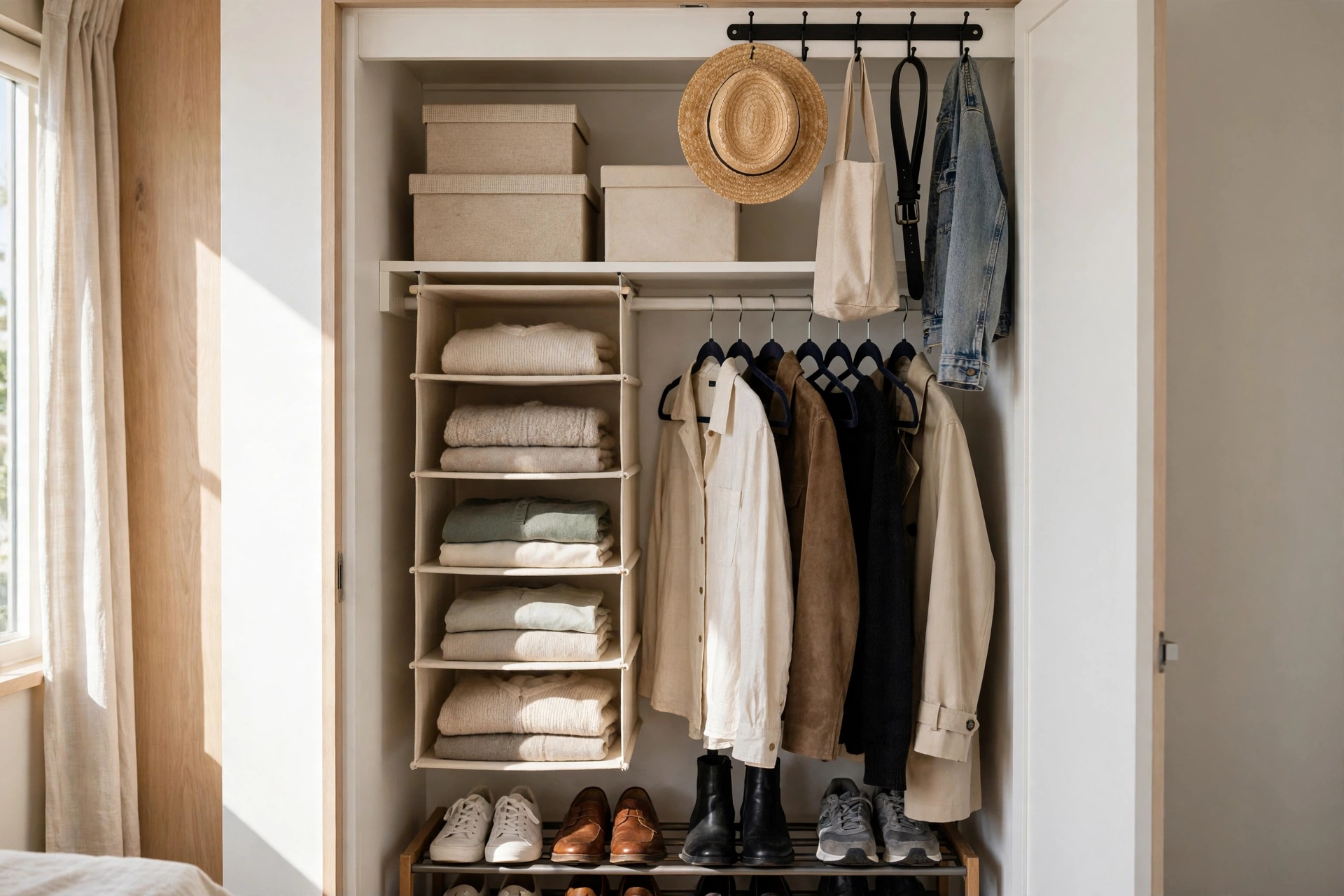
Small closet? You don’t need more space — you need smarter storage:
- Slim velvet hangers — they take up half the space of plastic ones and clothes don’t slip off.
- A hanging fabric organizer for folded knits, bags, or accessories.
- Stackable boxes on the top shelf for off-season items, labeled by season.
- An over-door hook rail for tomorrow’s outfit, robes, or frequently grabbed bags.
- A slim rolling cart or shelf risers inside deep shelves so nothing gets lost in the back.
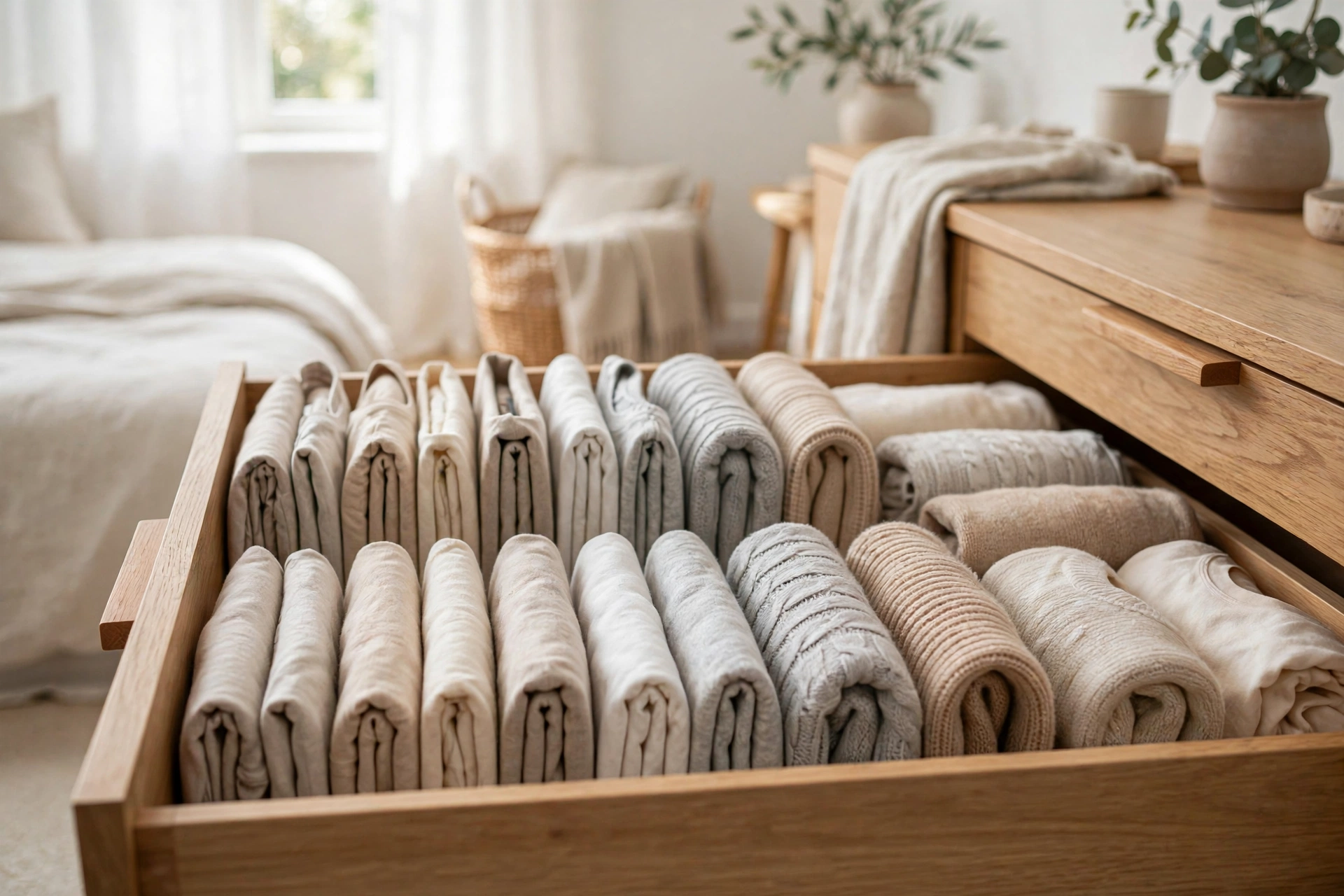
For drawers, switch to file folding — fold each item into a neat rectangle and stand it upright in rows, like files in a cabinet. You can see every single piece at a glance, nothing gets buried, and drawers hold far more than you’d expect.
What to Do With the Donate and Sell Piles
Here’s where most detoxes die: the bags sit in the hallway for three months and slowly migrate back into the closet. Don’t let that happen. Schedule the drop-off for Sunday afternoon or Monday morning — put it in your calendar like an appointment.
Split the pile strategically. Sell the pieces with real resale value — designer labels, barely-worn shoes, quality outerwear — through a consignment store or resale app. Take the photos and list them within the week, or the motivation evaporates. Donate everything else in good condition to a local charity shop or clothing bank; many offer home pickup if you book ahead.
The toss pile goes straight into the trash or, better, a textile recycling drop-off if your area has one. Worn-out fabrics can be recycled into insulation and rags — they don’t belong in a donation bin.

Building Back Smarter
An empty-feeling closet can trigger a shopping spree, which defeats the whole purpose. Instead, use the gaps list you jotted down on Saturday — the missing black flats, the white shirt that actually fits — as your intentional shopping list. Buy to fill real holes, not to chase a mood.
Adopt the one-in-one-out rule: every new piece that enters means one leaves. It sounds strict, but it’s the single habit that prevents the slow re-clutter. Before buying, ask the same questions you asked during the detox — does it fit today, where will I wear it this month, does it work with what I already own?
If you loved how streamlined your closet feels now, consider going further with a capsule wardrobe — a small, intentional collection where everything mixes and matches. Your freshly detoxed closet is the perfect starting point.

Keeping It That Way: The Seasonal Mini-Detox
A wardrobe is a living thing — it needs light maintenance, not another full weekend every few months. Four times a year, when the seasons change, do a 30-minute mini-detox:
- Pull out anything you didn’t wear that season and ask why.
- Move off-season clothes to storage so your current wardrobe stays visible and breathable.
- Check for repairs — loose buttons, small hems — and fix them now, not “later.”
- Review your shopping list and update it before the new season’s sales tempt you.
Thirty minutes, four times a year, and your closet stays in the calm state you built this weekend. Future you — the one getting dressed in five happy minutes every morning — will be grateful.
Closet Detox FAQs
How long does a full closet detox really take?
For most people, five to seven hours total across the weekend: three to four hours of sorting on Saturday, two to three hours of organizing on Sunday. If your wardrobe is very large, split the sort across Saturday morning and afternoon with a real break in between — decision fatigue is real, and tired decisions are bad decisions.
Should I get rid of clothes that don’t fit but might fit again?
Let them go. Keeping “goal clothes” turns your closet into a source of daily guilt instead of a tool for getting dressed. If your size changes in the future, you can shop intentionally for your new shape — and you’ll probably want different styles by then anyway.
What’s the best way to sell clothes from my detox?
For higher-value pieces, consignment stores give you the best return with the least effort — they handle photos, pricing, and buyers. For mid-range items, resale apps work well if you photograph in natural light and price competitively. Whatever doesn’t sell within a month, donate rather than letting it pile up again.
How do I stop my closet from getting messy again?
Two habits do most of the work: the one-in-one-out rule for new purchases, and the 30-minute seasonal mini-detox. Also, put laundry away the same day you fold it — the “chair pile” is where re-clutter begins.
Is it wasteful to get rid of so many clothes?
Keeping unworn clothes in your closet is its own kind of waste — they depreciate, go out of style, and help no one. Donating puts them back into use, selling recovers value, and textile recycling handles the rest. The most sustainable wardrobe is the one you actually wear.
The bottom line: a closet detox isn’t about having less for the sake of less — it’s about making every piece in your wardrobe earn its place. One weekend of honest decisions buys you years of easier mornings. Start Saturday, and by Sunday night you’ll wonder why you waited so long.