
Most of us have lived through the fitting-room heartbreak: a dress that looked incredible on the hanger and completely wrong on us. Before you blame yourself, hear this — it probably wasn’t you. It was the cut. Learning how to dress for your body type is the closest thing fashion has to a cheat code. Once you understand your shape — where you’re narrow, where you’re curvy, where a little structure helps — shopping gets faster, mornings get easier, and you stop apologizing for clothes that were never cut for your proportions in the first place.
This guide walks through the five most common body shapes — pear, apple, hourglass, rectangle, and inverted triangle — with specific, practical advice for each. No shape is better than any other. They’re just different starting points. And since real bodies rarely fit one label perfectly, we’ll finish with universal rules that flatter absolutely everyone.
First, Let’s Find Your Shape
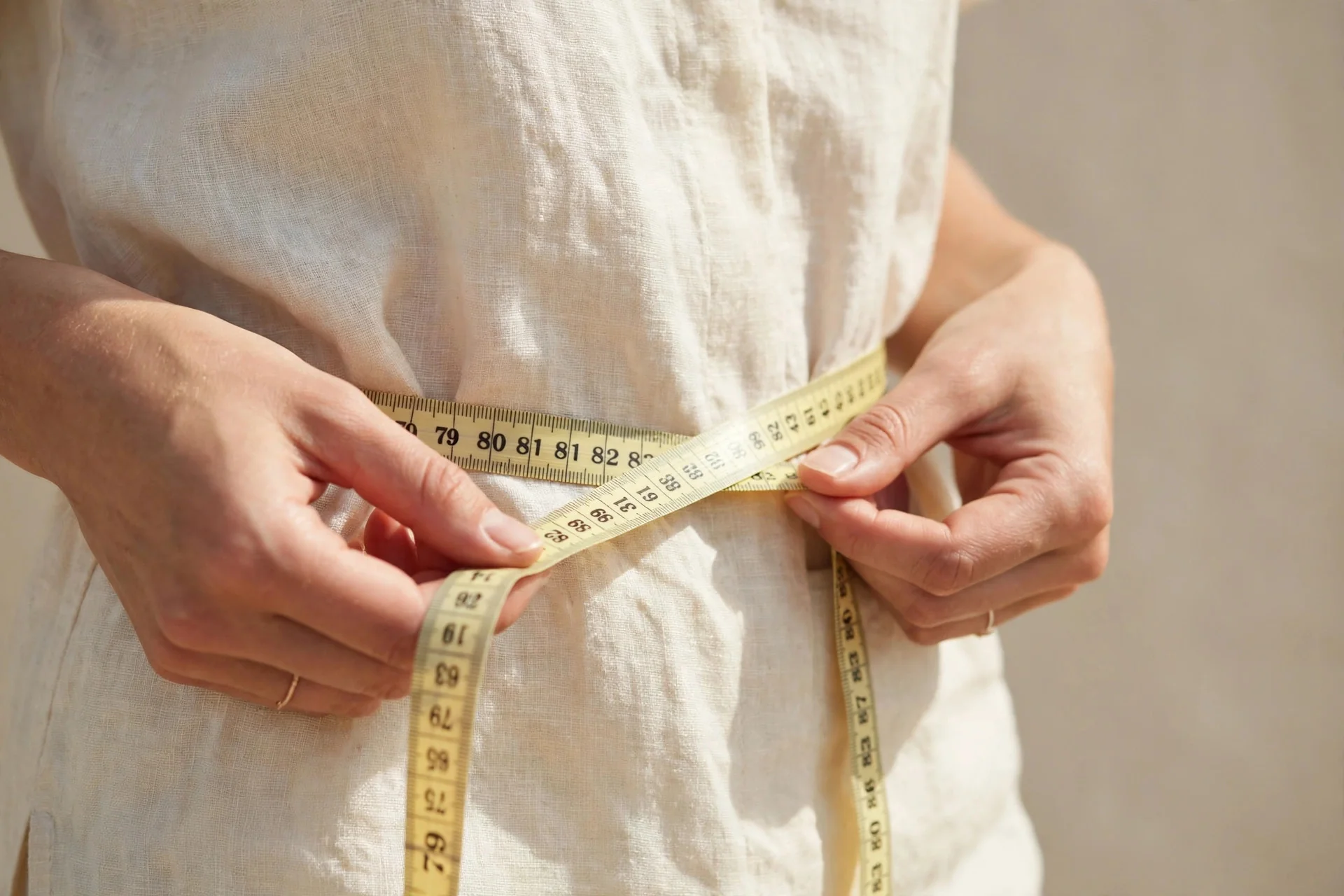
Grab a soft measuring tape and wear a thin layer or just your undergarments. Measure three places: the fullest part of your bust, the narrowest part of your waist (usually an inch or two above your belly button), and the fullest part of your hips. Write the numbers down and compare:
- Pear (triangle): hips measure larger than bust, waist is defined. Weight tends to settle on hips and thighs.
- Apple (round): bust and waist are close in measurement, with less waist definition. Weight tends to sit around the midsection, legs are often slimmer.
- Hourglass: bust and hips are close in size with a clearly smaller waist — typically 8 to 10 inches smaller.
- Rectangle (straight): bust, waist, and hips are all within a couple of inches of each other, with little waist definition.
- Inverted triangle: bust or shoulders measure larger than hips. Common in swimmers, former athletes, and anyone with naturally broad shoulders.
Two things worth knowing. First, most women are a blend — you might be a pear with an hourglass waist, or a rectangle with apple tendencies. Use the closest match as your starting point, not a life sentence. Second, your shape can shift with age, weight changes, and even strength training. Revisit your measurements every couple of years. Now, let’s get into the specifics of how to dress for your body type, shape by shape.
Pear Shape: Draw the Eye Upward
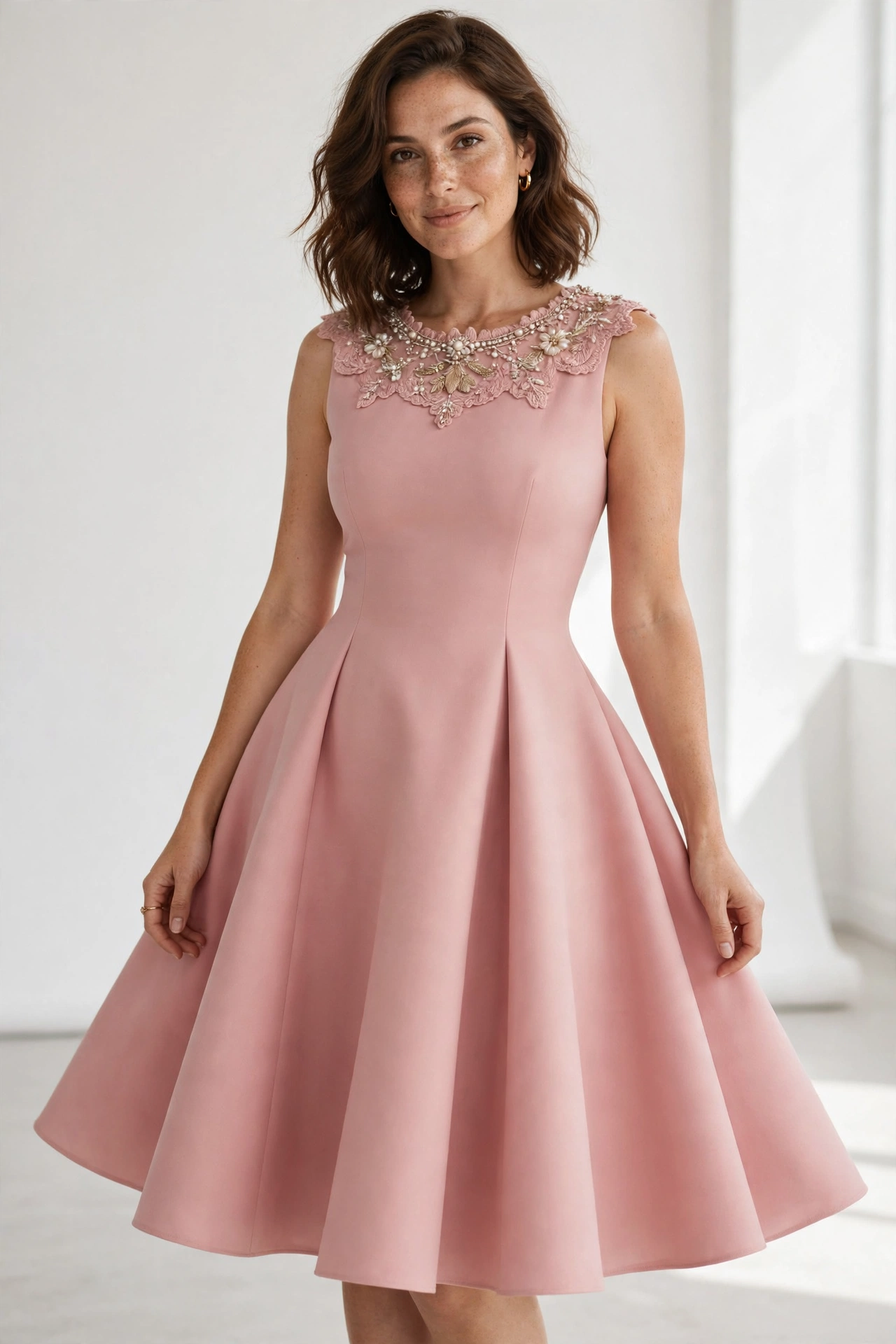
Pear shapes carry more volume through the hips and thighs with narrower shoulders and a defined waist. The goal here is simple: add visual interest up top while keeping the lower half clean and streamlined. It’s about balance, not hiding anything.
Your best moves:
- Necklines that widen: boat necks, square necks, and off-the-shoulder tops broaden the shoulder line beautifully.
- Detail on top: ruffles, embellished necklines, puff sleeves, and horizontal stripes across the chest all add volume where you want it.
- Structured shoulders: a blazer with light padding or a crisp button-down gives your frame that balanced line.
- Lighter or brighter colors on top, darker on the bottom. This isn’t a rule about “slimming” — it’s just how the eye reads proportion.
- Bottoms that skim: A-line skirts, straight-leg and wide-leg trousers, and bootcut jeans in dark washes. Stretch denim with at least 2% elastane keeps its shape through the day.
Go easy on: skinny jeans paired with clingy tops (all the volume lands in one place), cargo pockets or heavy embellishment on the hips, and pencil skirts that pull across the thigh. A wrap dress, on the other hand, is practically made for you — it defines the waist and skims the hip. If you want a ready-made rotation of pieces that work this hard, a capsule wardrobe built around A-line silhouettes will serve a pear shape for years.
Apple Shape: Define and Elongate
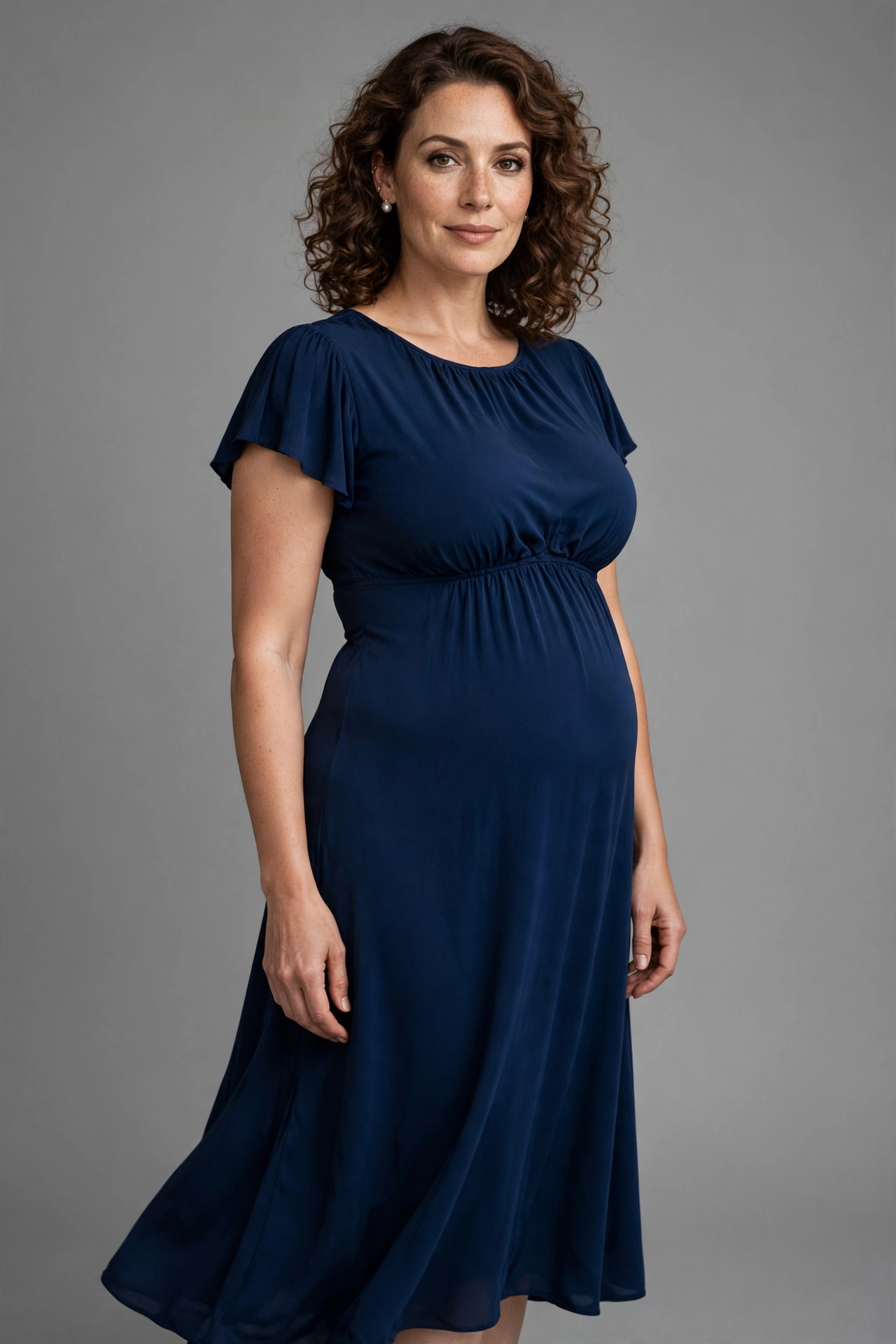
Apple shapes carry weight around the midsection with slimmer arms and legs, and the waistline is less defined. The most flattering strategy is to create the impression of a waist while showing off those great legs.
Your best moves:
- Empire waists and wrap tops that cinch just under the bust — the narrowest point on most apple frames.
- V-necks and scoop necks that elongate the torso and draw the eye vertically.
- A-line dresses and tunics that float away from the midsection instead of clinging to it. Look for ponte knit or crepe — fabrics with structure that don’t show every line.
- Straight-leg trousers and dark jeans with a higher rise (10 inches and up) that smooth rather than squeeze.
- Pointed-toe shoes and longer necklaces — small tricks, but they genuinely lengthen your line.
Go easy on: shapeless tent dresses that add bulk everywhere, very low-rise bottoms that create spillover, and stiff fabrics like heavy raw denim through the waist. One more tip: an open blazer or long cardigan worn undone creates two vertical lines down your torso, which reads as instant definition. Our fall layering guide shows exactly how to build those lines for colder months.
Hourglass Shape: Follow the Curves
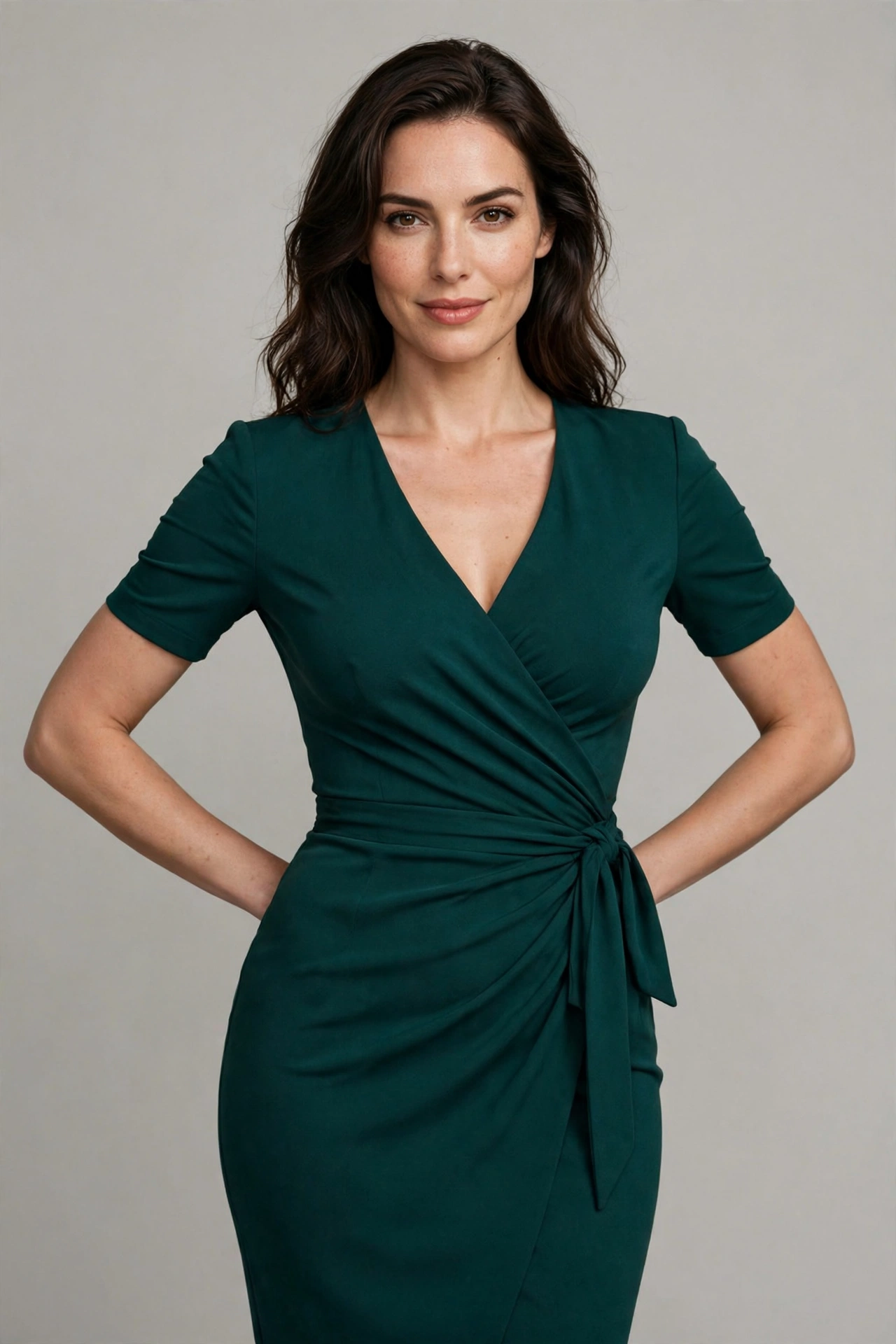
Hourglass figures have balanced bust and hips with a clearly defined waist. Your job is easy in theory — follow the body’s natural line — but surprisingly easy to get wrong, because so much off-the-rack clothing is cut for straighter frames.
Your best moves:
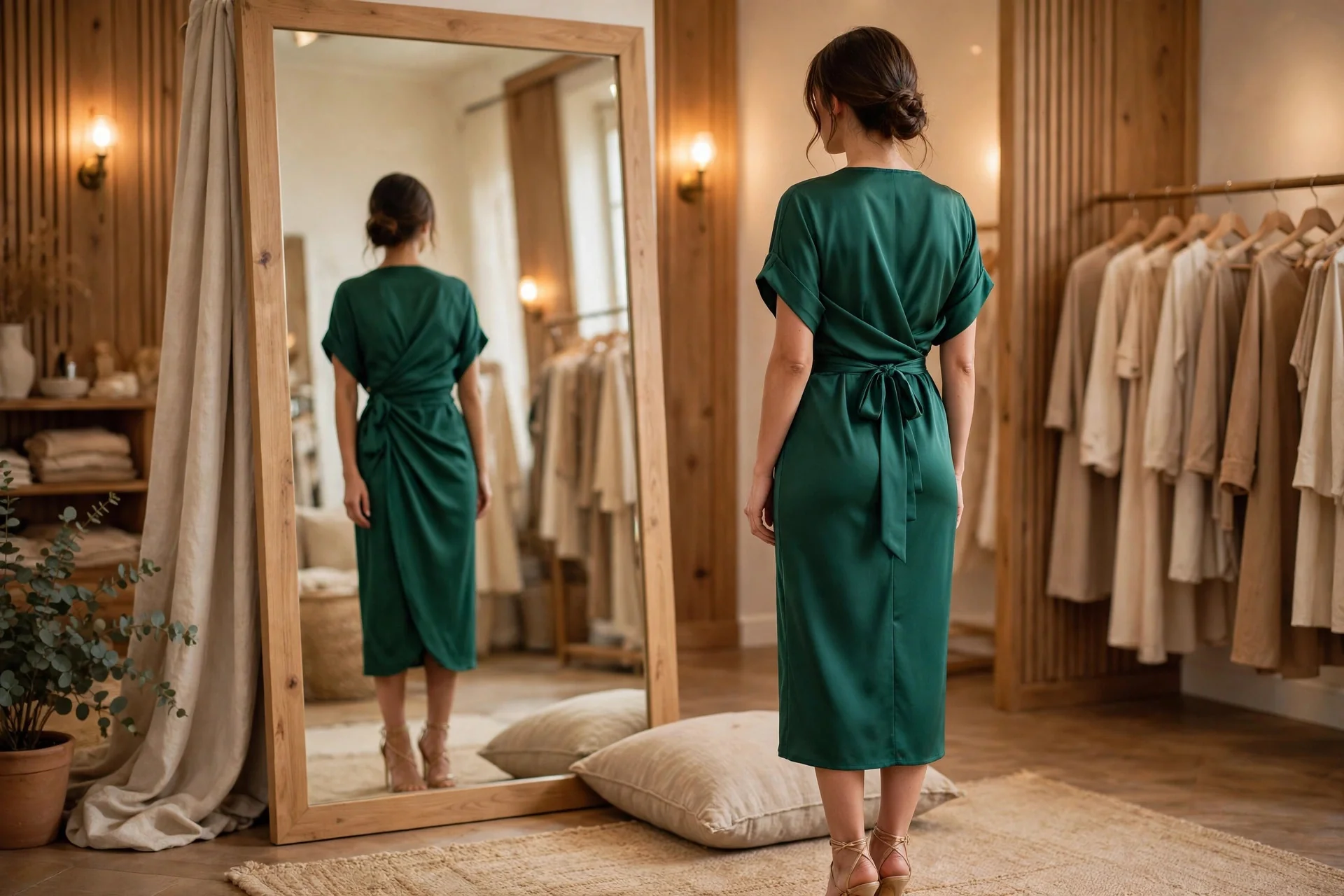
- Wrap dresses and belted everything: wrap tops, belted trench coats, and dresses with defined waists. This is your signature.
- High-waisted bottoms — jeans like Levi’s Ribcage or Everlane’s high-rise styles sit at the natural waist instead of gaping at the back.
- Fitted knit tops in fabrics with stretch that follow rather than flatten your shape.
- Pencil skirts and tailored trousers that acknowledge the hip instead of fighting it.
Go easy on: boxy, oversized pieces that erase your waist entirely (if you love the oversized look, our guide to styling oversized clothing shows how to do it without losing your shape), shapeless shift dresses, and high necklines with zero waist definition, which can read as one long column. Tailoring is your secret weapon — taking in the waist of an otherwise perfect blazer usually costs $15 to $25 and changes everything.
Rectangle Shape: Create the Curves
Rectangle shapes have shoulders, waist, and hips in similar proportion — athletic, straight, and often able to wear structured styles beautifully. The goal is to suggest curves where the body runs straight.
Your best moves:
- Peplum tops and flared hems that add volume at the hip and imply a waist.
- Belts, always: belt a blazer, a sweater dress, even a chunky cardigan. A belt is the fastest curve-creator in your closet.
- Ruffles and gathering at the bust or hips — a ruffled blouse or a skirt with tiers adds dimension.
- Crop tops with high-waisted bottoms: the sliver of skin (or the waistband itself) breaks your torso into sections and reads as shape.
- Layered looks: a fitted turtleneck under a cropped jacket under a long coat gives your silhouette depth that a single layer can’t.
Go easy on: straight-cut sheath dresses with no waist shaping, drop-waist styles, and anything that hangs in one unbroken line from shoulder to hem. Scoop and sweetheart necklines are your friends — they create a focal point at the bust that suggests an hourglass line.
Inverted Triangle: Soften and Balance Below
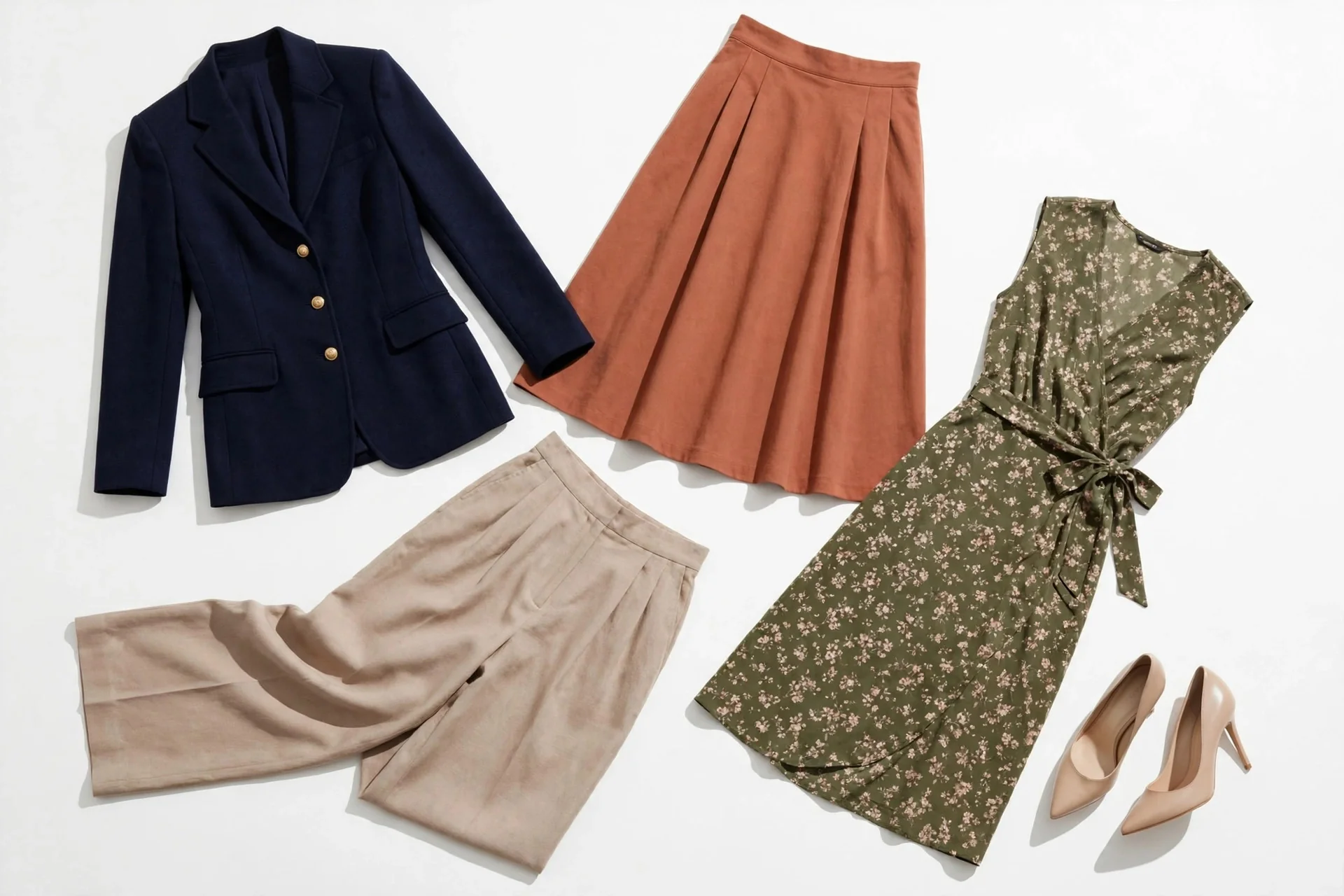
Inverted triangle shapes have broader shoulders or a fuller bust with narrower hips. The aim is to soften the shoulder line and add volume through the lower half for a balanced silhouette.
Your best moves:
- V-necks and wrap fronts that break up a broad chest and draw the eye down.
- A-line skirts and wide-leg trousers that build out the lower half. Pants with pockets, pleats, or a paperbag waist all help.
- Soft, unstructured tops: dolman sleeves, raglan cuts, and fluid fabrics instead of stiff shoulder pads.
- Darker colors on top, lighter or printed on the bottom — the reverse of the pear formula, for the same reason.
- Longer jackets that end at the hip rather than cropped styles that stop at the widest point.
Go easy on: boat necks, off-the-shoulder tops, puff sleeves, and heavy shoulder padding — all of which widen what’s already wide. Skinny jeans can work, but balance them with a longer, looser top rather than something cropped and tight.
How to Dress for Your Body Type: Rules That Work for Everyone
Shape-specific advice is useful, but these principles flatter every figure on this list:
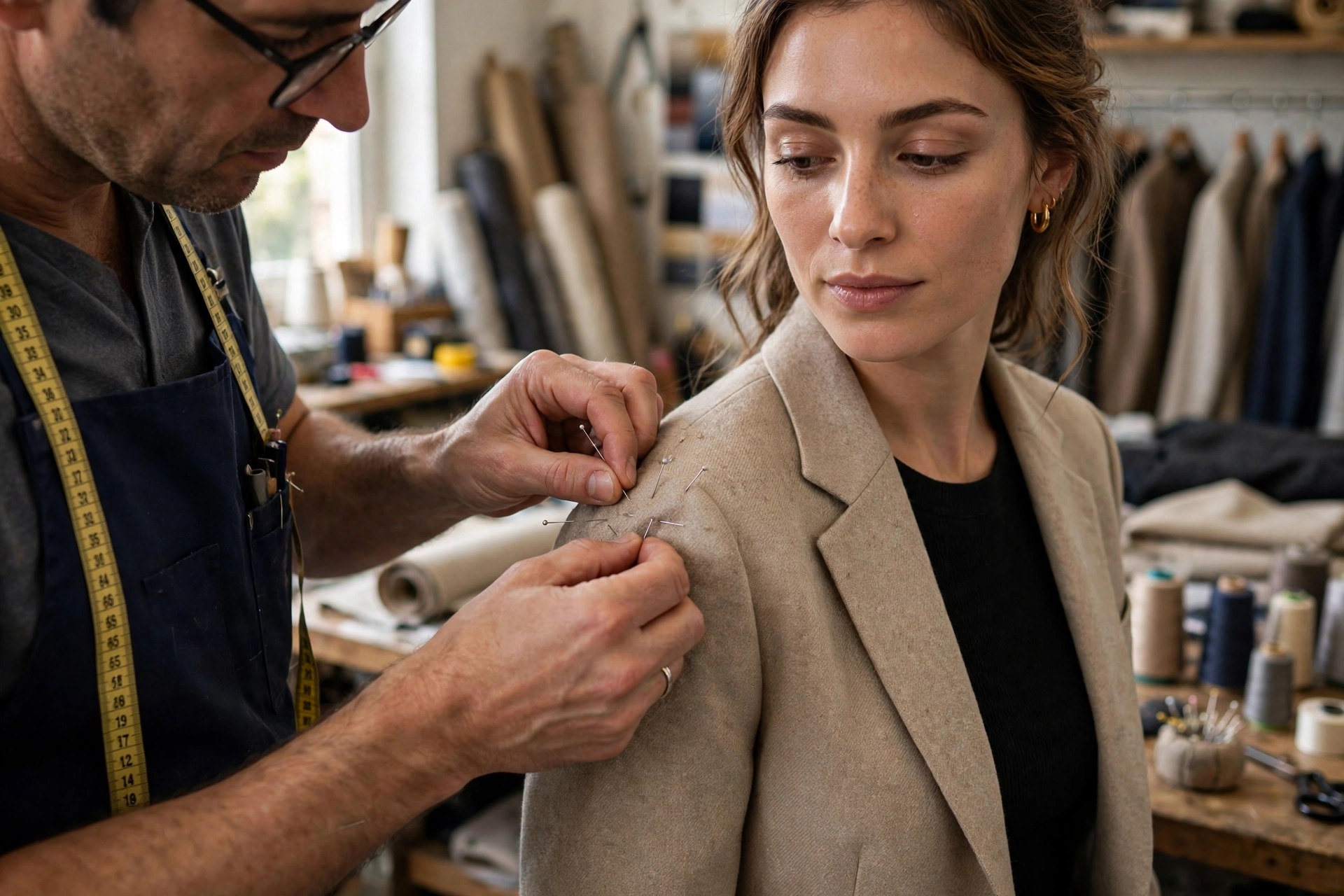
- Fit beats size, every time. The number on the tag is meaningless — brands vary wildly. Buy for your largest measurement and tailor the rest. A $20 hem or waist adjustment makes a $60 dress look like $200.
- Balance fitted with loose. The golden proportion rule: if the top is relaxed, keep the bottom closer to the body, and vice versa. Two oversized pieces together swallow any frame.
- Know your fabrics. Structured fabrics (ponte, crepe, stretch denim, twill) skim and hold; clingy fabrics (thin jersey, silk charmeuse) show everything underneath. Neither is “bad” — just match the fabric to the job.
- Undergarments are half the outfit. A properly fitted bra — and most women are wearing the wrong size — changes how every top drapes. Get measured once a year; many department stores do it free.
- Build around timeless pieces. Trends come and go, but timeless fashion pieces like a great blazer, dark jeans, and a simple black dress work for every shape, every season.
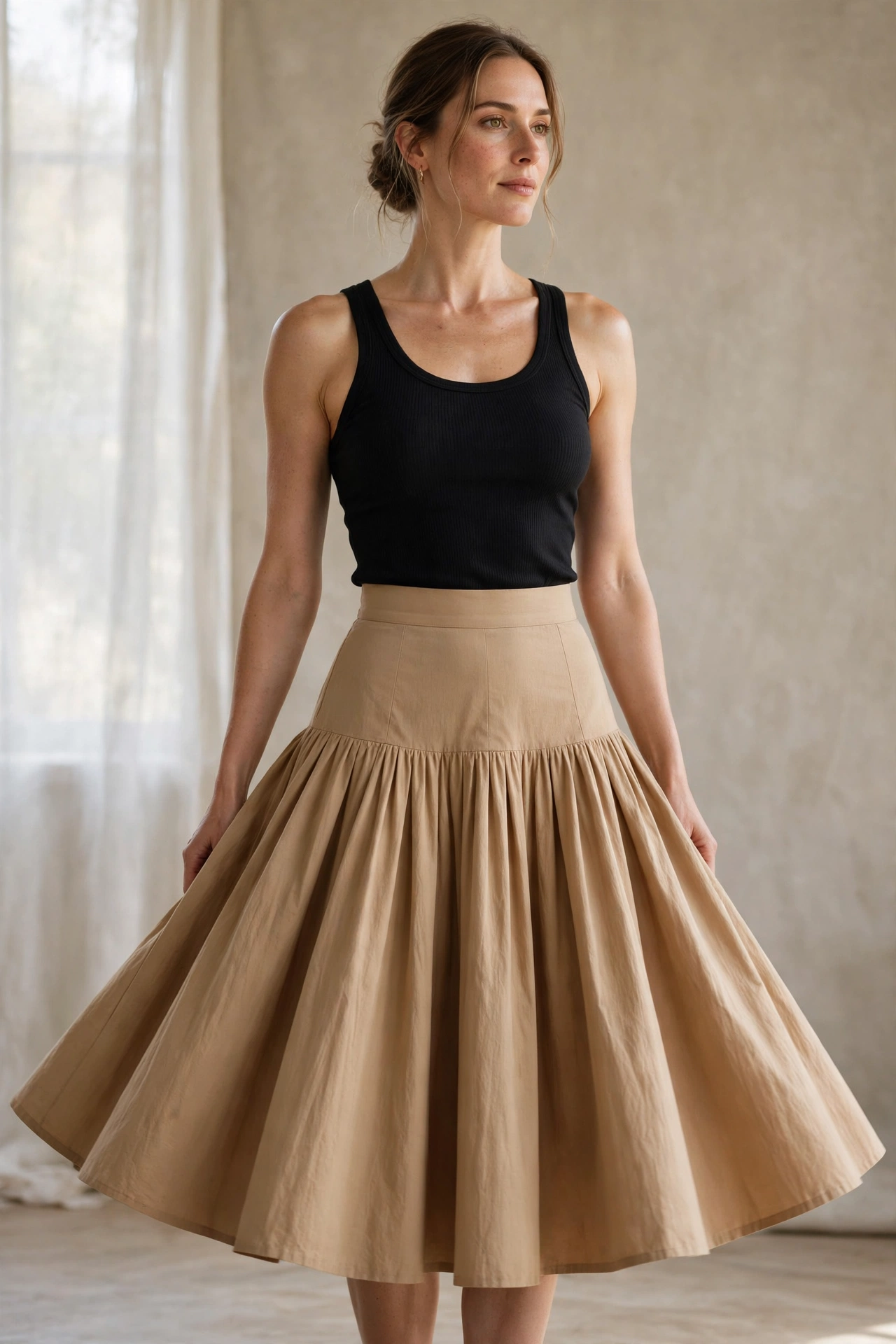
- Hemlines matter more than you think. Skirts and dresses that end at the slimmest part of your leg — just above the knee or at mid-calf — are universally flattering.
Mistakes That Work Against Every Shape
Even when you know how to dress for your body type, a few common missteps trip up all five shapes equally. Wearing the wrong bra size (straps digging in, band riding up) ruins the line of any top. Ignoring proportions — like a tunic long enough to be a dress worn with wide-leg pants — blurs your silhouette into one block. Buying for the body you wish you had instead of the one in the mirror leads to a closet full of “someday” clothes and nothing to wear today. And skipping the tailor is the most expensive mistake of all, because it means paying full price for clothes that only almost fit.
Frequently Asked Questions
What if I’m between two body shapes?
Most women are. Pick the shape you match most closely and borrow tricks from the second. A pear-hourglass blend, for example, can use pear neckline advice plus hourglass waist-defining pieces. The labels are tools, not boxes.
Does my body shape change over time?
Yes — weight changes, pregnancy, menopause, and even new workout routines can shift your proportions. That’s completely normal. Re-take your measurements every year or two and adjust your go-to silhouettes rather than fighting your current shape.
Can I wear trends that aren’t “recommended” for my shape?
Absolutely. These guidelines are about what flatters most easily, not what’s allowed. If you love something, wear it — just use the balancing tricks here (a belt, the right neckline, the right hemline) to make it work harder for you.
How do I dress for my body type on a budget?
Knowing how to dress for your body type actually saves money: focus on fit over labels — a well-fitting $30 dress beats a sloppy $150 one. Thrift stores are goldmines for blazers and wool trousers, and a local tailor can transform sale-rack finds. Build slowly around versatile basics rather than buying a whole new wardrobe at once.
Here’s the real secret behind learning how to dress for your body type: it’s not about dressing to “fix” anything. It’s about understanding your own architecture so well that getting dressed stops feeling like a gamble. Start with your measurements, lean into the silhouettes that love your shape, borrow the universal rules, and tailor the almost-perfect pieces. Do that, and the fitting room stops being a place of heartbreak — it becomes the place where you already know what’s going to work.