
Your daughter is getting married — and suddenly, after all the happy tears, a quiet panic sets in: what on earth am I going to wear? As mother of the bride, you will be in nearly as many photographs as the couple, greeting guests, giving a speech, and dancing the night away. You deserve to look extraordinary. But there is a delicate balance to strike: elegant and radiant, never competing with the bride.
Dressing as the mother of the bride over 50 is not about fading into the background or squeezing into something matronly. It is about choosing a look that honors the occasion, flatters your figure, and lets your joy shine through. This guide walks you through the golden rules, the most flattering colors and silhouettes, outfit ideas for every wedding style, and the mistakes worth avoiding — so you can walk down that aisle with complete confidence.
The Golden Rules of Mother-of-the-Bride Dressing
Before you fall in love with a dress, lock in these three non-negotiable rules. They will save you from every classic mother-of-the-bride misstep.
Rule one: never wear white, ivory, or champagne. This is the bride’s territory, full stop — and yes, that includes very pale blush or cream that photographs white. Even if the bride says she doesn’t mind, guests will notice, and the photographs will tell their own story.
Rule two: don’t upstage the bride. You can be glamorous, but the most ornate, most dramatic, most attention-commanding outfit in the room should belong to one person. Skip anything bridal-looking (veils, tiaras, trains) and anything louder than the wedding’s own formality level.
Rule three: coordinate, don’t match. Ask the bride about her color palette and the wedding party’s colors, then choose something complementary — not identical. If the bridesmaids are in dusty rose, you might choose a deeper mauve, a soft taupe, or an elegant navy. The goal is to look like you belong in the photographs without looking like an extra bridesmaid.
Colors That Work Beautifully After 50
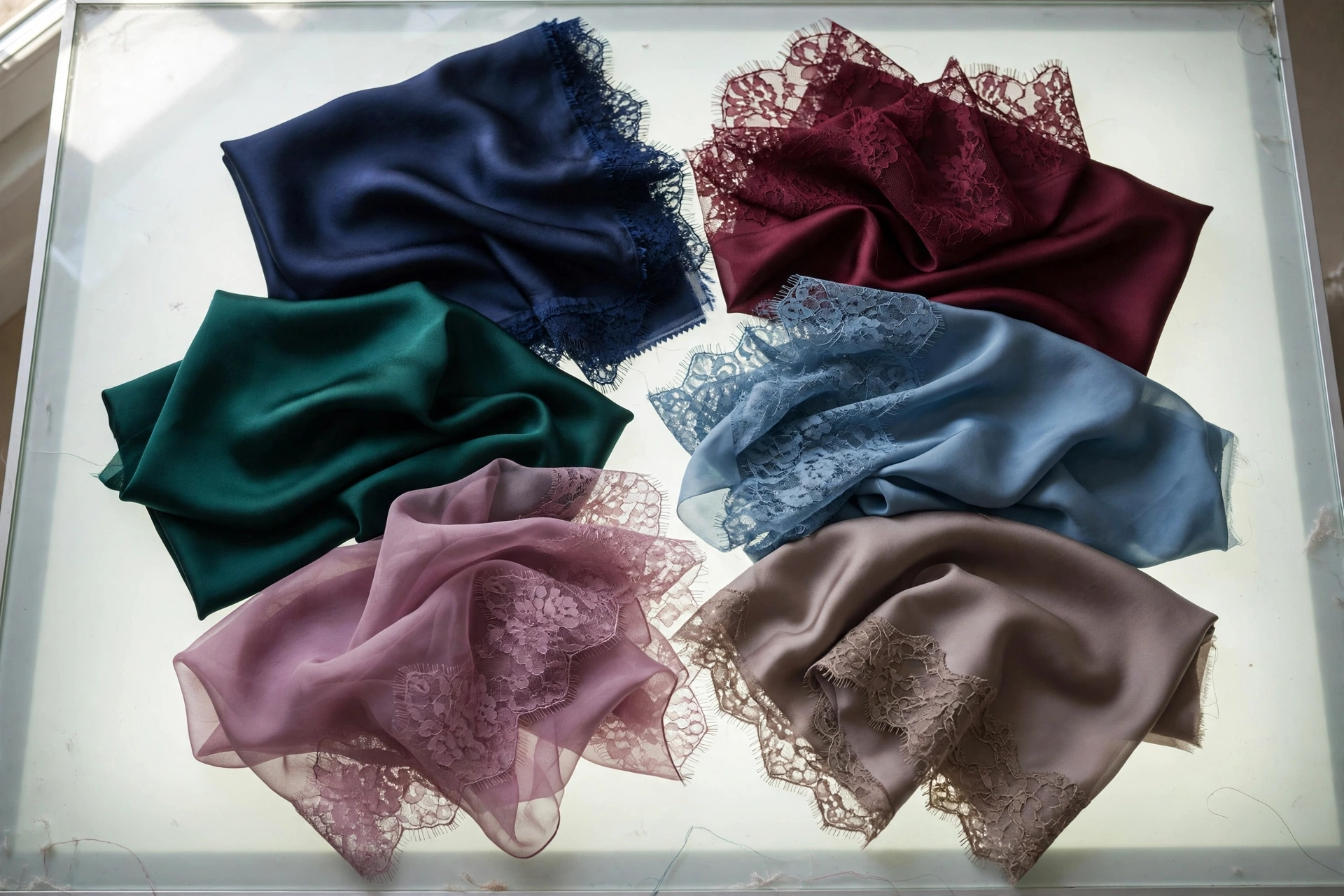
The right color does half the styling work for you — it brightens your complexion, photographs beautifully, and sets the tone. Some shades are practically made for mothers of the bride.
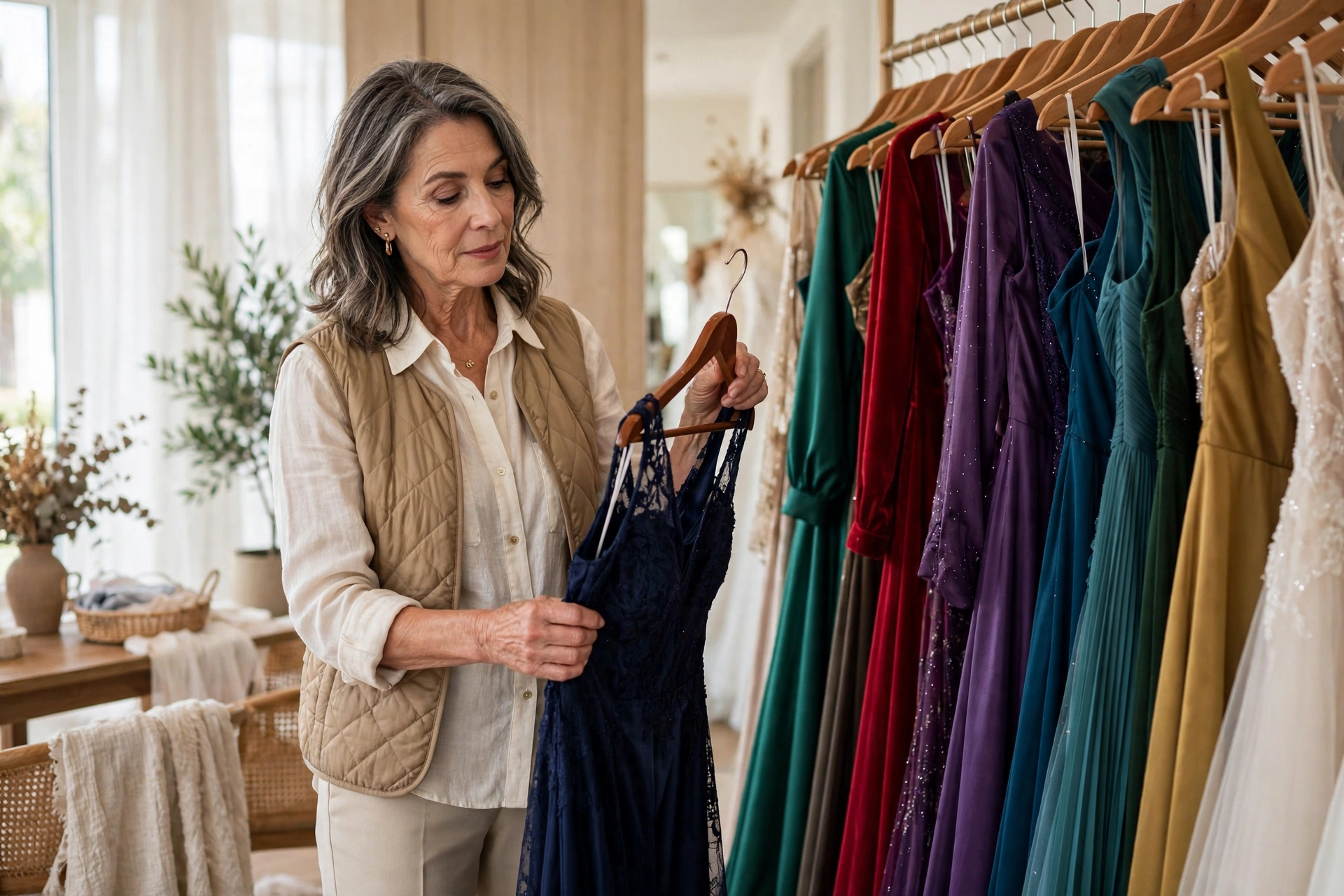
- Navy. The undisputed champion: universally flattering, endlessly elegant, appropriate for every formality level, and it photographs like a dream. A navy lace sheath or crepe gown is almost impossible to get wrong.
- Burgundy and wine. Rich, warm, and celebratory without shouting. Beautiful on warm and deep complexions especially.
- Emerald and deep teal. Jewel tones bring out the eyes and look luxurious in photographs.
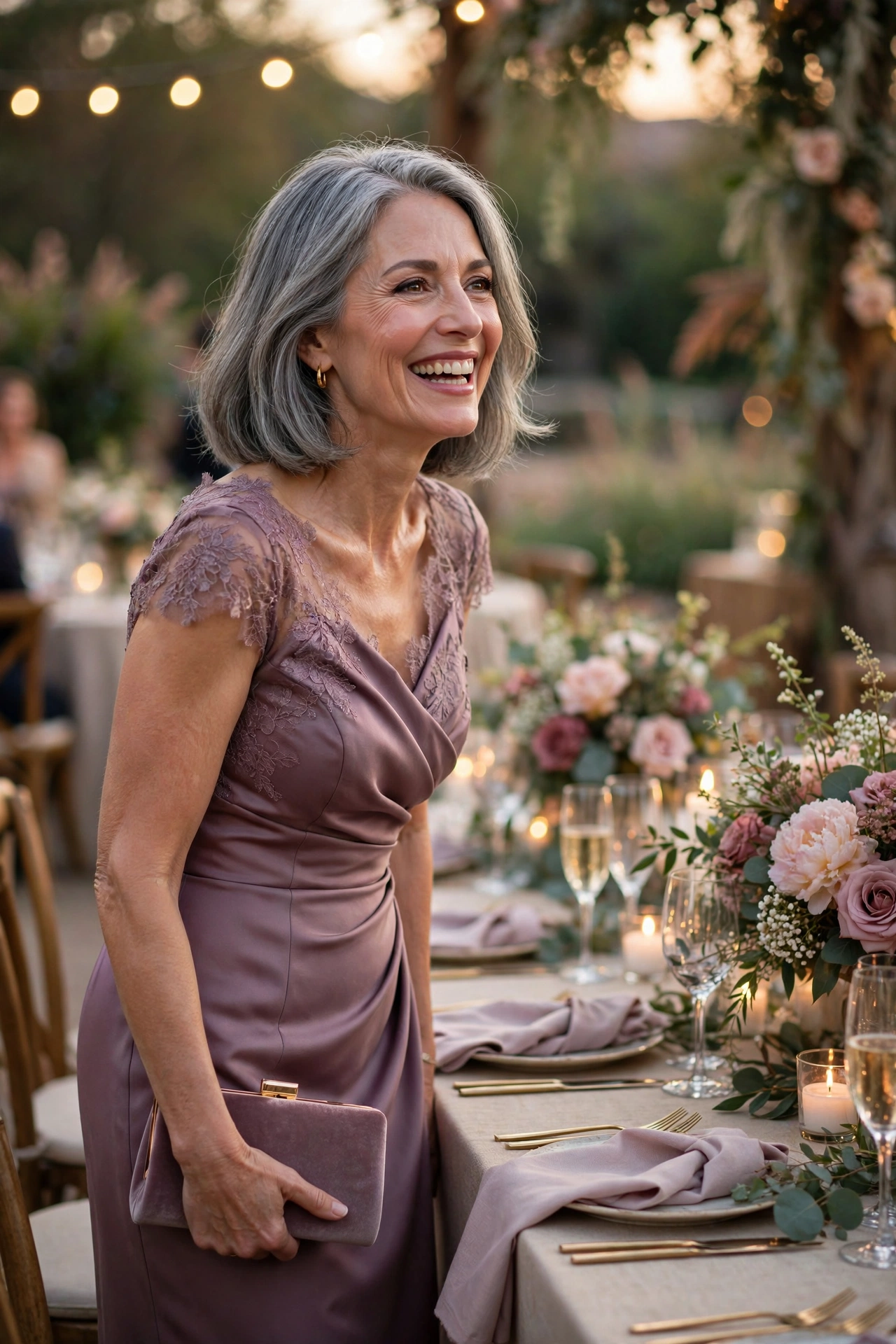
- Dusty blue, mauve, and soft taupe. Romantic and refined for daytime and garden weddings.
- Silver, pewter, and champagne-adjacent metallics. Festive for evening weddings — just keep the metallic away from bridal-white territory.
- Classic black — with conditions. Black is perfectly acceptable at formal evening weddings, but soften it with elegant jewelry, a colorful wrap, or interesting texture so it reads celebratory rather than funereal.
Colors to approach with caution: anything neon or fluorescent (it fights with photography), head-to-toe red at a conservative wedding (it can read as trying to steal focus), and all-black at a daytime garden wedding. When in doubt, jewel tones and deep neutrals are your safest, most flattering friends.
Dress Silhouettes That Flatter Mature Figures
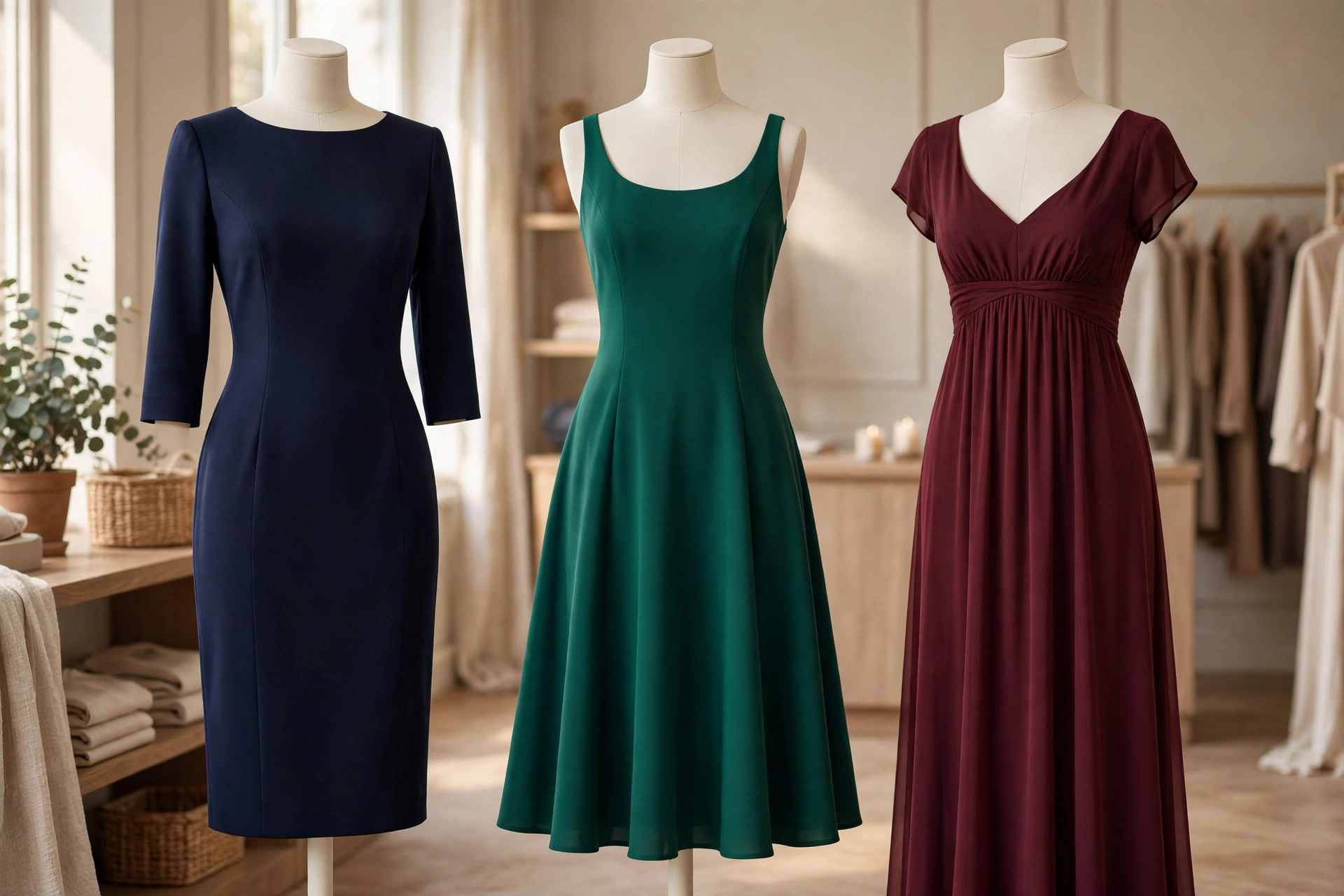
The most flattering mother-of-the-bride dress is the one cut for your body — not the one the mannequin wore best. A few silhouettes consistently earn their place:
- The sheath with sleeves. Clean, timeless, and endlessly elegant. Three-quarter sleeves are the sweet spot — they offer coverage while keeping the look modern.
- A-line dresses. Fitted through the bodice, gently flaring from the waist. Forgiving, feminine, and comfortable through a long day of hugging, sitting, and dancing.
- Empire-waist gowns. The raised waistline skims the midsection beautifully and creates a long, graceful line — a gift for formal evening weddings.
- Wrap dresses and faux-wrap bodices. The diagonal line defines the waist and flatters the bust without clinging.
- Tea-length and midi hems. Hitting below the knee or mid-calf, these lengths are sophisticated, age-appropriate, and practical for moving around all day.
Fabric matters as much as cut: crepe, lace overlays, chiffon, and stretch Mikado hold their shape from ceremony to last dance. Avoid anything too clingy (thin jersey shows everything by hour three) or too stiff (you need to sit, hug, and dance). If you are unsure which silhouette suits your proportions, our guide to dressing for your body type breaks it down figure by figure.
Formal and Black-Tie Weddings
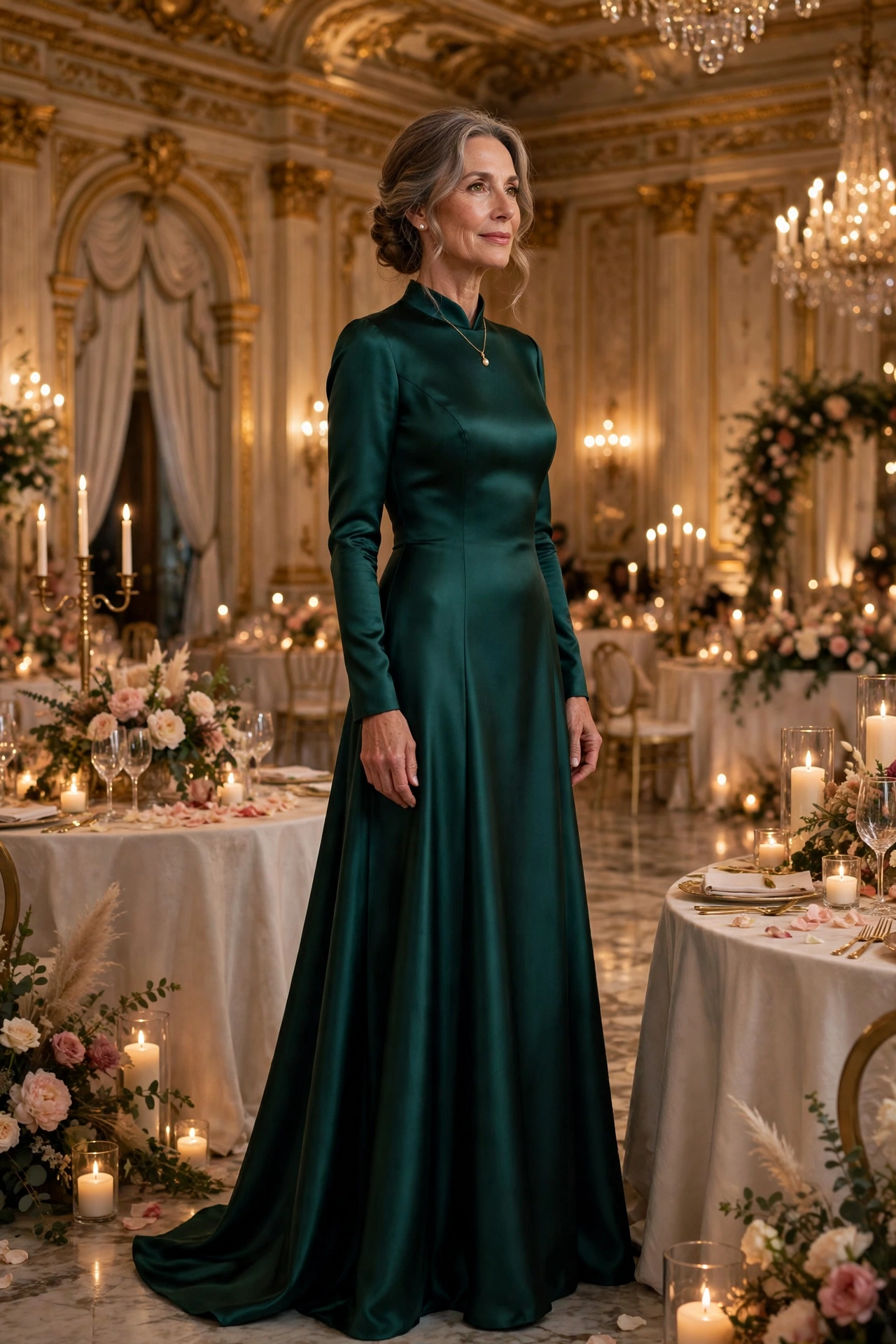
For an evening wedding with a formal dress code, this is your moment for full elegance: a floor-length gown or a sophisticated long cocktail dress. Think navy crepe with lace sleeves, an emerald satin sheath, or a burgundy chiffon gown with a delicate wrap.
Keep the neckline refined — a portrait, bateau, or modest V-neck reads formal without trying too hard. Pair with dressy heels (a block heel or elegant wedge if stilettos aren’t your friend anymore — no one will judge, and you’ll still be dancing at midnight), a small clutch, and one statement piece of jewelry rather than a full set. A pashmina or silk wrap in a complementary tone is both practical and polished for air-conditioned venues.
Garden and Outdoor Weddings
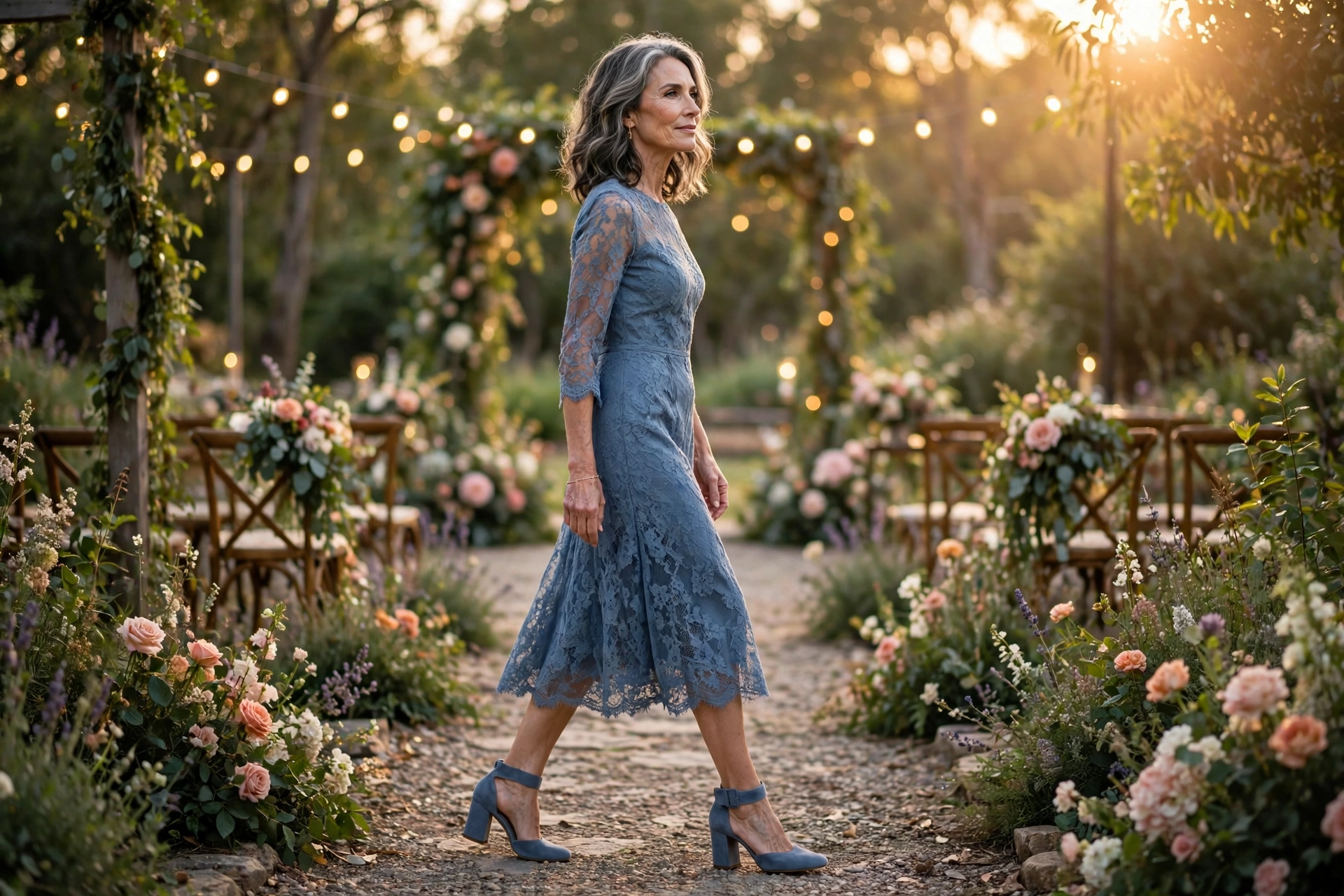
Daytime and outdoor weddings call for lighter fabrics, softer colors, and practical footwear. A floral or watercolor-print midi dress in dusty blue or mauve, a lace tea-length dress, or an elegant jumpsuit in a rich tone all work beautifully.
The golden practical rule for grass: skip the stiletto. Thin heels sink straight into lawn — choose block heels, wedges, or elegant dressy flats. Bring a wrap for when the temperature drops after sunset, and consider the sun: a chic wide-brim hat or fascinator can be gorgeous for a garden ceremony (just keep it modest enough not to block anyone’s view).
Beach Weddings
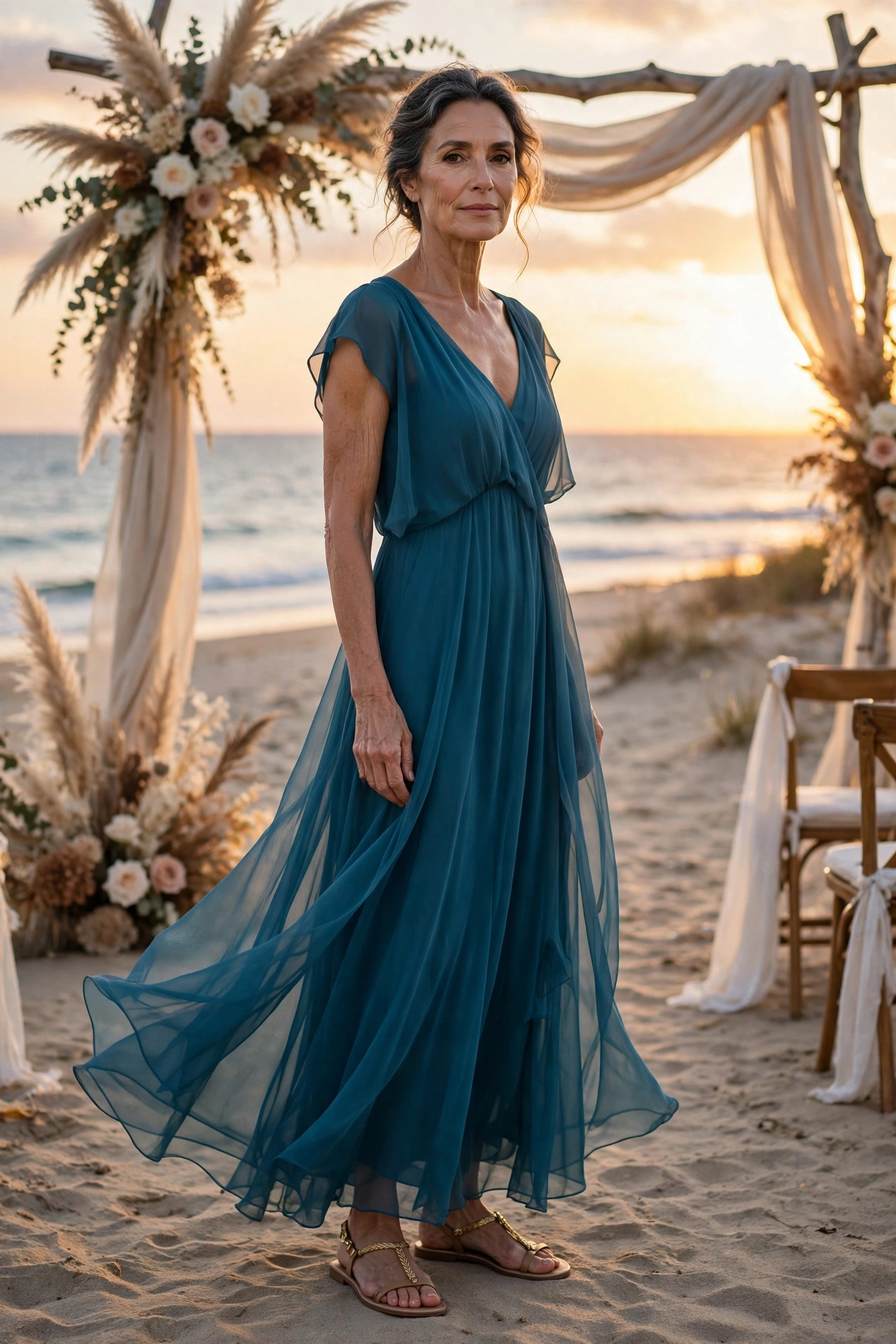
Beach weddings are relaxed in setting but not in significance — you still want to look special. Flowing maxi dresses in breathable fabrics (chiffon, georgette, lightweight crepe) in ocean-inspired tones — teal, sea glass, dusty coral — are ideal. The movement of the fabric looks stunning in seaside photographs.
Footwear is the make-or-break detail: dressy flat sandals or embellished flip-flops designed for occasions. Skip anything with a heel entirely — sand and heels are enemies. Keep jewelry simple and secure (sea breeze loves to claim dangling earrings), and choose hair and makeup that can handle humidity: an elegant updo and waterproof mascara are worth their weight in gold.
Winter Weddings
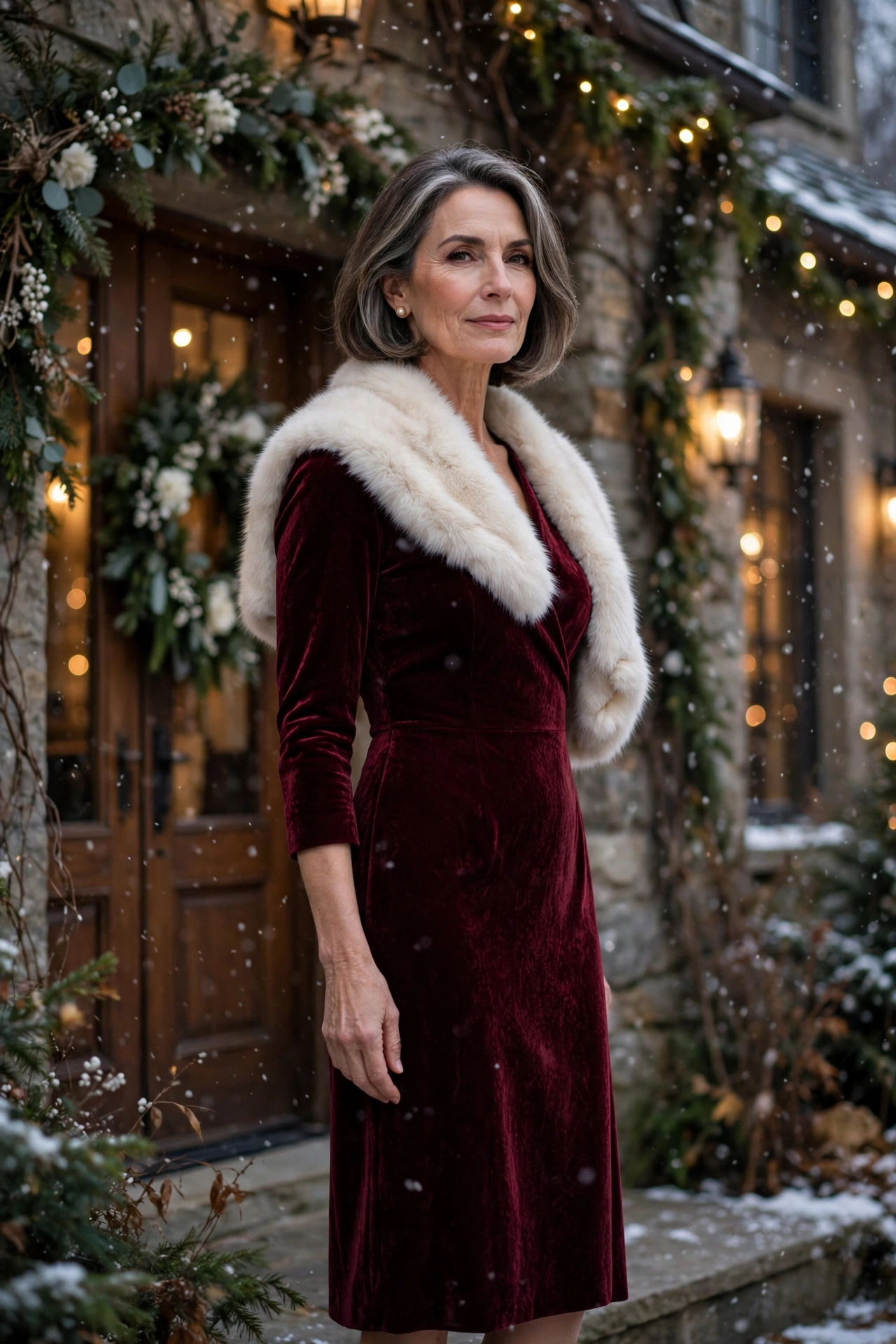
Winter gives you the richest palette of the year — burgundy, emerald, deep plum, midnight navy — in the most luxurious fabrics: velvet, brocade, heavy crepe, and lace with long sleeves. A velvet sheath dress with three-quarter sleeves or a brocade cocktail dress with a faux-fur stole is pure seasonal elegance.
Layering is your friend, and done well it elevates the whole look: a tailored bolero, an embellished jacket, or a cashmere wrap in a complementary shade. Closed-toe heels or dressy boots work for cold venues, and don’t forget that photographs may happen outdoors — a stunning coat you actually love (not the old standby) is part of the outfit. Our guide to layering for cold weather has techniques that apply just as well to occasion dressing.
Accessories, Shoes and Cover-Ups
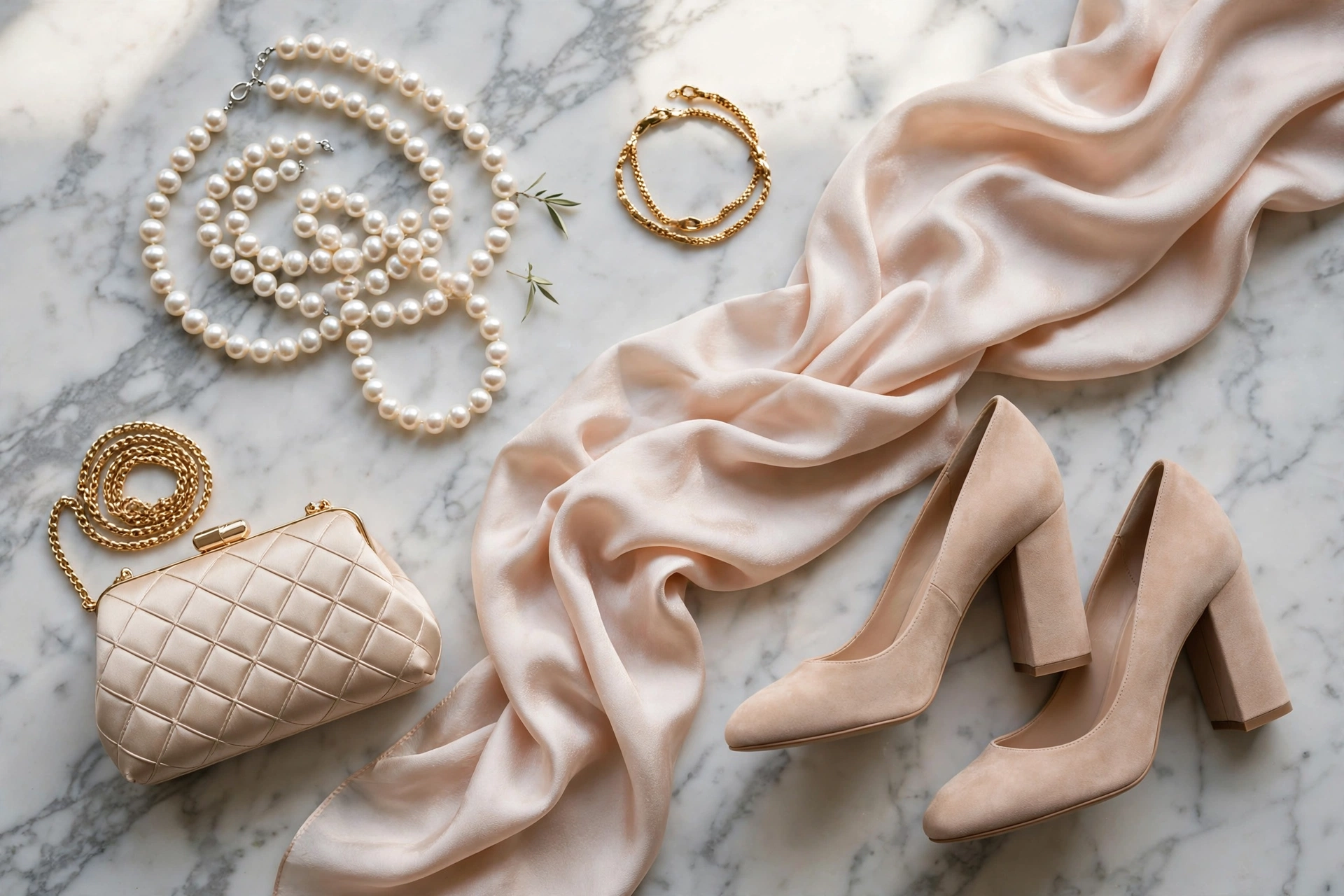
Accessories are where a good outfit becomes a great one — and where restraint matters most. Choose one focal point: statement earrings or a bold necklace or a striking bracelet, not all three competing at once. Pearls, in particular, are a mother-of-the-bride classic for a reason — luminous, elegant, and never wrong; see why they endure in our roundup of timeless pieces every woman should own.
- Shoes: comfort is non-negotiable for a 12-hour day. Block heels, wedges, or dressy flats in metallic or nude tones. Break them in before the wedding — blisters are not part of the plan.
- Bag: a small clutch or minaudière, just big enough for phone, lipstick, tissues (you will need them), and a few safety pins.
- Cover-ups: a pashmina, silk wrap, bolero, or tailored jacket that complements — not matches exactly — your dress.
- Hair and makeup: book a trial. Soft, polished, and long-wearing beats dramatic; this is a marathon, not a photoshoot.
What to Avoid: The Classic Mistakes
- Wearing white, ivory, or anything that photographs white. The single biggest rule, worth repeating.
- Dressing more formally than the dress code. A ball gown at a barn wedding looks out of place; match the venue’s energy.
- Matching the bridesmaids exactly. Complementary, not identical — you are family, not the wedding party.
- Uncomfortable shoes you haven’t broken in. You will be on your feet for hours. Test-drive everything.
- Over-accessorizing. One statement piece; everything else supporting.
- Last-minute shopping. Start 3–4 months out. Alterations alone can take weeks, and you want a calm final fitting, not a panic.
- Ignoring the bride’s wishes. If she has opinions about colors or formality, honor them graciously — it’s her day, and harmony photographs better than any dress.
Mother of the Bride FAQs
Should the mother of the bride match the wedding colors?
Coordinate, don’t match. Ask the bride for the palette, then choose a complementary shade — deeper, softer, or in the same family but clearly distinct from the bridesmaids’ dresses. You should look harmonious in group photos without blending into the wedding party.
Can the mother of the bride wear black?
Yes, at formal evening weddings — black is chic and appropriate after dark. Soften it with elegant jewelry, texture (lace, velvet), or a colorful wrap so it reads celebratory. For daytime or garden weddings, choose color instead.
How long should a mother-of-the-bride dress be?
Tea-length, midi, or floor-length are all appropriate — the right choice depends on formality and venue. Floor-length suits black-tie evenings; tea-length and midi are perfect for daytime, garden, and semi-formal weddings. As a rule, avoid anything above the knee for this role.
Who chooses first — mother of the bride or mother of the groom?
Tradition says the mother of the bride selects her outfit first, then informs the mother of the groom so she can choose something complementary in formality and tone. In practice, a quick friendly conversation between the two avoids any clash — and both look wonderful.
Can I wear a jumpsuit or pantsuit as mother of the bride?
Absolutely — a well-tailored jumpsuit or pantsuit in a luxurious fabric (crepe, satin, velvet) can be stunningly elegant and modern. Keep it formal in cut and fabric, accessorize as you would a gown, and check with the bride that she’s comfortable with the choice.
How far in advance should I buy my outfit?
Start shopping 3–4 months before the wedding. This leaves time for ordering, alterations (which alone can take 4–6 weeks), and a calm final fitting. Rushing leads to settling — and this is one outfit worth getting exactly right.
What shoes are best for an outdoor wedding?
Block heels, wedges, or dressy flats — anything with a wider base that won’t sink into grass or sand. Avoid stilettos outdoors entirely. Break them in at home for at least a few evenings before the big day.
The bottom line: the best mother-of-the-bride outfit is one that makes you feel beautiful, confident, and comfortable from the first photograph to the last dance. Follow the golden rules, choose colors and cuts that flatter you, dress for the venue — and then stop worrying about the dress and enjoy every single moment of your daughter’s day.