
Step into an underground club at midnight, and you’ll notice something right away: no two goths look alike.
One person wears a Victorian corset and lace gloves. Another glows under blacklight in neon cyberlocks. Someone else keeps it simple with all-black minimalism, while a group nearby mixes pastel pink hair with skeleton prints and combat boots.
Goth fashion is not one look. It’s a whole universe of styles, and each one tells a different story.
The subculture started in the early 1980s, born out of the post-punk music scene in the UK. Since then, it has split into dozens of distinct branches, each shaped by different music, art, history, and personal taste. Dark aesthetics are still everywhere in pop culture today, from horror-inspired fashion lines to gothic-themed TV shows that keep bringing new fans into the scene.
This guide breaks down every major type of goth, what makes each one unique, and how to build the look yourself. Let’s get into it.
What Is Goth Culture, Really?
Goth is a subculture built on music, fashion, and a shared love of darker themes. It grew out of post-punk in the early 1980s, when bands like Bauhaus, Siouxsie and the Banshees, The Cure, and Joy Division slowed punk down and added heavy atmosphere. This new sound became known as gothic rock.
Being goth was never really about wearing black. It’s about romanticism, individuality, and finding beauty in things the mainstream calls dark or strange.
Early goths had a signature look: backcombed black hair, pale skin, dramatic eyeliner, and clothing that mixed punk edge with Victorian elegance. As the subculture spread across the world through the 1980s and 90s, it branched out into many different styles, each with its own visual language and philosophy.
Types of Traditional and Classic Goths
These are the styles that started it all. They come straight from the original 1980s underground scene and still shape how people think about goth fashion today.
1. Trad Goth (First Wave Goth)
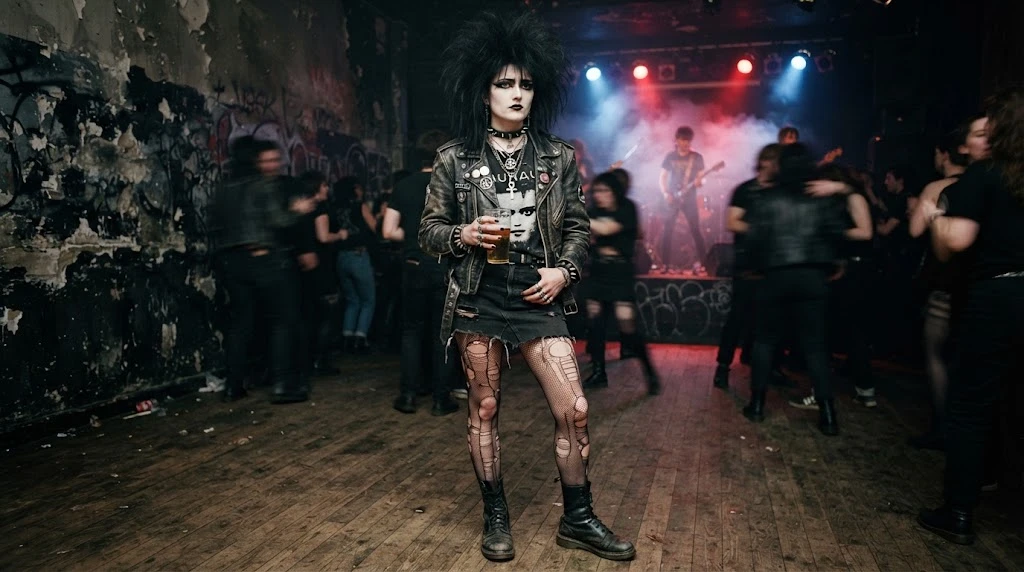
This is the original. Trad goth style comes directly from the early 80s post-punk scene, inspired by bands like Bauhaus and The Cure.
The look is DIY at its core. Nothing is store-bought perfect. It’s about personal expression, club culture, and staying true to the roots of the subculture.
How to dress trad goth:
- Colors: Mostly black, with the occasional flash of silver
- Clothes: Ripped fishnets, leather jackets, faded band t-shirts, torn fabric
- Shoes: Combat boots, creepers, or classic Dr. Martens
- Accessories: Ankh symbols, crosses, occult jewelry, thrifted finds
- Makeup: Heavy black eyeliner against stark pale foundation
- Hair: Teased and backcombed for maximum volume
2. Victorian Goth (Romantic Goth)
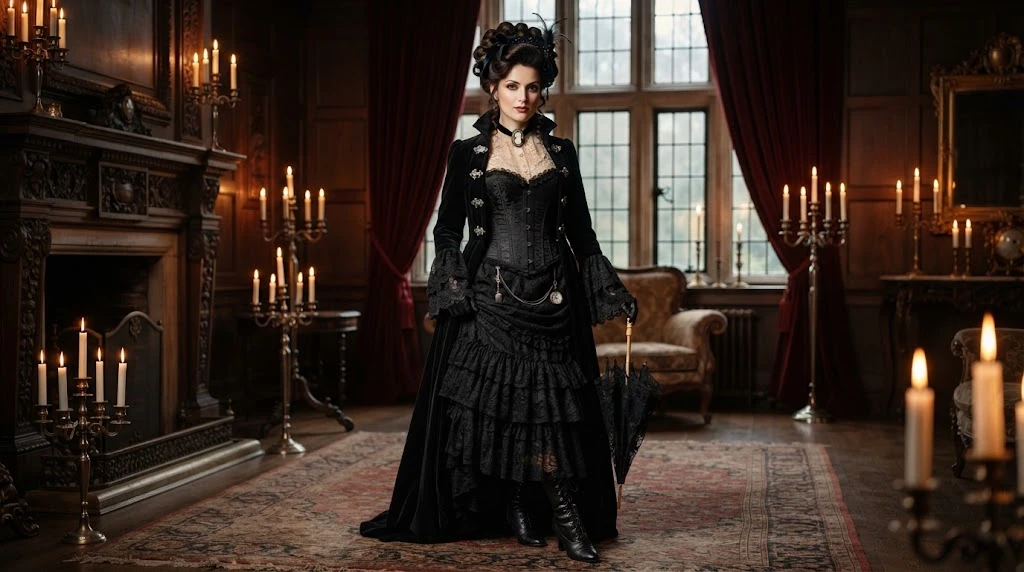
Victorian goth takes its cues from Gothic literature and 19th-century fashion. Think flowing lace, structured corsets, and rich velvet fabric.
This style is theatrical by design. It leans into mystery and old-world elegance, turning everyday outfits into something that feels straight out of a period drama.
How to dress Victorian goth:
- Colors: Black paired with deep burgundy, purple, or forest green
- Clothes: Corsets, long skirts, lace blouses, velvet coats
- Shoes: Lace-up Victorian boots with heels
- Accessories: Cameo brooches, pocket watches, parasols, top hats
- Makeup: Pale base with a subtle dark lip
- Hair: Elaborate curled updos with vintage hair ornaments
Types of Dark and Edgy Goths
These styles turn the volume up. They pull from punk, industrial music, and shock value to make a bold, unmissable statement.
3. Deathrock
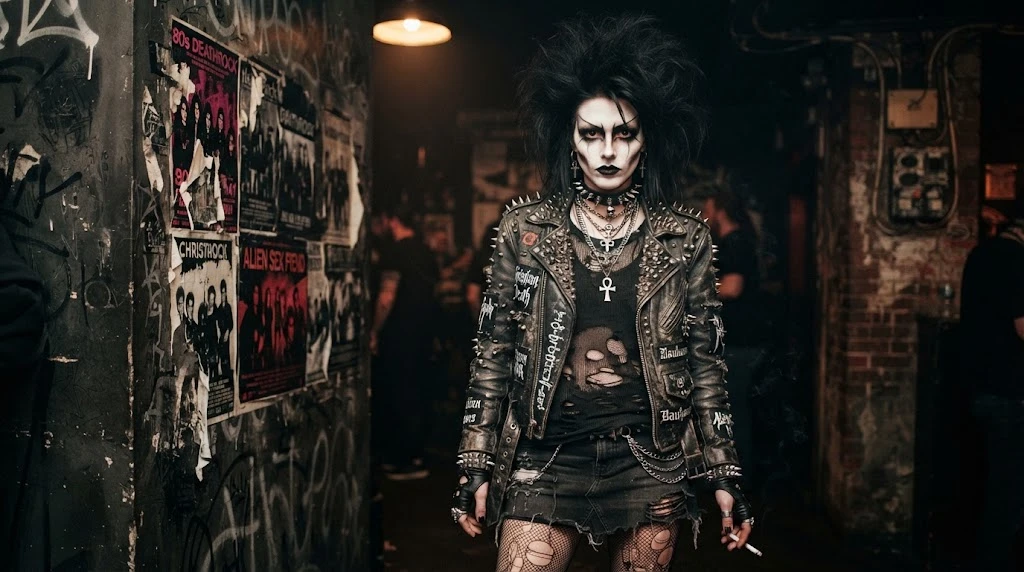
Deathrock blends punk’s raw energy with gothic horror. It’s loud, theatrical, and unapologetically rebellious, drawing heavily from cult horror films and underground DIY art.
How to dress deathrock:
- Colors: Black with horror-movie imagery
- Clothes: Studded jackets, ripped clothing, skeleton prints
- Shoes: Punk-style boots or worn-in combat boots
- Accessories: Skulls, spikes, punk studs
- Makeup: Skull or corpse-inspired face paint
- Hair: Mohawks or death hawks, teased into wild shapes
4. Industrial Goth (Rivethead)
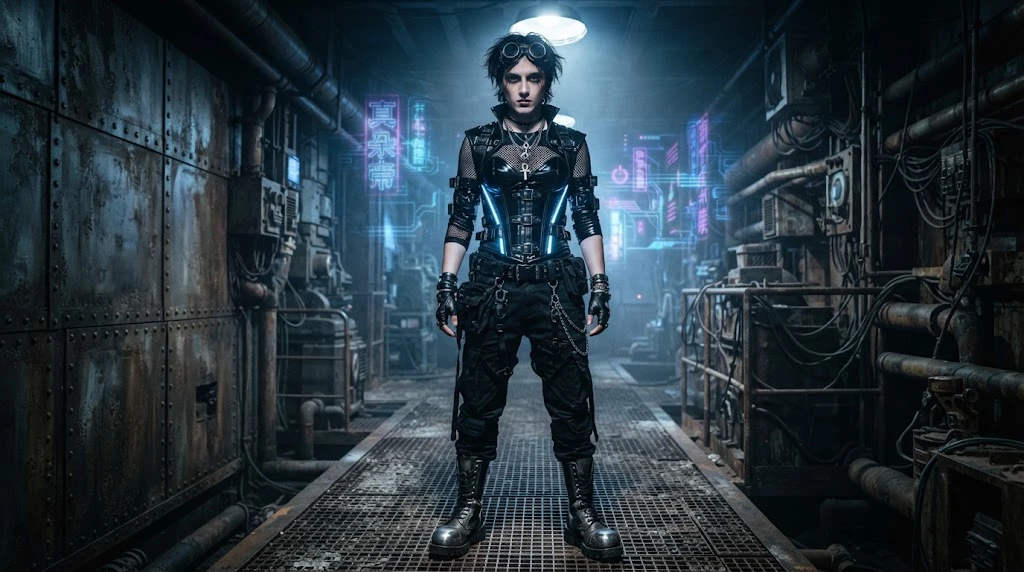
Industrial goth looks like it walked straight out of a dystopian film. It’s inspired by industrial music and cyberpunk visuals, built around military gear, PVC, and heavy metal hardware.
How to dress industrial goth:
- Colors: Black with silver hardware
- Clothes: Military surplus, structured PVC and leather pieces
- Shoes: Steel-toed combat boots
- Accessories: Gas masks, goggles, chains, metal fixtures
- Makeup: Sharp, minimal lines
- Hair: Buzz cuts, geometric shaves, or long dreadlocks
5. Shock Goth (Hard Goth)
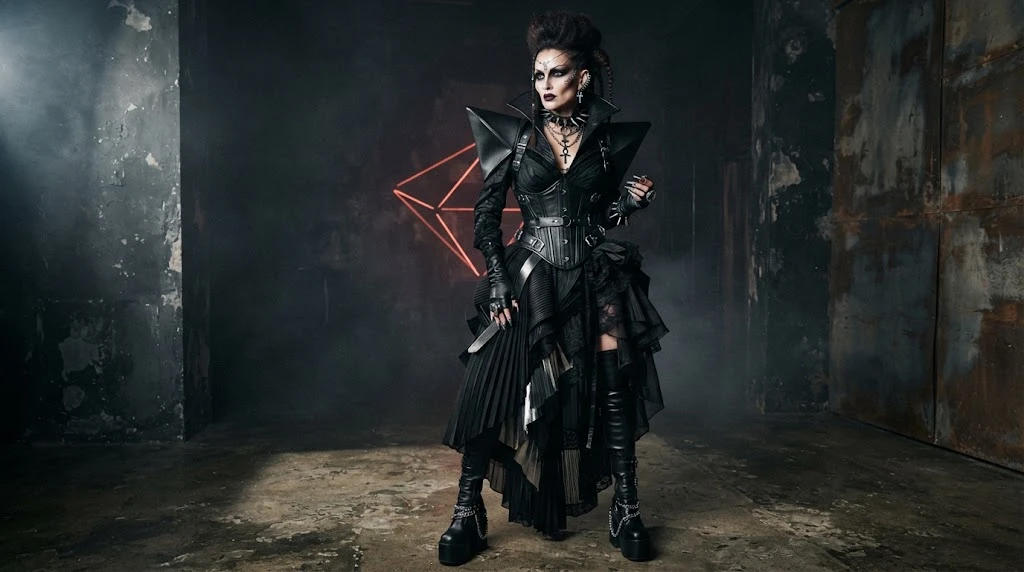
Shock goth exists to push boundaries. It mixes fetish-inspired fashion, horror symbolism, and extreme makeup to create a look designed to unsettle and provoke.
This style is about turning discomfort into art, and it’s not for anyone chasing a subtle aesthetic.
How to dress shock goth:
- Colors: Deep black with stark contrast accents
- Clothes: Fetish-inspired pieces, harnesses, extreme silhouettes
- Shoes: Platform boots or statement footwear
- Accessories: Bold, provocative jewelry and props
- Makeup: Dramatic, often unsettling designs
- Hair: Extreme cuts or colors
Types of Futuristic and Tech-Inspired Goths
These styles fuse gothic mood with science fiction and electronic music culture, creating a digital twist on dark fashion.
6. Cybergoth (Future Goth)

Cybergoth is bright, loud, and built for the dance floor. It mixes rave culture with gothic darkness, using neon colors and LED accessories to create a look that thrives under club lighting.
How to dress cybergoth:
- Colors: Black with neon green, pink, or electric blue
- Clothes: Reflective and synthetic fabrics, futuristic cuts
- Shoes: Chunky platform boots, sometimes wired with LEDs
- Accessories: Gas masks, goggles, UV-reactive gear, circuit-print patterns
- Makeup: Bold and neon-accented
- Hair: Synthetic cyberlocks in bright, unnatural colors
7. Darkwave Goth (EBM Goth)
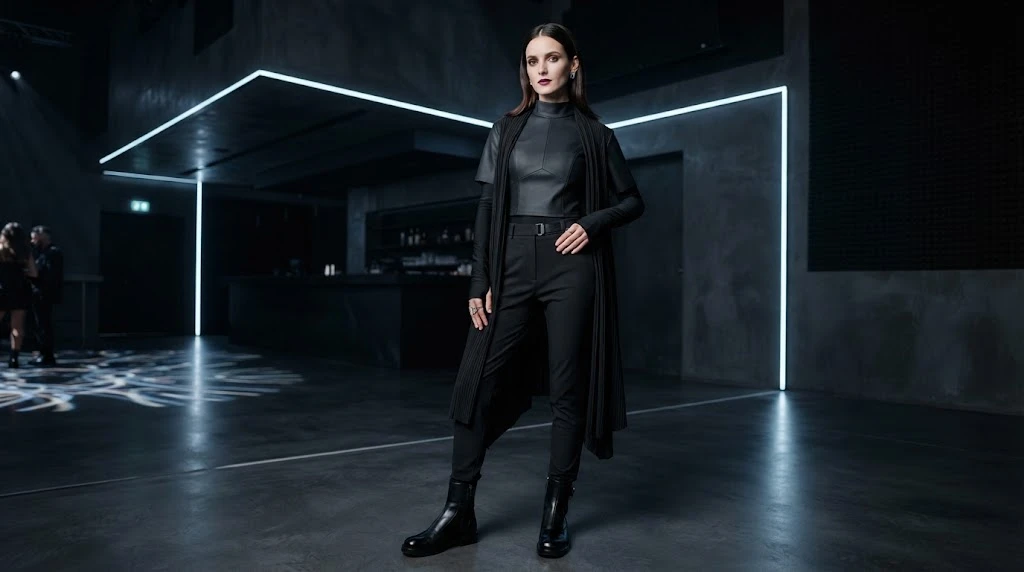
Darkwave goth takes cues from electronic music clubs. It’s sleek, structured, and monochrome, favoring clean lines over decoration.
How to dress darkwave goth:
- Colors: Solid black, kept monochrome
- Clothes: Fitted, streamlined pieces in synthetic fabric
- Shoes: Sleek modern boots
- Accessories: Minimal and understated
- Makeup: Subtle, modern
- Hair: Sleek and natural
Types of Soft and Fashion-Driven Goths
These styles soften the traditional gothic look, blending in streetwear and social media influence to make the subculture more approachable.
8. Nu Goth (New Goth)
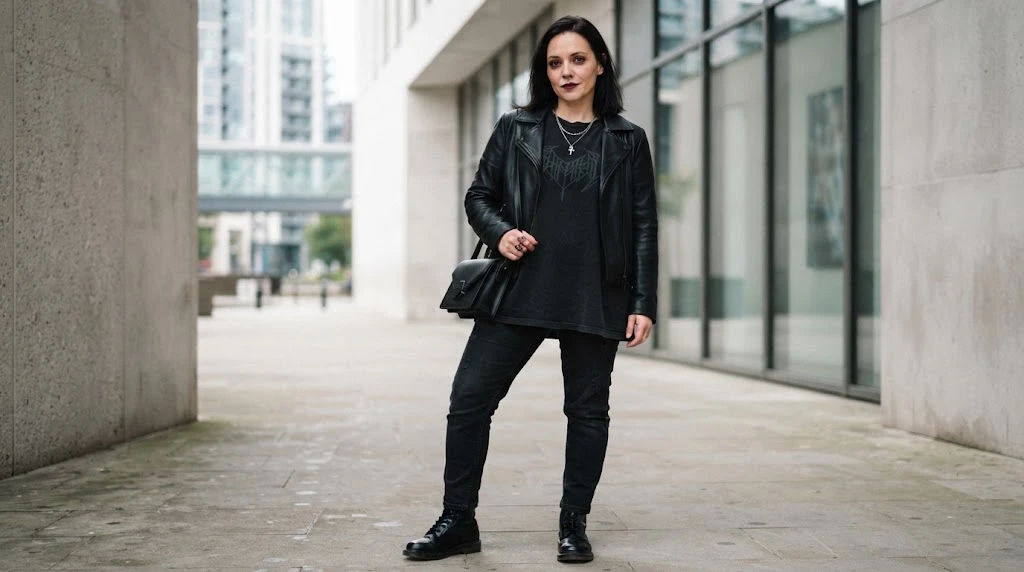
Nu goth is the wearable, everyday version of gothic style. It’s minimalist and streetwear-friendly, trading drama for quiet confidence through texture and shape.
How to dress nu goth:
- Colors: All black, sometimes with geometric patterns
- Clothes: Black jeans, band tees, modern leather jackets
- Shoes: Black boots or sneakers
- Accessories: Chokers, moon and pentagram symbols
- Makeup: Minimal and natural
- Hair: Natural dark tones, simply styled
9. Pastel Goth
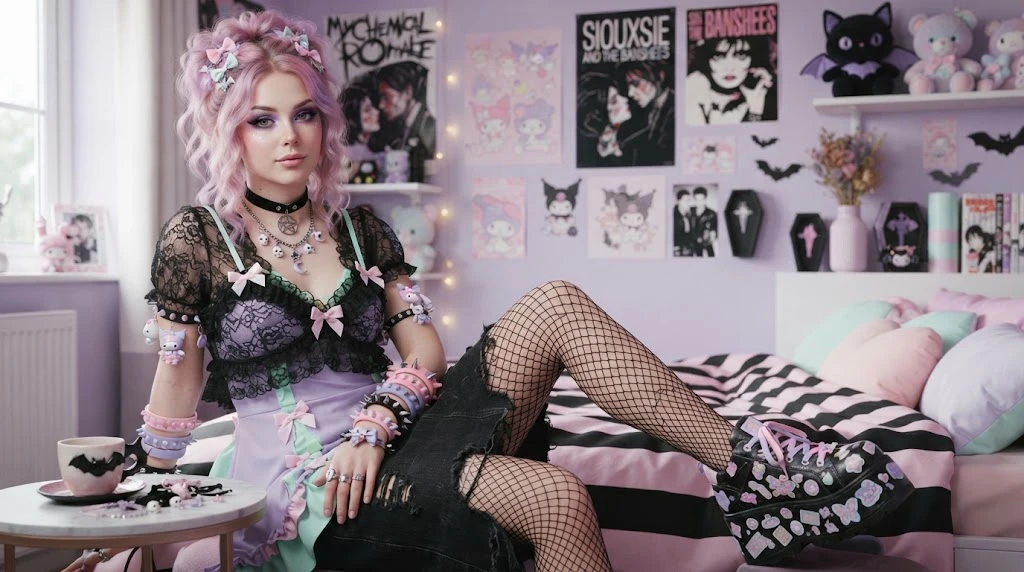
Pastel goth flips the script on traditional darkness. Soft lavender, mint, and baby pink sit alongside skeleton prints and black lace, creating a look that’s equal parts cute and creepy.
How to dress pastel goth:
- Colors: Lavender, mint, baby pink, and powder blue mixed with black
- Clothes: Pastel cardigans paired with gothic graphics
- Shoes: Pastel platform shoes
- Accessories: Kawaii charms mixed with dark symbols
- Makeup: Pastel eyeshadow and soft lip colors
- Hair: Pink, purple, or blue dye
10. Gothic Lolita
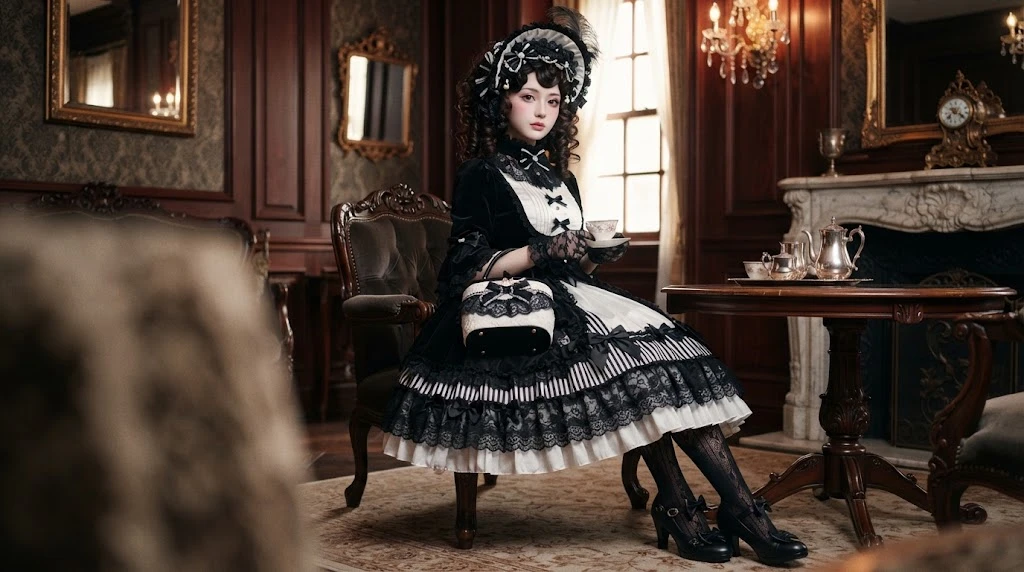
Gothic Lolita is a highly structured Japanese street style inspired by Victorian children’s wear and rococo design. Every piece is carefully coordinated, from lace trim to bows.
How to dress Gothic Lolita:
- Colors: Black and white, sometimes burgundy or navy
- Clothes: High-waisted dresses, bell skirts, petticoats, lace
- Shoes: Mary Janes or platform tea-party shoes
- Accessories: Bonnets, parasols, coordinated handbags
- Makeup: Doll-like and refined
- Hair: Curled and decorated with bows
Types of Youth and Pop Culture Goths
These styles brought gothic fashion into the mainstream, giving younger generations an easy entry point into the subculture.
11. Mall Goth
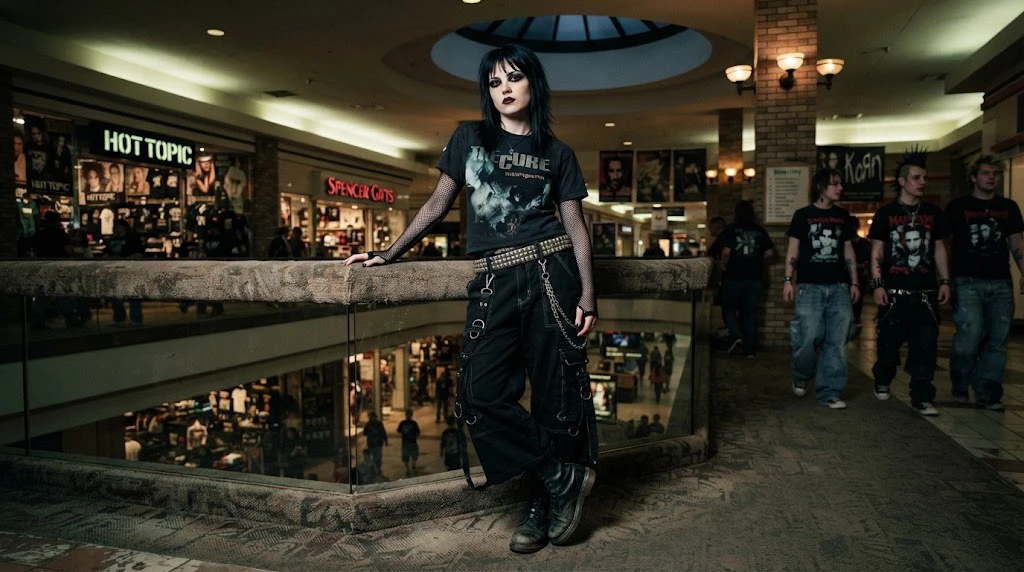
Mall goth defined the early 2000s. Band tees, baggy chained pants, and accessories from stores like Hot Topic made dark fashion accessible to teenagers everywhere.
How to dress mall goth:
- Colors: Black with graphic band logos
- Clothes: Nu-metal or industrial band tees, chained baggy pants
- Shoes: Combat boots or platform sneakers
- Accessories: Wallet chains, studded belts, fingerless gloves
- Makeup: Heavy, straightforward black eyeliner
- Hair: Straightened and dyed black
12. Emo-Goth (Scene Goth)
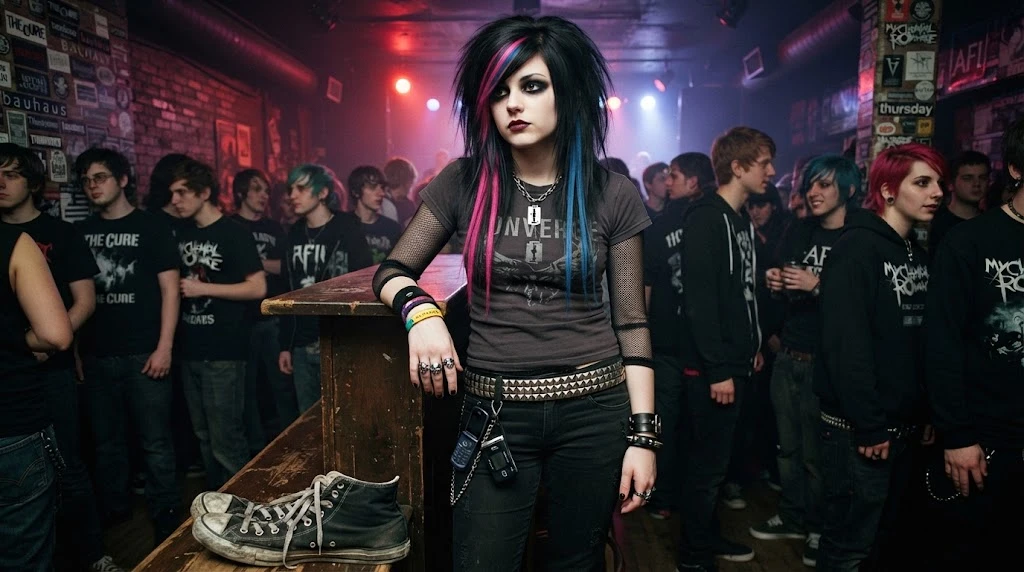
Emo-goth blends emo’s emotional intensity with gothic visuals. It grew out of the MySpace era, marked by colored streaks, skinny jeans, and side-swept bangs.
How to dress emo-goth:
- Colors: Black with bright streaks like pink, blue, or red
- Clothes: Skinny jeans, band tees, studded belts
- Shoes: Converse or Vans
- Accessories: Wristbands, beanies, scene-style pieces
- Makeup: Heavy black eyeliner
- Hair: Side-swept bangs with colored streaks
Specialty and Hybrid Gothic Styles
These styles pull from history, mythology, and high fashion to create something entirely their own.
13. Medieval Goth (Pagan Goth)
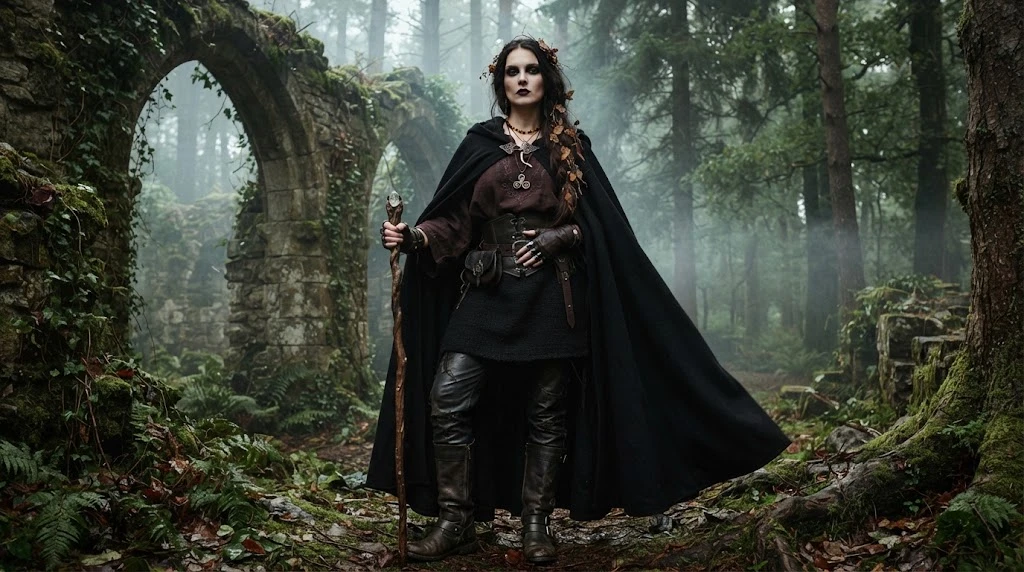
Medieval goth draws from medieval folklore and pagan tradition. Flowing cloaks, tunics, and handmade jewelry create an earthy, nature-connected look.
How to dress medieval goth:
- Colors: Black mixed with brown, green, and burgundy
- Clothes: Loose tunics, cloaks, natural fabrics
- Shoes: Leather boots
- Accessories: Celtic knots, runes, nature symbols
- Makeup: Minimal and natural
- Hair: Long and braided
14. Vampire Goth
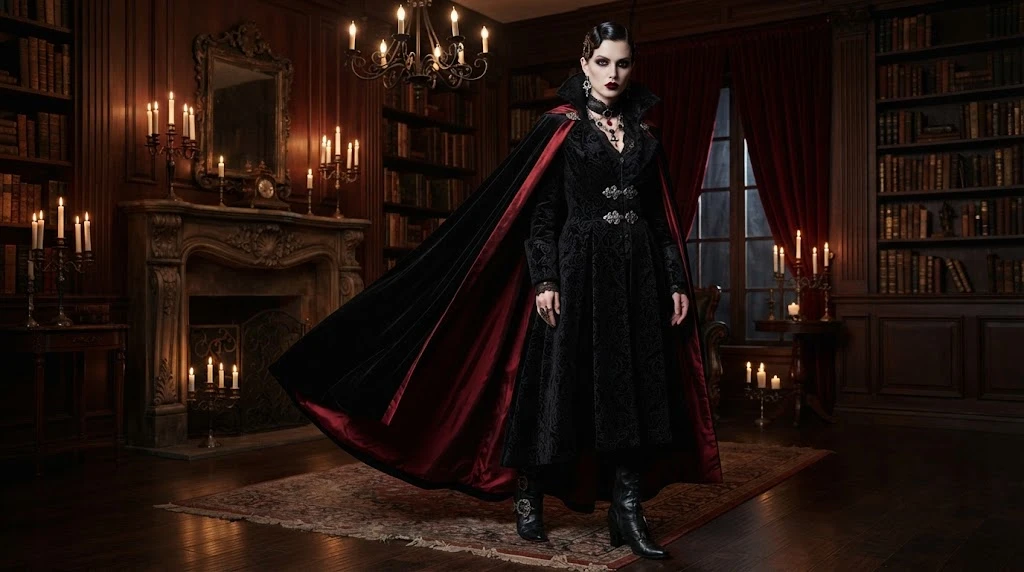
Vampire goth channels the romance and mystery of vampire folklore. Rich fabrics, high collars, and blood-red accents give this style its dramatic edge.
How to dress vampire goth:
- Colors: Black with deep blood-red accents
- Clothes: Victorian and Edwardian pieces, capes, velvet
- Shoes: Period-style boots
- Accessories: Fangs, capes, gothic jewelry
- Makeup: Dramatic red lips
- Hair: Slicked back or elaborately styled
15. Haute Goth (Glam Goth)
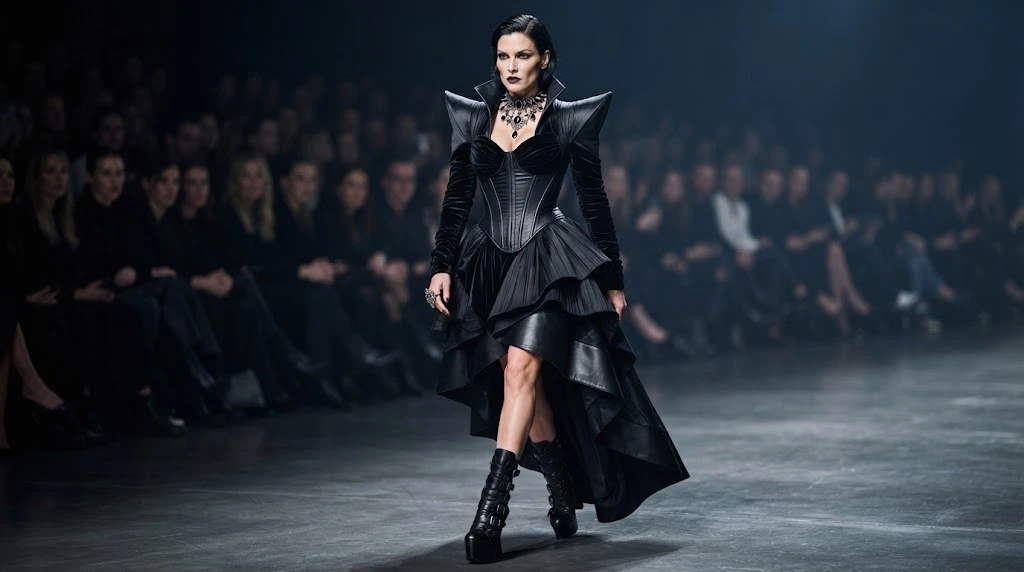
Haute goth is where gothic style meets high fashion. Designer pieces, rich fabrics, and dramatic silhouettes make this the subculture’s most artistic form, often seen on runways.
How to dress haute goth:
- Colors: Black with luxury and avant-garde tones
- Clothes: Designer pieces, dramatic silhouettes
- Shoes: High-end designer footwear
- Accessories: Statement jewelry, exclusive pieces
- Makeup: Runway-inspired and artistic
- Hair: Polished, high-fashion styling
16. Gothic Minimalism

Gothic minimalism is the refined, professional side of the subculture. Clean tailoring and monochrome tones create a subtle but unmistakably dark look, ideal for formal or work settings.
How to dress gothic minimalism:
- Colors: Monochrome black
- Clothes: Well-tailored, simple pieces in quality fabric
- Shoes: Sleek black boots or shoes
- Accessories: Minimal, understated
- Makeup: Subtle or none
- Hair: Natural and simple
17. Ambient Goth (Ethereal Goth)
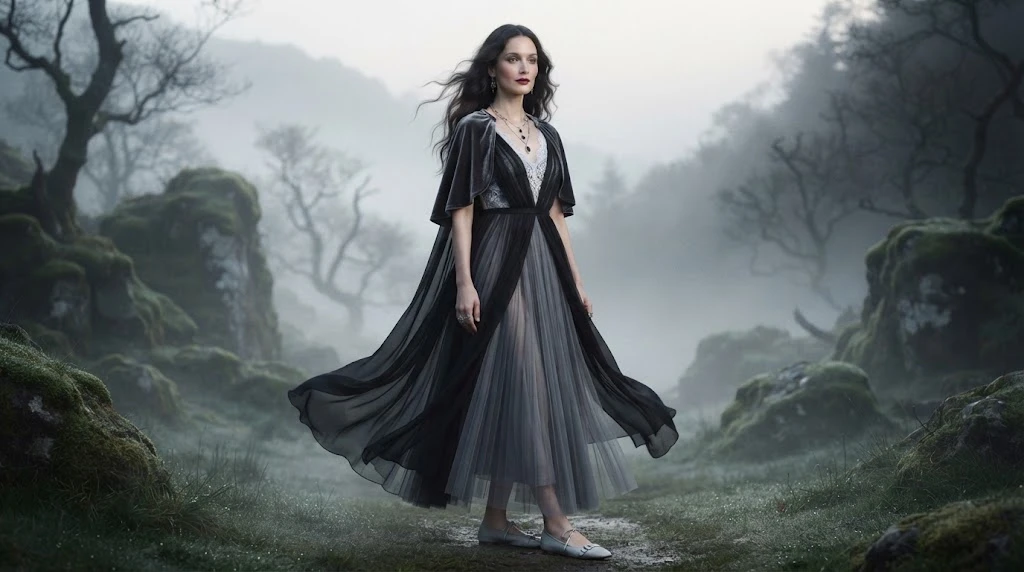
Ambient goth trades sharp contrast for softness. Flowing fabrics, muted tones, and gentle layering create a dreamlike, peaceful version of gothic style.
How to dress ambient goth:
- Colors: Black mixed with white, gray, and silver
- Clothes: Layered, flowing, soft fabrics
- Shoes: Light, feminine footwear
- Accessories: Delicate, ethereal pieces
- Makeup: Soft and natural
- Hair: Long and flowing
Comparing Goth Styles at a Glance
| Category | Colors | Materials | Key Features |
|---|---|---|---|
| Traditional & Classic | Black with silver or jewel tones | Leather, velvet, lace | DIY punk edge or Victorian elegance |
| Dark & Edgy | Black with horror themes | Torn fabric, PVC, rubber | Skulls, gas masks, bold styling |
| Futuristic & Tech | Black with neon or monochrome | Synthetics, reflective fabric | Platform boots, cyberlocks |
| Soft & Fashion-Driven | Black, pastels, monochrome | Cotton, soft fabric, lace | Streetwear cuts, cute-meets-dark |
| Youth & Pop Culture | Black with graphics | Retail fabrics | Band tees, chains, accessible pricing |
| Specialty & Hybrid | Black with varied accents | Natural fabrics to luxury | Historical, fantasy, or runway influence |
Frequently Asked Questions
Can you be goth without listening to goth music?
Yes. While the subculture started with gothic rock, plenty of people connect with the fashion and mood without following the original music scene closely. Loving the aesthetic is enough to belong.
Is goth fashion expensive?
It depends on the style. Gothic minimalism and nu goth work well with affordable basics, and trad goth thrives on thrifted pieces. Styles like Victorian goth and Gothic Lolita often need pricier, more detailed garments, though DIY methods can bring the cost down.
Is there an age limit for gothic fashion?
No. Goth culture spans generations. Many people carry the style into adulthood, often shifting toward more refined looks like gothic minimalism or Victorian goth for professional environments.
Final Thoughts
Gothic fashion was never just about wearing black. It’s a spectrum of self-expression built on decades of music, art, and personal identity.
Whether you’re drawn to the raw energy of trad goth, the elegance of Victorian goth, or the glow of cybergoth, there’s a style in this subculture for everyone who wants to embrace the darker side of fashion.
There’s no wrong way to do it. The only rule is staying true to what feels authentic to you.
For more style guides, trends, and pop culture deep-dives, keep exploring faminaz.com