
The 1920s brought a fresh sense of freedom to men’s clothing.
After World War I, everyday life began to change, and men’s wardrobes changed with it. Suits became more comfortable, trousers became roomier, and casual clothing gained importance.
Jazz, cinema, sports, travel, and growing cities all influenced the way men dressed.
Men still wore suits for work and formal occasions, but they also had more choices for weekends, sports, outdoor activities, and social events.
From high-waisted trousers and three-piece suits to sweaters, flat caps, leather shoes, and pocket watches, every part of a man’s outfit had a practical and stylish purpose.
In this guide, you will find what men wore in the 1920s, including everyday clothes, formal outfits, workwear, sportswear, accessories, and the details that made the decade’s style so recognizable.
The Historical Background of 1920s Men’s Clothing
The 1920s marked a major change in men’s fashion.
Earlier generations often wore clothing that was stiff, heavy, and highly structured. During the 1920s, men began looking for more comfort without giving up a polished appearance.
The growth of ready-to-wear clothing also made fashionable garments easier to access.
Men could buy suits, shirts, trousers, hats, and other clothing in standard sizes rather than relying entirely on custom tailoring.
At the same time, new forms of entertainment and leisure created different clothing needs.
A man could wear one type of outfit to work, another for a weekend, and something more formal for an evening event.
This created a more flexible wardrobe that still looked neat and well coordinated.
What Did Men Wear Every Day in the 1920s?
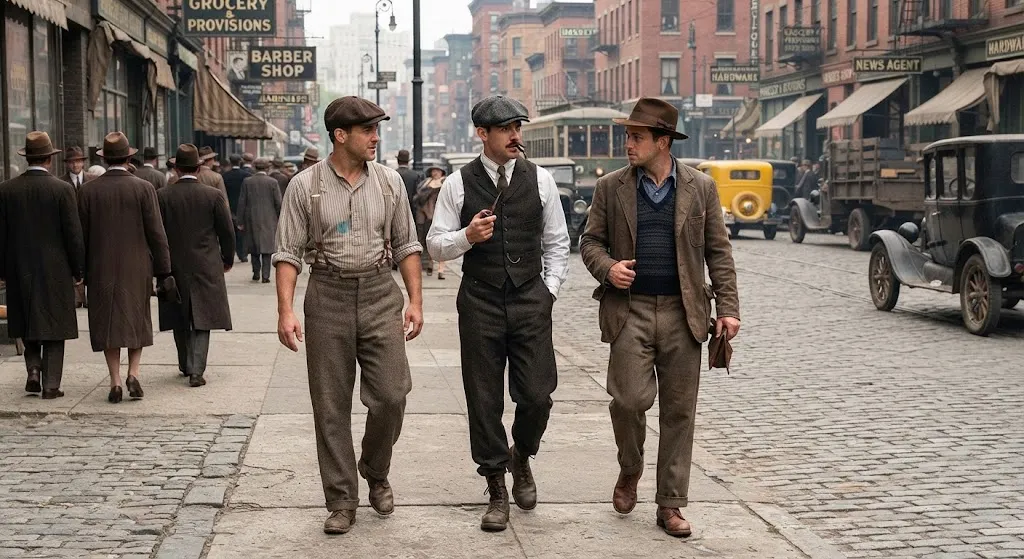
Everyday clothing depended on a man’s job, location, and activity.
For many men, a typical daytime outfit included high-waisted trousers, a button-up shirt, suspenders, a jacket, and leather shoes.
A hat was also an important part of everyday dressing.
Men who worked in offices often wore suits, while workers and men spending time outdoors could choose simpler and more durable clothing.
For relaxed occasions, sweaters, cardigans, sports jackets, and knickers offered comfortable alternatives.
The main idea was to remain neat while choosing clothing that suited the activity.
1920s Men’s Suits
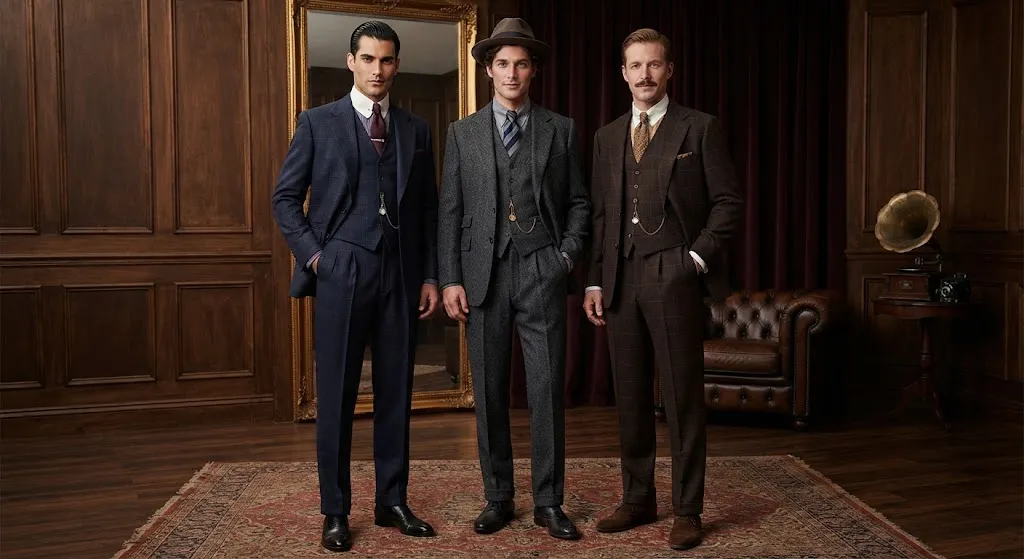
Suits were one of the most important parts of a man’s wardrobe.
Three-piece suits were especially recognizable, consisting of a jacket, trousers, and waistcoat.
Trousers were usually high-waisted and fairly loose through the legs.
Jackets could have a structured shape while still offering more freedom of movement than some earlier styles.
Common suit colors included:
- Navy
- Gray
- Brown
- Charcoal
- Tan
- Cream
Pinstripes, checks, and other subtle patterns also gave men more choices.
For a closer look at suit construction, fabrics, and styles, see our 1920s Men’s Suits guide.
1920s Men’s Formal Clothing
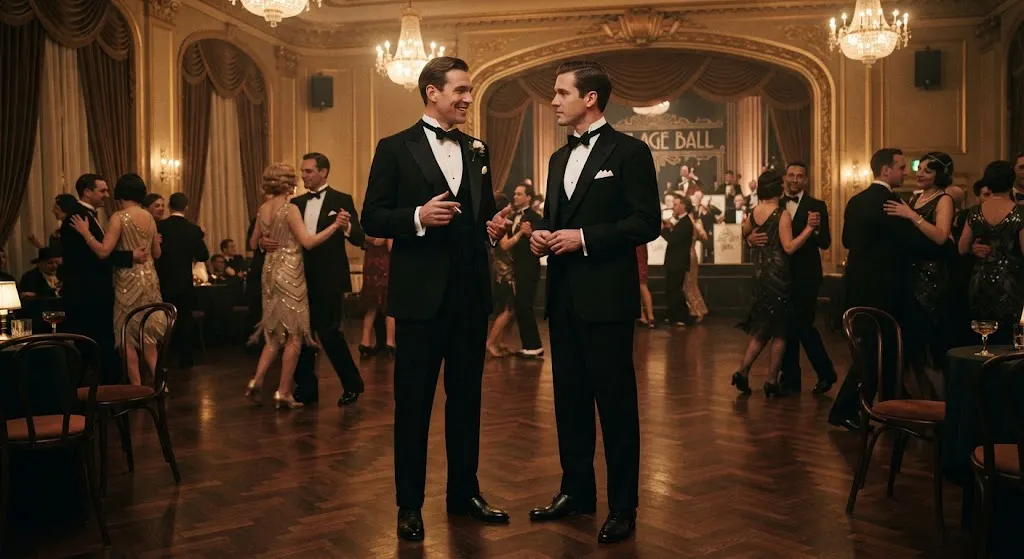
Formal clothing was important for weddings, dinners, theaters, dances, clubs, and evening gatherings.
Men could wear dark three-piece suits for formal daytime occasions.
For evening events, tuxedos and dark formal suits became increasingly popular.
A typical formal outfit could include:
- Dark jacket
- Matching trousers
- White dress shirt
- Bow tie
- Waistcoat
- Pocket square
- Polished leather shoes
Black was a classic choice for evening wear.
Formal clothing placed greater importance on neatness and coordination because every small detail could affect the finished appearance.
You can learn more about this side of the decade in our 1920s Men’s Formal Wear guide.
1920s Men’s Casual Clothing
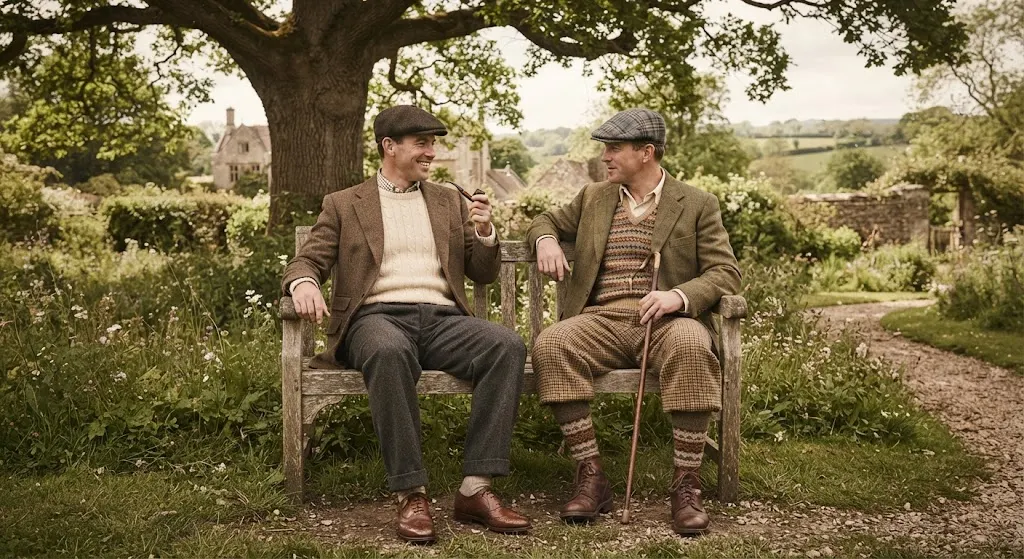
Casual clothing became more important during the 1920s.
Men no longer needed to wear a complete formal outfit for every activity.
Sweaters, cardigans, sports jackets, casual trousers, and simple shirts became useful choices for relaxed occasions.
Knickers and plus-fours were especially popular for outdoor activities and sports.
Flat caps and newsboy caps also worked well with casual clothing.
This new freedom helped create the difference between formal and casual dressing that is familiar today.
For more examples, see our 1920s Men’s Casual Fashion guide.
1920s Men’s Trousers
Trousers had a distinct shape during the decade.
Most styles were high-waisted and loose through the legs.
Cuffs were common and helped give the trousers a finished appearance.
Suspenders were widely used to keep trousers in place.
Wool, tweed, and other durable fabrics were common choices.
For everyday clothing, men could pair trousers with a simple shirt and sweater.
For formal occasions, the trousers were usually part of a matching suit.
1920s Men’s Shirts
Shirts were an essential part of almost every outfit.
White shirts remained a classic option, particularly for business and formal wear.
Casual shirts could feature stripes, checks, or softer colors.
Early in the decade, detachable collars were still common.
These collars could be removed and cleaned separately from the main shirt.
As the decade progressed, attached collars became more popular because they offered greater comfort and convenience.
The shirt was often finished with a tie or bow tie depending on the occasion.
1920s Waistcoats and Vests
Waistcoats were commonly worn as part of three-piece suits.
They helped create a structured appearance by covering the shirt between the jacket and trousers.
Some waistcoats matched the suit, while others used contrasting fabrics or colors.
They also had practical pockets.
Men could carry a pocket watch in a waistcoat pocket, with a chain attached across the front.
Even when a jacket was removed, the waistcoat helped keep the outfit looking neat.
1920s Men’s Workwear
Working-class men generally needed clothing that could withstand daily use.
Their wardrobes often included sturdy trousers, button-up shirts, suspenders, work jackets, vests, and flat caps.
Overalls were useful for factory and outdoor work.
Wool and heavier fabrics provided warmth and durability during colder conditions.
The purpose of workwear was mainly practical rather than decorative.
However, working-class clothing still contributed to the recognizable appearance of 1920s men.
1920s Men’s Sportswear
Sports became increasingly influential during the decade.
Golf, tennis, cycling, boating, and other outdoor activities required clothing that allowed greater movement.
Knickers and plus-fours became particularly associated with golf and country activities.
Men could wear these shorter trousers with long socks, shirts, sweaters, and flat caps.
Sportswear also encouraged the wider use of sweaters and lighter clothing.
This helped move men’s fashion toward a more relaxed approach to dressing.
1920s Men’s Hats
Hats were a major part of men’s clothing.
Many men would not consider an outfit complete without one.
Popular choices included:
Fedoras
Fedoras created a polished appearance and were popular in city settings.
Flat Caps
Flat caps were practical and worked well with casual and working-class clothing.
Newsboy Caps
Newsboy caps had a fuller shape and were often associated with working and outdoor outfits.
Homburgs
Homburg hats offered a more formal appearance and could be worn with tailored suits.
The choice of hat depended on the occasion, outfit, and social setting.
1920s Men’s Shoes
Shoes completed the overall outfit.
Leather Oxfords and brogues were popular choices for everyday and formal clothing.
Black and brown were practical colors that worked with many outfits.
Two-tone spectator shoes also became a recognizable style during the decade.
For formal occasions, men generally chose darker and more polished footwear.
For casual activities, brown leather shoes and other relaxed styles could be more suitable.
1920s Men’s Accessories
Accessories added personality to men’s clothing.
Common accessories included:
- Pocket watches
- Pocket squares
- Suspenders
- Ties
- Bow ties
- Tie pins
- Cufflinks
- Hats
- Leather gloves
Pocket watches were particularly useful during the early part of the decade.
By the end of the 1920s, wristwatches were becoming increasingly practical and modern.
Pocket squares and tie pins added small decorative details to formal suits.
Suspenders were both practical and visually important because they worked well with high-waisted trousers.
1920s Men’s Summer Clothing
Summer clothing required lighter materials and more comfortable designs.
Men could choose lightweight suits, cotton shirts, linen garments, and lighter-colored trousers.
Cream, beige, tan, and light gray were useful alternatives to darker winter colors.
Casual summer outfits could include lightweight trousers, shirts, sweaters, and simple leather shoes.
The goal was to stay comfortable while maintaining a neat appearance.
1920s Men’s Winter Clothing
Cold weather required heavier materials and additional layers.
Wool suits, tweed jackets, overcoats, scarves, gloves, and heavier hats were practical choices.
Men could wear sweaters beneath jackets for additional warmth.
Dark brown, gray, navy, and charcoal were common winter-friendly colors.
Layering also allowed men to adjust their clothing depending on the weather and activity.
How Men’s Fashion Differed by Occasion
One of the most interesting changes during the 1920s was the growing difference between clothing for different occasions.
| Occasion | Typical Clothing |
|---|---|
| Office | Three-piece suit, shirt, tie, leather shoes |
| Formal evening | Tuxedo, white shirt, bow tie, polished shoes |
| Casual weekend | Trousers, sweater, shirt, flat cap |
| Golf | Plus-fours, sweater, long socks, cap |
| Outdoor work | Work trousers, shirt, suspenders, work jacket |
| Summer outing | Lightweight trousers, shirt, light jacket |
| Winter | Wool suit, overcoat, scarf, gloves |
This variety made men’s wardrobes more flexible than before.
What Fabrics Did Men Wear in the 1920s?
The fabric depended on the season and type of clothing.
Wool
Wool was widely used for suits, trousers, jackets, and coats.
It was durable, warm, and capable of holding its shape.
Tweed
Tweed was popular for country clothing, sports jackets, and outdoor outfits.
Its textured appearance also gave casual clothing more character.
Flannel
Flannel was soft and comfortable and could be used for trousers and other everyday clothing.
Linen
Linen and other lightweight fabrics were useful during warmer weather.
They offered greater comfort when temperatures increased.
The use of different fabrics helped men create clothing suited to both the weather and occasion.
How to Dress Like a 1920s Man Today
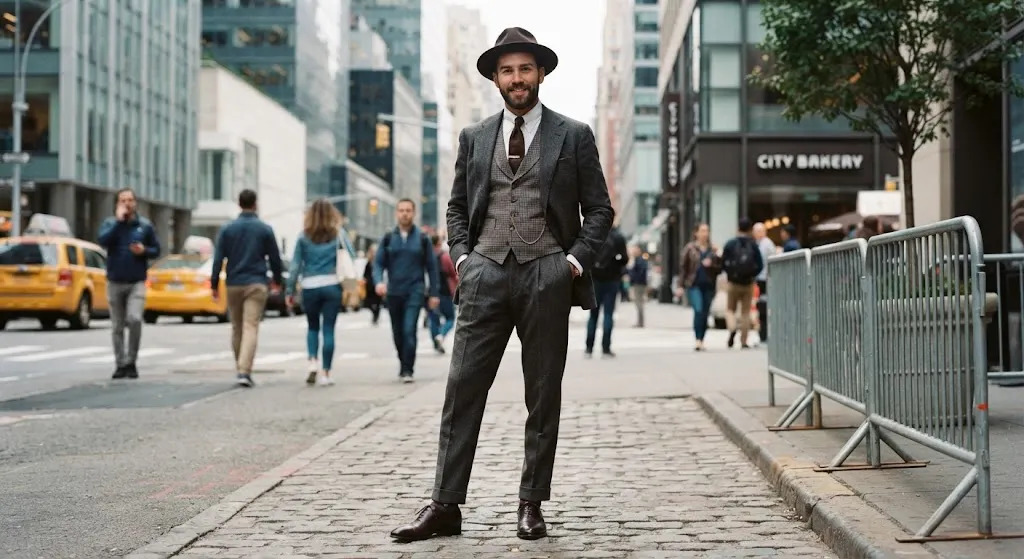
You do not need to copy every detail of historical clothing to create a 1920s-inspired outfit.
Start with the basic silhouette.
High-waisted trousers, a simple shirt, and a tailored jacket can immediately create a vintage appearance.
Add a waistcoat for a stronger Jazz Age look.
For casual clothing, try a sweater, tweed jacket, flat cap, or classic leather shoes.
For formal events, a three-piece suit with a pocket square and polished shoes can create a refined appearance.
The key is to avoid using too many historical details at once.
A few carefully selected pieces usually look more natural than wearing an entire vintage costume.
Why 1920s Men’s Clothing Is Still Popular
The 1920s continue to influence modern men’s fashion because the clothing combined style and practicality.
High-waisted trousers, three-piece suits, waistcoats, classic shoes, and vintage-inspired hats still appear in modern wardrobes.
The decade also helped establish the idea that clothing should match the occasion.
Men could dress formally for important events and choose more comfortable clothing for leisure.
That balance remains an important part of modern menswear.
Conclusion
So, what did men wear in the 1920s?
The answer depends on where they were going and what they were doing.
Men wore three-piece suits and formal clothing for work and important events, while sweaters, sports jackets, knickers, and relaxed trousers offered more casual options.
Hats, leather shoes, suspenders, pocket watches, ties, and waistcoats completed many outfits.
The decade was important because men’s clothing became more flexible.
Traditional tailoring remained, but comfort and personal choice became increasingly important.
That combination helped create a style that still inspires modern fashion.
Whether you prefer a classic three-piece suit, relaxed trousers and a sweater, or a simple vintage-inspired accessory, the clothing of the 1920s offers plenty of ideas for modern wardrobes.
Frequently Asked Questions
What Was the Most Common Clothing for Men in the 1920s?
Suits were extremely common, especially for work and city life. Men also wore trousers, shirts, waistcoats, sweaters, jackets, hats, and leather shoes for different occasions.
Did Men Wear Suits Every Day in the 1920s?
Many men wore suits for work and other formal daytime activities, but casual clothing was becoming more common for weekends, sports, and leisure.
What Pants Did Men Wear in the 1920s?
Men commonly wore high-waisted trousers with roomy legs. Knickers and plus-fours were also popular for sports and outdoor activities.
What Shoes Did Men Wear in the 1920s?
Oxfords, brogues, leather dress shoes, and two-tone spectator shoes were among the popular choices.
What Hats Did Men Wear in the 1920s?
Fedoras, flat caps, newsboy caps, homburgs, and other structured hats were commonly worn.
How Can I Dress Like a Man From the 1920s?
Try high-waisted trousers, a button-up shirt, waistcoat, classic leather shoes, or a vintage-inspired hat. You can use one or two pieces rather than recreating a complete historical outfit.