
One shape. Every body. No exceptions.
Walk into any store, scroll any fashion feed, or flip through any decade of style history, and you’ll spot it: a dress that hugs the shoulders, skims the waist, and gently flares toward the hem. It’s called the A-line dress, and it has quietly outlasted almost every other silhouette in fashion.
Most people can point one out. Few can explain why it works so well on so many different bodies. The answer isn’t magic — it’s math. A simple triangle shape, borrowed from the letter “A” itself, does more for balance and movement than almost any other cut in modern clothing.
This guide breaks down exactly what makes an A-line dress an A-line dress, who it flatters, the different styles you’ll come across, and how to style one for any season or occasion.
What Is an A-Line Dress?
An A-line dress is a dress that stays fitted through the shoulders and bust, then gradually widens as it moves down toward the hem — just like the shape of a capital letter A.
Unlike bodycon or straight-cut dresses, an A-line dress doesn’t cling to the hips or thighs. Instead, it creates soft, triangular movement below the waist. This effect usually comes from darts, seams, or fabric panels sewn into the design, rather than stretchy material doing all the work.
The result is a dress that skims the body instead of gripping it. It offers a defined shape up top, freedom of movement below, and a flattering line in between. That combination is exactly why designers, everyday shoppers, and celebrities alike keep coming back to it season after season.
Why Is the A-Line Dress So Popular?
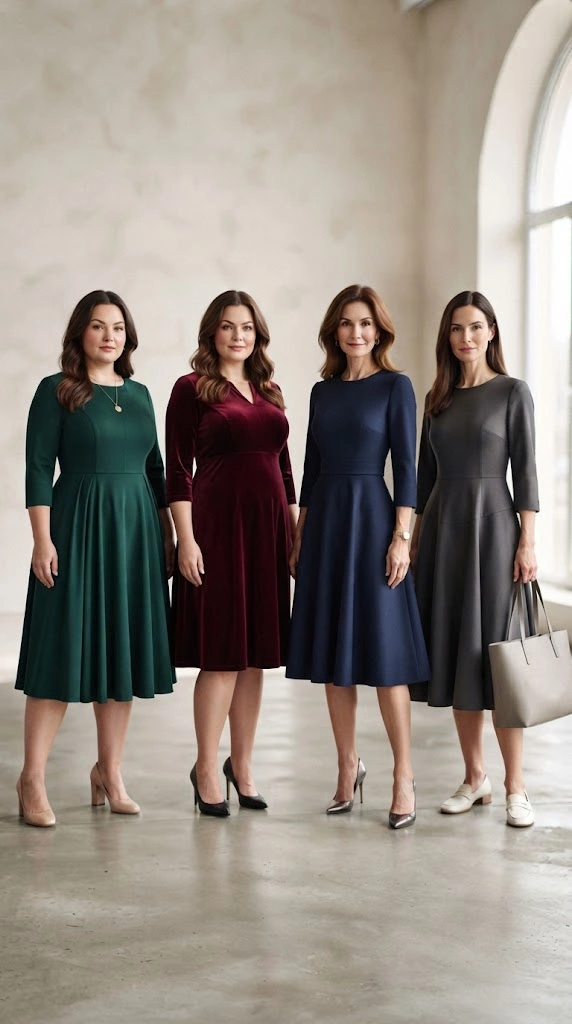
The A-line dress has stayed in style for one simple reason: it balances proportions no matter your body shape.
Because the top stays fitted and the bottom flares out, this cut adjusts to different figures without needing major tailoring. Here’s how it works across common body types:
- Pear shapes — the flared skirt softens and balances wider hips
- Apple shapes — the fitted bodice skims the midsection without pulling tight
- Hourglass figures — the defined waist highlights natural curves
- Rectangle shapes — the flare adds curves and visual dimension where there weren’t any before
Because one silhouette works across so many body types, the A-line dress has become a wardrobe staple rather than a passing trend. It’s the rare style that looks intentional on almost everyone who wears it.
How Does an A-Line Dress Fit?
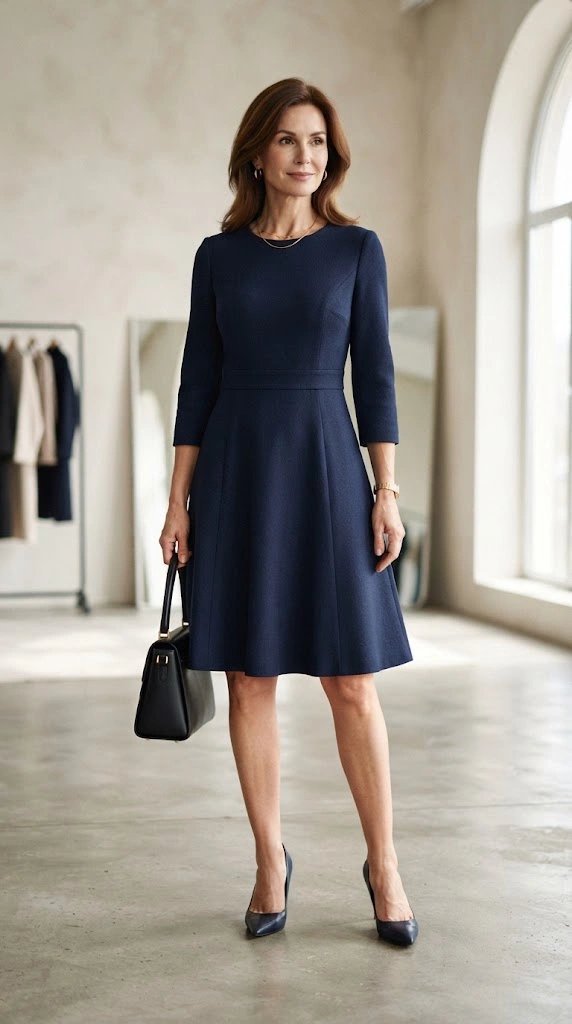
Up top, the dress follows your natural shape without squeezing. It sits close around the bust and waist while still leaving room to move and breathe comfortably.
Many A-line dresses include a waist seam or belt to sharpen the shape. This small detail creates a clean line at the waist, giving the outfit a polished, put-together look without feeling restrictive.
Below the waist, the skirt flows away from the hips instead of clinging to them. That extra room is what makes A-line dresses so comfortable for long days — whether you’re at the office, out running errands, or dancing at a wedding.
Because the top stays fitted and the bottom stays loose, the whole silhouette reads as balanced. That balance, more than anything else, is what makes this cut so wearable and so easy to style.
Types of A-Line Dresses
Not all A-line dresses look the same. Small changes in waist placement, seam style, and flare create several distinct variations. Here are the four you’ll see most often.
1. Classic A-Line Dress

The classic version has a natural waistline, meaning the fitted part sits right at your actual waist. From there, the skirt flares out gradually into the familiar A shape.
This style stays close to the body on top while leaving room to move below. It’s one of the easiest, most versatile A-line styles to wear for everyday life.
2. Empire A-Line Dress
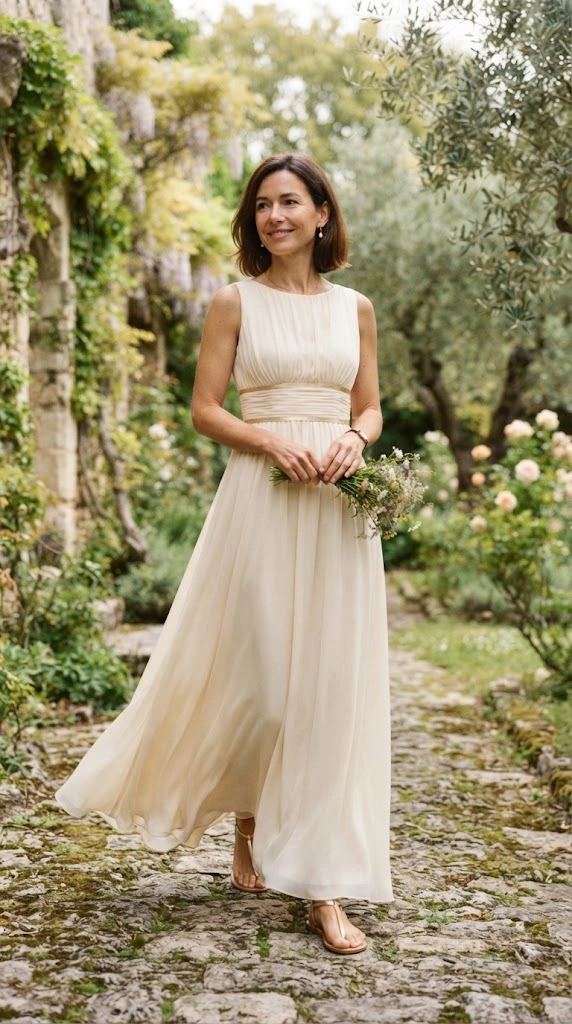
An empire A-line dress raises the waistline up to just below the bust. The fabric then flows loosely downward, skipping a defined waist altogether.
This cut suits anyone who wants a looser, more relaxed fit through the middle. It also pairs beautifully with flowing fabrics, since the extra length gives the material room to move.
3. Princess Seam A-Line Dress
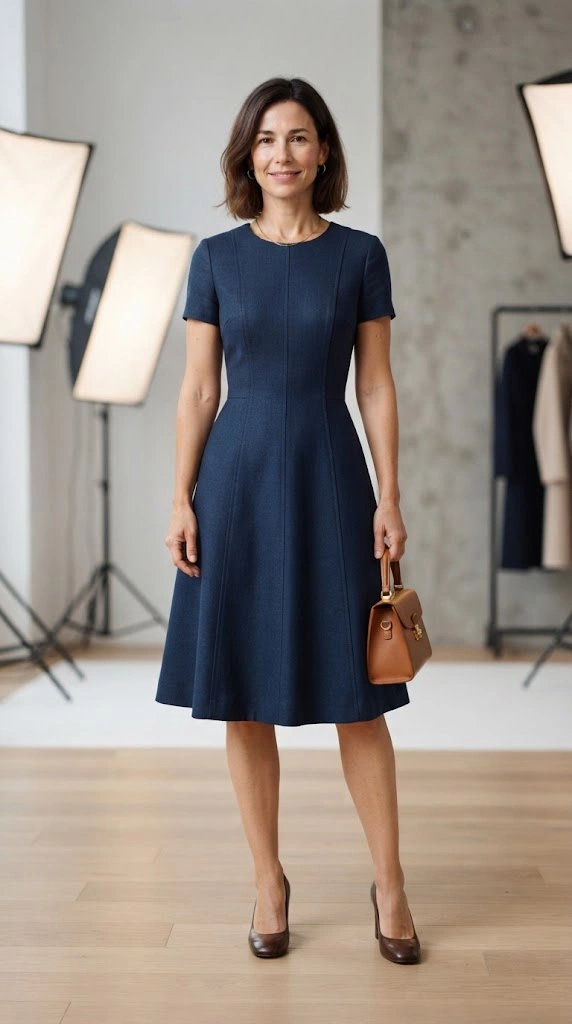
This version uses vertical seams running from the shoulders or bust down to the hem. Instead of darts, these seams shape the fabric, creating a close, tailored fit through the bodice.
The result is a smooth, structured look up top that still allows the skirt to flare naturally below. It’s a popular choice for dresses that need to look neat, sharp, and intentional.
4. Trapeze Dress
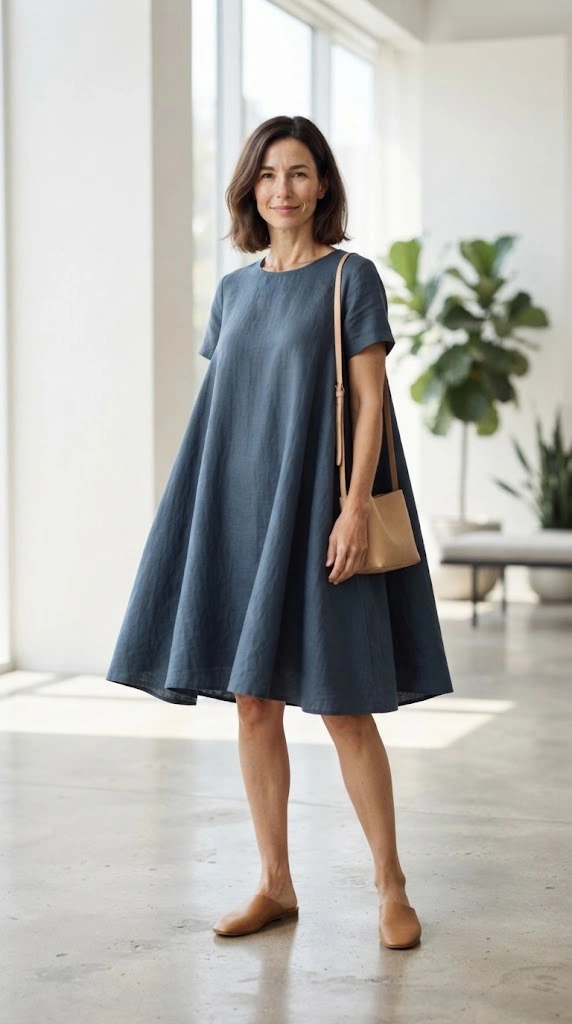
The trapeze dress skips waist definition completely. It flares out gently starting right at the shoulders, creating a loose, roomy shape that skims over the entire body.
Without a fitted waist, this style is ideal for anyone who wants extra comfort and movement. It works especially well for casual, laid-back settings.
A-Line Dress vs. Other Silhouettes
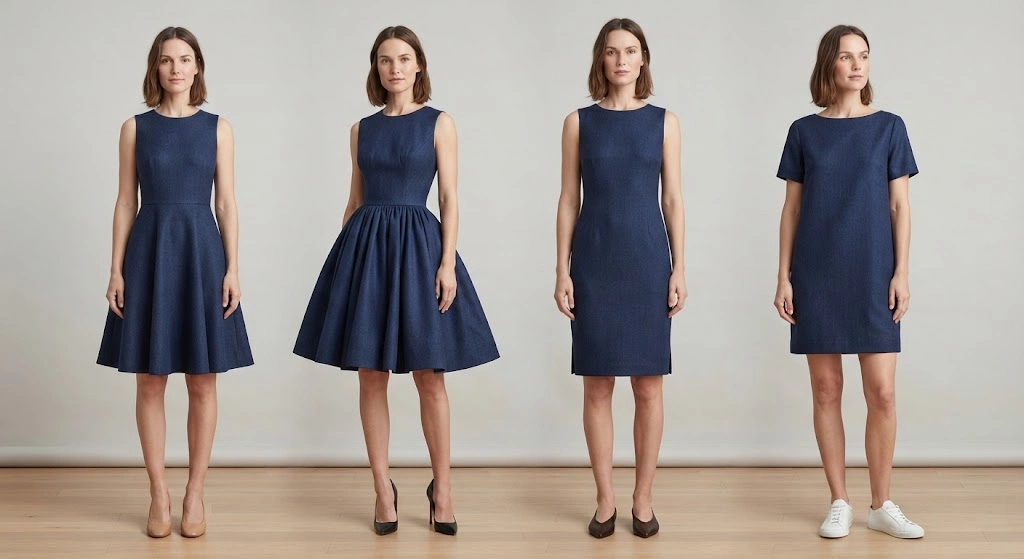
Dress shapes can look similar at a glance, but small differences in fit and flare change how each one looks and feels. Here’s how the A-line compares to other popular silhouettes.
| Comparison Point | A-Line Dress | Other Silhouette |
|---|---|---|
| Waist & hip fit | Gentle, gradual flare from the waist down | Fit-and-flare hugs the waist and hips tightly before flaring out |
| Overall body fit | Flares out for a relaxed, roomy feel | Sheath follows the body closely with little to no flare |
| Waist definition | Clear waistline with added structure | Shift hangs straight down with no waist shaping at all |
| Waist placement | Natural waistline, shorter flare | Empire waist sits higher, with a longer flare down |
Each silhouette offers a different trade-off between structure and movement. The best choice usually comes down to comfort, body shape, and the occasion you’re dressing for.
Choosing the Right Fabric for an A-Line Dress
Fabric changes everything about how an A-line dress looks, moves, and feels. Some materials suit everyday wear, while others are better saved for dressier occasions.
| Fabric Type | Best For | Why It Works |
|---|---|---|
| Cotton & linen | Casual, warm-weather wear | Lightweight and breathable, allowing easy movement all day |
| Silk & satin | Formal events, evening wear | Creates a smooth, flowing drape for a polished, elegant look |
| Wool blends & crepe | Workwear, cooler days | Holds its shape well and keeps the flare steady without clinging |
Tip: If you’re unsure which fabric to pick, check the care label first. Fabrics like linen wrinkle easily and may need extra attention to stay polished through the day.
Best Accessories for an A-Line Dress
The right accessories highlight an A-line dress’s natural shape. The wrong ones can overwhelm it. Keep these tips in mind:
- Belts and waist details — sharpen the waistline and add structure to looser, flowier styles
- Shoes — flats for comfort, heels for a dressier finish, boots for cooler weather, sandals for warm days
- Jewelry and bags — simple pieces for everyday wear, statement pieces for special occasions, and small bags for casual outings
Since the A-line shape already has a clean, balanced line, the goal with accessories is to complement it, not compete with it. Simplicity almost always wins.
Final Thoughts
The A-line dress earns its staying power honestly. It flatters nearly every body type, works across every season, and adjusts easily for casual days, busy workweeks, or formal events.
Whether you reach for a classic A-line, an empire waist, a princess seam, or a trapeze cut, the underlying idea stays the same: a fitted top, a flared bottom, and effortless balance in between.
The next time you’re shopping for a dress that works almost anywhere, this silhouette is a safe, stylish bet.
Frequently Asked Questions
Does an A-line dress hide the belly?
Yes. The flared skirt skims over the midsection instead of clinging to it, offering a relaxed, comfortable fit that doesn’t draw attention to that area.
What is another name for an A-line dress?
It’s sometimes called a “flared dress” or “circle skirt dress.” Both terms describe the same basic shape: narrow at the top, widening gradually toward the hem.
Can you wear an A-line dress in winter?
Yes. Pairing it with tights, boots, and a warm coat keeps the original shape intact while adding the extra warmth you need for colder months.
For more style guides, fashion breakdowns, and celebrity looks, stay tuned to faminaz.com.