
There is a particular kind of woman who walks into a room and looks expensive without a single logo in sight. No monogrammed handbag, no flashy jewelry, nothing shouting for attention — and yet everything about her reads as considered, polished, and quietly luxurious. That is quiet luxury, and here is the best part: it has almost nothing to do with money.
Quiet luxury is not about designer labels or a five-figure wardrobe. It is a way of dressing built on beautiful fabrics, a restrained color palette, impeccable fit, and the confidence to let quality speak softly. And for women over 50, it may be the most flattering style philosophy there is — because it rewards exactly what maturity brings: discernment, restraint, and the self-knowledge to know what suits you. This guide breaks down how to achieve the quiet luxury over 50 look on a sensible budget, piece by piece.
What Quiet Luxury Actually Is (And What It Isn’t)
Quiet luxury is sometimes confused with “old money style,” and the two do overlap — both favor timeless pieces over trends. But quiet luxury is broader and less about heritage. It is simply dressing in a way where the quality of the cloth, the cut of the garment, and the harmony of the outfit do all the talking. Think a cream cashmere sweater with perfectly tailored trousers, rather than a head-to-toe designer tracksuit.
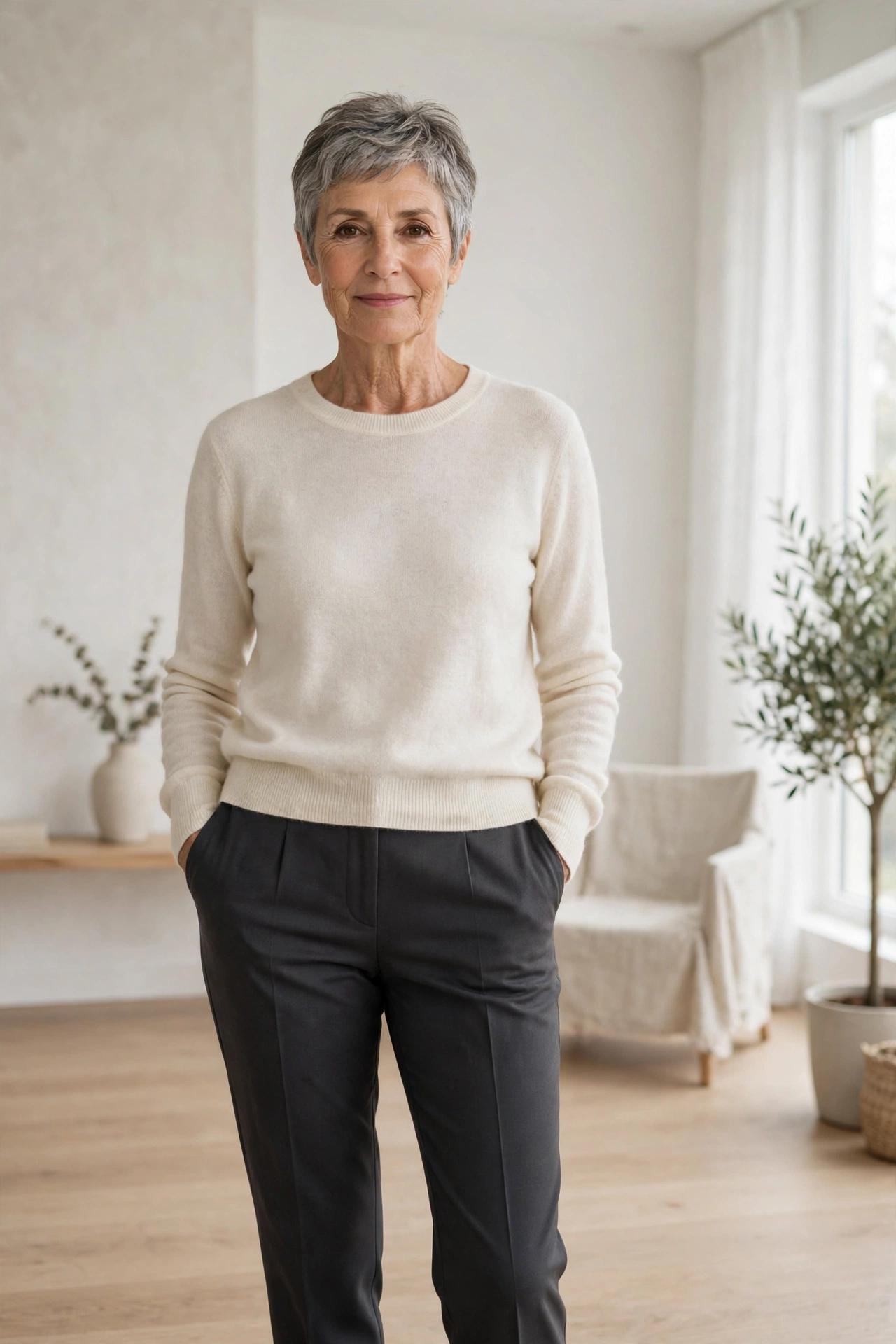
What it isn’t: it isn’t boring, it isn’t invisible, and it certainly isn’t about disappearing into beige. A woman in quiet luxury still has presence — she just earns it through polish rather than flash. It also isn’t a rulebook that bans color or personality. It is a framework: fewer, better things, chosen with intention. If the old-money aesthetic appeals to you, our guide to old money outfits for women over 50 explores that adjacent world in detail.
The Color Palette That Reads Expensive
If quiet luxury has a signature, it is color discipline. The palette centers on neutrals: camel, cream, ivory, taupe, charcoal, navy, and soft grey. These shades read as expensive for a simple reason — they look intentional together. A camel coat over cream knit with taupe trousers looks curated; the same pieces in clashing brights would look accidental.
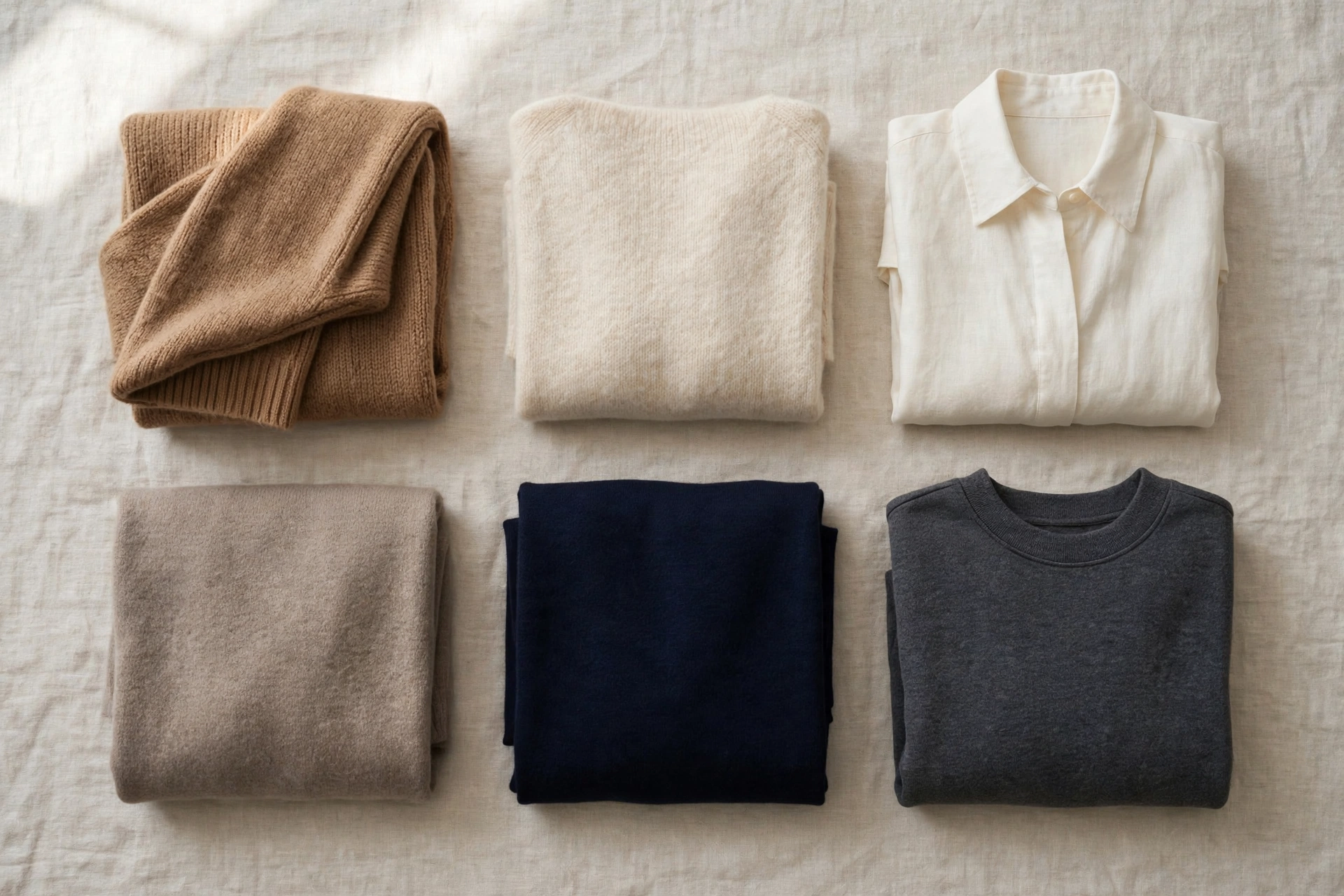
You do not need to abandon color entirely. The trick is to use it the way expensive wardrobes do: as an accent, not a announcement. A deep burgundy scarf, an olive knit, a navy blazer — one rich, saturated note against a neutral base. After 50, this approach has a second benefit: soft neutrals near the face (cream, ivory, warm taupe) are kinder to the complexion than stark black or harsh white, which can drain mature skin.
Fabrics That Look Rich on a Budget
Fabric is where quiet luxury is won or lost — and where a modest budget can compete beautifully. The eye reads texture before it reads labels. Wool, cashmere blends, silk, linen, and good cotton with a tight weave all signal quality instantly, and none of them requires a designer price tag if you shop carefully.
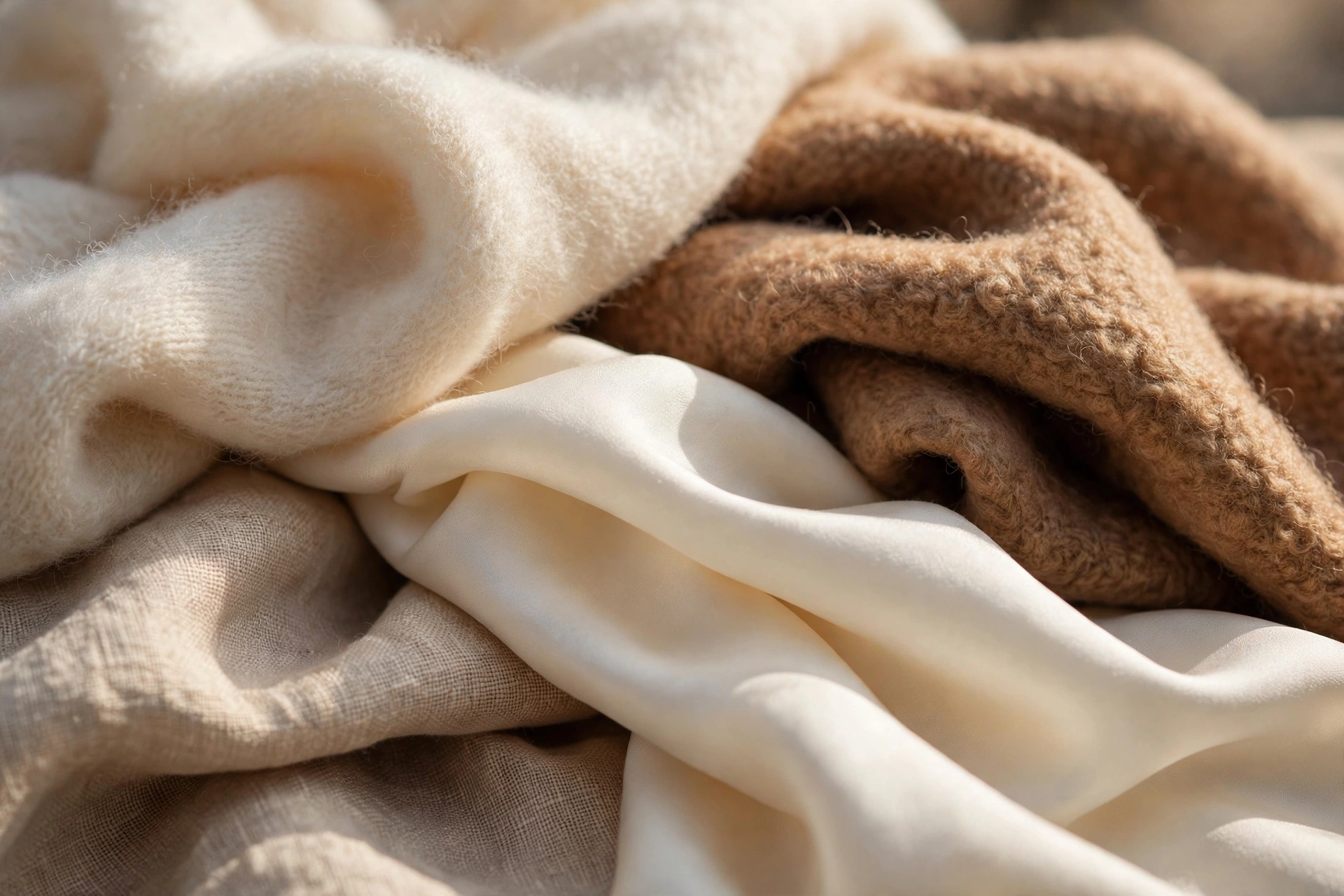
Learn to touch before you buy. Run the fabric between your fingers: does it feel dense and smooth, or thin and scratchy? Hold it up to the light — cheap synthetics often look shiny or plasticky, while natural fibers have a soft, matte depth. Some of the best quiet-luxury finds are hiding in unexpected places: a wool-blend blazer from a mid-range high-street brand, a silk scarf from a thrift store, a cashmere-blend sweater on end-of-season sale. The fiber content label is your most honest shopping advisor — look for high percentages of wool, cotton, silk, and linen, and be wary of 100% polyester masquerading as luxury.
The Fit and Tailoring Trick
Here is the open secret of expensive-looking dressing: fit matters more than price. A $60 blazer that has been tailored to your shoulders will look richer than a $600 blazer swimming on you. After 50, when bodies have settled into their long-term shape, tailoring stops being a luxury and becomes the single highest-return investment in your wardrobe.

The alterations that pay off most are simple and inexpensive: hemming trousers to the right length, taking in a blazer at the waist, shortening sleeves to show a sliver of wrist. A good tailor can transform an ordinary high-street piece into something that looks made for you — because after the alteration, it essentially was. Budget tip: buy the best fabric you can afford in a size that fits your largest measurement, then tailor down. It is far cheaper than buying designer, and the result often looks better.
Where to Spend vs. Where to Save
Quiet luxury on a budget is not about spending as little as possible — it is about spending strategically. Some pieces earn their price because you wear them constantly and they anchor everything else. Others are practically invisible in the cost-per-wear math, so economize freely.
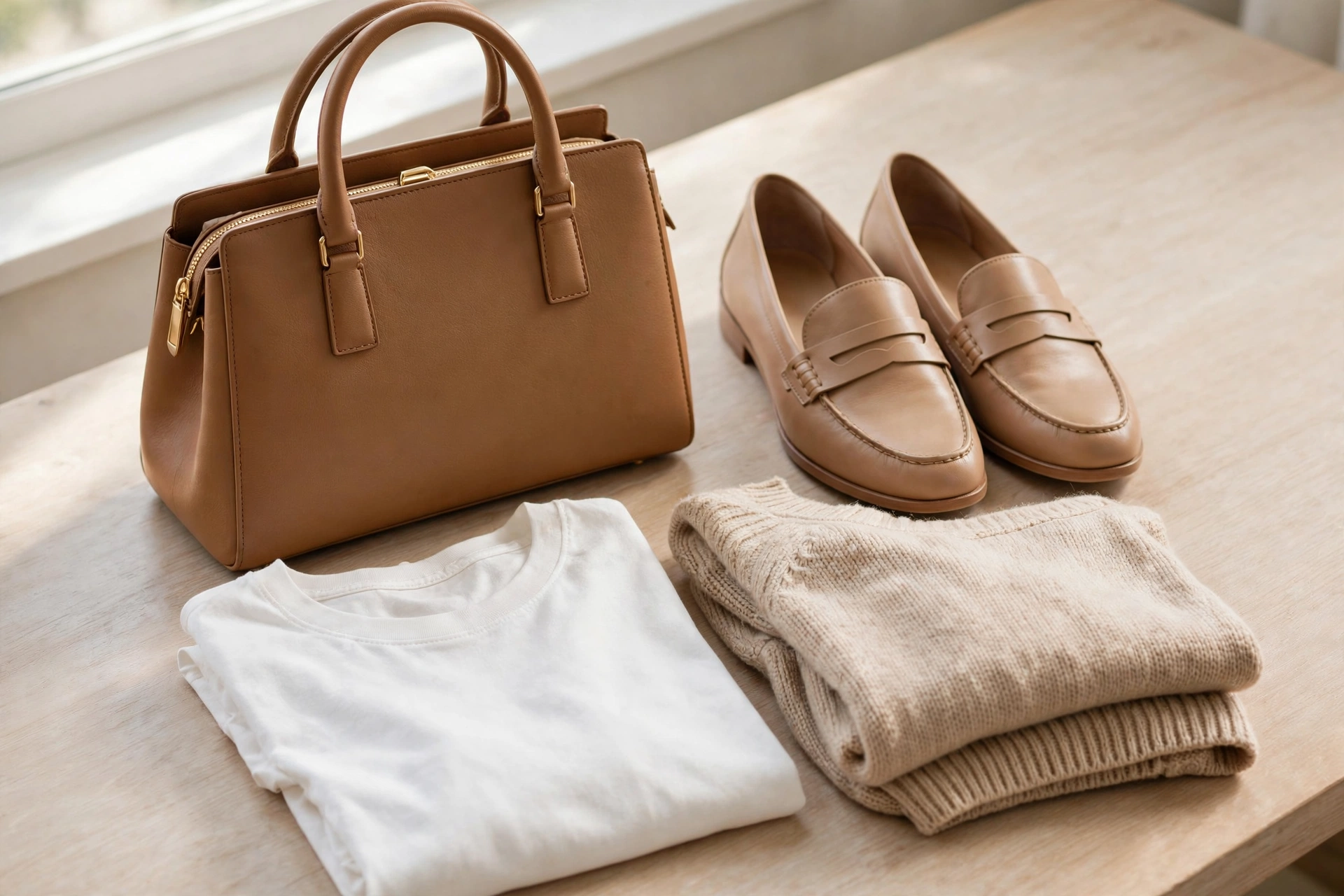
Spend on: shoes, a handbag, a wool coat, and tailoring. These are the items people actually notice and the ones that take the most daily punishment — quality here pays for itself. Save on: t-shirts, simple knit tops, and anything trendy you are testing out. A plain white tee does not need to cost $80; the difference between a $15 tee and a $50 tee is negligible once it is layered under a beautiful blazer. The guiding question is always cost per wear: a $200 coat worn 100 times costs $2 per wear, while a $40 top worn twice costs $20 per wear. Do that math honestly and the “expensive” choice is often the cheaper one.
Building the Wardrobe Piece by Piece
The fastest way to waste money chasing quiet luxury is to buy it all at once. The aesthetic is built on coherence, and coherence comes from adding pieces slowly, checking each new purchase against what you already own. Start with the foundation: well-fitting trousers in navy and taupe, a cream knit, a white shirt, a camel or navy blazer.
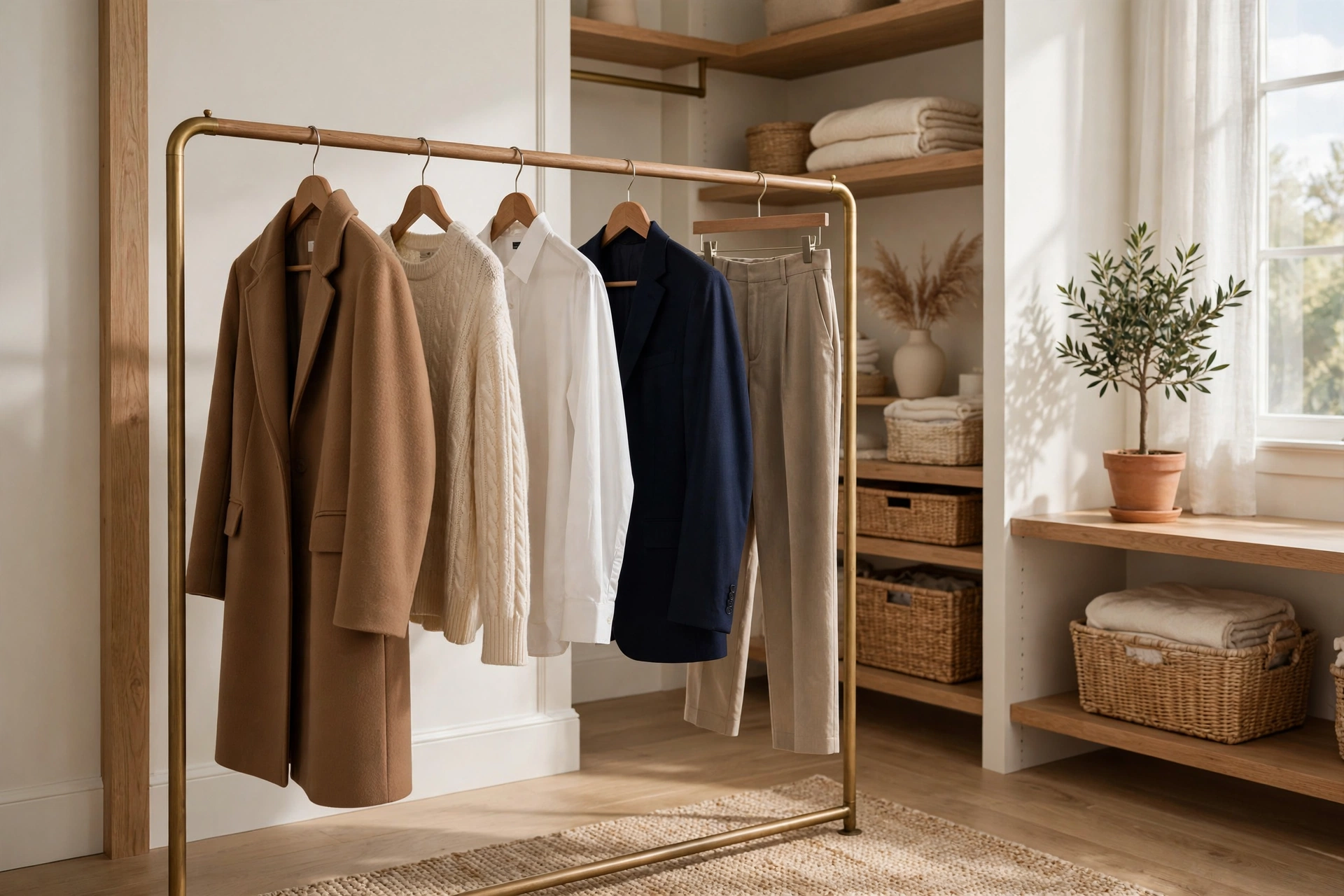
Then add one “anchor” piece per season — the wool coat in autumn, beautiful loafers in spring — rather than five mediocre things at once. Each addition should work with at least three things you already own; if it doesn’t, it doesn’t come home. This slow-build method is essentially capsule wardrobe thinking, and our capsule wardrobe guide walks through the full system. Within a year of disciplined additions, you will own a small wardrobe where everything matches, everything fits, and getting dressed takes five minutes.
Accessories That Elevate Everything
Accessories are quiet luxury’s secret weapon, because they do disproportionate work for their size and price. A simple gold necklace, a silk scarf, a classic watch, a structured leather handbag — each one raises the perceived quality of the entire outfit around it. This is also where restraint matters most: one beautiful accessory beats five competing ones.
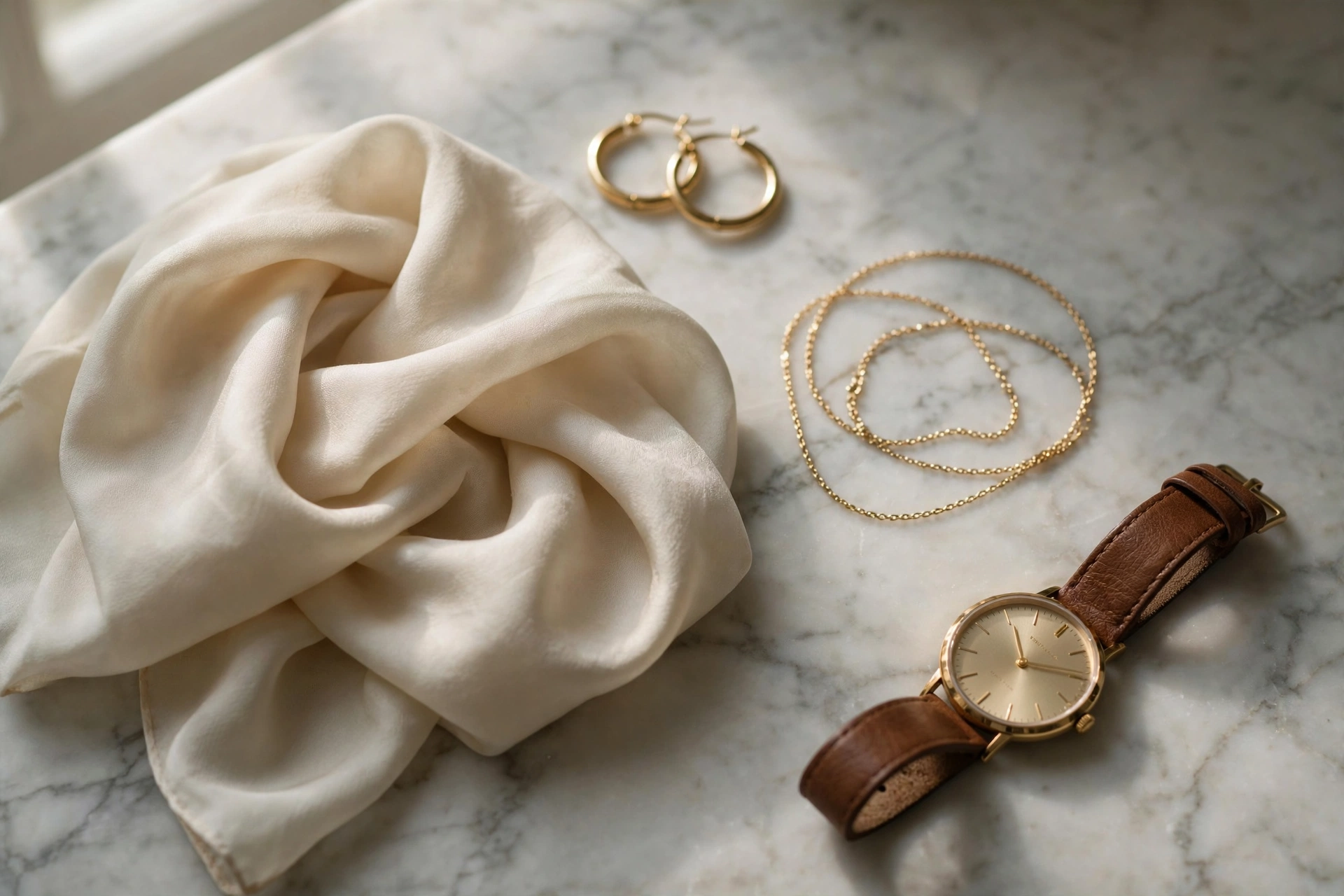
Choose accessories with the same discipline as clothing: classic shapes, real materials, no visible branding. Small gold hoops or a delicate pendant, a leather-strap watch, a scarf in silk or fine wool, sunglasses with a timeless frame. Avoid anything that tries too hard — oversized logos, piles of costume jewelry, and “statement” pieces that shout are the opposite of quiet. The goal is for someone to notice you look polished without being able to point to why.
Mistakes That Cheapen the Look
Quiet luxury is as much about what you avoid as what you choose. The fastest ways to undermine an otherwise polished outfit: visible wear (pilling, scuffed shoes, frayed hems), wrinkled fabrics, and too many competing elements. None of these cost money to fix — they cost attention.

Build small maintenance habits: a fabric shaver for knits, shoe polish and cedar trees for leather shoes, a steamer for shirts and blouses, and a regular cull of anything stained or misshapen. Also watch the “almost” trap — the blazer that almost fits, the trousers that are almost the right length. In quiet luxury, “almost” reads as careless. Either tailor it or let it go. For the foundational pieces worth getting right, see our roundup of timeless fashion pieces every woman should own.
Quiet Luxury FAQs
Is quiet luxury only for wealthy people?
No — that is the whole point of this guide. Quiet luxury is an aesthetic of quality, fit, and restraint, not a price bracket. A tailored high-street blazer, a thrifted silk scarf, and well-kept shoes achieve the look. Wealth makes it easier, but discernment is the actual currency.
What is the difference between quiet luxury and old money style?
They overlap heavily — both favor timeless pieces, neutrals, and quality over logos. Old money style specifically references a heritage aesthetic (think country clubs and inherited pearls), while quiet luxury is broader: anyone can adopt its principles regardless of background. Think of quiet luxury as the philosophy, and old money as one dialect of it.
Can I wear color, or is it all beige?
You can absolutely wear color. The quiet-luxury approach is to keep the base neutral and add color as a single considered accent — a burgundy bag, an olive sweater, a navy coat. What reads as “cheap” is usually not color itself but many loud colors competing at once.
Where are the best places to find affordable quality pieces?
End-of-season sales at mid-range retailers, thrift and consignment stores (especially for silk scarves, wool coats, and leather bags), and outlet stores for classic brands. Also: buy the best fabric content you can find at any price point, and budget separately for tailoring.
How many pieces do I need to start?
Fewer than you think. A strong start is about ten pieces: two trousers, a blazer, a knit, a white shirt, a coat, two pairs of shoes, a handbag, and a scarf. If everything is neutral and well-fitting, those ten pieces make dozens of outfits.
Does quiet luxury work for casual everyday life?
It works best there. The aesthetic shines in real life — school runs, grocery trips, lunch with friends — because it is built on comfortable, wearable pieces rather than occasion dressing. A cream sweater, dark jeans, and loafers is quiet luxury at its most practical.
I’m on a very tight budget — where do I begin?
Start with fit and maintenance, which cost almost nothing: tailor what you own, steam or iron everything, polish your shoes, and remove anything pilled or stained. Then add one anchor piece per season. The transformation from “tidy” to “quietly luxurious” is mostly grooming and discipline, not spending.

The bottom line: quiet luxury after 50 is not about having more — it is about choosing better. A restrained palette, honest fabrics, precise fit, and a few well-chosen accessories will always outshine a closet full of logos. Start where you are, build slowly, tailor everything, and let the quality speak quietly. That is the entire philosophy, and it has never required a fortune — only an eye.