
There is a special kind of winter morning dread that every working woman over 50 knows: the alarm goes off while it is still dark, the bedroom is cold, and the closet offers nothing but compromises. The heavy sweater looks shapeless under a blazer. The elegant dress leaves your legs freezing on the platform. The coat that actually keeps you warm makes you look like you are heading to a ski lodge, not a board meeting.
Dressing for work in winter after 50 is a balancing act with real stakes. You need warmth without bulk, polish without stiffness, and comfort that lasts from the morning commute to the last meeting of the day. The good news is that it takes far fewer pieces — and far less morning decision-making — than you think. This guide gives you the formulas, the power pieces, and the small upgrades that make winter work dressing feel effortless again.
The Winter Work Wardrobe Formula

Forget the idea that you need a different outfit for every day of the month. A winter work wardrobe runs on a simple formula: a warm base, a polished middle, and a structured finish. The base keeps you comfortable (a fine thermal or silk layer), the middle does the visual work (a blouse, knit, or dress), and the finish gives the outfit its professional shape (a blazer, cardigan, or structured coat).
Built this way, roughly twelve well-chosen pieces — two trousers, two skirts or dresses, three tops, two knit layers, two blazers, and one great coat — can carry you through an entire winter of workdays without repeating a look. This is capsule wardrobe thinking applied to the office: fewer, better pieces that all work together, so getting dressed takes five minutes instead of twenty-five.
Layering Without the Bulk

The number one mistake in winter work dressing is layering with the wrong weights. A chunky sweater under a fitted blazer will always look — and feel — cramped. The trick is to layer thin: a silk or heat-retaining camisole against the skin, a fine-gauge merino turtleneck or long-sleeve tee over it, and then your blazer or dress on top. Three thin layers trap more warmth than one thick one, and they disappear under tailoring.
Pay attention to where layers end. A base layer that stops at the waistband will ride up and bunch; look for longer cuts or bodysuit-style thermals that stay put. Sleeves matter too: push the blazer sleeve slightly and let a slim knit cuff show, or keep base-layer sleeves narrow enough to slide inside a jacket without wrinkling. When every layer lies flat, the whole outfit reads as sleek rather than stuffed.
The Blazer: Your Hardest-Working Layer

If winter work dressing has a hero piece, it is the wool blazer. It sharpens everything beneath it, adds real warmth over a blouse, and moves between meetings, lunches, and after-work events without missing a beat. In winter, choose wool or wool-blend blazers with a touch of structure in the shoulder — they hold their line over knit layers where an unlined summer blazer would collapse.
Fit is everything after 50: the shoulder seam should sit at your shoulder bone, the button should close without pulling, and the sleeve should end at your wrist bone. A navy or charcoal blazer worn over a cream silk blouse and tailored wool trousers is a combination that has never failed anyone — and if you want to refine the details, our guide on how to wear a blazer after 50 covers proportions, lengths, and styling tricks in depth.
Knit Dresses That Mean Business

A knit dress is the winter equivalent of a great suit: one piece, fully dressed. Look for ribbed or ponte knits with enough structure to skim rather than cling — a midi length, long sleeves, and a defined waist (either built in or added with a slim belt) keep it firmly in professional territory. Dark, saturated colors like burgundy, forest, navy, and charcoal look richest in winter fabrics.
Style it with opaque tights and knee-high or ankle boots, and add a blazer over the top for important days. The beauty of the knit dress is its efficiency: thermal tights underneath handle the warmth, the dress handles the polish, and you walk out the door in ninety seconds. Keep one black and one colored knit dress in rotation and you have solved a third of your winter mornings.
Coats That Mean Business
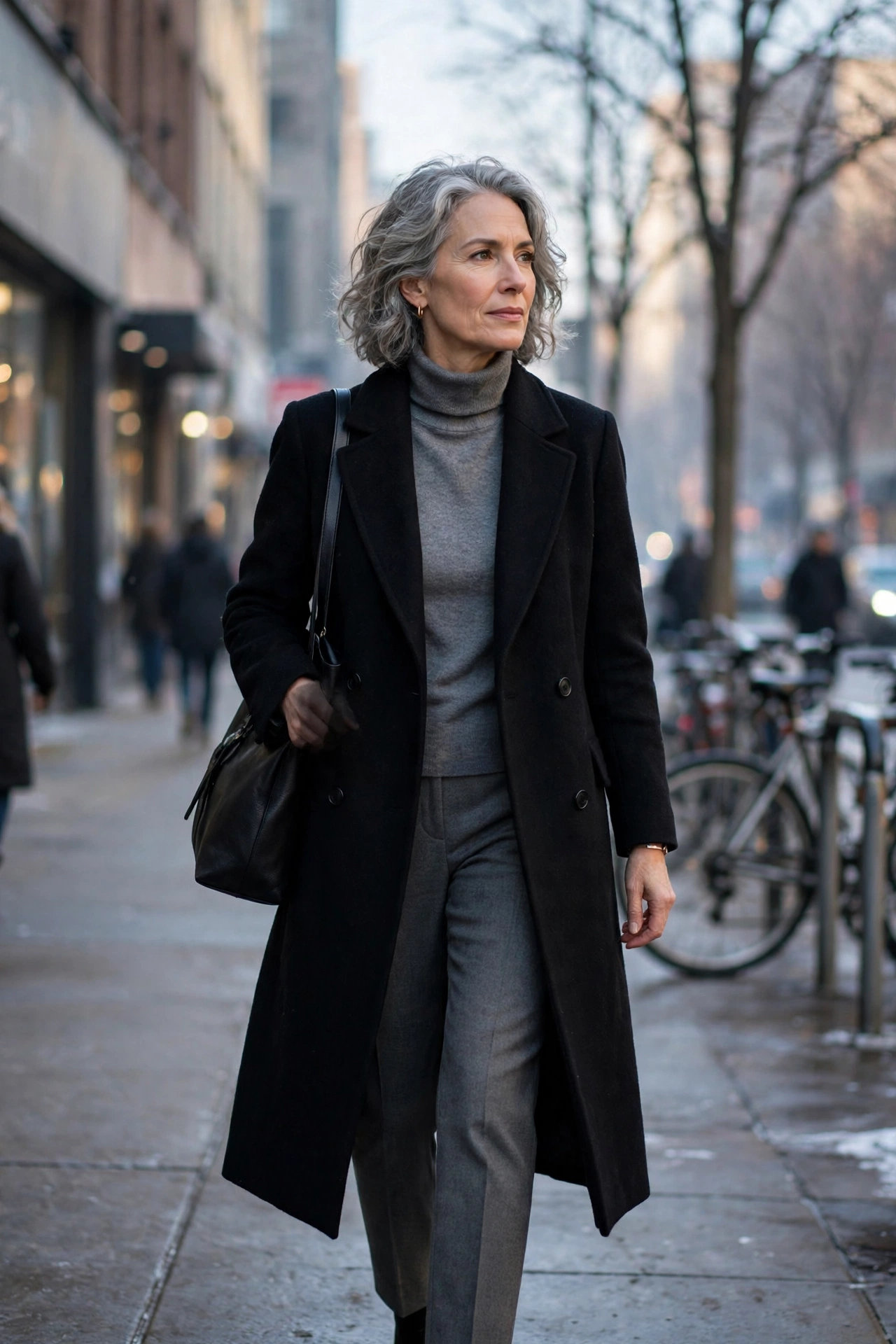
Your coat is the first and last thing colleagues see all winter, so it deserves the same attention as what is underneath. A knee-length or longer wool overcoat in camel, charcoal, navy, or black instantly elevates everything — trousers, dresses, even the days you kept it simple underneath. The length matters: a coat that covers your blazer and skirt hem looks intentional; a cropped jacket over a long dress looks unfinished.
Choose a single-breasted style with clean lines for maximum versatility, and make sure there is room to layer a blazer beneath without straining the buttons. A good wool coat is an investment piece — for the full breakdown of which winter staples are worth the money, see our winter wardrobe essentials guide. One excellent coat worn daily beats three mediocre ones gathering dust.
Boots and Shoes for the Office
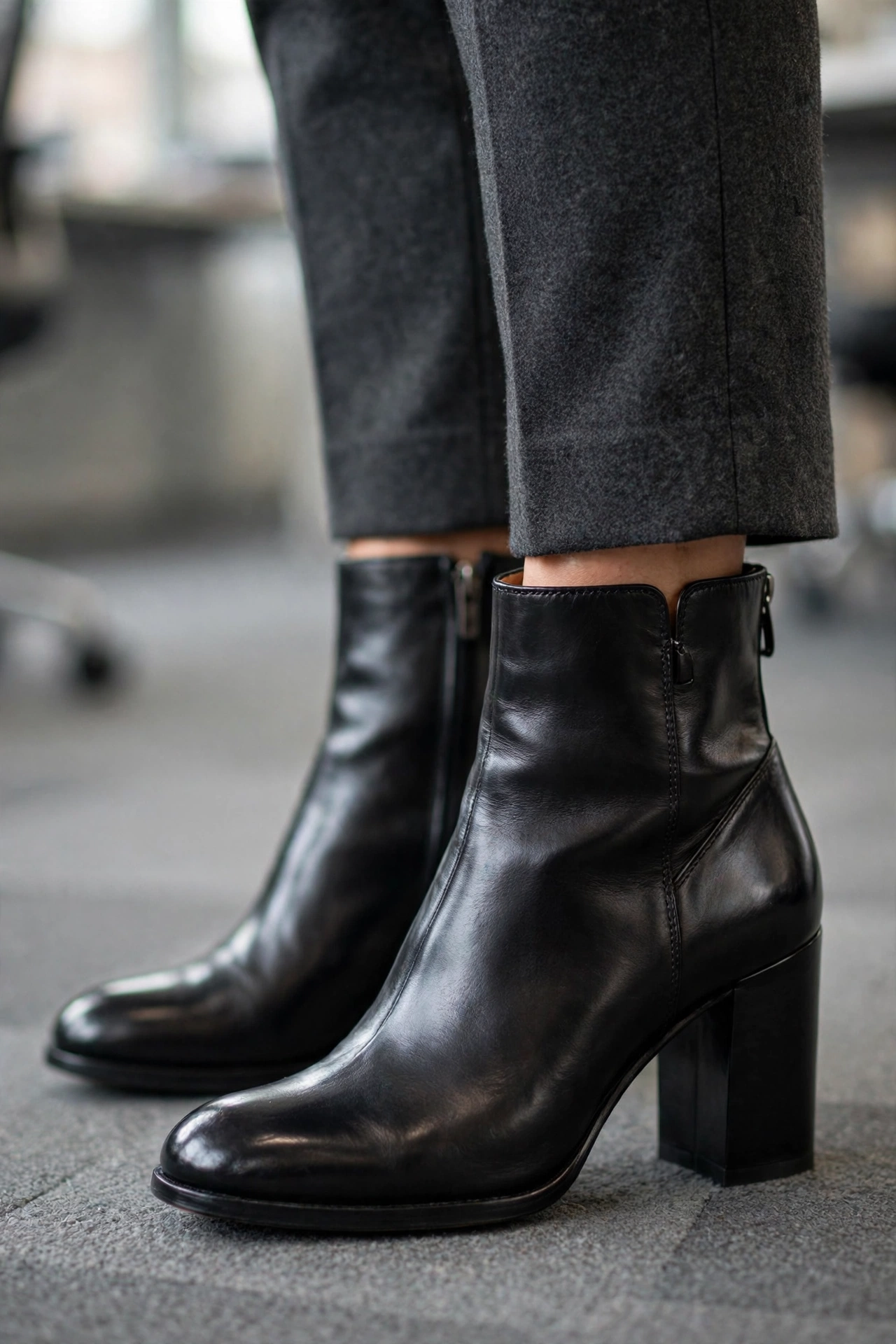
Winter footwear has two jobs: getting you to the office safely and looking right once you arrive. Sleek leather ankle boots with a block heel do both — stable on slick pavements, polished with trousers, skirts, and dresses. Choose a heel height you can genuinely walk in; a confident stride in a two-inch block heel looks far more professional than a wobble in stilettos.
For the worst weather days, keep a pair of simple black commuting boots by the door and change into office shoes at your desk — no one will judge the practical swap, and your good boots will last years longer. Knee-high boots earn their place with skirts and dresses, but make sure the shaft fits your calf comfortably over tights. Whatever you choose, keep soles in good repair: worn-down heels undermine an otherwise impeccable outfit.
Winter Work Accessories
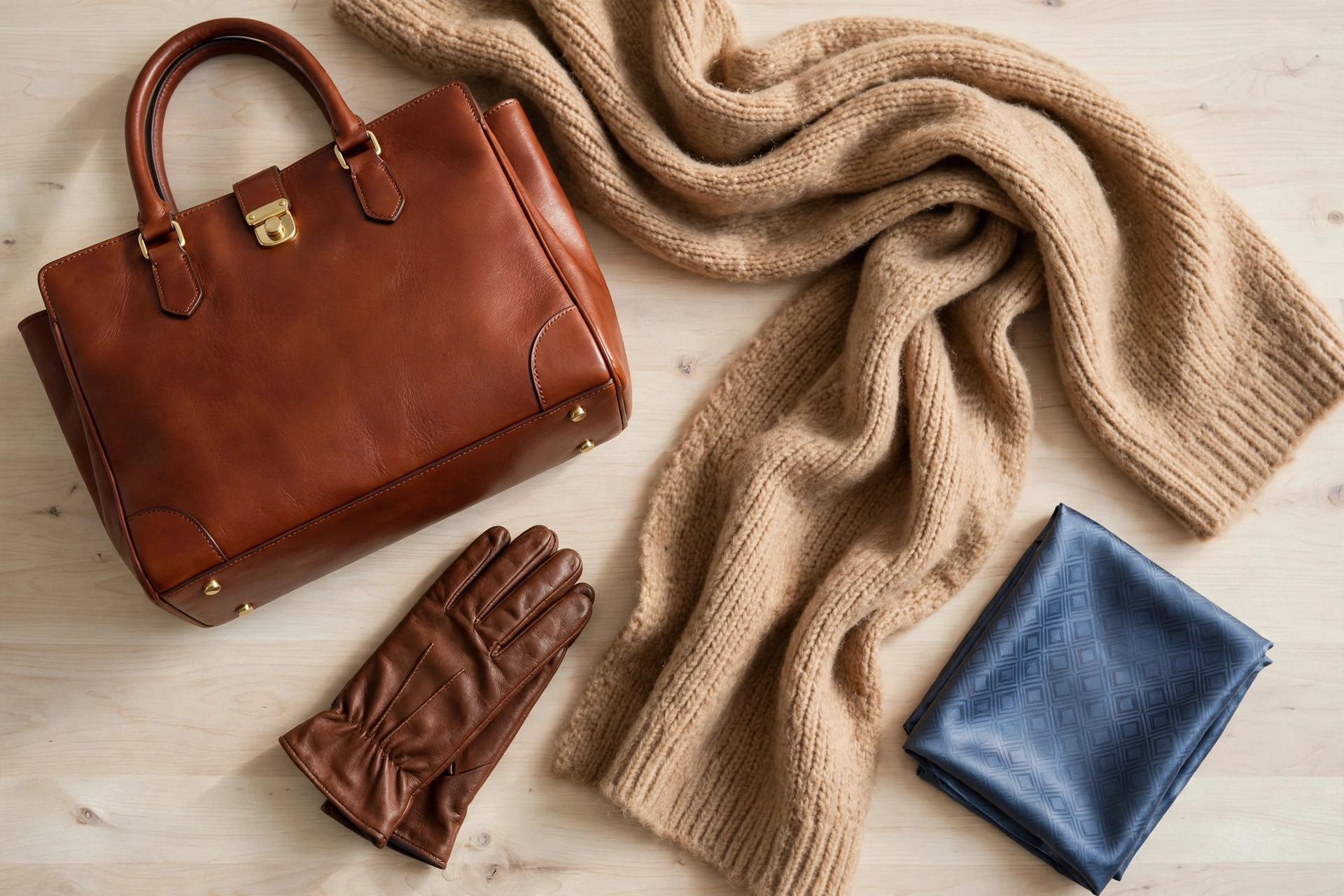
Accessories do quiet heavy lifting in a winter work wardrobe. A beautiful wool scarf in camel, grey, or a muted plaid adds warmth and a finished look to even the simplest coat-and-trousers combination. Leather gloves in black or cognac signal attention to detail, and a structured leather tote carries the laptop, the water bottle, and the extra layer without looking like luggage.
Do not overlook tights: opaque black tights in a good denier are the foundation that makes winter skirts and dresses office-appropriate, so buy quality and replace them at the first sign of wear. A silk scarf at the neck adds color near the face — flattering in harsh winter light — and a simple watch or stud earrings complete the picture. In winter, accessories are not extras; they are the difference between dressed and dressed well.
What Not to Wear to Work in Winter

Some winter staples, however beloved, do not belong in a professional setting. The shiny quilted puffer — perfect for the school run — reads as too casual past the office door; save it for weekends and wear your wool overcoat to work instead. Ditto for chunky hiking-style boots, fleece jackets worn as outerwear, and athletic sneakers paired with work trousers.
Watch out for the subtler traps too: sweaters so oversized they swallow your shape, leggings worn as trousers without a tunic-length top, and novelty holiday knits before the office party. None of these are fashion crimes in real life — they are simply context errors. The rule of thumb is straightforward: if you would feel underdressed walking into a client meeting in it, change before you leave the house.
Fabric First: Choosing Materials That Last
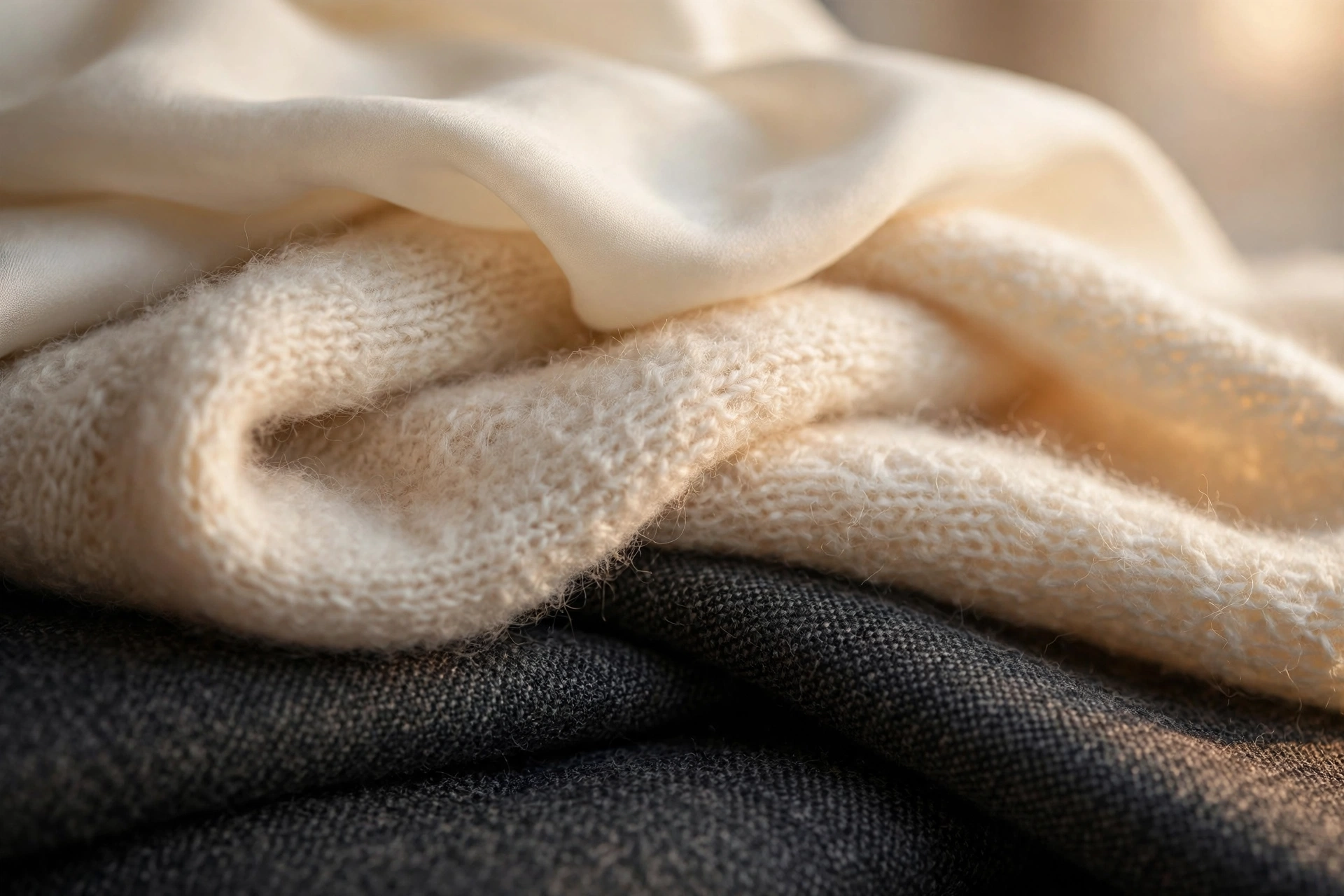
Winter work clothes earn their keep through months of heavy rotation, so fabric choice matters more now than in any other season. Wool and wool blends are the backbone: naturally warm, breathable, and resistant to wrinkles. Cashmere blends add softness for knits and scarves, while ponte and double-knit fabrics give dresses and trousers the structure that keeps them looking pressed all day.
Learn to read a label the way you read a menu. Higher natural-fiber content generally means better warmth, better drape, and longer life — a 100% wool trouser will outlast and out-look a polyester blend several times over. Care for these fabrics properly: air wool garments between wears, use a fabric shaver on knits, and store coats on sturdy hangers. Good fabric, well kept, is what makes a winter work wardrobe look expensive year after year.
Winter Work Outfit FAQs
How do I stay warm in office clothes without looking bulky?
Layer thin, technical pieces underneath rather than adding one thick layer on top. A heat-retaining camisole plus a fine merino turtleneck under your blazer or dress adds serious warmth with zero visible bulk — the outfit looks exactly the same, only you know the difference.
Are sweater dresses appropriate for a professional office?
Yes, when they have structure. Choose ribbed or ponte knits in midi length with long sleeves, add opaque tights and boots, and define the waist with a belt. Avoid clingy fabrics and mini lengths, and throw a blazer over it for formal meetings.
What is the best winter coat for commuting to work?
A knee-length wool overcoat in a neutral color — camel, charcoal, navy, or black. It layers over blazers, covers skirt hems, and looks polished from the train to the office door. Make sure it buttons comfortably over your thickest work layer.
Can I wear boots to a conservative office in winter?
Absolutely. Sleek leather ankle boots with a modest block heel, or polished knee-high boots with skirts, are standard winter office footwear. Keep them clean and in good repair, and save chunky or embellished styles for weekends.
How many work outfits do I need for winter?
About twelve well-chosen pieces — two trousers, two skirts or dresses, three tops, two knit layers, two blazers, and one great coat — can produce weeks of different combinations. A small, coordinated wardrobe beats a large, random one every time.
What should I wear to work when it is snowing heavily?
Wear practical commuting boots and your warmest coat for the journey, and change into office shoes at your desk. Keep a compact umbrella and an extra pair of tights in your tote — arriving composed on a chaotic-weather day is its own kind of professional polish.
Are leggings ever acceptable as winter workwear?
Only as a base layer under a dress or long tunic — never as a standalone trouser replacement in a professional setting. Thick ponte leggings under a knee-length sweater dress with boots is a legitimate winter work outfit; leggings with a short top is not.
The bottom line: winter work dressing after 50 comes down to a formula, not a fortune. Thin layers for warmth, a wool blazer for polish, a great coat for arrival, and boots you can actually walk in — built from a small wardrobe of quality fabrics, these pieces will carry you through every cold morning with confidence. Dress warm, dress well, and let winter be the season your work style looks its sharpest.