
The 1920s changed more than men’s clothing. It also introduced a cleaner and more controlled approach to men’s hairstyles.
Short sides, neatly combed tops, side parts, slicked-back hair, and carefully shaped waves became common features of the decade.
Movies, sports stars, musicians, and growing city life all helped spread new ideas about grooming. Men paid more attention to their hair and used products to keep it neat throughout the day.
The hairstyles of the decade were usually practical, but they could also look polished and stylish.
In this guide, you will find the most recognizable 1920s men’s hairstyles, how men styled their hair, what products they used, and how to recreate these classic looks today.
The History of Men’s Hairstyles in the 1920s
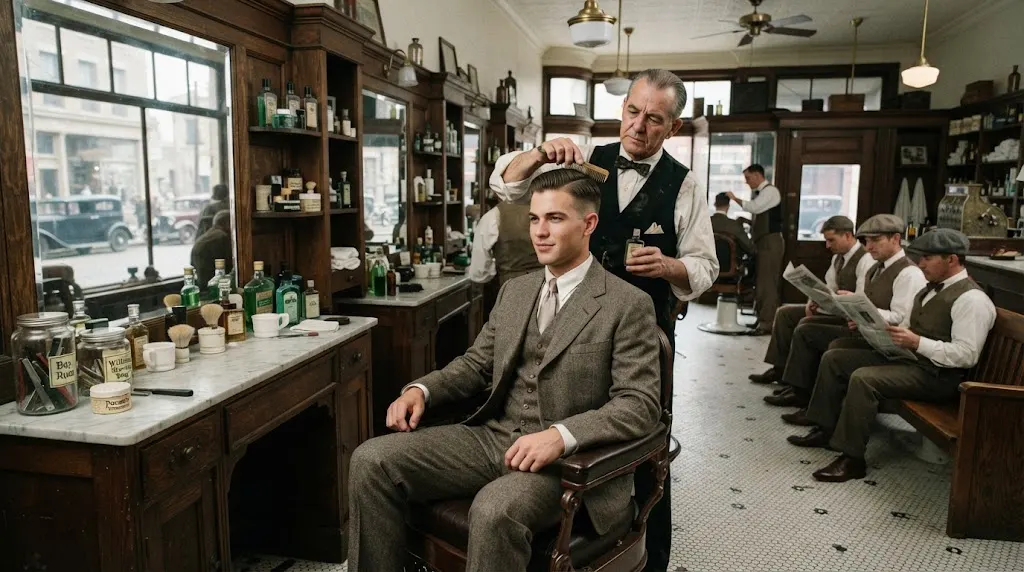
The 1920s marked a major shift in men’s grooming.
During earlier decades, many men wore longer and more traditional hairstyles. By the 1920s, shorter cuts became increasingly popular, especially among younger men living in cities.
The sides were often cut shorter while the hair on top was left long enough to comb into place.
Men also became more interested in hair products.
Pomades, hair tonics, and brilliantines helped create the smooth, controlled appearance associated with the decade.
This gave men more control over the shape and finish of their hair.
What Did Men’s Hair Look Like in the 1920s?
Most fashionable men’s hairstyles shared a few common features.
The hair was generally:
- Short around the sides
- Longer on top
- Neatly combed
- Often parted on one side
- Slicked or controlled with hair products
- Styled close to the head
However, not every man wore the same haircut.
Working men, athletes, musicians, and wealthy professionals could have different styles depending on their job and lifestyle.
Hair also varied according to age and location.
1. The Classic Side-Part Hairstyle
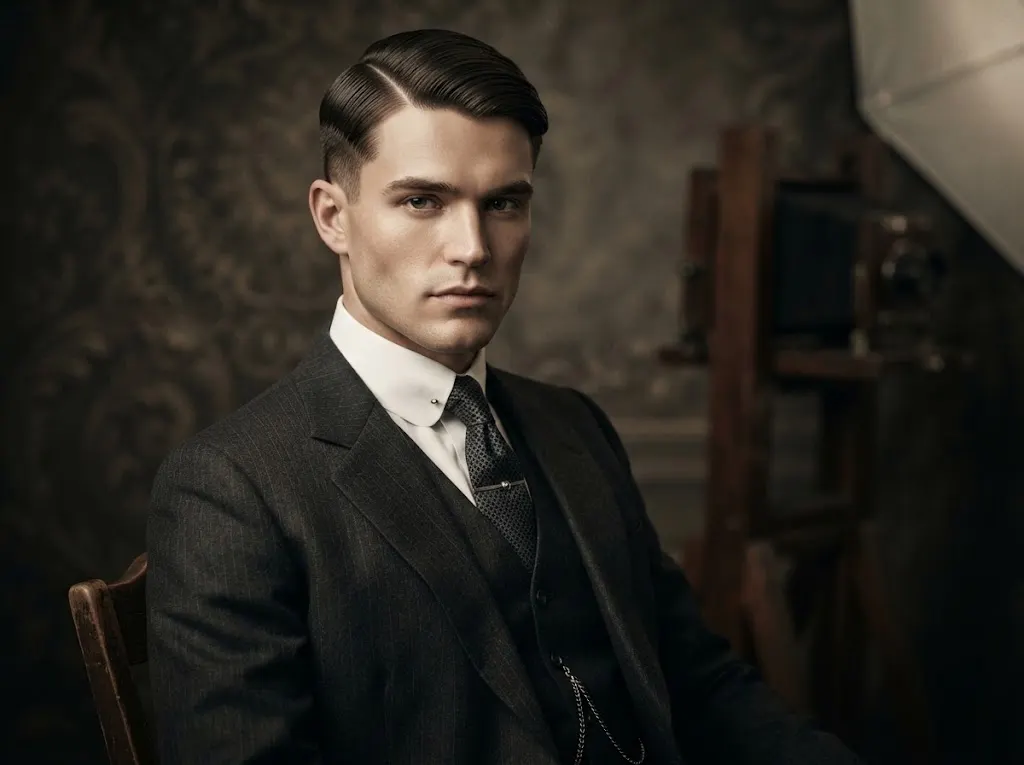
The side part was one of the most recognizable men’s hairstyles of the decade.
The hair was divided clearly on one side, with the longer section combed neatly across the head.
The sides were usually shorter than the top, creating a clean contrast.
A small amount of pomade could be used to keep the hair in place.
The side part worked well with the tailored suits and formal clothing that were common during the period.
Today, it remains one of the easiest 1920s-inspired hairstyles to recreate.
2. Slicked-Back Hair
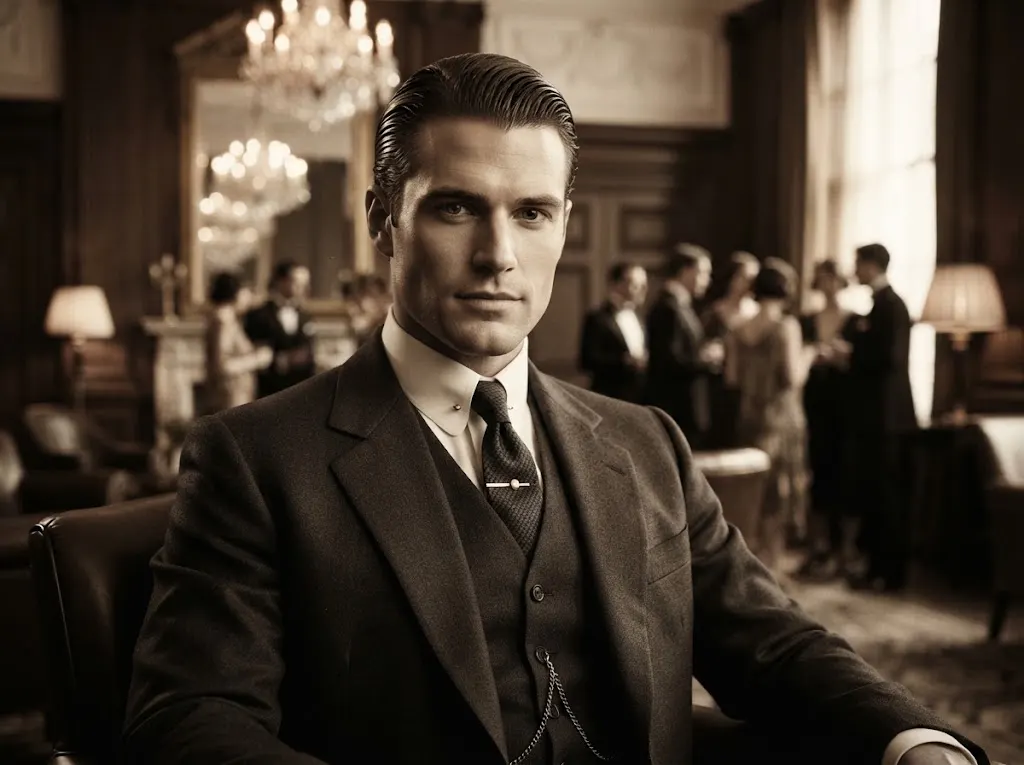
Slicked-back hair created a smooth and controlled appearance.
Men combed their hair backward from the forehead, usually using pomade or brilliantine to keep it in place.
The result was a shiny and polished finish.
This hairstyle worked particularly well with formal clothing.
A man wearing a dark suit, crisp shirt, and polished shoes could complete the look with slicked-back hair.
The style was also practical because the product helped prevent loose hair from falling across the face.
3. Short Back and Sides
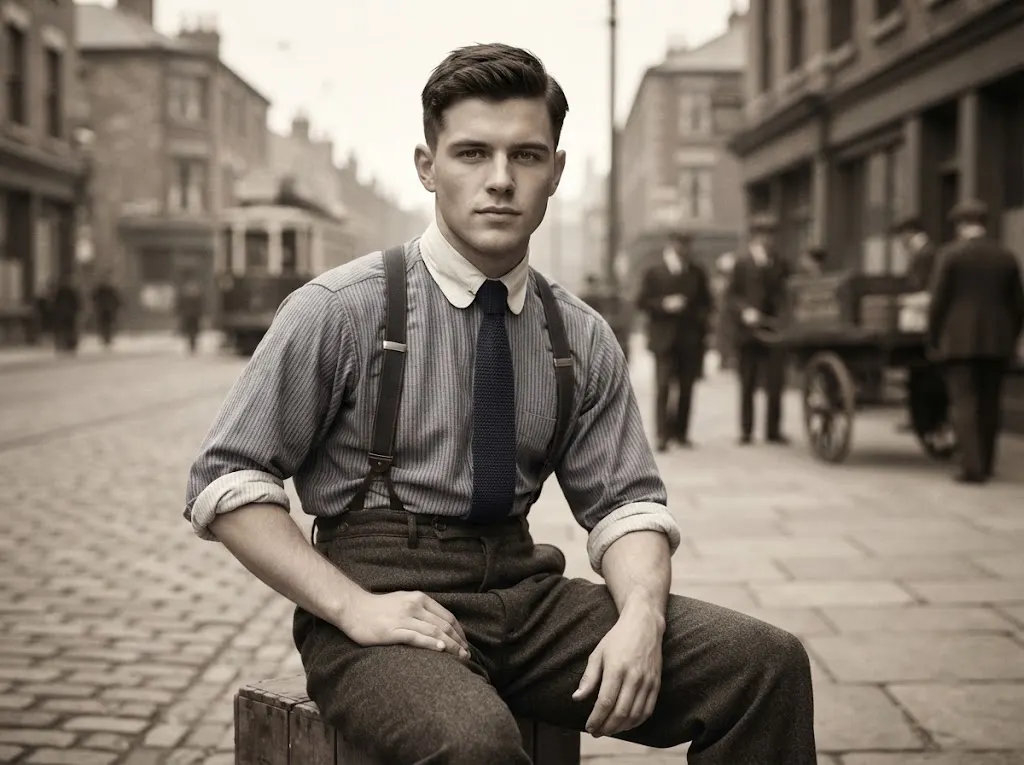
Shorter hair around the sides became increasingly popular during the 1920s.
The top was usually left longer so it could be combed or styled.
This created a neat and masculine shape without requiring complicated styling.
The shorter sides also made the hairstyle easier to maintain.
This basic structure influenced many men’s haircuts that followed in later decades.
4. The Undercut-Inspired Look
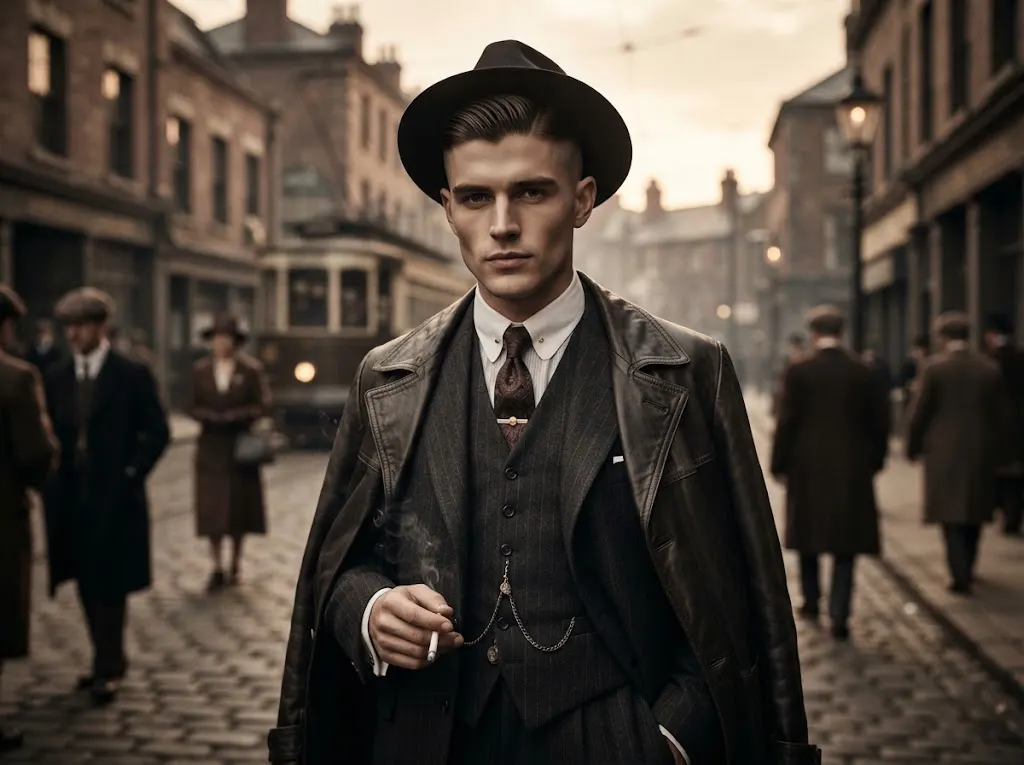
Short sides combined with longer hair on top created a dramatic contrast.
Modern people sometimes describe some 1920s cuts as undercut-inspired because of this difference in length.
The historical styles were not always identical to the modern undercut, but the basic idea was similar: the sides were noticeably shorter while the top remained longer.
The longer hair could then be parted, slicked back, or combed over.
This style became particularly recognizable among younger men.
5. Wavy 1920s Hairstyles
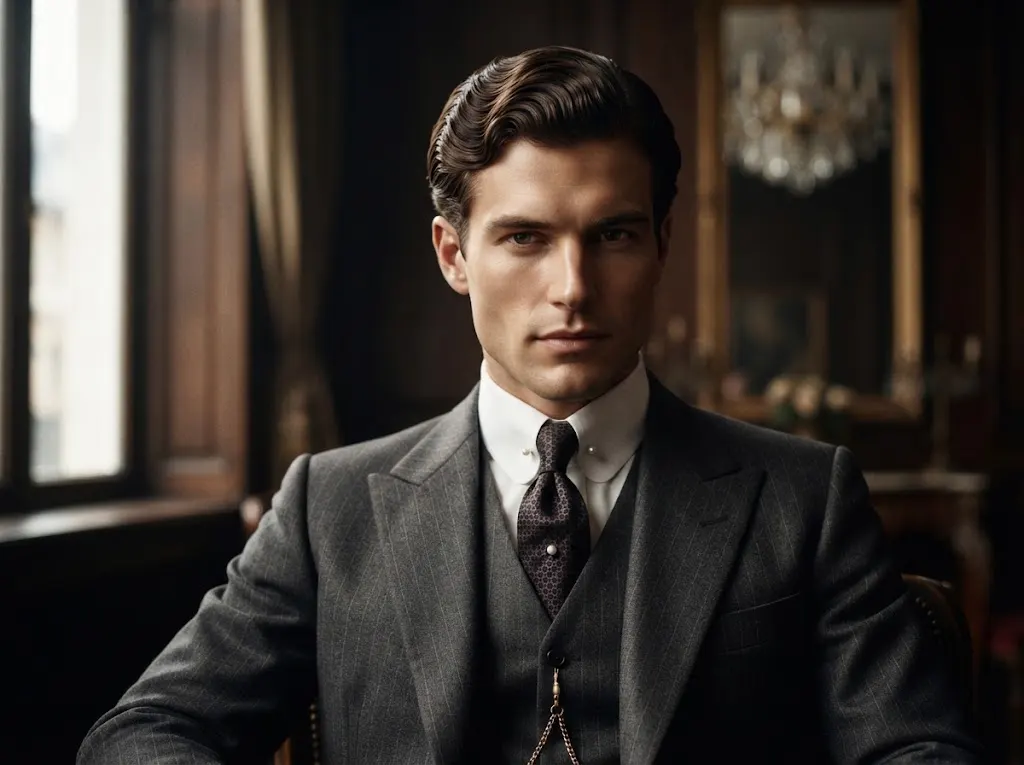
Not every fashionable hairstyle was completely straight.
Men with naturally wavy hair could use their texture to create a controlled, polished appearance.
Hair was often combed close to the head while the natural wave created subtle movement.
Some men also used styling products to create more defined waves.
This look worked especially well with formal clothing because it maintained a neat shape without removing the hair’s natural texture.
6. Short Cropped Hair
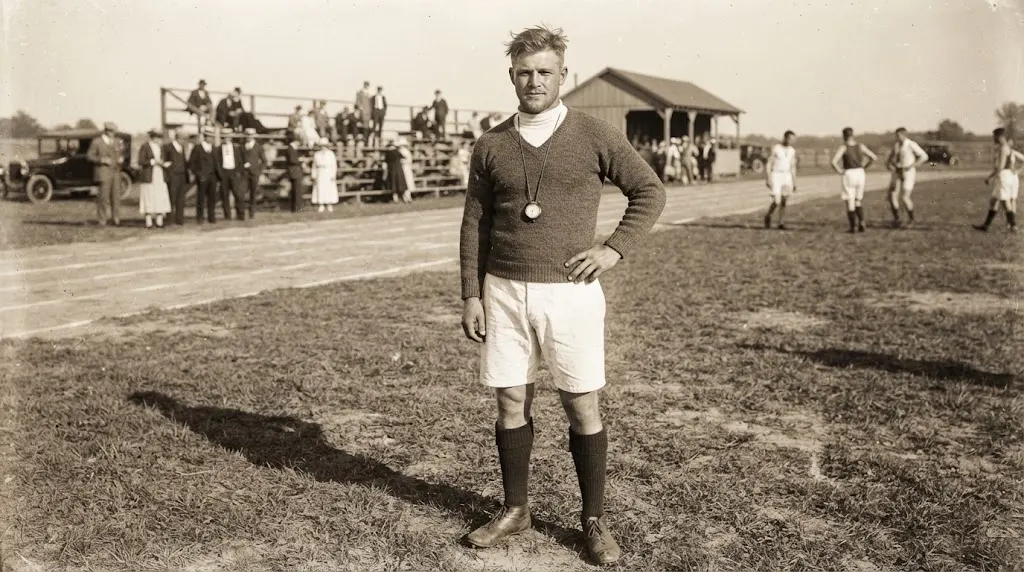
Short cropped hair was practical for men who preferred low-maintenance grooming.
The hair could be cut relatively short and kept close to the head.
Athletes and working men often needed hairstyles that would not interfere with physical activity or daily work.
Shorter hair also reflected the decade’s growing preference for clean and practical grooming.
It was simple, functional, and easy to maintain.
7. Comb-Over Styles
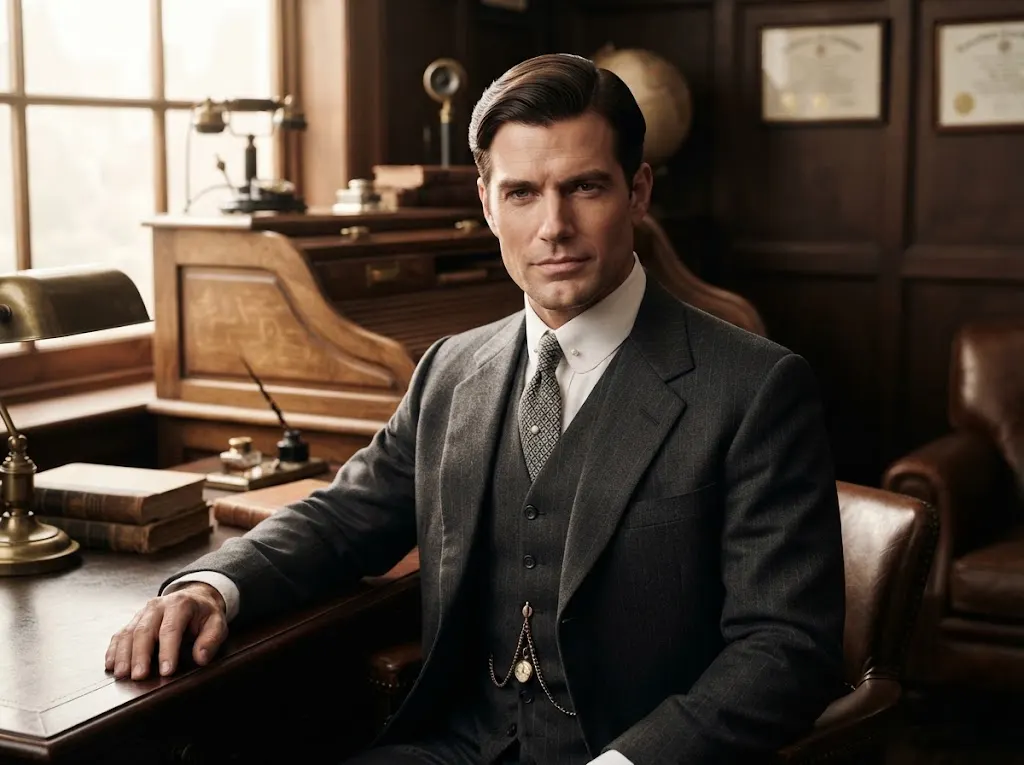
A comb-over was another way men could arrange longer hair on top.
The hair was carefully combed from one side across the head.
Pomade or another styling product helped keep the shape in place.
Unlike the modern use of the term, a 1920s comb-over could simply refer to a deliberate side-combed hairstyle rather than an attempt to hide thinning hair.
The style looked especially polished when paired with a formal suit.
8. Tapered Hairstyles
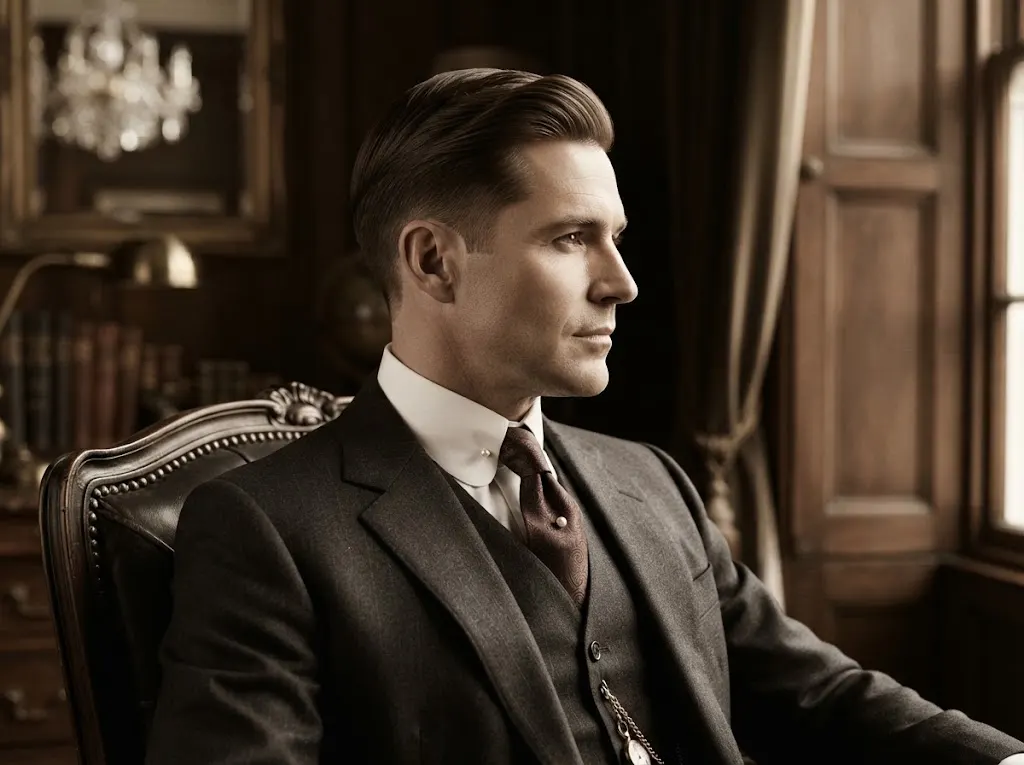
Some men’s haircuts had a gradual change in length from the top toward the sides and back.
This created a smoother appearance than a sharply contrasting cut.
The hair could then be parted or slicked back.
Tapered styles were useful for men who wanted a neat haircut without an extreme difference between the top and sides.
They also worked well for professional settings.
1920s Men’s Hair Products
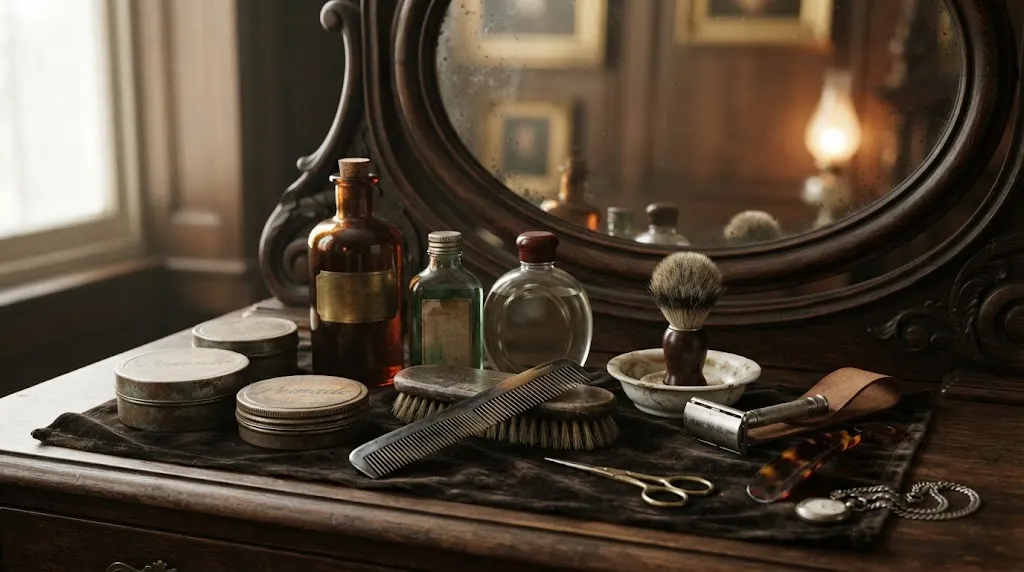
Hair products played an important role in creating the polished appearance of the decade.
Pomade
Pomade helped hold hair in place while creating a smooth finish.
It was especially useful for side parts and slicked-back styles.
Brilliantine
Brilliantine was used to add shine and control.
It helped give hair the glossy appearance associated with many photographs of the period.
Hair Tonics
Hair tonics were also marketed for grooming and hair care.
Men could use them to make hair easier to comb and maintain.
The amount of product depended on the desired appearance.
A small amount could create a controlled finish, while more product produced the strong slicked look associated with formal styles.
How Men Styled Their Hair in the 1920s
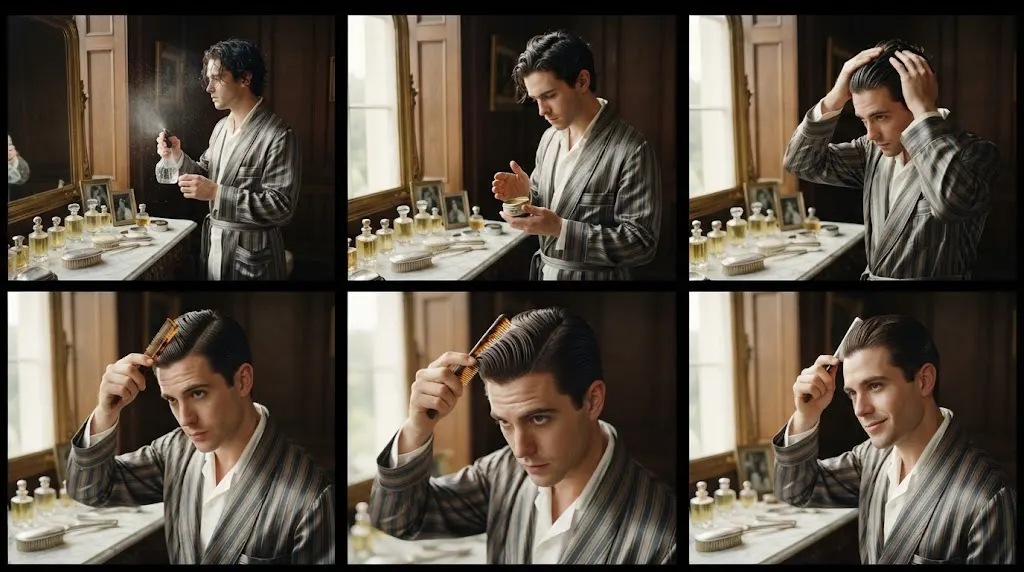
Creating a 1920s hairstyle required more than simply getting a haircut.
Men usually combed their hair carefully after washing it.
A basic styling process could include:
- Start with damp or slightly wet hair.
- Apply a small amount of styling product.
- Create a clear side part.
- Comb the longer hair into position.
- Smooth the sides close to the head.
- Add more product if needed.
- Use a fine comb to create a clean finish.
The goal was usually control and neatness.
Loose, messy hair was less consistent with the polished appearance associated with fashionable men’s grooming during the decade.
1920s Hairstyles and Men’s Fashion
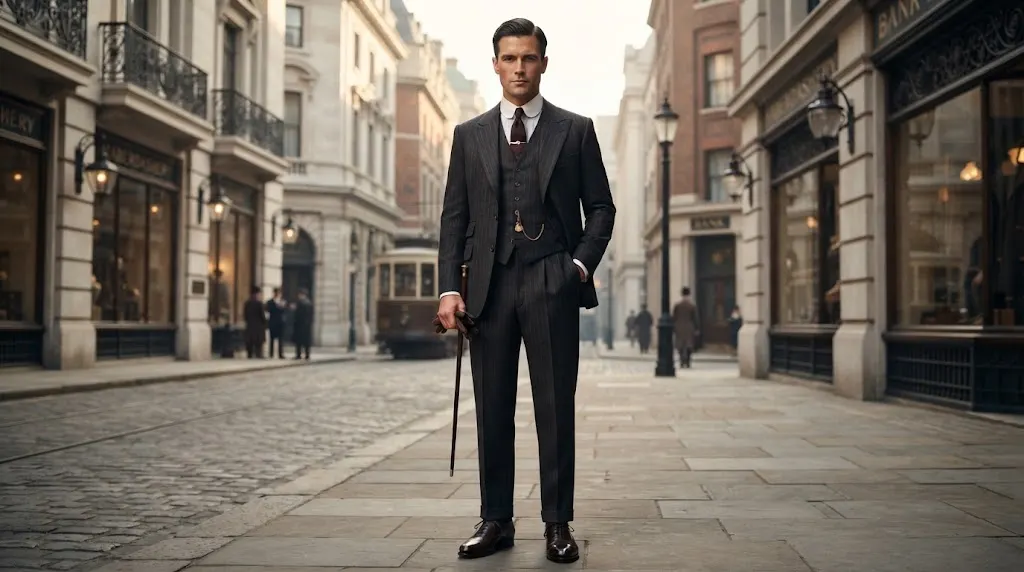
Hair was closely connected to clothing.
A formal hairstyle could complete a three-piece suit, while a more relaxed cut could work with casual clothing.
For example, slicked-back hair paired naturally with a tuxedo or formal suit.
A side part could work with both business and casual outfits.
A shorter cropped style could complement sportswear or working clothes.
This connection between grooming and clothing helped create a complete personal appearance.
For the wider clothing styles of the decade, see our 1920s Men’s Fashion Style Guide.
Hairstyles for Different 1920s Occasions
Men could adjust their grooming based on the occasion.
For Work
A neat side part or short haircut was practical for professional settings.
For Formal Events
Slicked-back hair or a carefully shaped side part worked well with formal suits and evening clothing.
You can also explore our guide to 1920s Men’s Formal Wear for more ideas.
For Casual Activities
A shorter and less polished hairstyle could be worn with casual clothing.
For Sports
Short hair was practical for athletes because it required less attention during physical activity.
Famous Men and 1920s Hairstyles
Film stars, musicians, and athletes helped make certain hairstyles popular.
Silent-film actors were particularly influential because audiences could see their appearance on large screens.
Their neatly combed hair, tailored clothing, and carefully groomed appearance helped establish ideas about masculine style.
Musicians also contributed to changing fashion.
As jazz became increasingly popular, performers became visible style figures whose clothing and grooming influenced younger audiences.
This connection between entertainment and fashion would become even stronger in later decades.
1920s Hairstyles for Different Hair Types
The basic styles of the decade could work with different hair textures.
Straight Hair
Straight hair was easy to part and slick back.
It could be shaped with pomade for a smooth finish.
Wavy Hair
Wavy hair could be combed close to the head while allowing the natural texture to remain visible.
Thick Hair
Thick hair could be controlled with stronger styling products and careful combing.
Fine Hair
A clean side part and shorter cut could create a tidy appearance without requiring excessive product.
The key was to work with the hair rather than trying to force it into a completely different texture.
1920s Men’s Hairstyles vs. Modern Hairstyles
Many modern men’s hairstyles still use ideas that were popular during the 1920s.
Side parts, slicked-back hair, short sides, and longer tops continue to appear in modern barbering.
The biggest difference is often the finish.
Modern styles may use lighter products and a more natural texture, while historical 1920s styles were often more controlled and shiny.
This makes it possible to create a hairstyle inspired by the decade without looking like you are wearing a costume.
How to Get a 1920s Hairstyle Today
If you want a modern version of a 1920s hairstyle, start with the haircut.
Ask your barber for shorter sides and a longer top that can be parted.
For a classic look:
- Keep the sides neat.
- Leave enough length on top to comb.
- Create a defined side part.
- Use a small amount of pomade.
- Comb the hair into place.
- Keep the finish controlled but not overly greasy.
For a more modern appearance, use a matte styling product instead of a high-shine product.
You can also keep more natural texture in the hair.
This gives you the shape of a 1920s style while keeping the overall look current.
How to Match a 1920s Hairstyle With Clothing
The easiest way to create a complete vintage-inspired look is to coordinate the hairstyle with your clothes.
For a formal outfit, try:
- Side-parted hair
- Dark three-piece suit
- White shirt
- Bow tie
- Polished leather shoes
For a casual outfit, try:
- Short side-parted hair
- Sweater
- High-waisted trousers
- Flat cap
- Brown leather shoes
This approach creates a consistent appearance without requiring every item to be historically accurate.
Our What Did Men Wear in the 1920s? guide has more information about clothing from the decade.
Why 1920s Men’s Hairstyles Are Still Popular
The appeal of 1920s men’s hairstyles comes from their clean shape and simple structure.
A side part, short sides, and controlled top can look polished without being complicated.
These features also work with many modern outfits.
That makes 1920s-inspired hair easy to adapt.
Instead of copying the decade exactly, modern men can borrow its strongest ideas and adjust them to their own hair type and personal style.
Conclusion
1920s men’s hairstyles reflected the decade’s growing interest in grooming, fashion, and personal presentation.
Side parts, slicked-back hair, short sides, cropped cuts, comb-over styles, and controlled waves became recognizable looks during the era.
Hair products also gave men greater control over their appearance and helped create the smooth finish associated with Jazz Age grooming.
Many of these ideas remain relevant today.
A modern side part or slicked-back hairstyle can still carry the clean, confident character of the 1920s without looking outdated.
The best approach is to take inspiration from the period rather than copying every detail.
Frequently Asked Questions
What Was the Most Popular Men’s Hairstyle in the 1920s?
The side-parted hairstyle was one of the most recognizable looks. Men commonly kept the sides shorter and combed the longer hair on top neatly to one side.
Did Men Have Short Hair in the 1920s?
Yes. Shorter hairstyles became increasingly popular, particularly among younger men, athletes, and city workers.
Did Men Use Hair Products in the 1920s?
Yes. Products such as pomades, brilliantine, and hair tonics were used to control hair, add shine, and maintain carefully styled looks.
What Was a 1920s Slicked-Back Hairstyle?
It was a hairstyle in which the hair was combed backward from the forehead and held in place with a styling product, often creating a smooth and shiny finish.
How Can I Get a 1920s Hairstyle Today?
Ask for shorter sides and a longer top that can be parted or slicked back. Use a small amount of pomade or another styling product and comb the hair into a controlled shape.
Were Side Parts Popular in the 1920s?
Yes. Side parts were a common way for men to arrange longer hair on top and create a neat, structured appearance.