
You can sleep eight full hours and still wake up looking like you pulled an all-nighter. Dark circles are one of the most common beauty complaints — and one of the most misunderstood.
Here’s the honest truth most articles won’t tell you: there is no single cause of dark circles, which means there is no single cure. The shadow under your eyes might come from your genes, your blood vessels, extra pigment, lost volume, or simply last night’s salty dinner. The remedy that works beautifully for one type can do absolutely nothing for another.
This guide skips the hype. We’ll help you identify your type of dark circles, cover the ingredients with real evidence behind them, give honest verdicts on home remedies, and tell you when it’s time to see a dermatologist.
What Really Causes Dark Circles
Under-eye skin is the thinnest on your body — roughly half a millimeter — so nearly everything beneath it shows through. The main culprits:
- Genetics. The big one. Excess melanin around the eyes runs in families and is especially common in South Asian, Middle Eastern, and Mediterranean skin tones. If yours have been there since your teens, genes are almost certainly involved.
- Visible blood vessels. Tiny vessels beneath thin under-eye skin show through as a bluish or purplish tint. Fair skin makes it more noticeable, and anything that dilates those vessels — lack of sleep, crying, allergies — deepens the color.
- Pigmentation. Extra melanin creates a brownish shadow. Sun exposure makes it worse, and chronic eye-rubbing causes low-grade inflammation that the skin answers with more pigment.
- Fluid buildup. Salt, alcohol, crying, and sleeping flat on your back encourage fluid to pool under the eyes overnight. The resulting puffiness casts its own little shadow — which is why circles often look worst first thing in the morning.
- Allergies. Histamine dilates vessels and makes eyes itch; the rubbing that follows damages delicate skin and triggers pigmentation. Doctors even have a name for it: “allergic shiners.”
- Aging and volume loss. We lose fat and collagen under the eyes over time, creating a hollow (the “tear trough”) that catches shadow, while the skin itself gets thinner. This is why circles often deepen in our thirties and forties even when habits haven’t changed.
- Lifestyle amplifiers. Lack of sleep doesn’t directly create pigment, but it makes skin paler (so vessels show more) and encourages fluid pooling. None of these is usually the root cause — but they all make existing circles look worse.
Identify Your Type: Vascular vs. Pigmented vs. Structural
This is the most useful five minutes you’ll spend on this problem, because treatment depends entirely on type. Try these tests in natural daylight with a mirror:
The Vascular Type
Your circles look bluish, purplish, or reddish. Stretch the skin under your eye sideways — if the color fades, you’re seeing blood vessels through thin skin. These circles often look worst in the morning and ease through the day.
The Pigmented Type
Your circles look brownish or grayish-brown. If the color doesn’t change when you stretch the skin or tilt your face toward the light, it’s melanin — true pigmentation. Often genetic, and common in medium to deep skin tones.
The Structural Type
You see more of a shadow or hollow than a color. Look up at a ceiling light, then slowly tilt your chin down — if darkness appears and deepens as overhead light hits the hollow, it’s structural: a tear trough casting a shadow. This is about volume loss, not color.
Many people have a combination — pigmented circles with a vascular tint, for instance. That’s normal. Note which type dominates, because that’s where your efforts will pay off most.
Ingredients That Actually Work
Here’s what the evidence supports — and what each ingredient can’t do.
Vitamin C
One of the best-studied brighteners. Vitamin C inhibits melanin production — genuinely useful for the pigmented type — and supports collagen, which helps thin skin over time. Use it in the morning under sunscreen, at 10–15% in a dedicated eye product or a face serum. Honest limit: it won’t do much for vascular or structural circles.
Niacinamide
The gentle all-rounder. Niacinamide strengthens the skin barrier, evens tone, and calms inflammation — helpful when circles come with sensitivity or allergy-related irritation. At 4–5% it’s well tolerated even by reactive skin. Think of it as a solid supporting player rather than a dramatic brightener.
Caffeine
The morning hero for the vascular type. Caffeine temporarily constricts blood vessels, visibly reducing that bluish tint and morning puffiness. The effect is real but lasts only a few hours — excellent day-to-day management, not a cure. Apply in the morning; it does little overnight.
Retinol
The long game. Retinol thickens the dermis and boosts collagen, gradually making thin under-eye skin less translucent. But the eye area is delicate: start low (0.1–0.3%), use a pea-sized amount for both eyes, keep it away from the lash line, and apply only at night. Expect 8–12 weeks before judging results. Honest limit: it can’t fix deep hollowing or strong genetic pigmentation.
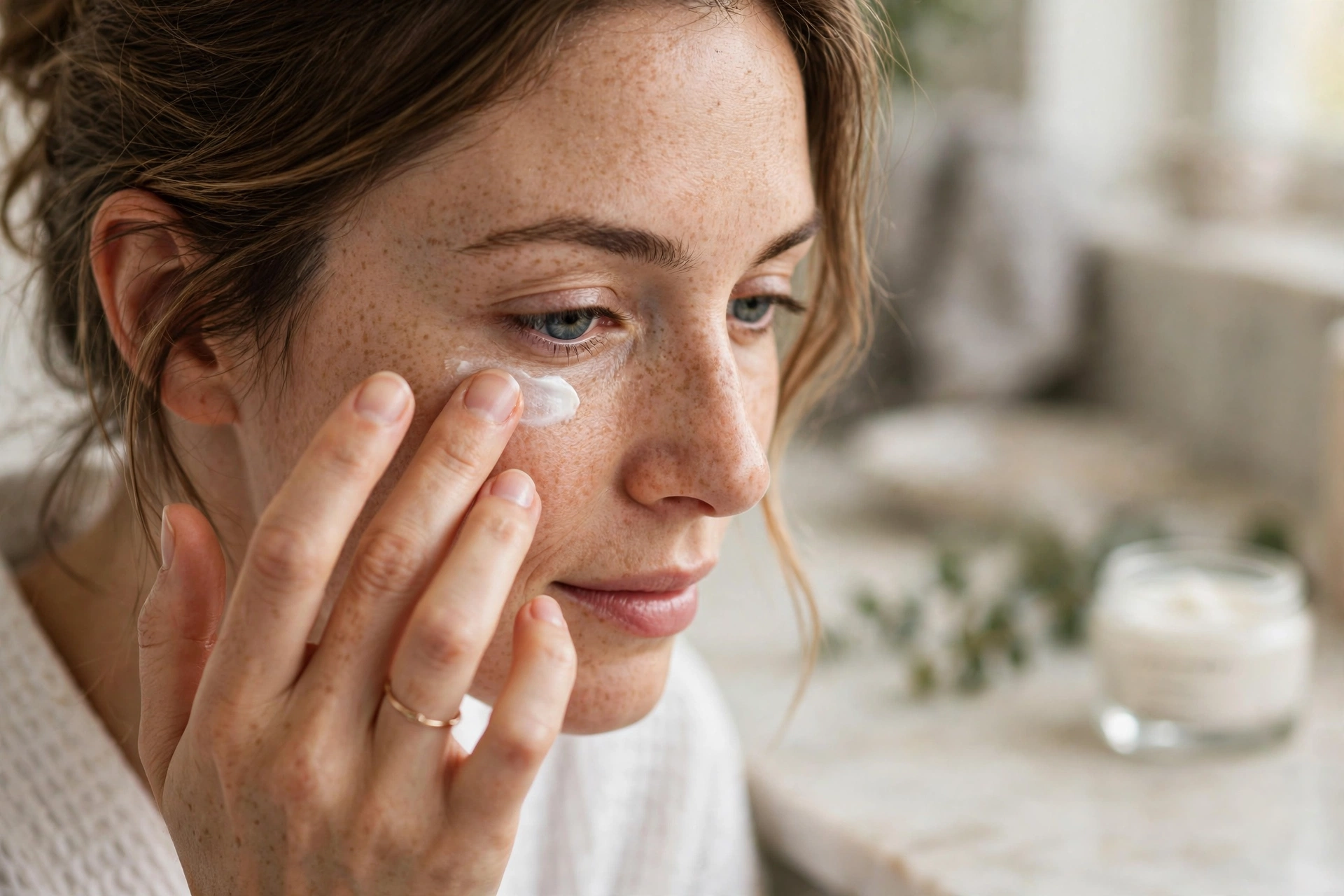
Vitamin K
Let’s be candid: vitamin K appears in many eye creams on the theory that it helps with blood under the skin, but the clinical evidence is thin. It’s not harmful — just don’t choose a product for its vitamin K. Choose it for the proven ingredients alongside it.
On routine order: eye cream goes on after serums and before moisturizer — light textures first, richer ones later. Our skincare layering order guide lays out the full morning and night sequence.
Lifestyle Fixes That Genuinely Move the Needle
No cream can outwork a lifestyle that’s fighting it. Four changes that are unglamorous, free, and actually effective:
- Sleep smarter, not just longer. Aim for 7–9 hours with your head slightly elevated — an extra pillow keeps fluid from pooling under your eyes overnight.
- Watch evening salt and alcohol. Both encourage fluid retention. Go easier on very salty late dinners and notice the difference in your morning mirror.
- Treat allergies instead of enduring them. If your eyes itch regularly, talk to a doctor about antihistamines or allergy management. Every rub damages delicate skin and deepens pigmentation over time.
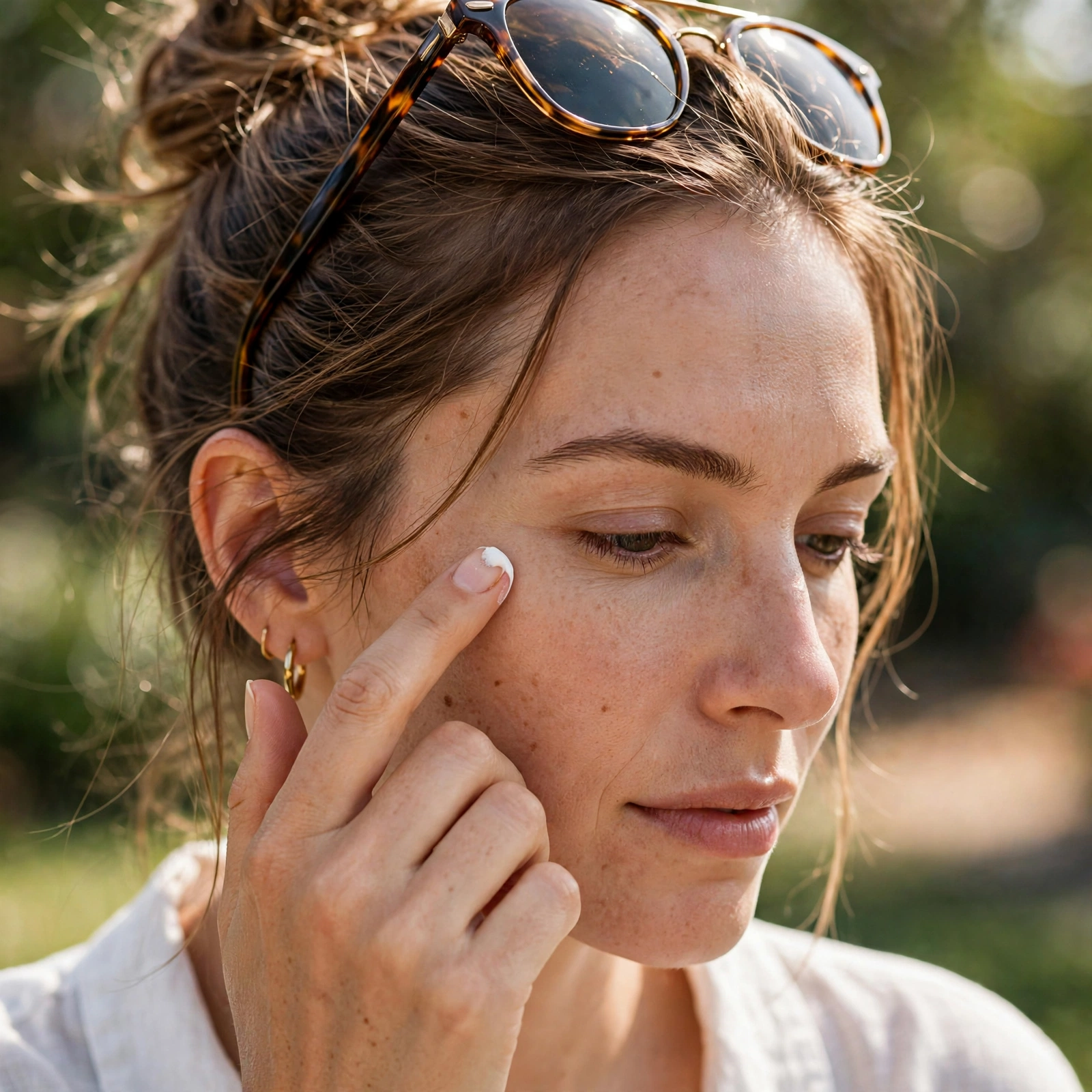
- Protect the area from sun. UV deepens pigmentation-type circles and breaks down the collagen that keeps under-eye skin thick. Sunglasses are the easiest win; broad-spectrum SPF 30+ applied carefully around (not in) the eyes is the second. Sunscreen always goes on last in your morning routine.

Home Remedies: An Honest Verdict
Some kitchen cures have real merit; others are mostly ritual. The honest breakdown:
Cold compress — genuinely useful
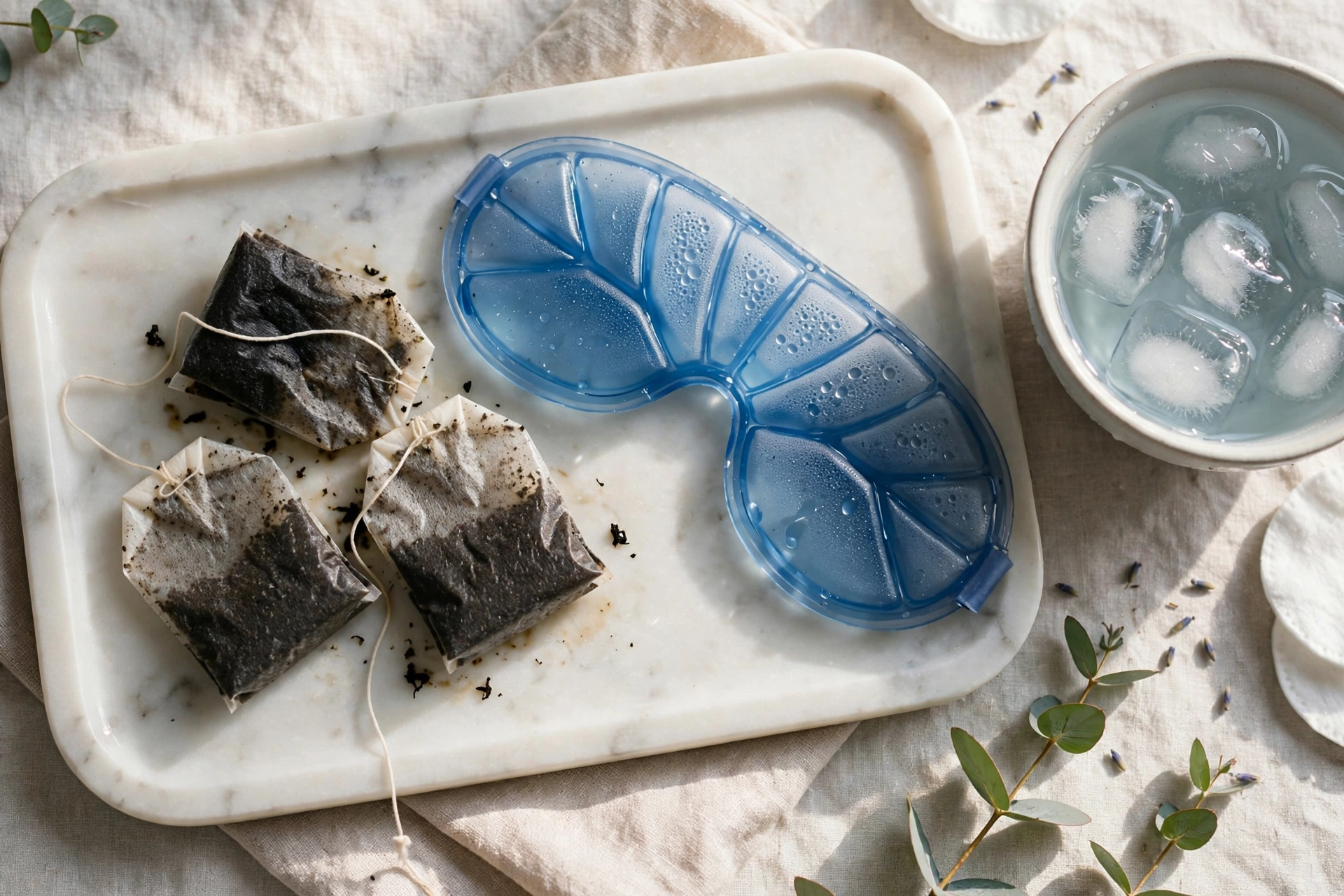
Cold constricts blood vessels and reduces swelling — exactly what puffy, vascular-type circles need in the morning. A cold washcloth, chilled spoons, or a gel eye mask for 10–15 minutes all work. Temporary, but real.
Tea bags — surprisingly legitimate
Cooled black or green tea bags on closed eyes for 10–15 minutes deliver caffeine (constricts vessels) and tannins (mild astringent). Honest limit: they help puffiness and mild vascular tint — not true pigmentation or hollows.
Cucumber slices — mostly comfort
Cool, watery, mildly hydrating — soothing, but there’s nothing in a cucumber that specifically treats dark circles. Enjoy the ritual; don’t expect transformation. A cold compress does the same job better.
Potato juice and almond oil
Evidence here is anecdotal at best. Almond oil is a fine gentle moisturizer for the eye area, but it doesn’t lighten pigment. Neither will harm you; neither is a treatment.
The verdict: home remedies are excellent for morning puffiness and the vascular type, decent as a soothing ritual, and no substitute for targeted ingredients when pigmentation or thinning skin is the real issue.
Makeup Tricks That Conceal in Minutes
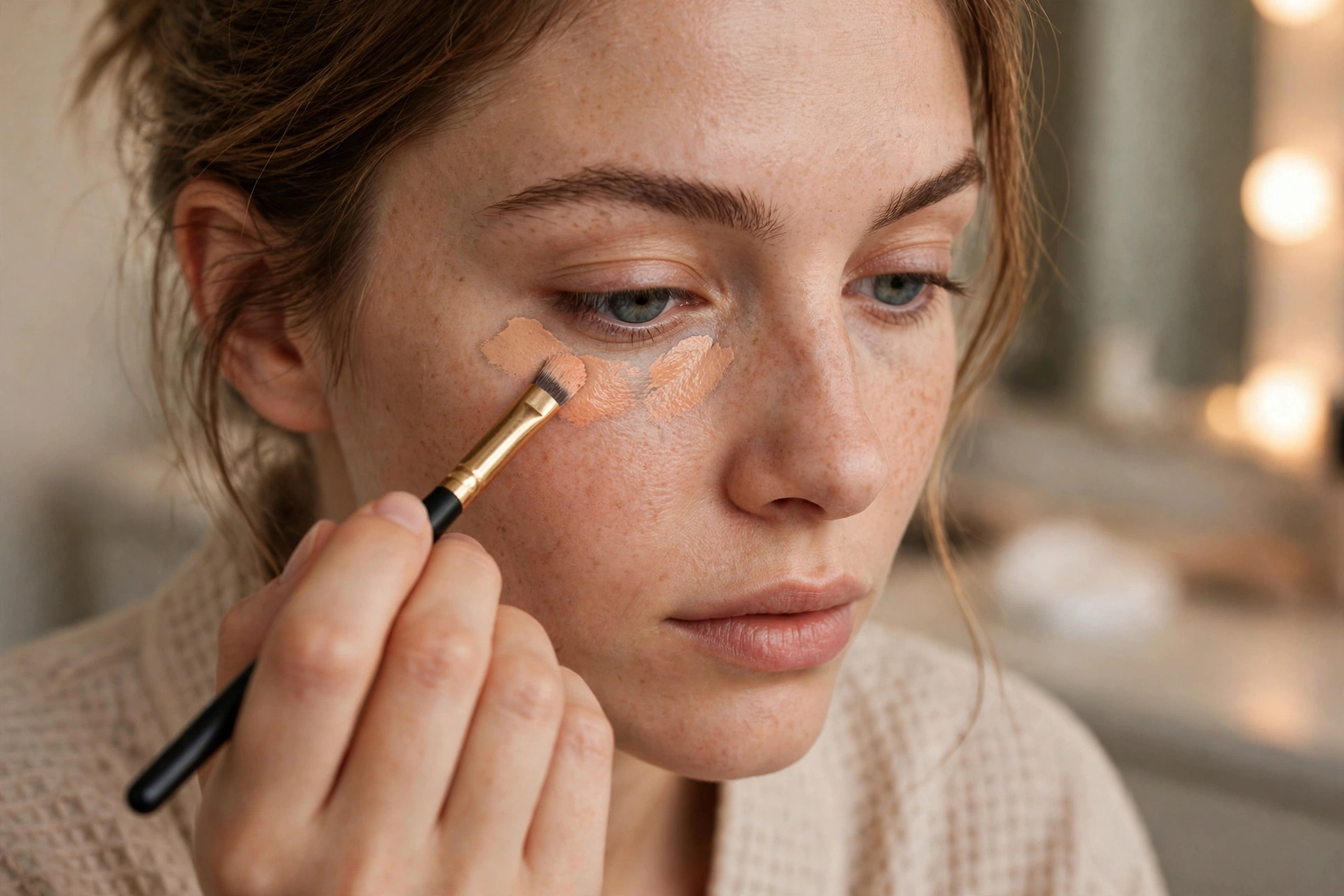
While the long-term work happens underneath, makeup is the instant fix — and done right, it’s undetectable. The secret is color theory, not thick coverage:
- Color-correct first. Concealer alone often turns grayish over dark circles. A peach or salmon corrector cancels blue and purple (vascular type) on fair to medium skin; orange does the same on deeper skin tones. Pat a thin layer only where the discoloration is.
- Choose the right concealer shade. Go one shade lighter than your foundation — no more, or you get the reverse-panda look. Our guide on how to find your perfect foundation shade covers shade testing that applies equally to concealer.
- Apply in a triangle, not a crescent. Draw an inverted triangle from the inner corner down toward the cheek and back up, then blend the edges. This lifts the whole mid-face instead of just painting over the shadow.
- Less is more — then set it. Thin layers tapped in with a ring finger or damp sponge melt into skin; thick layers crease by noon. Finish with the sheerest dusting of translucent powder pressed under the eye to lock it in.
When to See a Dermatologist
- Nothing works after 8–12 weeks of consistent, appropriate care. A dermatologist can confirm your circle type and prescribe stronger options — like prescription retinoids or short-term hydroquinone for stubborn pigmentation, under supervision.
- Structural hollowing dominates. Tear-trough fillers can soften the shadow dramatically, but choose a board-certified dermatologist or oculoplastic surgeon, and know results are temporary (6–12 months).
- Pigmentation is severe. In-office options like gentle peels or pigment-targeting lasers exist, but they must be matched to your skin tone — aggressive treatment on deeper skin can cause more pigmentation.
- Circles appeared suddenly. Dark circles arriving out of nowhere in adulthood can occasionally signal iron-deficiency anemia, thyroid issues, or severe allergies. Get a checkup rather than just a concealer.
What to Avoid
- Harsh DIY acids — lemon juice, baking soda, or undiluted vinegar near the eyes irritate thin skin and can trigger more pigmentation.
- Steroid creams without a prescription. Prolonged use thins the skin further — the opposite of what you want.
- Aggressive rubbing, from allergies, makeup removal, or impatience. Always remove eye makeup gently.
- Overnight-miracle expectations. Real improvement takes 8–12 weeks of consistency.
- Skipping sunscreen around the eyes. Every unprotected day deepens pigmentation-type circles a little more.
Dark Circles FAQs
Can lack of sleep really cause dark circles?
Not exactly — it doesn’t create pigment from nothing. Poor sleep makes skin paler (so vessels show more clearly) and encourages fluid pooling. So it makes existing circles look dramatically worse, especially the vascular type. Fixing sleep often produces the fastest visible improvement of any single change.
Do eye creams actually work, or is moisturizer enough?
It depends on the formula, not the label. A basic moisturizer hydrates and slightly plumps, which helps mild cases. But pigmented or vascular circles need targeted ingredients — vitamin C, niacinamide, caffeine, or retinol — at effective concentrations most general moisturizers lack. The ingredient list matters more than the “eye cream” label.
How long before I see real results?
De-puffing tricks (cold compress, caffeine, sleep position) work within minutes to hours. Brightening ingredients like vitamin C and niacinamide typically show change in 4–8 weeks. Retinol’s skin-thickening effects need 8–12 weeks of consistent nightly use. If nothing has changed after three months of the right approach for your type, see a dermatologist.
Are dark circles ever a sign of something serious?
Usually they’re cosmetic — genetics, thin skin, or lifestyle. But circles that appear suddenly, come with extreme fatigue, or look dramatically worse on one side deserve a medical check. Iron deficiency, thyroid disorders, and severe allergies can all show up around the eyes first.
Can men follow the same advice to get rid of dark circles?
Absolutely — causes and treatments are identical. Men who don’t wear makeup simply lean harder on skincare and lifestyle: sun protection, allergy management, sleep, and a good vitamin C or retinol formula do the heavy lifting.
The bottom line: identify your type — vascular, pigmented, or structural — then match the treatment to it. Caffeine and cold for vessels, vitamin C and sun protection for pigment, patience and possibly professional help for hollowing. Skip the hype, stay consistent, and let concealer handle the days in between.