
There is a special kind of disappointment in buying a foundation that looked perfect in the store, only to get home and realize your jawline is a completely different color from your neck. We have all been there. If you are trying to find your foundation shade and keep ending up too orange, too pink, or too pale, this guide walks you through the exact process makeup artists use — so you only have to buy once.
Shade matching is part science, part practice — undertone, lighting, and how a formula reacts with your skin all change how a shade looks. Once you understand these pieces, choosing becomes straightforward instead of a gamble.
Why the Right Foundation Shade Changes Everything
Foundation is the base of your entire look. When the shade is right, it disappears into your skin — no visible line at the jaw, no gray cast in photos, no orange tint in daylight. Everything you layer on top, from blush to bronzer, sits better because it is working with your real skin tone instead of fighting it.
When the shade is wrong, the opposite happens. A foundation that is even one shade too dark can make your face look disconnected from your neck and chest. One that is too light washes you out and shows up harshly in flash photography. And the wrong undertone — pink-based foundation on warm golden skin, for example — can make your complexion look dull or ashy no matter how good the formula is.
The good news: drugstore and luxury brands alike have expanded their shade ranges dramatically. Lines like Maybelline Fit Me ($8–$10), L’Oréal True Match ($12–$14), Fenty Beauty Pro Filt’r ($40), and MAC Studio Fix ($39) now offer 40 or more shades with clearly labeled undertones — you just need a method for choosing between them.

Step 1: Figure Out Your Undertone
Before you look at a single bottle, learn your undertone — the subtle hue beneath your skin’s surface color that never changes with tanning. The three categories are warm (golden, peachy, yellow hints), cool (pink, red, bluish hints), and neutral (a mix of both). Most mismatches happen because someone nails the depth but misses the undertone, which is exactly why learning to find your foundation shade starts here and not at the display wall.
Use these three quick tests together — no single one is perfect, but the pattern they form is reliable:
The Vein Test
Look at the veins on the inside of your wrist in natural light. Green-looking veins suggest warm undertones; blue or purple suggest cool. If you honestly cannot tell, or see a mix, you are probably neutral.
The Jewelry Test
Think about which metal looks better against your skin. Gold jewelry tends to flatter warm undertones, making the skin look radiant. Silver tends to flatter cool undertones. If both look equally good, that points to neutral. This is the fastest test of the three, and it is surprisingly accurate for most people.
The White Paper Test
Hold a plain white sheet of paper next to your bare face in daylight. Does your skin look yellowish or golden next to the paper? That is warm. Pinkish or rosy? That is cool. If you see neither strongly, you are neutral. Do this test without makeup and in front of a window for the most honest result.
What the Shade Labels Mean
Once you know your undertone, bottle labels start making sense. Most brands use a letter system: W for warm, C for cool, and N for neutral. MAC uses NW (neutral-warm, which suits pinker skin) and NC (neutral-cool, which suits more golden skin) — confusingly reversed, so check the brand’s own guide. Fenty uses a number system where lower numbers run cooler and higher numbers run warmer within each depth level. When in doubt, the brand’s website usually has an undertone chart for its specific line.
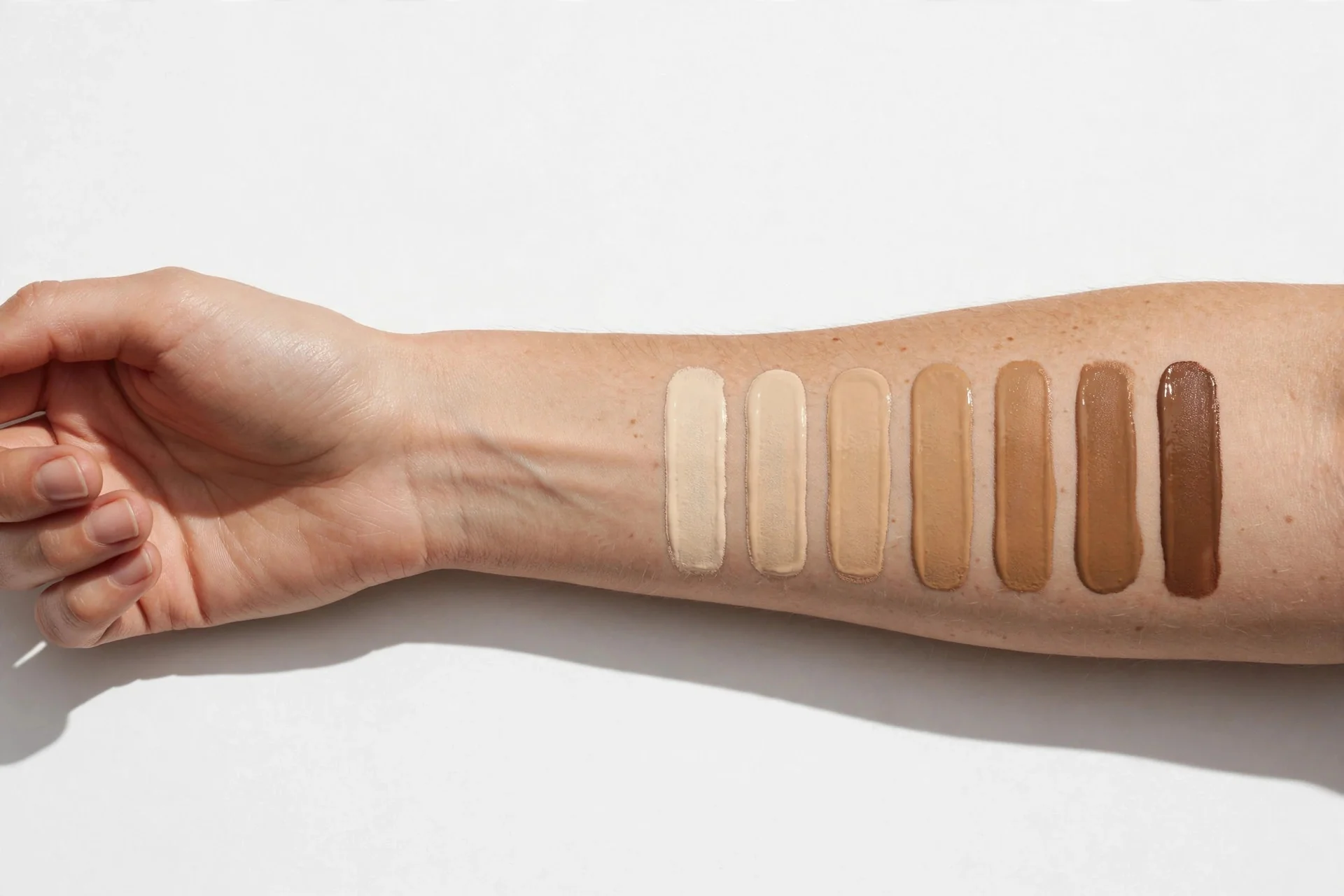
How to Find Your Foundation Shade: The Jawline Test
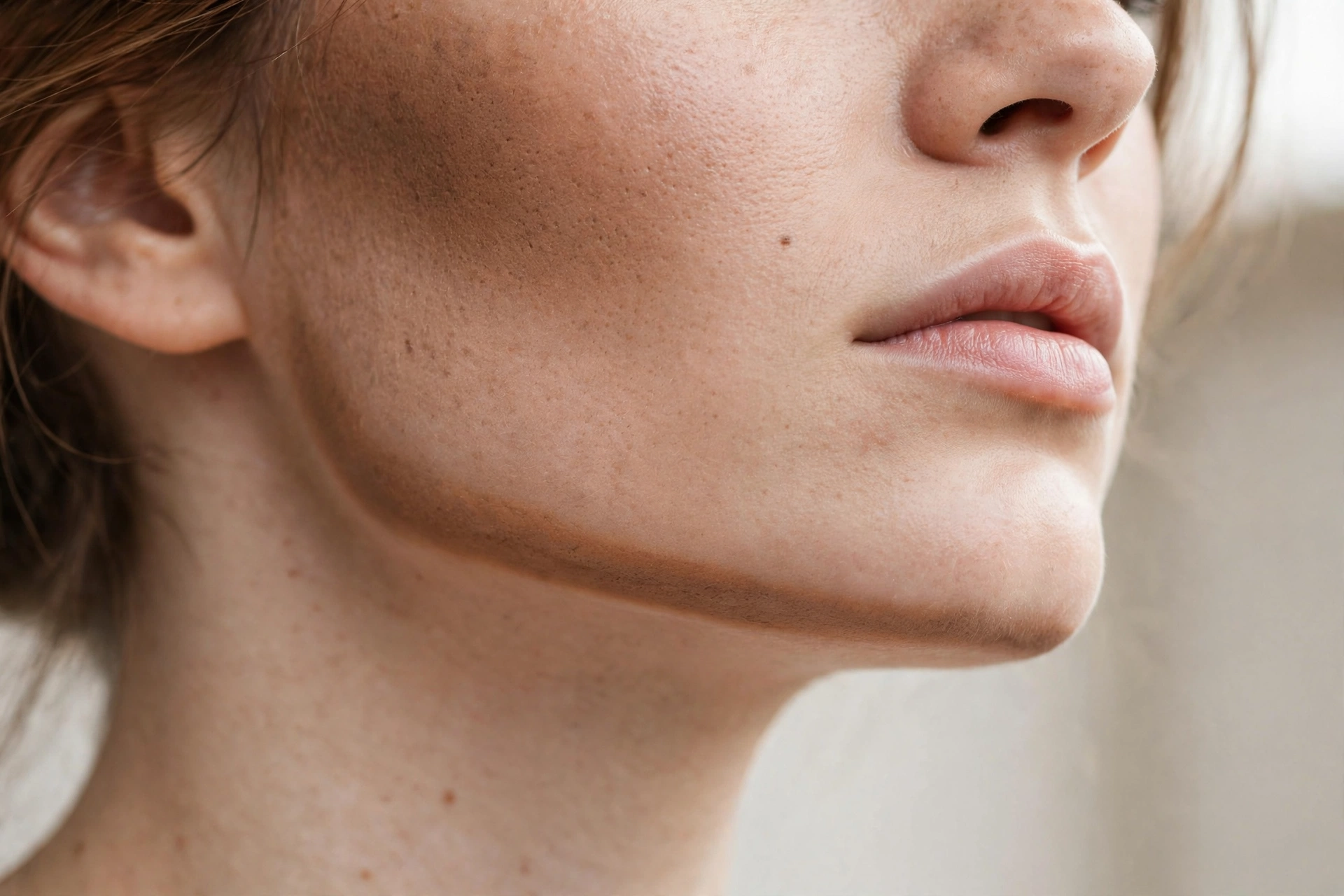
This is the method professional makeup artists rely on, and it beats swatching on your hand every time. Your hand is often a different color from your face — sun exposure, veins, and thinner skin all skew the result. The jawline is where your face meets your neck, so it is the truest reference point.
- Start with bare, moisturized skin. Foundation applies and reads differently over dry patches or heavy sunscreen. If you normally wear moisturizer or primer, apply it first and let it absorb — and check our skincare layering guide if you are unsure about the right order.
- Pick three candidate shades. Choose the shade that looks closest to your skin, plus one slightly lighter and one slightly darker. Testing a range is faster than testing one bottle at a time.
- Swipe each shade along your jawline. Draw a short stripe of each, from the lower cheek down past the jaw onto the neck. Keep the stripes separate so you can compare.
- Step back and look straight on. The right shade is the one that seems to vanish — where you cannot see where the stripe starts or ends. If all three are visible, the match is in the wrong undertone, not just the wrong depth.
- Check the neck blend. Your foundation should bridge your face and neck seamlessly. Many people match their face perfectly and ignore the neck, which is exactly how the dreaded mask line happens.
If you are shopping online and cannot swatch, use the brand’s shade finder quiz as a starting point, then cross-check with a shade you already own using a tool like Findation or Temptalia’s foundation matrix. These databases match shades across hundreds of brands based on real user data, and they are far more reliable than guessing from a screen.

Step 3: Always Check in Natural Light
Store lighting is designed to make everything look good — and it lies. Fluorescent and LED retail lights often run cool-toned, which can make warm foundations look balanced in the aisle and orange at home. This is the most common reason for shade regret, and the reason you should always confirm you have found your foundation shade in real daylight before committing.
When you swatch in a store, walk to the entrance or a window before deciding. If the store has testers, ask for a sample pot and wear it for a full day — many counters at Sephora, Ulta, and MAC will make you one for free. Live with the shade through morning light, office light, and evening light. A true match holds up in all of them.
If you are buying online, order from retailers with good return policies or start with travel sizes. A $12 mini that confirms your shade is far cheaper than a $45 bottle you never open again.

Step 4: Account for Oxidization
Some foundations darken or turn orange within an hour of application. This is oxidization — the formula reacting with the oils and pH of your skin, plus exposure to air. It is especially common in foundations with certain iron oxides and in very matte, long-wear formulas.
You cannot judge a shade in the first five minutes. When testing, apply your candidate shades and wait at least 30 to 60 minutes before making a final call. Take a photo in natural light at the start and again after an hour to compare honestly — our eyes adjust and fool us, but photos do not.
If you love a formula that oxidizes, try going half a shade lighter than your perfect match, or use a mattifying primer underneath to control the oil it reacts with. But if a foundation shifts more than a full shade, the formula simply does not suit your skin chemistry — move on.
Step 5: Do Not Assume Shades Match Across Brands
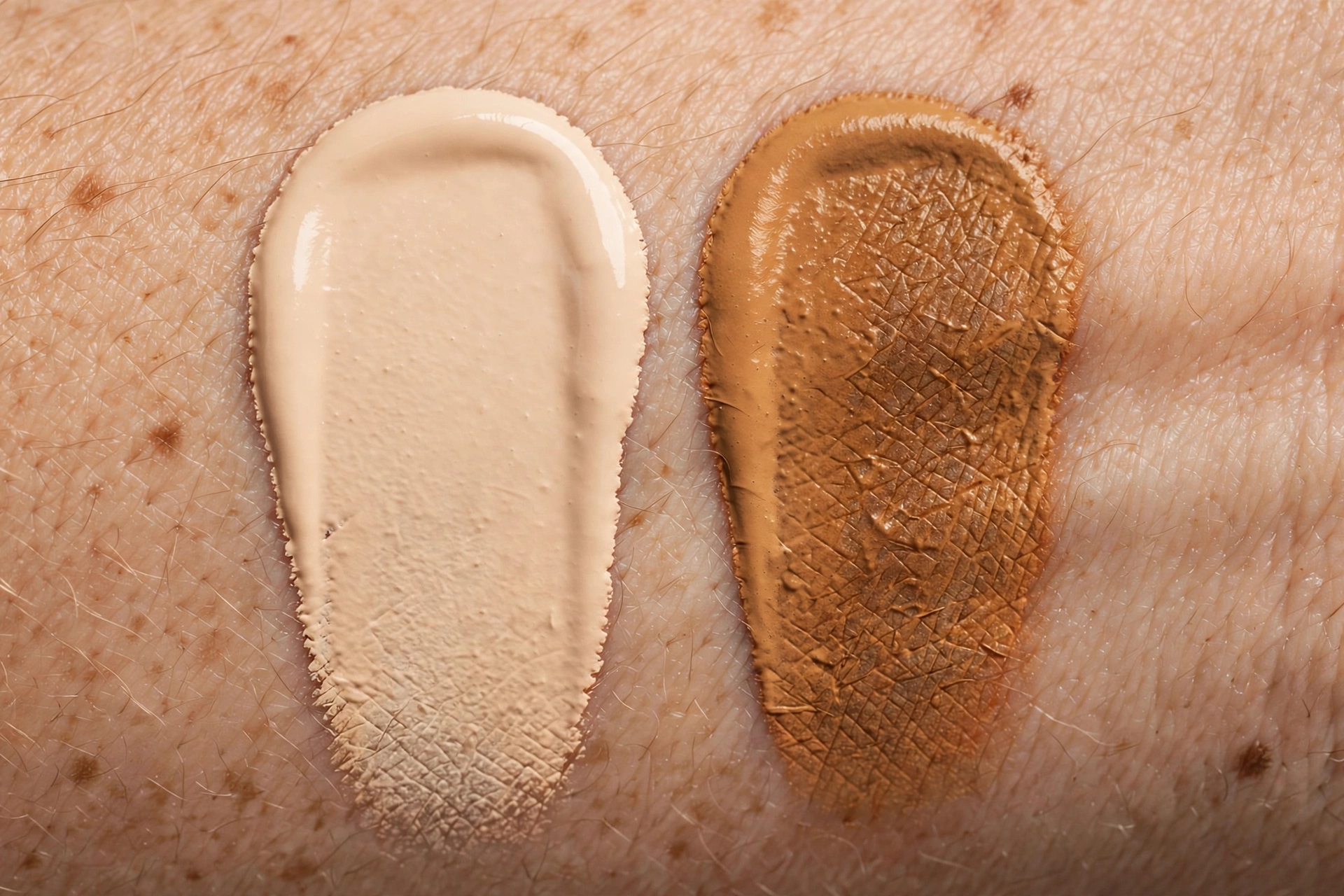
There is no universal standard for foundation shades. A “Medium Beige” from one brand can be two shades deeper than another brand’s “Medium Beige,” and undertone labels vary wildly. So to find your foundation shade in a new line, always start from your undertone and run the jawline test again from scratch.
Every time you try a new line, run the jawline test again from scratch. Use your current best-match foundation as a reference point: swatch it next to the new candidates so you have a known baseline. Shade-matching databases help here too — enter your current match and they will suggest equivalents in the new brand, which narrows your in-store testing to two or three bottles instead of ten.
Also watch out for reformulations. Brands quietly tweak formulas and shade lineups every few years. If your holy-grail foundation suddenly looks off, check whether the formula changed before assuming your skin did.
Your Foundation Shade Will Change With the Seasons
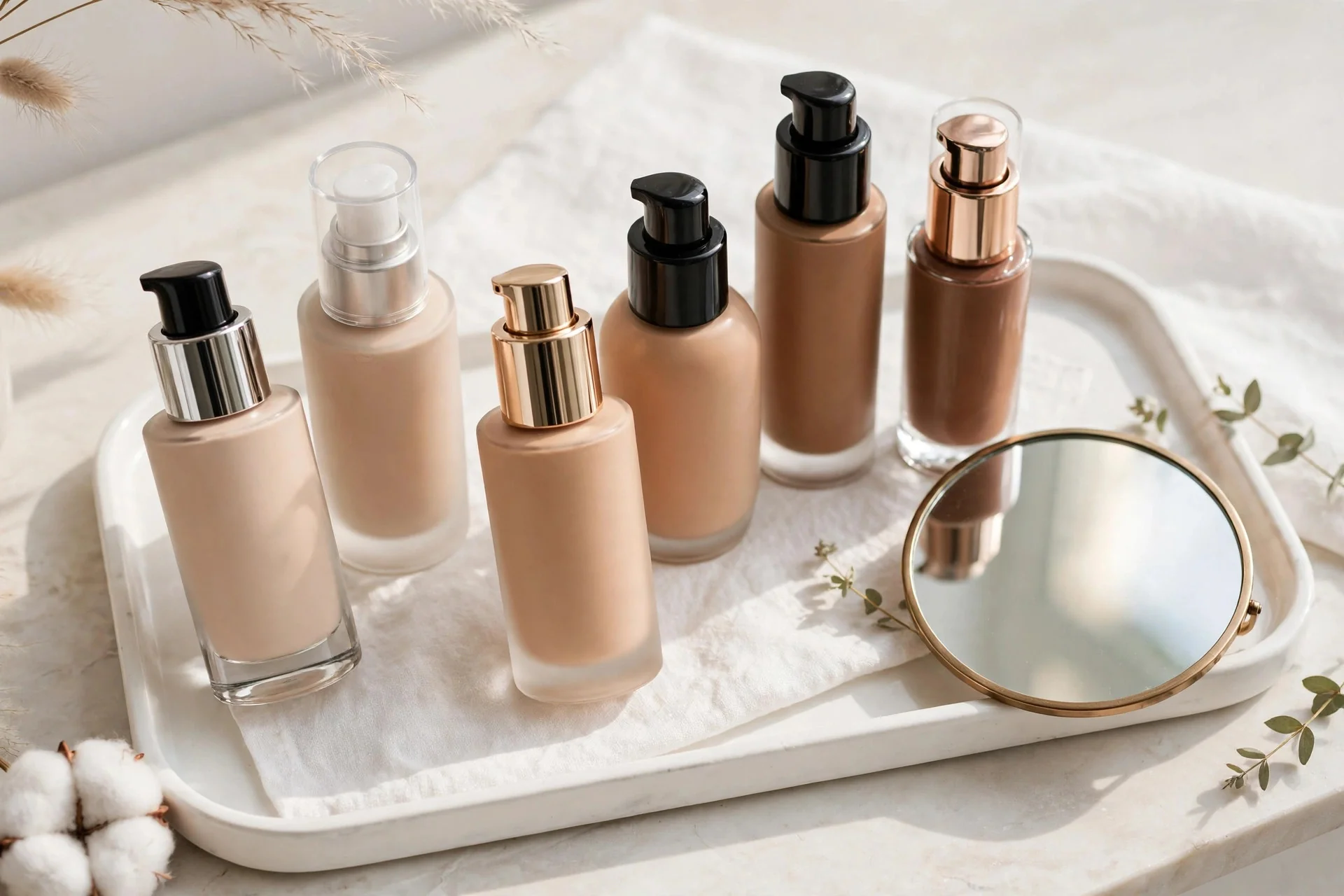
Most people need at least two foundation shades per year: one for their palest months (usually late winter) and one for when skin has the most color (late summer). You do not necessarily need two full bottles — buy your summer shade and mix it with moisturizer in winter, or blend it with your winter shade during transitional months. When your summer foundation starts looking mask-like in October, reassess to find your foundation shade for the new season. After one full year of notes, you will have your personal shade calendar and never have to guess again.
Mistakes That Lead to the Wrong Shade
- Testing on your hand or wrist. Hands get more sun and have different undertones than faces. Always test on the jawline.
- Testing over a full face of makeup. Residue from other products changes how a swatch reads. Start with a clean, moisturized base.
- Trusting store lighting. Always verify near a window or take a sample home first.
- Judging the shade immediately. Wait 30 to 60 minutes to account for oxidization before deciding.
- Ignoring your neck and chest. The goal is a seamless blend from face to neck, not a perfect match to your cheek alone.
- Buying the same shade name in a new brand. Shade names are not standardized — retest every time you switch lines.
- Skipping primer or moisturizer during the test. Test under the same base routine you will actually wear, since it changes the finish and color.
Foundation Shade FAQs
Should I match my foundation to my face or my neck?
Match to the area where they meet — the jawline. Your neck is usually slightly lighter and less red than your face, so blending at the jawline gives you the most natural transition. If your face and neck differ a lot, split the difference and blend downward.
What if I am between two shades?
Buy both if your budget allows and mix them — this is what makeup artists do constantly, and it gives you a truly custom match. If you can only buy one, choose the lighter shade; it is much easier to warm up a slightly light foundation with bronzer than to fix one that is too dark.
How do I find my foundation shade online without swatching?
Start with the brand’s shade quiz, then verify using a shade-matching database like Findation or Temptalia’s matrix by entering a foundation you already own. Order from retailers with free returns, and consider minis or samples first. Never trust the model’s photo alone — studio lighting and retouching make it meaningless.
Why does my foundation look different in photos?
Two usual culprits: flashback from SPF or silica-heavy powders (which reflect camera flash and create a white cast), and a shade that is slightly too light for your skin. Test with a flash photo in natural light before an event — it takes ten seconds and saves you from surprises.
The Bottom Line
Learning to find your foundation shade is a skill, not a talent — and now you have the method. Know your undertone, test on your jawline in natural light, wait out oxidization, and retest whenever you switch brands or seasons. If you are just starting out with makeup altogether, our makeup for beginners guide covers the essential products and techniques to build on this foundation — literally. Get the base right, and everything else becomes easy.