
You could own the most expensive serums money can buy, but if you’re smoothing them on in the wrong sequence, you’re mostly wasting them. Here’s the uncomfortable truth about skincare layering order: it decides whether your products actually sink in and do their job, or just pile up on the surface and roll off into little pills by noon.
Most of us built our routines backwards, buying products for what they promised without thinking about how they fit together. The good news: once you understand the logic, you’ll never need to memorize a rigid routine again.
This guide walks you through the full skincare layering order for morning and night, step by step. You’ll learn the one rule that governs everything, how long to wait between layers, which ingredient combinations to keep apart, and the small mistakes that quietly sabotage even the best formulas.
Why the Order of Your Skincare Actually Matters
Think of your skin like a sponge with a very picky personality. Light, water-based formulas need direct contact with clean skin to absorb properly. Heavy creams and oils, on the other hand, are designed to sit on top and seal everything in — that’s literally their job. So if you apply a rich face oil first and then try to layer a watery hyaluronic acid serum over it, the serum can’t get through. It just sits there, and you’ve wasted both products.
There’s also a chemistry angle. Certain active ingredients, like vitamin C and alpha hydroxy acids, work best at a specific pH and need to be close to bare skin to perform. Bury them under three other layers and you’re dulling their effect. Order isn’t about being fussy — it’s about giving each product the conditions it needs to work.
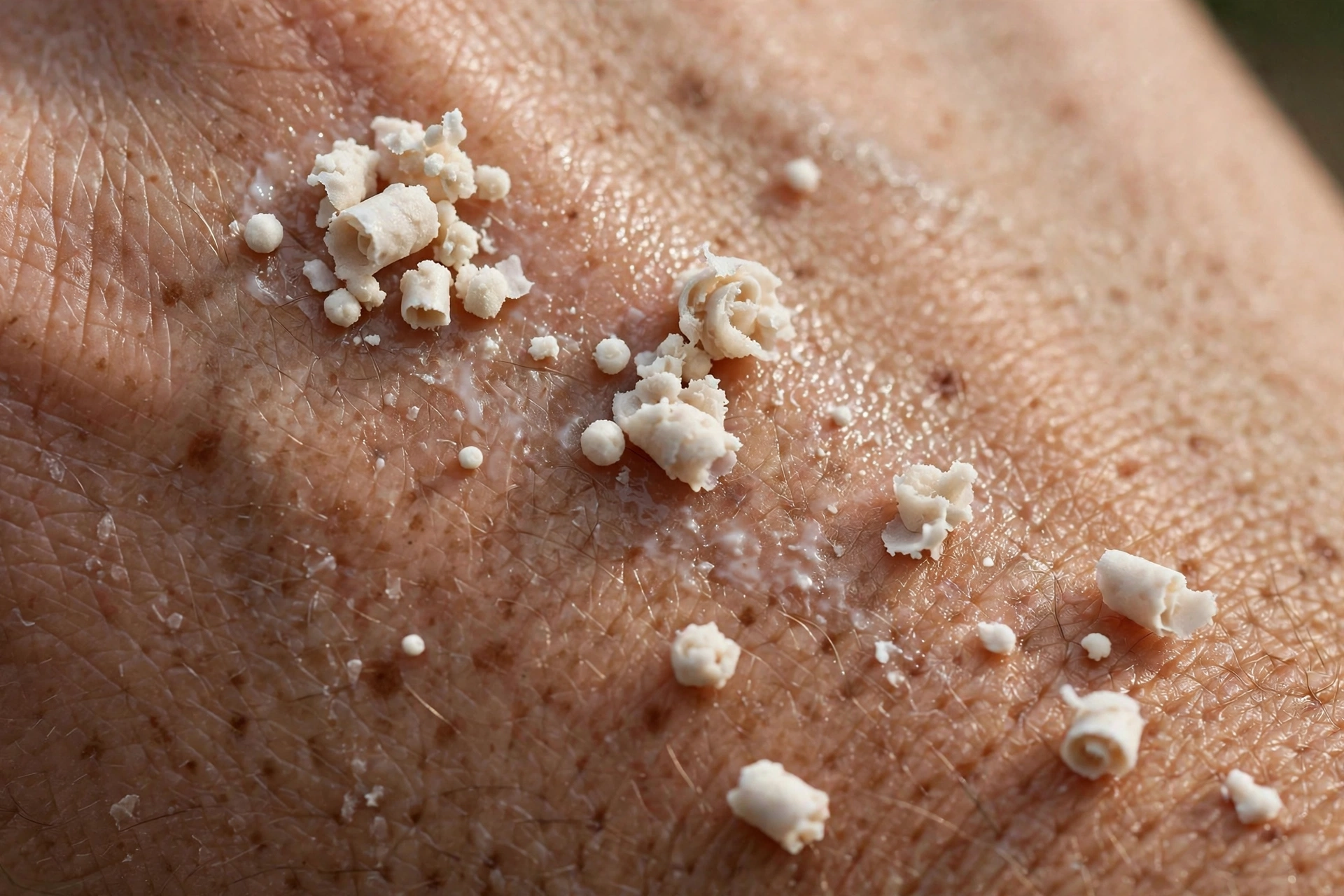
Then there’s pilling — when rushed or mis-ordered products ball up and flake off. If your makeup slides around by lunchtime, the culprit is often your layering, not the products themselves.
The Golden Rule of Skincare Layering Order: Thinnest to Thickest
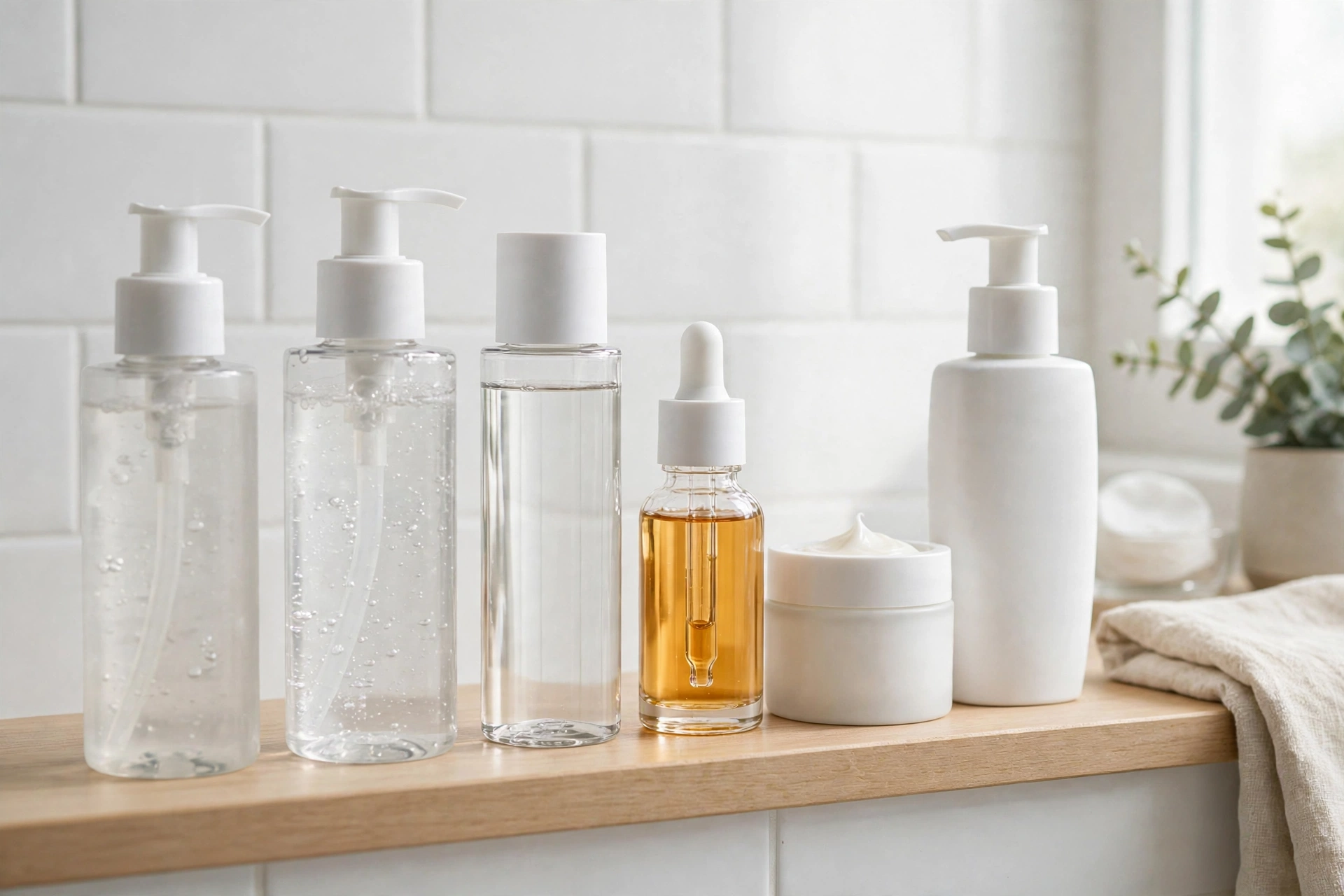
If you remember one thing from this guide, make it this: apply products from thinnest texture to thickest. Watery toners and essences go first, then serums, then lotions, then creams, and finally oils. Each layer should be slightly richer than the one before it.
There’s a simple reason this works. Thin, water-based formulas absorb fast and need a clear path to your skin. Thicker formulas contain more oils and occlusives that form a protective seal. Going thin-to-thick means every layer can do its job without blocking the one underneath it.
Two useful exceptions to know:
- Water-based before oil-based, always. Even if your oil feels light, oils seal. Water-based serums with ingredients like hyaluronic acid or niacinamide should go on before any oil.
- Sunscreen is always last in the morning. It needs to form an even film over everything to protect properly. Nothing goes on top of it except makeup.
Once this rule clicks, you can look at any lineup of products — no matter how many — and sort them in seconds. Texture tells you everything.

Your Morning Skincare Layering Order, Step by Step
Morning routines have one main job: protect. You’re shielding your skin from UV rays, pollution, and all the environmental stress the day throws at it. Here’s the exact morning routine we recommend:
- Cleanser. A gentle cleanse removes overnight oil and sweat — a mild gel or cream cleanser and lukewarm water, about 60 seconds.
- Toner or essence. A watery hydrating toner with glycerin or hyaluronic acid dampens skin so your serums absorb better. Pat it in with your palms instead of swiping with a cotton pad.
- Serum. Morning is prime time for a vitamin C serum. It’s an antioxidant, which means it helps defend against the free-radical damage caused by sun and pollution — and it actually boosts your sunscreen’s protection. Use a pea-sized amount and press it into your skin.
- Eye cream. The skin around your eyes is thinner and shows fatigue first. Use your ring finger (it naturally applies the least pressure) to tap a small amount around the orbital bone. Don’t drag.
- Moisturizer. This seals in all the hydration and actives you just applied. In the morning, a lightweight lotion or gel-cream is usually enough, even for dry skin types, since sunscreen adds another layer on top.
- Sunscreen. The non-negotiable final step. Use about a nickel-sized amount for your face alone — most people use far too little — and don’t forget your neck and ears. Give it two to three minutes to set before you put on makeup. Once your base has settled, your skin is the perfect canvas — here’s how to find your perfect foundation shade so your makeup matches flawlessly.
If you’re just starting out with makeup too, a well-layered morning routine makes everything you apply afterward look smoother and last longer — our makeup for beginners guide builds right on top of these steps.
Your Nighttime Skincare Layering Order, Step by Step
Night is when your skin does its repair work, so your evening routine can be a little richer and more treatment-focused. Your nighttime routine follows the same thin-to-thick logic, with a couple of extra steps:
- First cleanse: oil cleanser or cleansing balm. This dissolves sunscreen, makeup, and the day’s buildup. Massage into dry skin for a full minute.
- Second cleanse: water-based cleanser. Your regular gentle cleanser removes whatever the oil cleanse left behind. Yes, two cleanses sound like a lot, but each one has a different job, and together they keep pores clear without stripping.
- Exfoliant (2–3 nights a week, not every night). A leave-on AHA like glycolic acid or BHA like salicylic acid smooths texture and unclogs pores. More isn’t better — over-exfoliating damages your barrier and causes the dullness you’re trying to fix.
- Hydrating toner or essence. Same as morning: a watery hydrating layer preps the skin and helps your treatment serums absorb evenly.
- Treatment serum. Night is when hardworking ingredients like retinol or niacinamide shine. A good rule of thumb: alternate your strong actives. Use retinol two or three nights a week, and save exfoliating acids for the other nights — never stack them in the same routine.
- Eye cream. A slightly richer formula at night is fine. Tap, don’t rub.
- Moisturizer. Go a little richer than your daytime moisturizer. Night creams with ceramides or peptides help support your skin barrier while you sleep.
- Facial oil (optional). If your skin runs dry, a few drops of squalane or jojoba oil as the very last step locks in all that moisture. Remember: oil always goes last because nothing water-based can penetrate through it.
How Long Should You Wait Between Layers?
This is the step everyone skips, and it’s why so many routines pill. Wait 30 to 60 seconds between layers — apply one product, brush your teeth, then apply the next.
Try the touch test: press your fingertips lightly to your cheek. Your skin should feel slightly tacky and damp, not wet and not completely dry. That tacky stage is the sweet spot — products glide on smoothly and bond well.
A few timing notes worth knowing:
- After strong actives like vitamin C or retinol, give a full minute before the next layer so they can absorb without interference.
- Hydrating layers (toners, hyaluronic acid serums) actually work better on damp skin, so don’t wait until your face is bone dry between these steps.
- Sunscreen before makeup needs two to three minutes to form its protective film. Rush this and your foundation will slide right off it.

Ingredient Combinations You Should Never Layer Together
Some ingredients are wonderful on their own but cause irritation — or cancel each other out — when layered in the same routine. Here are the pairings to keep apart:
- Retinol + vitamin C: both are excellent, but together they can irritate. Easy fix — vitamin C in the morning, retinol at night.
- Retinol + AHAs or BHAs on the same night: that’s two forms of exfoliation at once, which is a fast track to redness and flaking. Alternate them on different nights instead.
- Benzoyl peroxide + retinol: benzoyl peroxide can deactivate retinol, so they essentially waste each other. If you use both, put benzoyl peroxide in your morning routine and retinol at night.
- Copper peptides + strong acids: direct acids like glycolic acid break down copper peptides before they can work. Keep them in separate routines.
- Too many actives at once: this isn’t one specific pairing, but it’s the most common mistake. Pick one hero active per routine. Your skin can’t process four treatments simultaneously, and neither can you tell which one is actually helping.
One myth worth clearing up: niacinamide and vitamin C are fine together in modern formulas. That warning comes from decades-old research using unstable forms at extreme temperatures. Today’s well-formulated products layer beautifully.
5 Layering Mistakes Almost Everyone Makes
Even with the right order, small habits can undermine your routine. Watch out for these:
- Putting the heaviest product on first. Rich cream before serum is the classic error. If your serum never seems to do anything, check what’s underneath it.
- Using way too much product. A pea-sized amount of serum covers your whole face. A nickel-sized dollop of moisturizer is plenty. Over-applying doesn’t give you extra benefits — it gives you pilling, clogged pores, and an empty wallet.
- Layering facial oil under water-based serums. We covered this, but it bears repeating because it’s so common. Oil is always the final seal, never the base.
- Rushing the wait time. If your products consistently pill, slow down before you blame the formulas. Thirty extra seconds between layers fixes this for most people.
- Adding everything at once. When you introduce three new products in one week and your skin reacts, you have no idea which one caused it. Add one product at a time, give it a week or two, and patch test on your jawline first.
Skincare Layering Order FAQs
Can I just mix two serums together in my palm to save time?
It’s tempting, but don’t. Mixing changes how each formula absorbs and can cause pilling. Layer them one at a time, thinnest first, with a short wait in between. The whole process adds maybe a minute.
Do I really need both a serum and a moisturizer?
They do different jobs. Serums are concentrated treatments that target specific concerns — dark spots, fine lines, dullness. Moisturizers are sealants that lock in hydration and protect your barrier. If your skin is oily and you use a hydrating serum, you might get away with a very light moisturizer, but skipping the seal entirely usually leads to dehydration by afternoon.
Where does face oil fit into my routine?
Dead last — after moisturizer, before bed (at night) or before sunscreen (in the morning, though most people skip oil in AM routines). Oils are occlusive, which means they trap everything beneath them. That’s wonderful as a final step and terrible anywhere else.
What order should I use if I only own three products?
Keep it simple: cleanser, then your treatment product (serum), then moisturizer — plus sunscreen in the morning. That tiny routine, done consistently and in the right order, will outperform a chaotic ten-step routine every time.
The bottom line: getting your layering right isn’t complicated: thin to thick, water before oil, treatments close to clean skin, sunscreen last in the morning. Give each layer a moment to settle, keep warring ingredients apart — and your products will finally earn their shelf space.
And if you’re in the mood to make it a ritual rather than a chore, pair your Sunday-night routine with a little extra pampering — mask on, then treat yourself to a salon-quality manicure at home. Good skin and great nails: that’s a weekend well spent.