
If you could keep only one tailored piece in your wardrobe after 50, make it the blazer. No other garment works as hard: it sharpens a t-shirt and jeans, finishes a work outfit, dresses up an evening dress, and adds instant structure to a figure that has earned the right to look polished without trying too hard. A good blazer doesn’t just complete an outfit — it changes your posture, your presence, and the way a room reads you.
But the blazer is also one of the easiest pieces to get wrong. Too boxy and it ages you a decade; too tight and it looks uncomfortable; the wrong length throws off your whole proportion. This guide covers how to wear a blazer after 50 — the fit details that matter, the colors and fabrics worth owning, outfit formulas for casual days, work, and evenings, and the mistakes that sabotage the look.
Why the Blazer Is the Hardest-Working Piece After 50
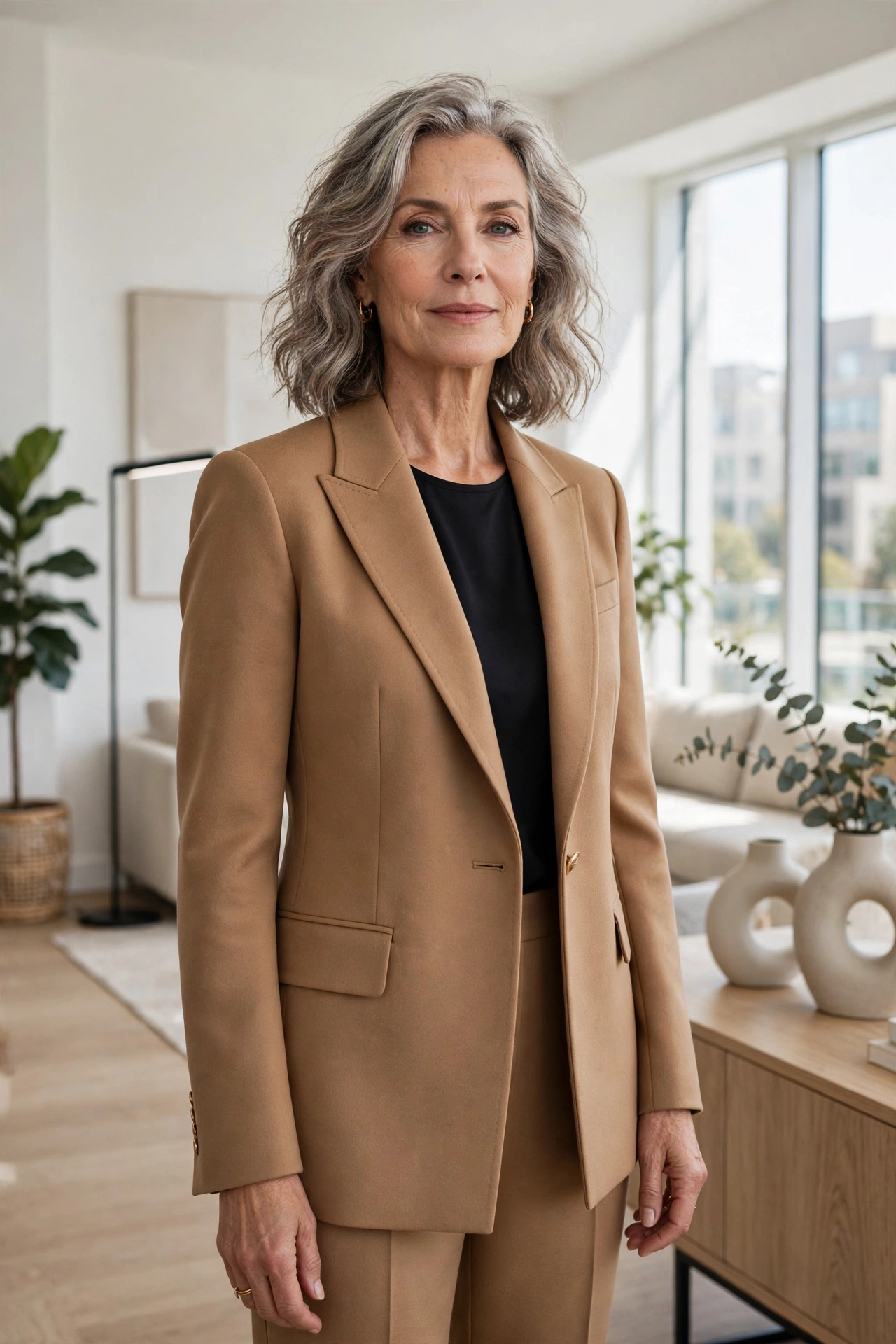
After 50, dressing well is less about trends and more about architecture. The blazer gives an outfit what stylists call “a shoulder line” — a clean, defined frame that makes everything underneath it look intentional. That structure is uniquely flattering on mature figures: it skims the waist, defines the shoulder, and creates a long vertical line through the torso.
It is also the fastest route from casual to considered. A white tee and jeans is an outfit; the same tee and jeans under a navy blazer with the sleeves pushed up is a look. The blazer belongs in the small club of pieces that never date — which is why it sits at the top of our roundup of timeless fashion pieces every woman should own. Buy it well once, and it will serve you for a decade.
Fit First: Shoulders, Length and Sleeves
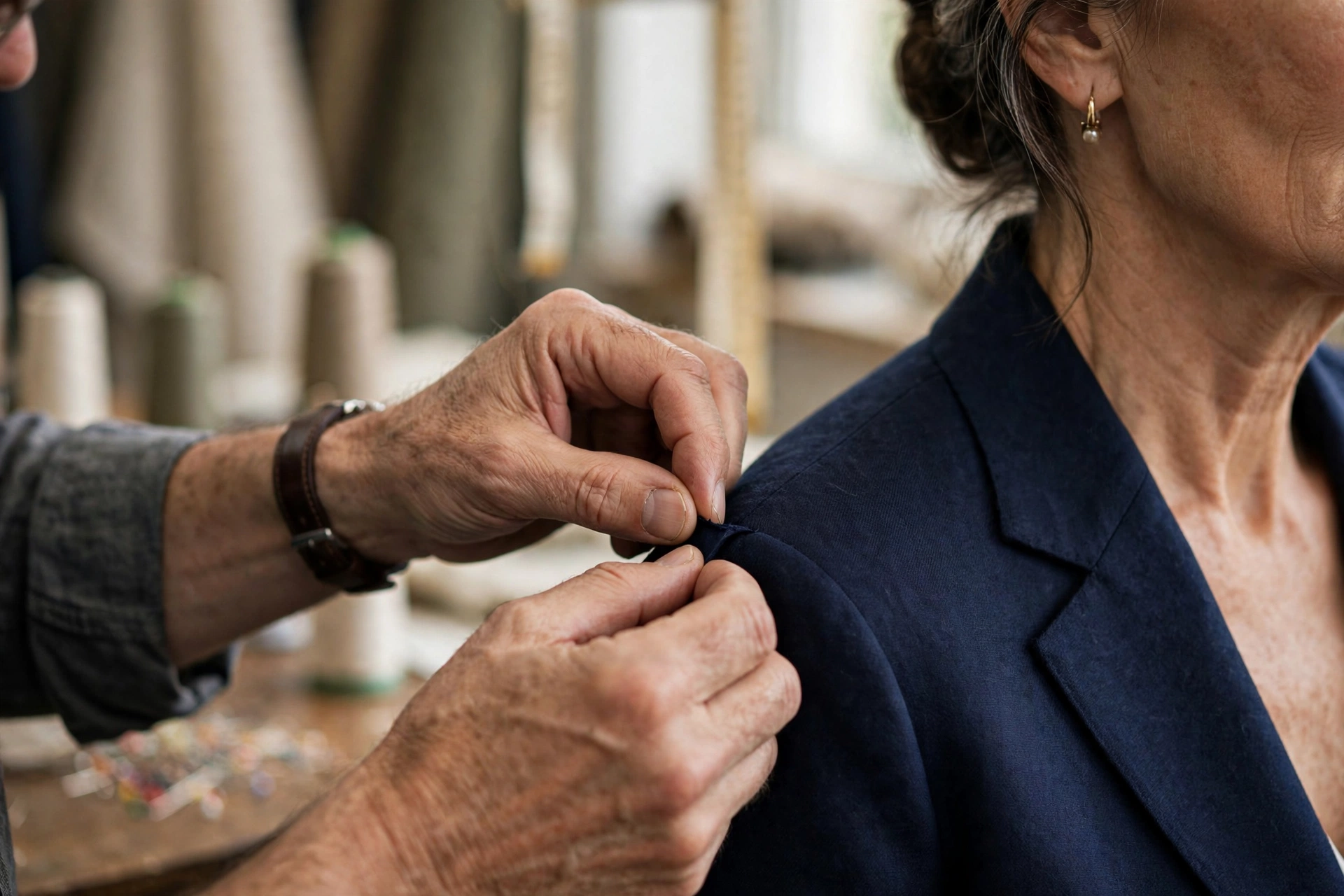
Fit is everything with a blazer. Get the fit right and a $70 blazer looks like $700; get it wrong and no price tag saves it. Check these four points in the fitting room mirror:
- Shoulders: the seam should sit exactly at the edge of your shoulder bone. Too far past it and the blazer wears you; too far inside and it pulls. Shoulder fit is the one thing a tailor cannot easily fix, so never compromise here.
- Length: the most flattering length for most women over 50 hits at or just below the hip bone. It covers the hip, elongates the leg, and works with trousers, skirts, and dresses alike. Cropped blazers suit petite frames; longer, tunic-length blazers suit taller women — but avoid anything that ends at the widest part of your thigh.
- Sleeves: aim to show a quarter to half an inch of shirt cuff or wrist. Sleeves that swallow your hands look sloppy; sleeves riding up look borrowed. Sleeve length is a cheap, easy alteration — buy for the shoulders and hem the sleeves.
- The button test: fasten the middle button. If the fronts pull into an X across the bust or stomach, size up. A blazer should close smoothly with a little ease — you will mostly wear it open anyway.
One more rule: hug yourself — if you can’t do it comfortably, the blazer is too small, whatever the tag says.
Single vs Double-Breasted: Choosing Your Silhouette
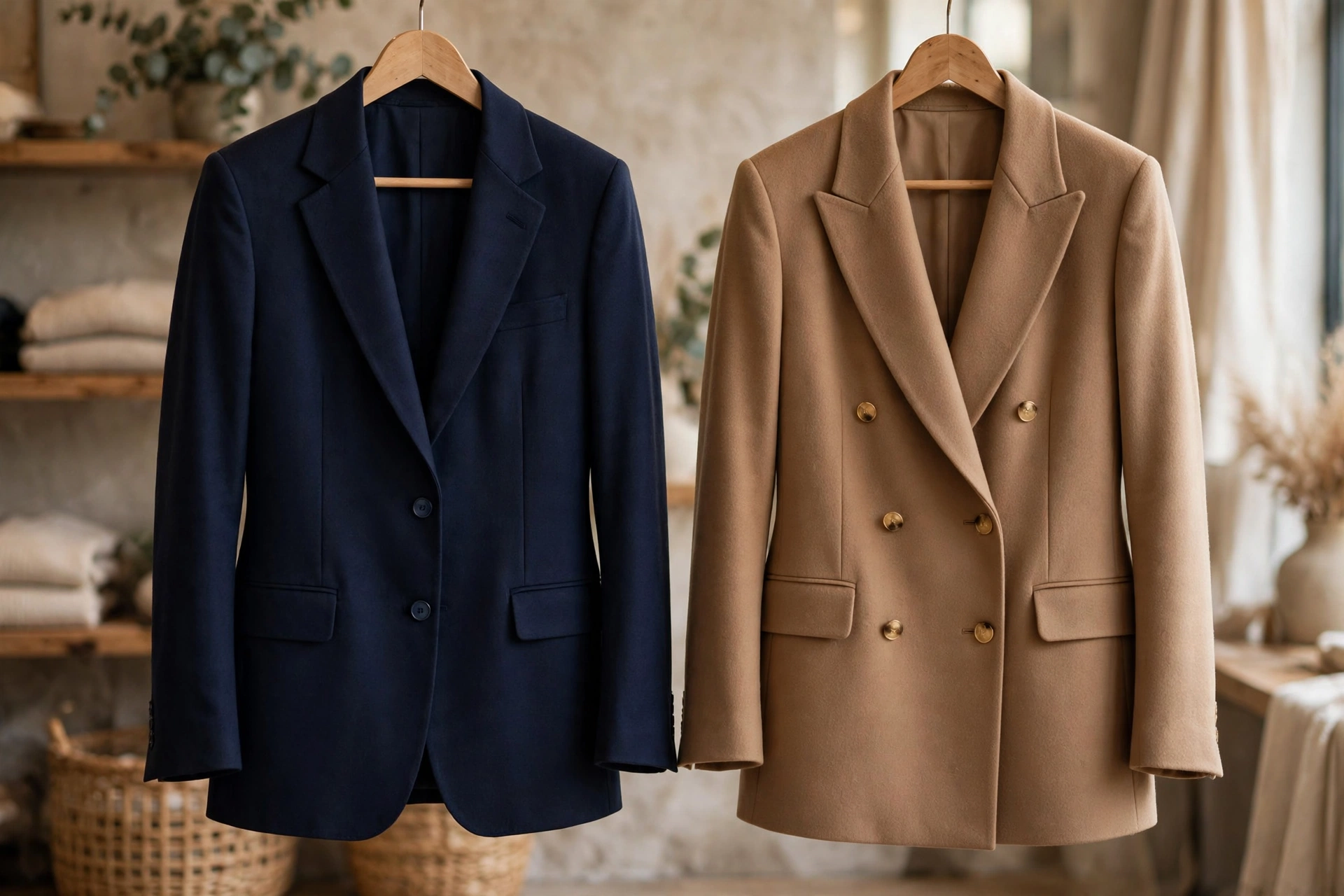
The single-breasted blazer — one column of buttons, notch lapel — is the most versatile and forgiving choice after 50. It creates a clean vertical line, works open or closed, and suits every body type. If you own one blazer, make it this one.
Double-breasted blazers are having a long moment, and they can look superb — but they add visual width across the torso, so they flatter taller, leaner frames most. If you love the look, choose one with a deep V opening and only fasten the inner button, which keeps the line long rather than boxy.
Lapels matter too: a classic notch lapel suits everyone; a shawl collar softens the look for evening; a peak lapel adds drama and authority. As a general guide, smaller lapels suit petite frames and larger lapels balance taller ones. If you are still learning which lines flatter your proportions, our guide to dressing for your body type breaks down silhouettes figure by figure — the same principles apply to choosing a blazer cut.
The Colors and Fabrics Worth Owning
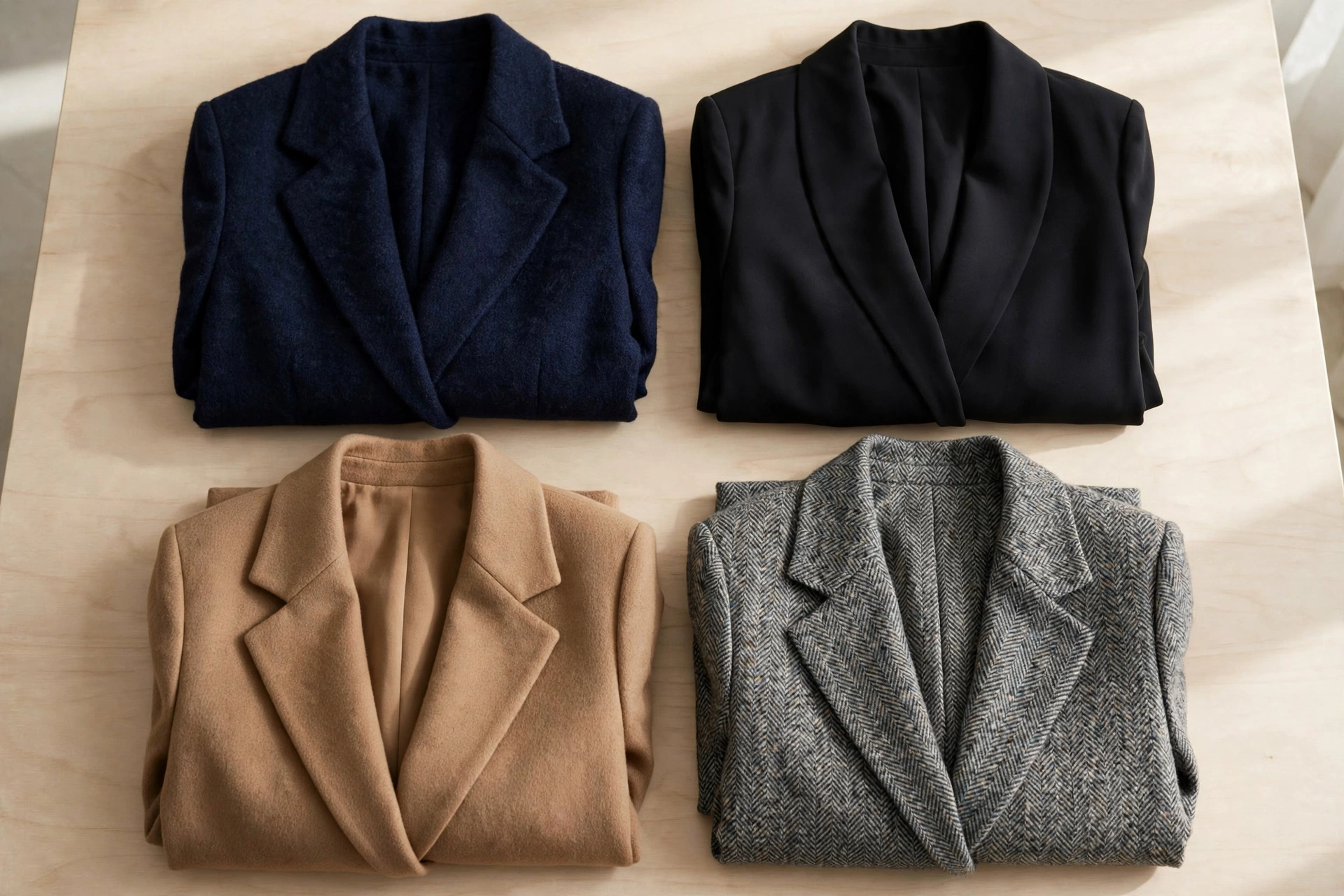
You don’t need a closet of blazers — you need the right three or four. Start here:
- Navy: the undisputed first blazer. More flattering than black near the face, appropriate everywhere, and it pairs with literally everything you own.
- Black: essential for evenings and formal settings. Choose a matte wool or crepe — shiny black fabric reads cheap.
- Camel or tan: softens every outfit, gorgeous with denim, cream, and white. The friendliest blazer color after 50.
- Grey or charcoal: the quiet professional — less stark than black, endlessly pairable.
- Cream or ivory: fresh for spring and summer, stunning with navy and tan.
On fabric: a wool blend with a touch of stretch is the gold standard for year-round wear — it holds its shape and resists wrinkling. Cotton twill and linen blends are excellent for warmer months; velvet and brocade earn their place for evening. What to avoid: thin, shiny polyester that wrinkles if you look at it — fabric quality is visible from across the room, and honest natural fibers are the foundation of the quiet luxury look on a budget.
Casual Outfit Formulas That Always Work
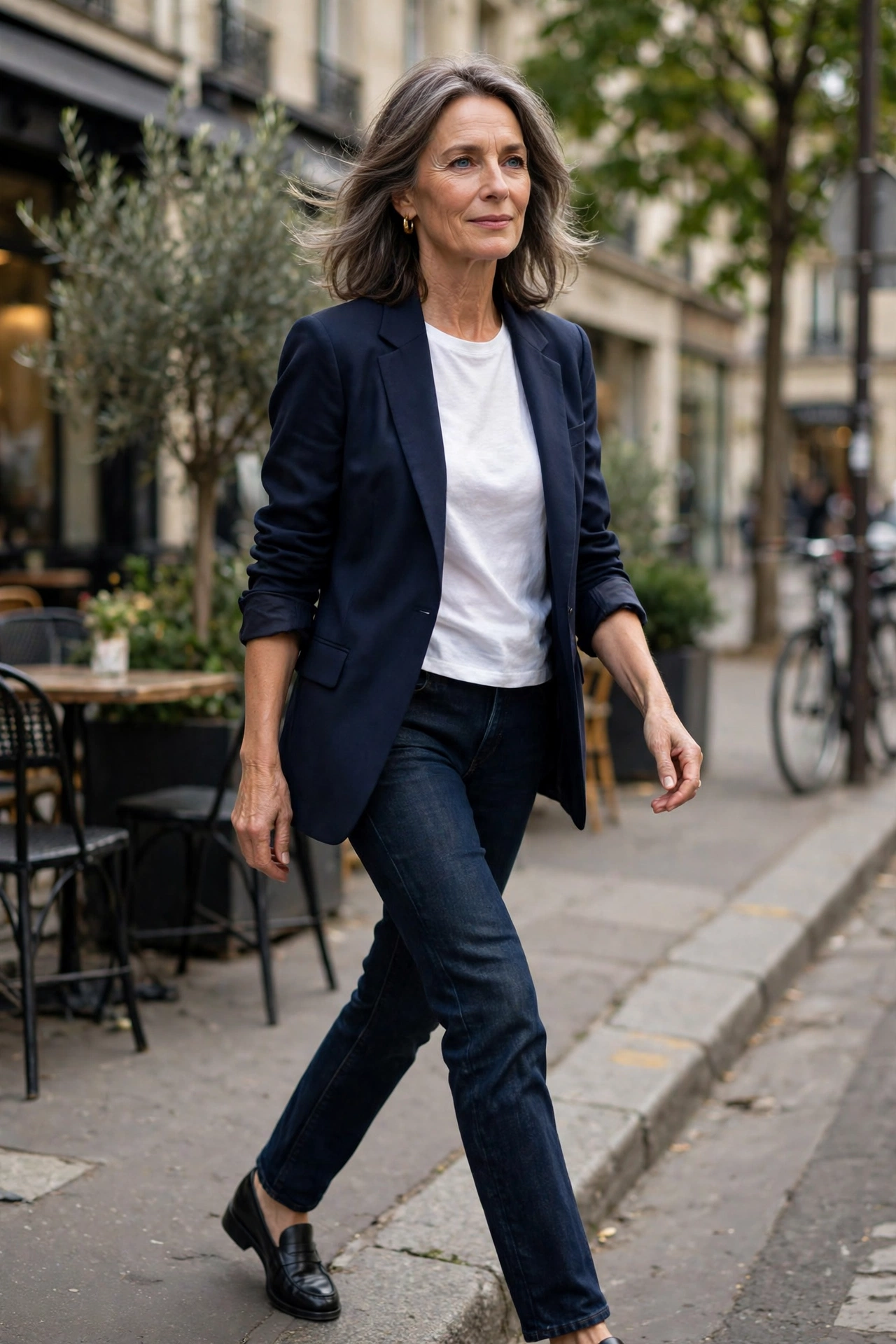
The modern way to wear a blazer is dressed down. These formulas never fail:
- Navy blazer + white tee + dark jeans + loafers: the uniform of effortlessly chic women everywhere. Push the sleeves to the elbow and leave the blazer open.
- Camel blazer + striped Breton top + straight-leg jeans + white sneakers: French-inspired, ageless, perfect for weekends.
- Black blazer + black knit top + black trousers: tonal dressing that looks expensive and elongates the figure.
- Linen blazer + simple tank + white jeans + sandals: summer polish without any stiffness.
- Plaid or tweed blazer + turtleneck + dark denim + ankle boots: autumn’s most reliable combination.
The casual blazer trick is contrast: pair the structure of the blazer with something relaxed underneath — that mix of polished and easy is what keeps the look modern rather than corporate.
Work Outfit Formulas: Polished Without the Uniform

For professional settings, the blazer is your authority piece:
- Blazer + silk blouse + tailored trousers: the classic, updated with a blouse in ivory or soft print instead of a stiff white shirt.
- Blazer + sheath dress: wear the blazer open over the dress — it frames the outfit and adds coverage for air-conditioned offices.
- Blazer + fine knit + midi skirt: softer than trousers, still completely professional.
- The full suit, broken up: wearing your suiting blazer with different trousers (and vice versa) doubles your wardrobe and looks more modern than the matched set every day.
At work, keep the blazer structured and fabrics matte; save relaxed, unstructured blazers for weekends — the distinction reads as intentional.
Evening and Dressy Formulas
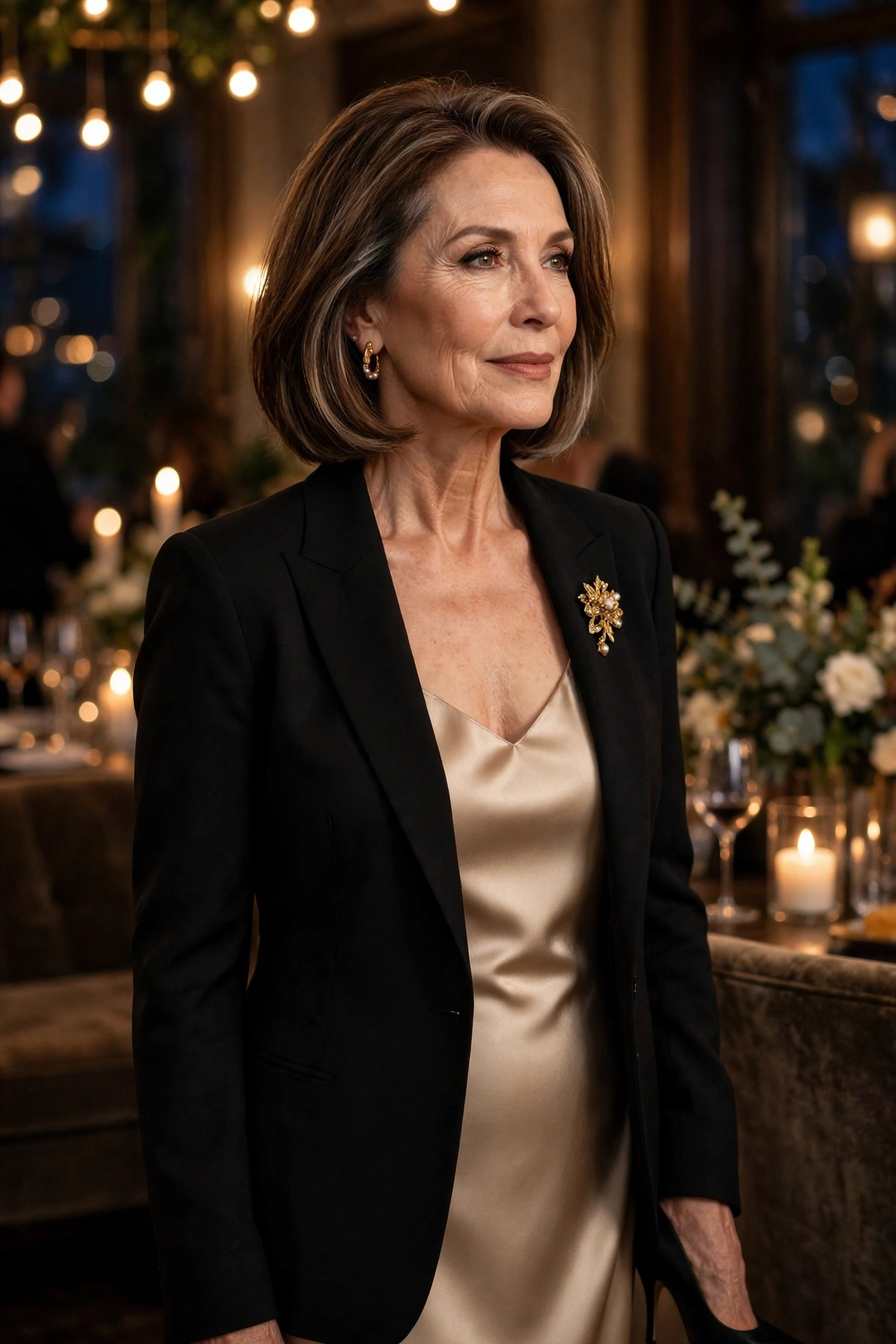
A blazer after dark is one of the chicest moves in the book:
- Black blazer over a slip dress: the contrast of tailored and fluid is pure evening elegance. Add heels and one striking piece of jewelry.
- Velvet blazer + silk camisole + wide-leg trousers: rich texture does the talking — keep everything else simple.
- Cream blazer + black dress: the light-over-dark pairing brightens your face in evening lighting.
- Blazer as the dress: a longer, well-fitted blazer worn closed over bare legs with heels works for a bold night out — keep the hem at a modest length and the styling minimal.
For evening, a brooch on the lapel is the perfect finishing touch — it adds personality and polish in one small gesture, and it never looks dated when the blazer itself is classic.
Blazer Mistakes That Age You
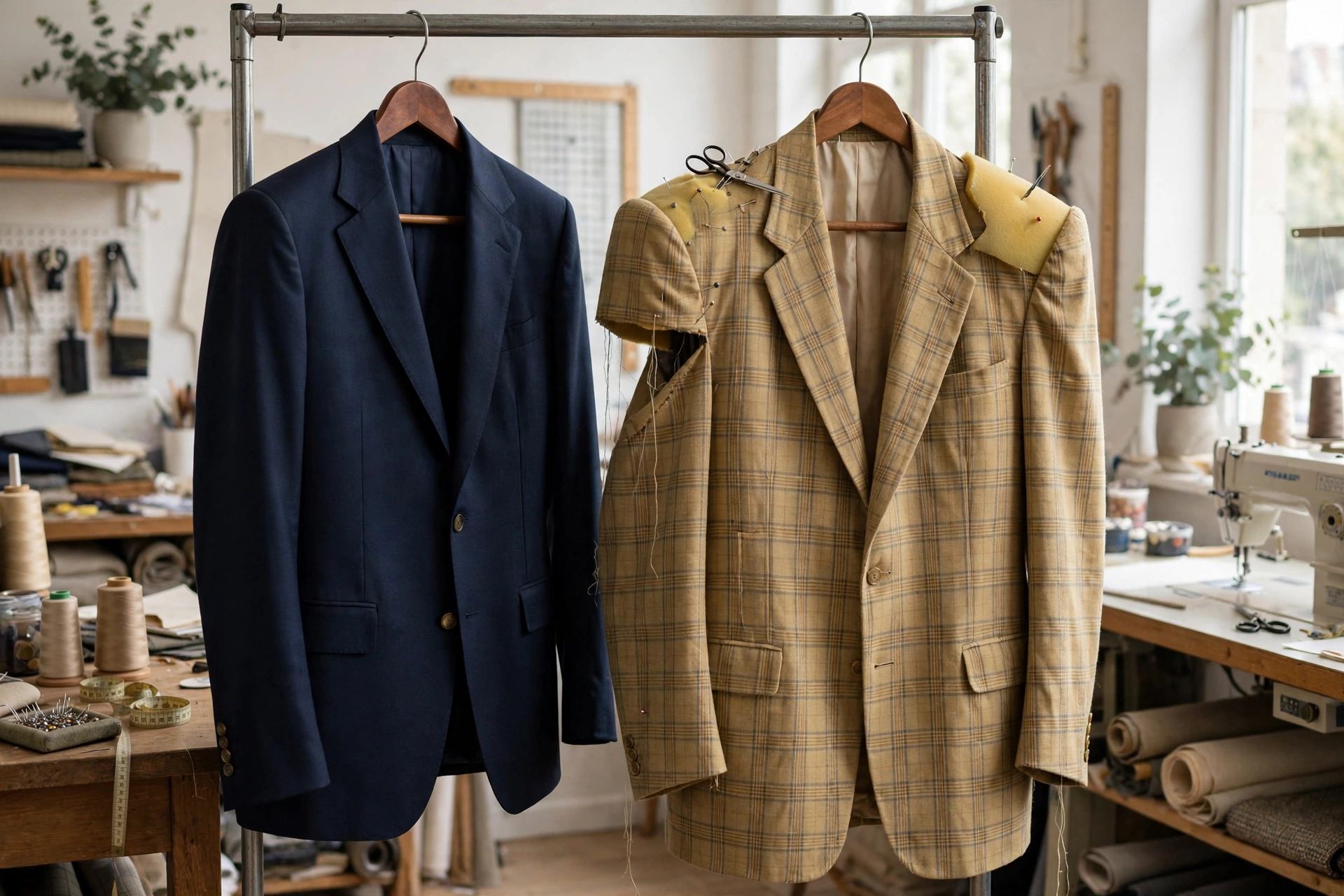
- The 1980s shoulder pad: oversized pads and boxy cuts scream a bygone decade. Modern blazers have soft, natural shoulders — if yours could double as football gear, retire it.
- Too long and shapeless: a blazer that hangs past the mid-thigh with no waist definition swallows your figure. Some shape — even slight waist suppression — keeps it current.
- Fastening every button: on a three-button blazer, the bottom button stays undone; on a two-button, fasten only the top. Buttoning everything looks stiff and dated.
- Wearing it like a uniform: the same black blazer with the same trousers every day reads as a rut, not a signature. Vary colors, textures, and pairings.
- Ignoring wear: shiny elbows, frayed cuffs, and missing buttons undo all the polish a blazer provides. Inspect yours in good light twice a year.
- Wrong proportions underneath: a long blazer over a long tunic over wide trousers erases your shape entirely. Balance volume: structured on top, streamlined below — or vice versa.
Tailoring, Care and the Finishing Details
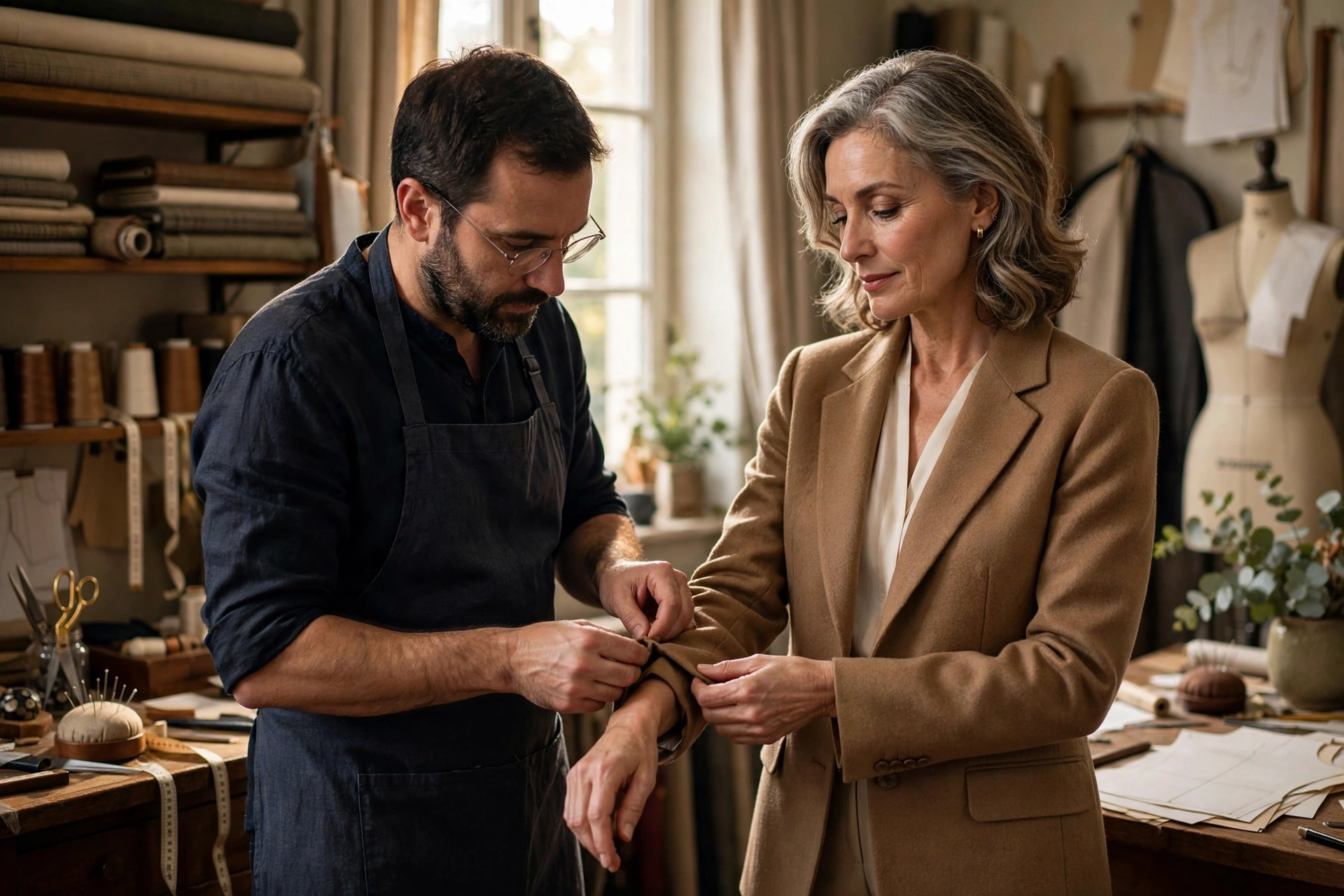
A blazer rewards a little maintenance more than almost any other garment. The alterations worth paying for: shortening sleeves, taking in the waist slightly, and hemming the length. Together they cost far less than a new blazer and make an ordinary one look custom.
For daily care: steam rather than iron (direct heat crushes lapels), brush wool blazers with a clothes brush to lift dust and revive the nap, and always hang blazers on wide, shaped hangers — never wire ones, which dent the shoulders. Let a blazer rest a day between wears so the fibers recover, and dry clean sparingly; too-frequent cleaning wears fabric out faster than actual wearing. Small habits — polishing buttons, checking the lining, replacing a loose button promptly — keep a good blazer looking expensive for years.
FAQs
How should a blazer fit a woman over 50?
Shoulder seams at the shoulder bone, length hitting at or just below the hip, sleeves showing a sliver of wrist, and enough ease to close the middle button without pulling. If you can’t move freely, it’s the wrong size.
Can I wear a blazer casually after 50?
Absolutely — that’s the modern way to wear one. Pair a structured blazer with jeans, a simple tee or knit, and loafers or sneakers. Leave it open, push up the sleeves, and let the contrast between tailored and relaxed do the work.
Single or double-breasted after 50?
Single-breasted is the safest, most versatile choice — it flatters every figure. Double-breasted can look fantastic but adds width across the torso, so it suits taller, leaner frames best. When in doubt, go single.
What blazer length is most flattering over 50?
Hip-length — ending at or just below the hip bone — suits most women. It covers the hip, elongates the leg, and works with trousers, skirts, and dresses. Petite women can try a slightly cropped cut; taller women can carry a longer line.
Can petite women wear blazers?
Yes, with attention to proportion. Choose a slightly cropped or hip-length blazer, smaller lapels, and a single button. Avoid oversized or extra-long styles that overwhelm a smaller frame, and always hem the sleeves.
How many blazers does a woman over 50 need?
Three covers nearly everything: navy for everyday, black for evenings and formal occasions, and camel or grey for variety. Add a seasonal texture — linen for summer, tweed or velvet for winter — only once the core three are in place.
Are oversized blazers okay after 50?
In moderation. A slightly relaxed, boyfriend-style blazer worn open over slim trousers or a dress can look modern and chic. But head-to-toe oversized — big blazer, wide trousers, chunky shoes — tends to swamp a mature figure. Keep one element streamlined.
The bottom line: the blazer is the closest thing to a style shortcut after 50. Get the fit right, own the essential colors, wear it open over the simplest things you own — and let the structure do the talking. Few pieces reward so little effort with so much polish.