
Few garments have earned the staying power of the trench coat. Created for British officers in the early 1900s, immortalized by Audrey Hepburn in Breakfast at Tiffany’s and Meryl Streep in Kramer vs. Kramer, the trench has moved through a century of fashion without ever looking dated. Its secret is balance: structured enough to look polished, relaxed enough to feel effortless — a combination that happens to flatter women at every age, and especially after 50.
After 50, the trench coat does something few pieces can: it makes getting dressed simpler. Thrown over jeans, tailoring, or a dress, it adds instant polish while skimming gracefully over the body. This guide is your complete reference — how to find a flattering fit, the classic and modern styles worth knowing, outfit formulas for work, weekends, and evenings, colors beyond beige, and how to care for a coat designed to serve you for decades.
Why the Trench Coat Never Ages

The trench endures because its design solves real problems. The double-breasted front and storm flap were engineered against wind and rain; the belt defines the waist; the vented back allows movement; the deep pockets are genuinely useful. Every detail earns its place, which is why the silhouette has barely changed in a hundred years. Trends borrow from the trench; the trench borrows from no one.
On a woman over 50, those same details do quiet aesthetic work. The defined waist creates shape without clinging. The knee-skimming length elongates the leg line. And because the trench is a recognized classic — one of the true timeless fashion pieces every woman should own — it signals confidence rather than effort. You never look like you are trying too hard in a trench.
It is also one of the most photographed coats in fashion history: it looks good in motion, in rain, half-undone, or belted tight.
Finding Your Perfect Fit
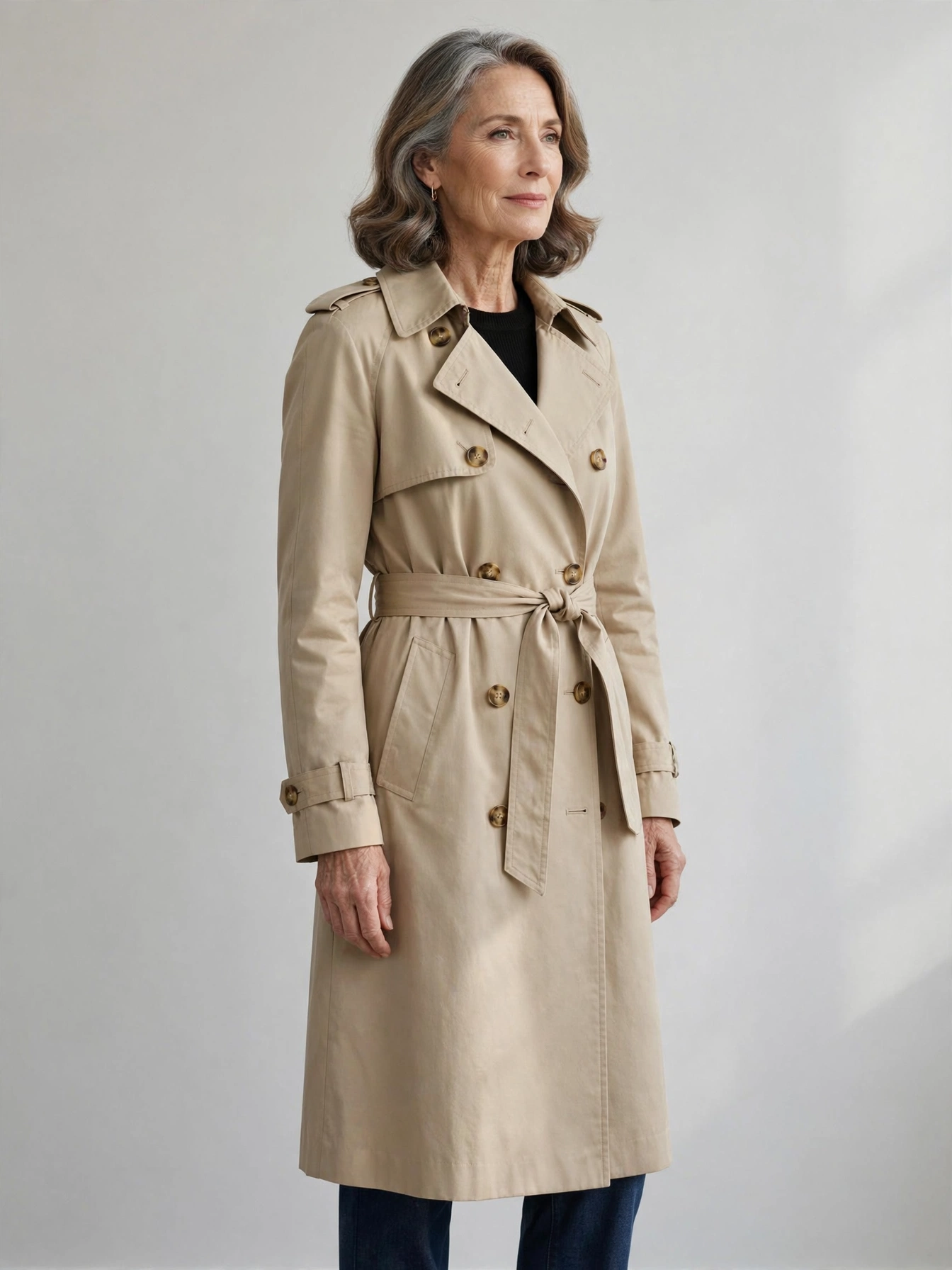
Fit is where a trench succeeds or fails, and after 50 the details matter more than the label. A trench should skim, not squeeze; define, not constrict. Before you fall for a color or brand, run through these fit checkpoints — they separate a coat you will wear for a decade from one that lives in the back of the closet.
- Length. Knee-length — just above or just below the knee — is the most versatile and flattering on most figures. Longer cuts suit taller women; petite women should choose a hem that hits mid-thigh to knee to avoid being overwhelmed.
- Shoulders. The shoulder seam should sit exactly at the edge of your shoulder — no drooping, no pulling. You should be able to layer a blazer underneath without strain across the back.
- Belt. The belt should cinch at your natural waist without gaping. If the coat blouses excessively above the belt, try a smaller size or a slimmer-cut style.
- Sleeves. Sleeves should end at the wrist bone, showing a sliver of cuff. The straps on the cuffs are decorative heritage details — keep them fastened for a cleaner line.
When trying one on, move in it: sit down, raise your arms, button it fully. A trench that feels perfect standing still but binds when you move will spend its life on a hanger. Comfort is not a compromise at this stage of life — it is the entire point.
Classic vs Modern Trench Styles

The classic trench — double-breasted, storm flap, epaulettes, belted, in honey beige — remains the benchmark, and honestly it is the version most women over 50 will wear the most. But modern interpretations have earned their place too, and knowing the difference helps you choose wisely — or lets you confidently own both.
The classic means a ten-button double-breasted front, wide lapels, a back vent, and knee length. It pairs with everything and never looks wrong. The modern trench plays with the formula: single-breasted fronts, cropped or midi lengths, relaxed oversized cuts, deconstructed shoulders without epaulettes, sometimes in technical fabrics. A relaxed modern trench in a neutral tone can look wonderfully current over wide-leg trousers — the silhouette does the talking.
If you own one trench, make it classic. If you own two, let the second be modern — the classic covers polish, the modern covers personality.
What to Wear With a Trench Coat: For Work

The trench is a working woman’s secret weapon — it finishes a professional outfit in the time it takes to shrug it on. For the office, think of it as the final tailored layer: it should echo the polish of what is underneath rather than fight it.
- Navy blazer, white shirt, and tailored charcoal trousers with loafers — trench worn open
- Black sheath dress with pointed flats — trench belted over it
- Cream knit with camel wide-leg trousers and low block heels — trench in a tonal beige
Keep the palette calm: the trench already adds structure, so let one element — a silk scarf, a good bag — provide the interest. This is also where a trench earns its place in a well-edited fall capsule wardrobe, working across nearly every combination you own.
Weekend Casual Trench Looks

Off duty, the trench relaxes beautifully. The trick is contrast: pair its crisp structure with soft, casual pieces and you get that effortless weekend energy without looking overdressed for the farmers’ market.
- Striped Breton top, white or medium-wash jeans, and white sneakers — trench open with sleeves pushed up
- Grey cashmere sweater, black leggings, and suede ankle boots — trench belted loosely
- Chambray shirt with olive chinos and loafers for an easy tonal look
Weekend is the time to wear the trench undone — open, collar up, belt tied loosely at the back. A little insouciance is the whole point.
Evening Trench Styling
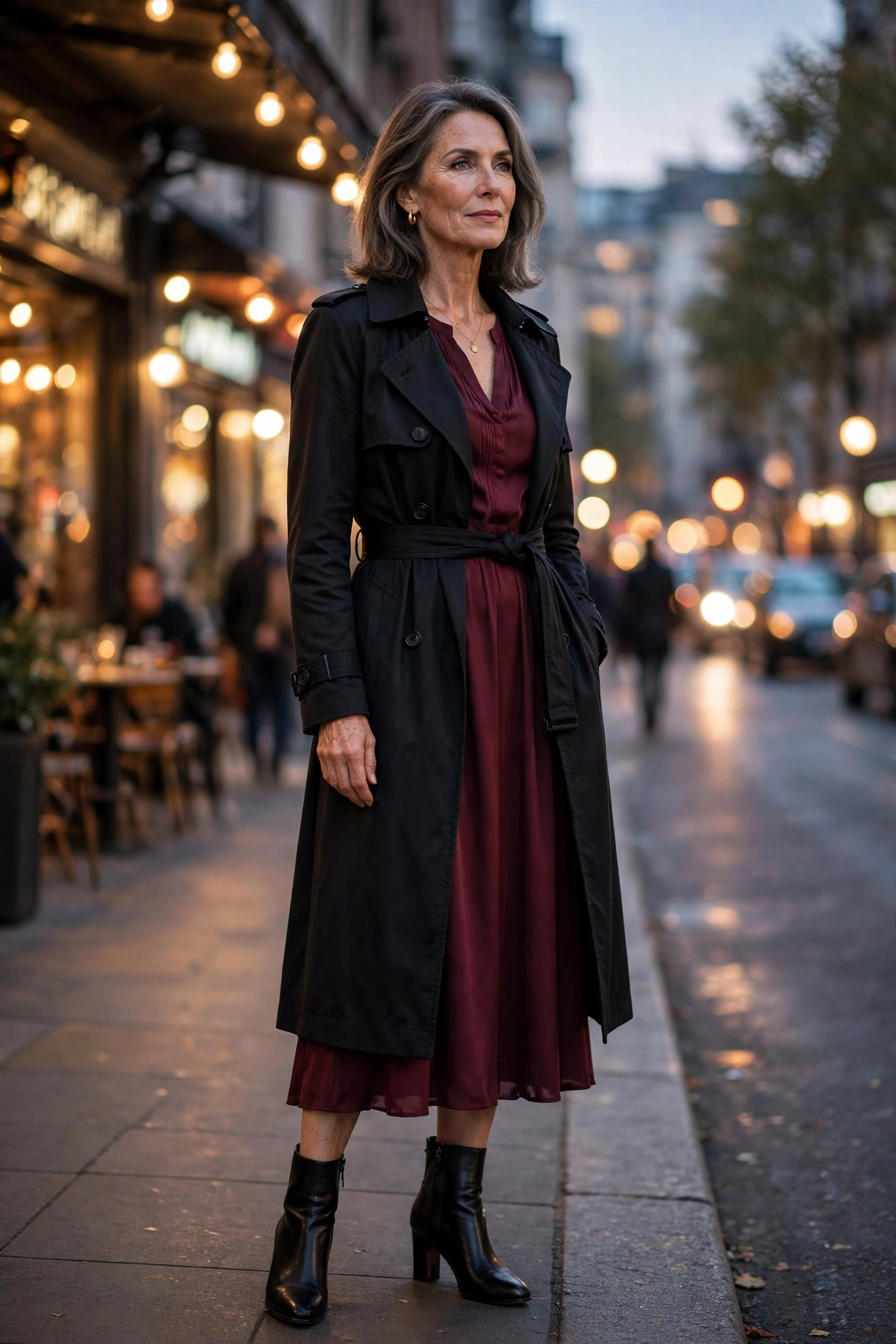
A trench over evening wear is one of fashion’s great quiet-luxury moves — the contrast between utilitarian outerwear and something beautiful underneath never fails. After 50, it is also practical: evenings get chilly, and a trench is far more elegant than shivering.
Belt a dark trench — black, navy, or deep olive — over a midi dress in a rich tone like burgundy or forest green, and add heeled boots. Or wear a beige trench open over an all-black evening look; the light-dark contrast is striking. For the boldest move, belt the trench itself and wear it as the dress: closed, cinched, with bare legs and heels — a runway look that works beautifully at any age when the fit is right. The whole effect channels the quiet luxury look: expensive without a logo in sight.
Colors Beyond Beige
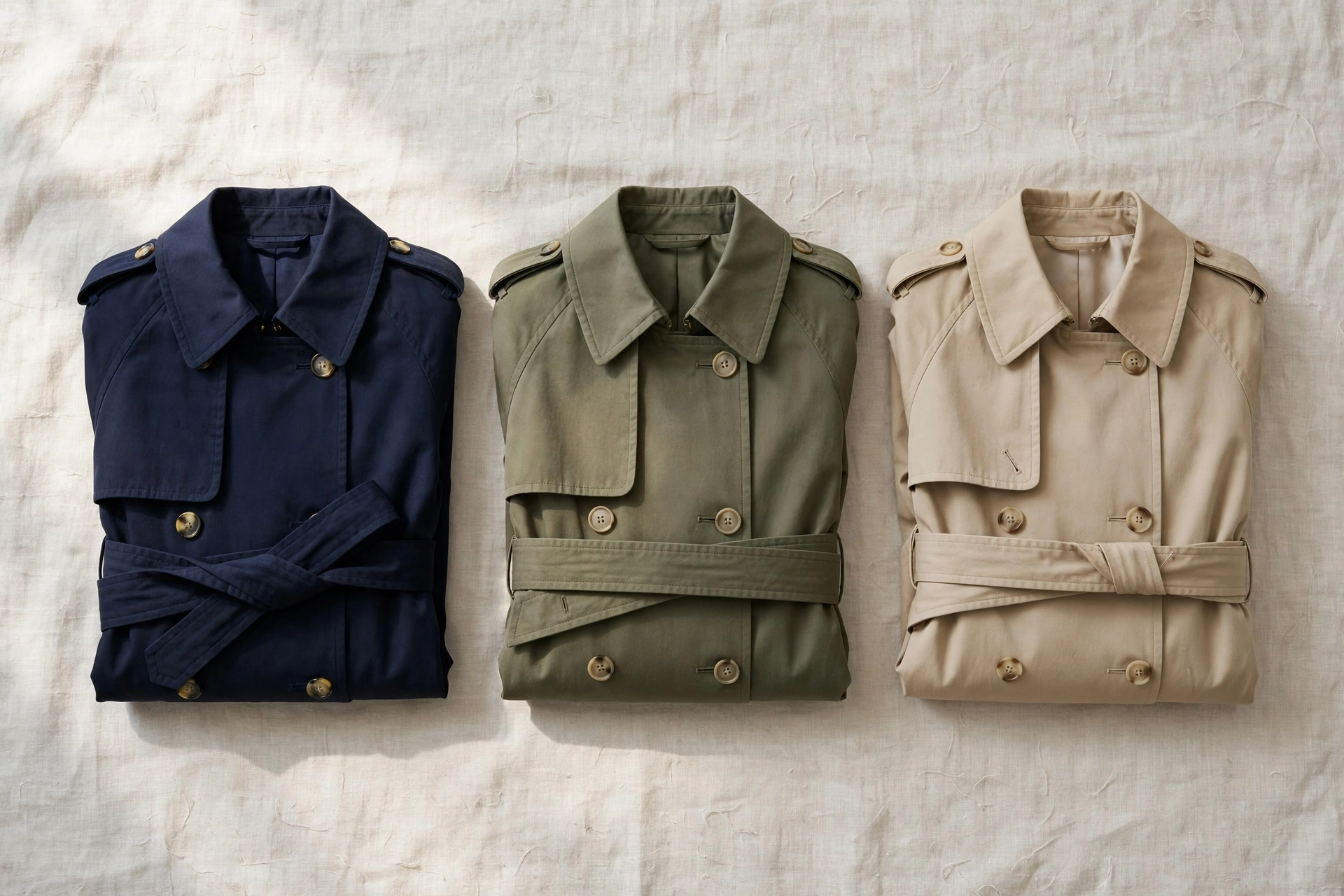
Honey beige is the icon, and if you own one trench it should probably be beige. But the second — or the bolder first — trench opens a world of color, and some shades are arguably more flattering against mature skin than classic tan.
- Navy: softer than black, pairs with everything beige pairs with, and wonderful with silver hair.
- Olive: the earthy neutral that loves denim, cream, and brown — endlessly wearable.
- Black: the evening trench — dramatic, slimming, and perfect over dresses.
- Stone/greige: lighter than beige and elegant against fair skin, with a modern feeling.
- Burgundy/oxblood: the statement neutral — rich, seasonal, and unforgettable.
When choosing, hold the color near your face in natural light. The right shade brightens you; the wrong one casts shadows. Trust the mirror over the trend report.
Caring for Your Trench Coat
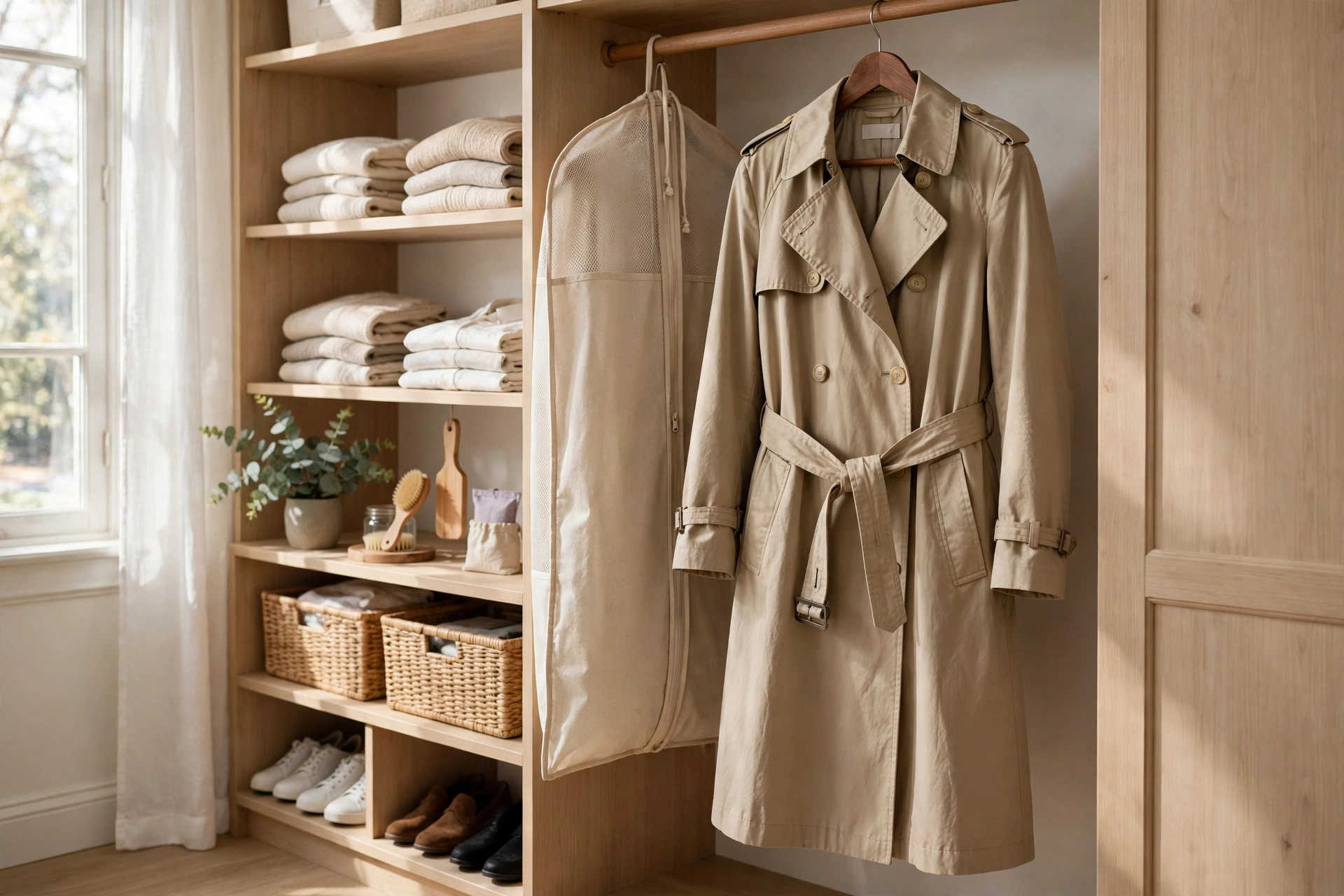
A good trench is an investment, and like all investments it rewards maintenance. Most trenches are cotton gabardine — a tightly woven, naturally water-resistant fabric — and caring for it properly keeps that crisp structure for years.
- Hang on a wide, sturdy hanger to preserve the shoulder line; never fold a trench for long-term storage.
- Spot-clean small marks promptly with a damp cloth; have the coat professionally cleaned once a season.
- Re-proof water resistance every year or two with a spray designed for cotton gabardine.
- Store in a breathable garment bag (never plastic) through summer, with the belt loosely tied.
- Steam out wrinkles rather than ironing directly — or hang the coat in a steamy bathroom.
Address loose buttons and fraying hems promptly; a ten-minute repair at a good tailor keeps a decade-old coat looking intentional rather than tired.
Fabric and Quality: What to Look For
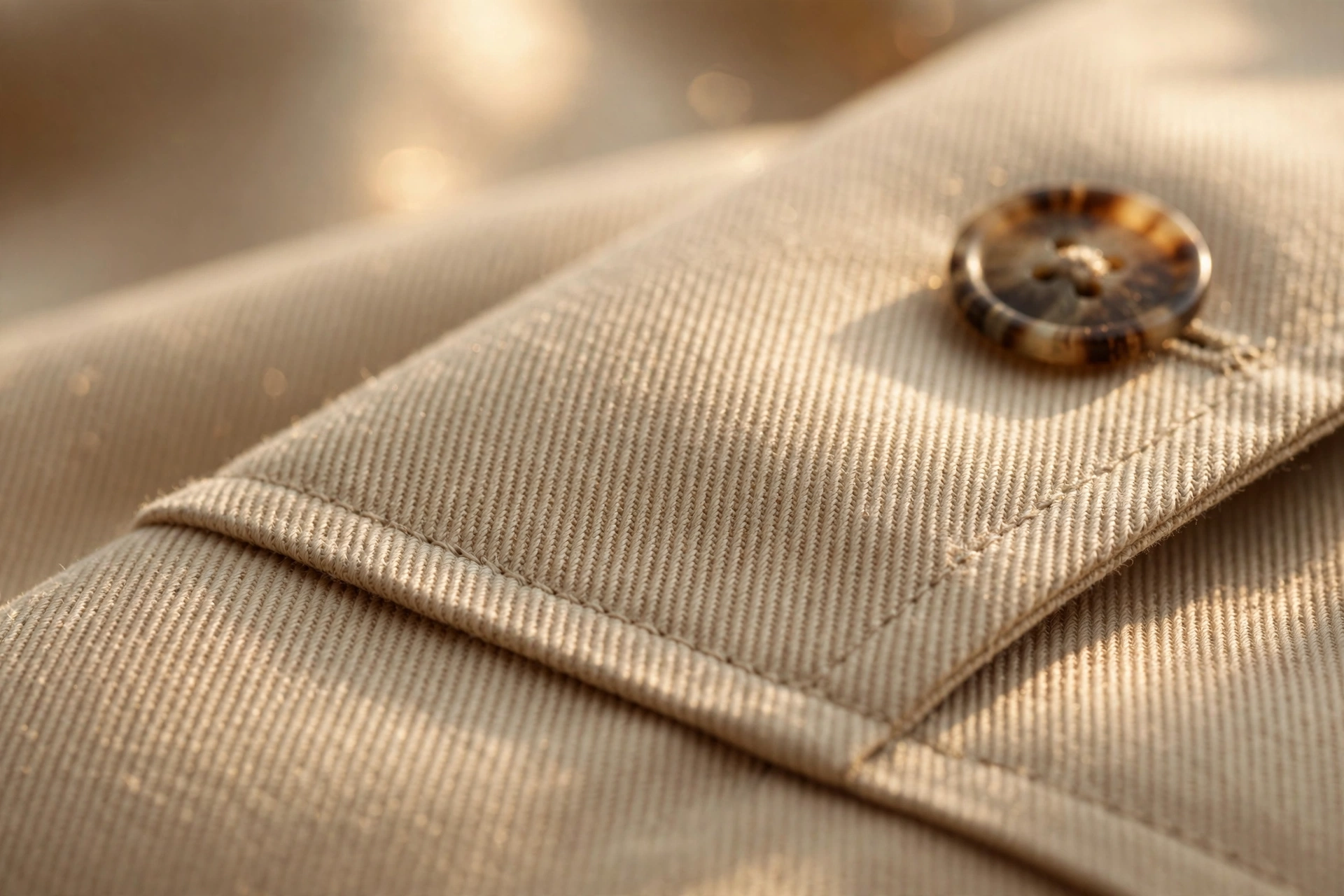
Not all trenches are equal, and the differences show with wear. The benchmark is cotton gabardine — a dense twill weave that sheds rain while staying breathable. A high cotton content with a tight, even weave is what you are paying for in a quality trench.
- Feel the fabric: it should feel substantial and smooth with a slight sheen — never papery or plasticky.
- Check the seams: straight, even stitching with no puckering, especially at the shoulders and storm flap.
- Inspect the lining: a quality trench has a smooth, fully finished lining, often check-patterned in heritage brands.
- Test the buttons: real horn or corozo buttons feel cool and weighty; plastic feels light and looks shiny.
- Examine the belt: it should be cut from the same fabric, with clean edges and sturdy buckle hardware.
A well-made trench softens beautifully with age, while cheap ones wrinkle permanently and lose their shape within a season. Buy the best construction your budget allows; cost-per-wear makes it the economical choice.
Trench Coat FAQs
What length trench coat is most flattering after 50?
Knee-length — hitting just above or just below the knee — suits the widest range of figures. It elongates the leg, works over both trousers and dresses, and never overwhelms. Petite women should favor the shorter end of that range; taller women can carry a below-knee or midi length beautifully.
Should I size up in a trench coat to layer underneath?
Only if you plan to wear thick knits beneath it regularly. Otherwise, buy your true size: a trench is cut with layering ease built in, and sizing up usually means drooping shoulders and a belt that cannot cinch properly. Always try it on over a blazer to check.
Can petite women wear trench coats without looking swamped?
Absolutely — choose a single-breasted style, a hem no longer than knee-length, narrower lapels, and a slimmer belt. Avoid oversized cuts and below-knee lengths, which shorten the leg line. A cropped trench that hits at the hip is another excellent petite option.
Is a trench coat warm enough for winter?
A classic unlined or lightly lined trench is a fall and spring coat, not deep-winter armor. For colder days, layer a warm knit underneath and add a scarf and gloves — or look for a trench with a removable quilted liner, which extends its season considerably.
How do I belt a trench without adding bulk at the waist?
Tie the belt with a simple loose knot at the back for a clean front, or use a half-knot at the side rather than a full bow. Keep the knot flat and low-profile, and make sure the coat is not blousing excessively above the belt — that usually means the size is too big.
What shoes work best with a trench coat?
Almost everything: loafers and ballet flats for polish, white sneakers for casual weekends, ankle boots for fall, knee-high boots for winter, and heeled pumps or heeled boots for evening. Match the shoe’s formality to the occasion, not to the coat — the trench adapts.
How do I keep my trench coat from wrinkling?
Hang it immediately after wearing, never scrunch it into a bag, and choose cotton gabardine over cheap poly-blends, which wrinkle permanently. A handheld steamer removes creases in minutes; in a pinch, hang the coat in a steamy bathroom and let the moisture relax the fabric.
The bottom line: the trench coat is that rare garment that asks almost nothing and gives a great deal — polish without effort, structure without stiffness, and a silhouette that has flattered women for a century. Choose your fit carefully, wear it everywhere, care for it well, and it will return the favor for decades.