
Beauty marks and moles are a normal part of many people’s skin. Some people love theirs and consider them a signature feature. Others want them gone, whether for cosmetic reasons or because a dermatologist has flagged one as worth watching.
Whatever your reason, the method you choose matters. The wrong approach can leave scarring, uneven skin tone, or even hide a health problem that needed attention. The right approach, guided by a licensed professional, gives you safe, predictable, and lasting results.
This guide walks through everything you need to know: what beauty marks actually are, the safest removal methods available today, what recovery looks like, how much it might cost, and which “quick fix” options you should skip entirely. Every recommendation here reflects standard dermatology practice, so you can make an informed decision about your skin.
What Are Beauty Marks and Moles, Really?
“Beauty mark” and “mole” are often used interchangeably, but they’re not identical.
- A beauty mark is usually flat, small, and darker than the surrounding skin. Many people see it as a distinctive feature rather than something to fix.
- A mole can be flat or raised, and it may have texture, hair, or a slightly different shape than a typical beauty mark.
Both are made of clusters of pigment-producing cells, and the vast majority are completely harmless. Still, dermatologists recommend keeping an eye on any spot that changes in size, shape, or color, or that starts to itch, bleed, or feel tender. That kind of change is a signal to get it checked, not necessarily a sign of danger, but worth a professional look either way.
Once a mole or beauty mark has been evaluated and deemed safe to remove for cosmetic reasons, you can move on to choosing a removal method.
Professional Methods for Beauty Mark Removal
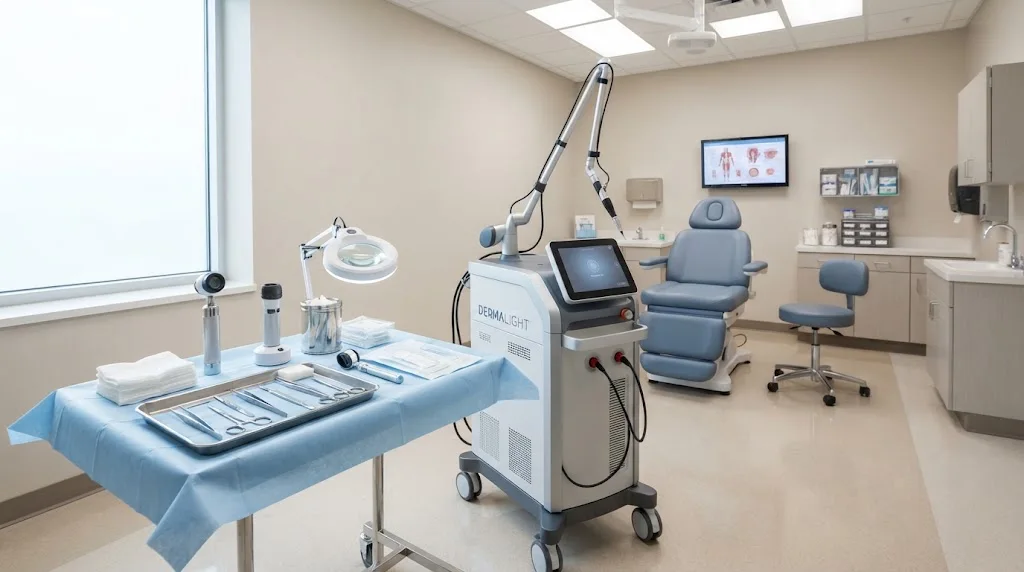
Laser treatment, surgical excision, and shave excision are the gold-standard options for removing beauty marks. Each one is precise, performed under sterile conditions, and designed to minimize scarring and downtime. Here’s how they compare.
1. Laser Removal
Laser removal uses focused light energy to break down pigment in the mole without harming the skin around it. It works especially well on small, flat, or darker marks.
Why people choose it:
- Minimal discomfort during the procedure
- Short recovery window, often just a few days
- Lower risk of visible scarring compared to cutting methods
Most patients need more than one session for complete results, especially with deeper pigmentation, so ask your provider how many treatments to expect.
2. Surgical Excision
Surgical excision removes the mole along with a small margin of healthy tissue around it, then closes the area with stitches. It’s the go-to method for moles that extend beneath the skin’s surface.
What to expect:
- Performed under local anesthesia, so you’re awake but numb
- Produces permanent results in a single session
- The removed tissue can be sent for lab testing, which is useful if there’s any question about the mole’s nature
Because stitches are involved, this method leaves a small linear scar, but a skilled dermatologist will place it to heal as discreetly as possible.
3. Shave Excision
Shave excision is designed for raised moles. A dermatologist uses a sterile blade to gently shave off the raised portion, leveling it with the surrounding skin.
What makes it appealing:
- Fast, typically done in minutes
- Little to no pain during the procedure
- Leaves only a faint mark that usually fades within weeks to months
Because there’s no cutting below the skin’s surface, this method skips stitches entirely and involves very little downtime.
4. Cryotherapy and Electrocautery
Cryotherapy freezes the mole using liquid nitrogen, while electrocautery uses a controlled electric current to remove it with heat. Both are best suited to small, benign spots.
These methods require a precise, experienced hand. Done incorrectly, they can cause pigmentation changes or irritation, so they should only be performed by a trained professional, never attempted at home.
Why At-Home Removal Kits Are Risky
Mole removal pens and creams are marketed as convenient, affordable alternatives to a dermatologist visit. Dermatologists, however, consistently advise against them, and for good reason.
- Pens apply electric or plasma energy to the skin, which can cause burns or uneven results without medical training.
- Creams often rely on acids or bleaching agents that irritate the skin and rarely fully remove the mole’s root cells.
- Results are unpredictable. Many users see partial fading rather than true removal, followed by scarring or discoloration.
- You lose the safety check. A dermatologist visit doubles as a screening opportunity. At-home removal skips that step entirely, which matters if the mole ever needed a closer look.
If cost is the concern, ask a dermatology clinic about payment plans or simpler in-office options like shave excision, which is often more affordable than people expect.
How to Remove Flat Moles From the Face Permanently
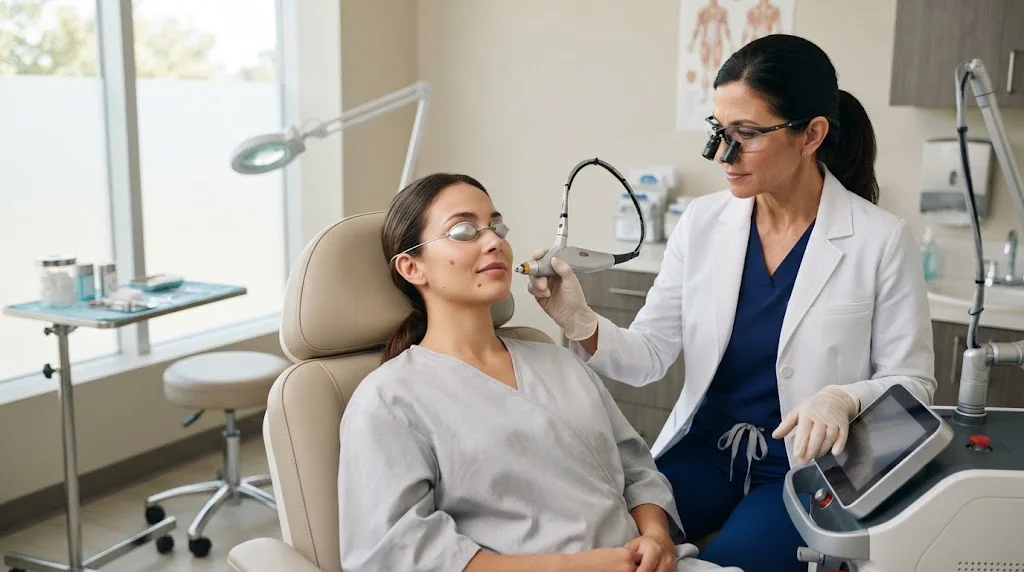
Facial moles need extra care because the skin here is thinner and more visible than on other parts of the body.
- Laser removal is usually the first choice for flat facial moles. It targets surface pigment with minimal discomfort and a quick recovery, making it well-suited to sensitive facial skin.
- Surgical excision is reserved for deeper moles that a laser can’t fully reach. It removes the mole completely and allows the tissue to be examined if needed.
Both procedures should be done under sterile, controlled conditions. A board-certified dermatologist will factor in your skin tone, mole depth, and healing tendencies (some people scar more easily than others) before recommending a method. That personalized approach is exactly why professional care outperforms any generic at-home product.
Post-Treatment Care and Healing Tips
Aftercare is just as important as the procedure itself. Skipping it can undo an otherwise well-done treatment. Here’s what dermatologists typically recommend:
- Clean the area gently. Use a mild, fragrance-free cleanser and lukewarm water. Avoid scrubbing.
- Keep it moisturized. A healing ointment helps the area stay hydrated and lowers the risk of infection while new skin forms.
- Protect it from the sun. Once the area has healed, apply a broad-spectrum sunscreen daily. Sun exposure on healing skin can cause dark spots that take months to fade.
- Skip makeup and harsh products. Hold off on exfoliants, alcohol-based products, and makeup on the treated spot until your dermatologist gives the go-ahead.
- Watch for warning signs. Redness, swelling, pus, or pain that gets worse instead of better is a reason to call your dermatologist right away.
Most people can return to their normal routine within a week or two, though full fading of any residual mark can take several months.
Possible Risks, Side Effects, and Safety Precautions
No skin procedure is entirely risk-free, but knowing what to expect makes the recovery process much less stressful.
| Concern | What to Expect | How to Handle It |
|---|---|---|
| Redness or swelling | Mild irritation right after treatment | Apply a soothing, fragrance-free cream and avoid touching the area |
| Pigmentation changes | Temporary lightening or darkening of the skin | Wear sunscreen daily while healing |
| Infection | Possible if aftercare instructions aren’t followed | Keep the area clean, dry, and covered as directed |
| Scarring | Rare, more likely with deeper moles | Follow aftercare closely and ask about scar-reducing gels if needed |
| Overall safety | Best minimized by choosing the right provider | Only use board-certified dermatologists, never at-home devices |
What Affects the Cost of Beauty Mark Removal?
Prices for mole and beauty mark removal vary widely depending on several factors. Understanding them ahead of time helps you budget and choose a clinic with confidence.
- Treatment type: Laser removal, shave excision, and surgical excision are each priced differently based on time, tools, and technique.
- Size and depth of the mole: Larger or deeper moles take more time and precision, which raises the cost.
- Clinic reputation and technology: Established dermatology practices with advanced equipment often charge more, but typically offer more consistent results.
- Location: Clinics in major cities tend to cost more than those in smaller towns or suburban areas.
- Insurance coverage: If a dermatologist determines the removal is medically necessary rather than purely cosmetic, insurance may cover part or all of the procedure.
It’s worth calling a few local clinics for consultations. Many offer a free or low-cost first visit where they can give you an accurate quote based on your specific mole.
What Real Patients Say: Insights From Online Communities
Online forums and discussion boards offer a candid look at what mole removal is really like, beyond the clinical explanations.
Common themes that come up again and again:
- People with flat or darker marks often need more than one laser session to see full results.
- Mild redness, small scabs, or temporary marks are common in the days following treatment, but they typically fade within a few weeks.
- Cost and sensitivity vary a lot depending on location and the clinic’s experience level.
- People prone to keloid scarring (thick, raised scars) are advised to mention this to their dermatologist before choosing a method, since some techniques carry more scarring risk than others.
- Overall, most people report smoother skin and more even tone once healing is complete, along with a boost in confidence.
These firsthand accounts are a helpful supplement to professional advice, but they shouldn’t replace an actual consultation, since everyone’s skin responds a little differently.
Final Thoughts
Removing a beauty mark or mole is a personal decision, but how you go about it shouldn’t be left to chance. Professional treatments like laser removal, surgical excision, and shave excision give you precision, safety, and results that actually last. At-home pens and creams might look tempting, but they carry real risks, from scarring to incomplete removal, without the safety net of a professional evaluation.
Before scheduling any procedure, talk to a board-certified dermatologist. They can confirm the mole is safe to remove, recommend the best method for your skin type, and walk you through recovery so you know exactly what to expect.
Have you gone through beauty mark removal, or are you considering it? Share your experience in the comments. It might help someone else feel more confident about their next step.
Frequently Asked Questions
Can I remove moles naturally in one day?
No. There’s no scientifically proven way to safely remove a mole in a single day. Any product or method that claims otherwise should be treated with caution. Professional treatment remains the only reliable, safe option.
What does Vaseline do to moles?
Vaseline (petroleum jelly) simply moisturizes and protects the skin. It’s often used after a mole has been professionally removed to support healing, but it does not remove moles on its own.
What ointment should I use after mole removal?
Dermatologists typically recommend a gentle antibiotic or healing ointment to prevent infection and support recovery. Always follow the specific product and instructions your dermatologist provides, since needs can vary by skin type and procedure.
This article is for general informational purposes and is not a substitute for professional medical advice. Always consult a licensed dermatologist before pursuing any mole or beauty mark removal treatment.