
Thinning hair changes more than your hairstyle. It changes where you part your hair, how you angle yourself in photos, and how confident you feel walking out the door. Serums and thickening sprays can help for a while, but they only cover so much. Eventually, the scalp still shows through.
Scalp micropigmentation (SMP) is a non-surgical solution that reduces scalp visibility and creates the look of fuller, denser hair. It doesn’t replace your hair. It works with what you already have.
There’s no surgery, no daily maintenance routine, and no downtime to plan around. Once healed, the results can last for years with only occasional touch-ups.
This guide breaks down exactly how SMP works for women, who benefits most from it, what each session involves, and how to choose a practitioner you can trust.
What Is Scalp Micropigmentation?
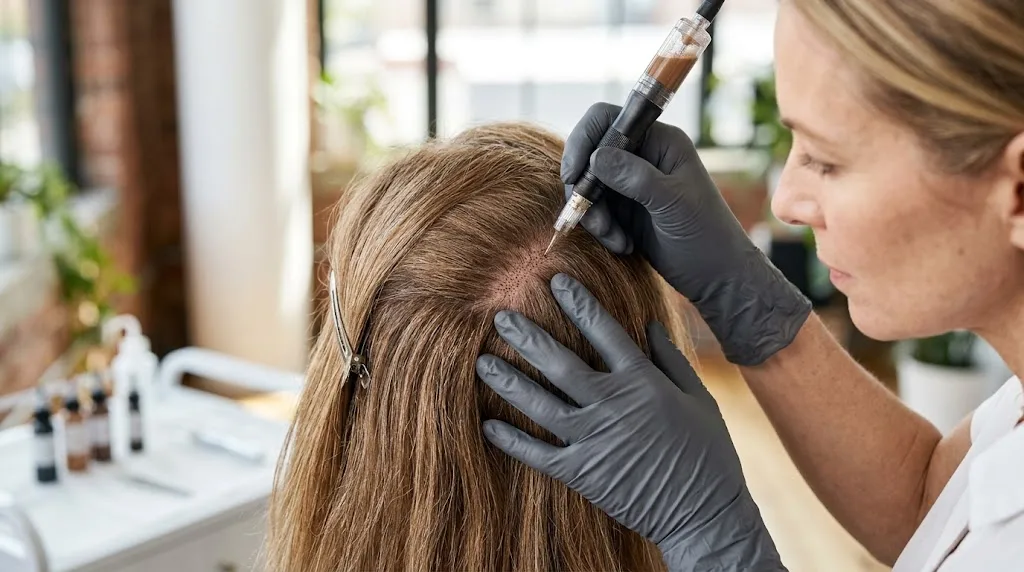
Scalp micropigmentation is a cosmetic technique that uses tiny pigment deposits to mimic the look of real hair follicles on the scalp.
A specialized needle deposits pigment just under the top layer of skin. Depending on the goal, this can create the appearance of a fuller hairline, added density, or an evenly shaved look.
SMP is often compared to a tattoo, but the two aren’t the same. SMP uses finer needles, shallower placement, and pigments specifically formulated to hold their tone instead of fading into blue or green undertones the way traditional tattoo ink can.
How SMP for Women Differs From SMP for Men
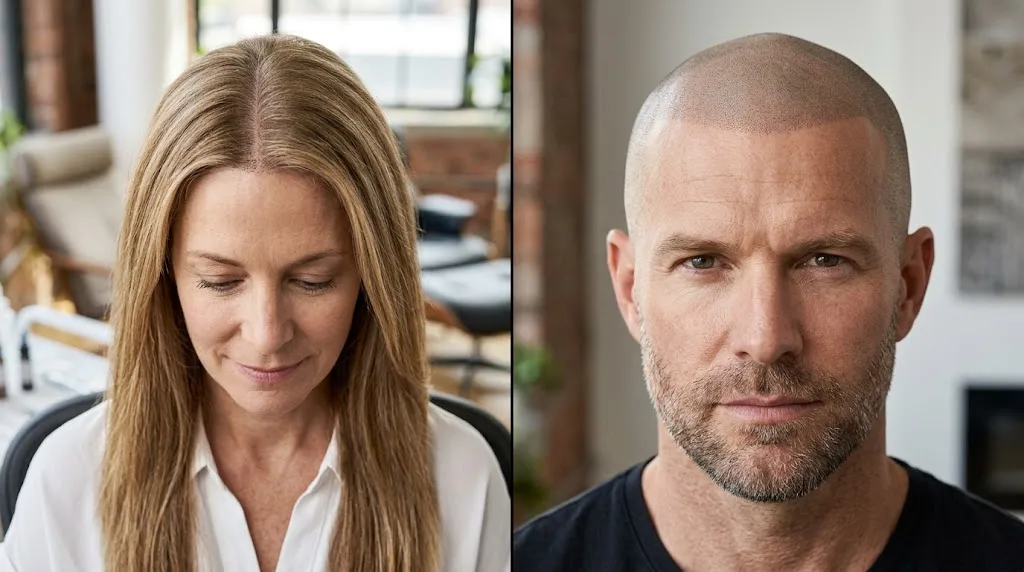
Most SMP marketing shows men with shaved heads and sharp hairlines. That’s not usually what women need.
Female hair loss tends to show up as diffuse thinning across the scalp rather than a receding hairline. So the technique, goals, and results look different too.
Here’s how it typically differs:
- Coverage area: Women usually need pigment blended across the whole scalp, not just along the hairline.
- Density, not shape: The goal is filling in visible thinning between existing strands, not recreating a buzzed hairline.
- Part-line focus: A widening or see-through part is one of the most common concerns SMP addresses for women.
- Working around longer hair: Practitioners blend pigment underneath and around existing hair length instead of assuming a shaved scalp.
Who Makes a Good Candidate for SMP?
SMP works best for women who understand what it actually does: it creates the appearance of coverage. It doesn’t regrow hair.
The best candidates usually have:
- A healthy scalp, free from active infection or irritation
- Realistic expectations about the visual result
- A hair loss pattern that has stabilized, not one that’s rapidly progressing
- Willingness to attend multiple sessions and follow aftercare instructions
- Comfort with a semi-permanent, low-maintenance solution
If you’re not sure whether you qualify, a scalp consultation with a licensed practitioner is the fastest way to find out. Guessing from general guidelines online won’t tell you much about your specific scalp.
What Conditions Can SMP Treat?
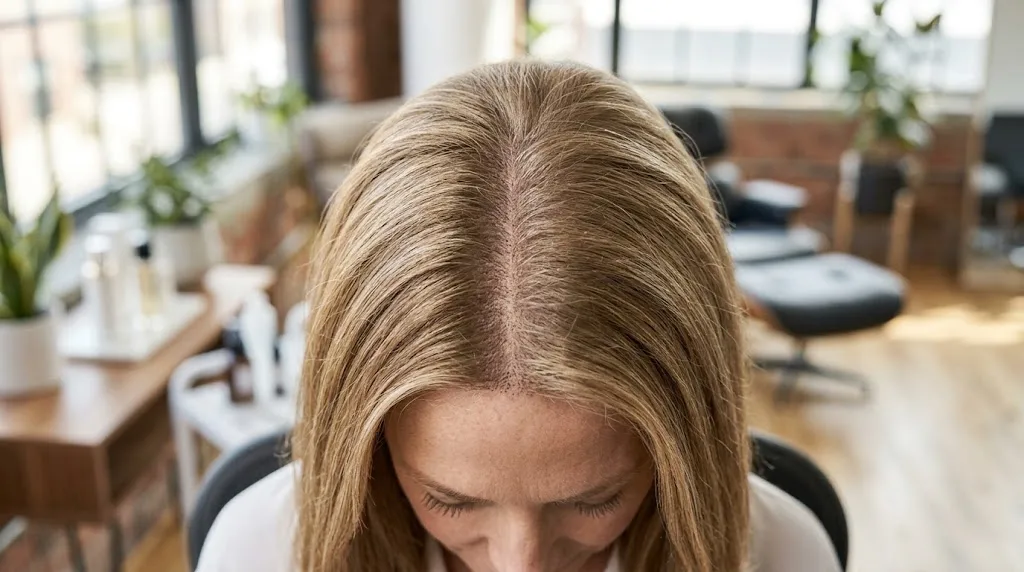
SMP can address a wide range of hair and scalp concerns, from mild thinning to full scarring, by visually filling in areas where hair no longer grows.
| Condition | How SMP Helps |
|---|---|
| Diffuse thinning | Fills in visible gaps between existing strands |
| Widening part lines | Adds pigment along the part to hide scalp visibility |
| Alopecia areata/totalis | Camouflages patchy or complete hair loss with even coverage |
| Female pattern hair loss | Builds density across thinning areas, especially the crown |
| Scalp scars | Blends surgical or trauma scars into the surrounding pattern |
| Post-transplant scarring | Disguises linear or dot scars from earlier procedures |
Expert tip: Many practitioners recommend waiting until hair loss has stabilized before starting SMP. Treating a pattern that’s still actively progressing often means needing touch-ups sooner, just to keep the pigment looking natural as thinning continues.
The SMP Process, Step by Step
SMP isn’t a single appointment. It’s a structured process spread across multiple sessions, built to add density gradually and naturally.
Step 1: Consultation and Scalp Assessment
Every treatment plan starts with a consultation. The practitioner examines your scalp condition, hair loss pattern, and skin tone to determine session count and whether SMP is the right fit for your goals.
Step 2: Pigment Color Matching
Pigment gets matched carefully to your natural hair color, skin undertone, and how the pigment is expected to fade over time. Getting this step right prevents mismatched or unnatural results later, especially since pigment tends to soften slightly after it heals.
Step 3: First Session — Mapping and Outline
The first session establishes the overall pattern, mapping out where pigment will sit to mimic natural follicle placement. Practitioners work in small dots and focus on the areas that need the most density, without overloading any single section too soon.
Step 4: Follow-Up Sessions
Most women need two to four total sessions, spaced a few weeks apart. Each session builds on the last, adding depth and refining coverage based on how the pigment settled after the previous visit.
Step 5: Healing Between Sessions
The scalp needs roughly 10 to 14 days to heal between appointments before more pigment goes in. Rushing this stage can throw off how evenly the pigment settles, so practitioners typically space sessions out to protect the final result.
Step 6: Final Touch-Up and Aftercare
A final session smooths out any uneven areas and confirms the finished look matches expectations. This is also when practitioners walk through long-term maintenance, sun protection, and when to expect future touch-ups.
How Long Does SMP Last?
SMP typically lasts three to six years before noticeable fading sets in, making it semi-permanent rather than permanent.
Pigment fades gradually due to sun exposure, skin type, and natural skin cell turnover, though it rarely disappears completely without additional treatment.
Fair or sensitive skin tends to fade faster than darker skin tones. Scheduling a touch-up every few years keeps density looking sharp and natural as the original pigment softens.
Scalp Micropigmentation Cost for Women
SMP for women generally costs between $1,500 and $5,000 total, depending on how much of the scalp needs treatment and how experienced the practitioner is.
Individual sessions typically run $400 to $1,000 each, and most women need two to four sessions to complete the process.
Treating diffuse thinning across a large area costs more than touching up a single part line or small patch. Highly experienced practitioners often charge more, but that expertise usually pays off in more natural, longer-lasting results.
Aftercare Tips for Healing
How well you care for your scalp after each session directly affects how sharp and natural the pigment looks long-term.
Do:
- Keep the scalp completely dry for the first 4–5 days
- Apply any aftercare ointment exactly as directed
- Wear a loose hat outdoors and avoid direct sun
- Use SPF on the scalp long-term once fully healed
Don’t:
- Sweat heavily, swim, or use saunas during initial healing
- Use harsh shampoos, exfoliants, or scrub the area for at least 2 weeks
- Pick or scratch the treated skin
- Color or chemically treat your hair right after a session
Risks and Side Effects to Know Beforehand
SMP is minimally invasive, but it’s worth understanding the potential downsides before booking.
- Temporary redness and tenderness: Common right after each session, usually gone within a few hours to a couple of days.
- Pigment fading or color shift: Can happen over time, especially with sun exposure, sometimes shifting slightly in tone.
- Uneven results from inexperienced practitioners: Poor technique can create unnatural dot patterns, patchy density, or visible blotching.
- Allergic reactions: Rare, but possible depending on the pigment formula. A patch test beforehand can rule this out.
- Infection risk: Low in a sterile, licensed setting, but improper aftercare or an unlicensed provider raises the risk.
- Difficult removal: Fading happens naturally, but full pigment removal is harder and may require laser treatment.
Final Thoughts
SMP for women works by recreating the look of natural follicle density, whether the goal is filling in diffuse thinning, softening a widening part, camouflaging alopecia, or blending post-transplant scarring.
The process typically unfolds over two to four sessions with built-in healing time, and total cost usually falls between $1,500 and $5,000 depending on how much coverage is needed.
Done well, the results last three to six years with the right aftercare and sun protection. It’s not the right choice for everyone, but for the right candidate, it can bring back real confidence.
Frequently Asked Questions
Can SMP be combined with other hair loss treatments?
Yes. SMP is purely cosmetic and doesn’t interfere with active treatments like minoxidil or PRP therapy. Always tell your practitioner about any ongoing treatments before your first session.
Does SMP work on all skin tones?
Yes. The pigment used mimics follicle shadows rather than trying to match hair color exactly, which makes it effective across all skin tones without the risk of a visible color mismatch.
Is SMP painful for women?
Discomfort is usually mild. Most women describe it as a light scratching sensation, and many practitioners apply a topical numbing cream beforehand to keep the session comfortable.
For more beauty and wellness insights, keep exploring faminaz.com.