
Most of us never think about our eyelids — until one day we notice a fold that seems new, a crease that looks different in photos, or a lid shape we can’t quite explain.
Here’s the truth: eyelid types aren’t a beauty ranking system. They’re anatomical categories based on how your skin, muscle, and connective tissue interact above your eye.
Understanding your eyelid type matters for more than curiosity. If you’re considering Botox, eyelid surgery, or even just picking the right eye makeup technique, knowing your actual anatomy helps you set realistic expectations and avoid disappointment.
In this guide, we’ll break down every major eyelid type, show you how to spot yours in the mirror, and clear up some of the most common myths people believe about eyelid shapes.
What Are Eyelids, Exactly?
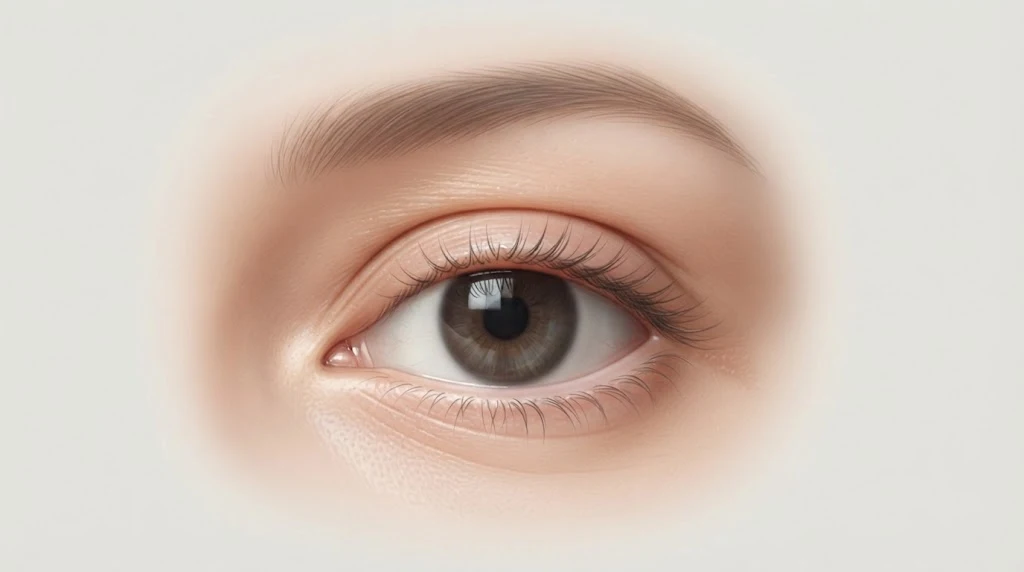
Your eyelids are thin, flexible folds of skin that sit above and below each eye. Every time you blink, they open and close to protect your eyes and keep them working properly.
Your eyelid shape is set by genetics, not habits or lifestyle. Specifically, it comes down to:
- How your skin attaches to the muscle underneath (called the levator muscle)
- How much fat and tissue sits along the lid
- Where your natural crease forms, if it forms at all
Once your eyelids finish developing, their basic structure stays the same for life. You can’t train, exercise, or “fix” your crease pattern without professional intervention — but every eyelid type, no matter how it looks, is built from the same basic layers of skin, muscle, and tissue.
Why Do Eyelids Matter for Eye Health?
Eyelids do a lot more than frame your eyes. They play a real role in protecting your vision every single day.
- They block debris. Dust, wind, and small particles get stopped before they reach your eye surface.
- They spread tears evenly. Each blink coats your eye in moisture, which prevents dryness and irritation.
- They control light exposure. Your lids adjust how much brightness reaches your eyes.
- They help you express emotion. A raised brow, a narrowed gaze, a wide-eyed look — your lids move with your feelings.
In short, your eyelids aren’t just cosmetic. They’re a working part of your eye health system.
The Main Types of Eyelids
Eyelid types are grouped by how the crease behaves — whether it’s visible, hidden, or made up of multiple folds. Below are the categories experts typically use.
1. Monolid Eyelids
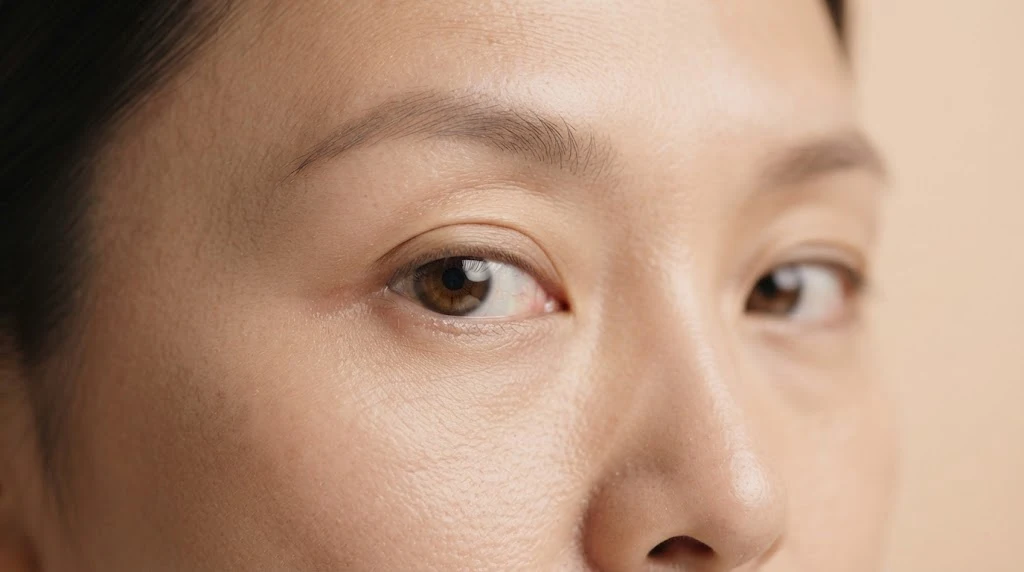
Monolids have no visible crease above the lash line. The lid looks smooth and even, without a fold breaking up the surface.
This happens when the skin doesn’t form a strong connection to the levator muscle, so no defined crease line ever appears.
2. Hooded Eyelids
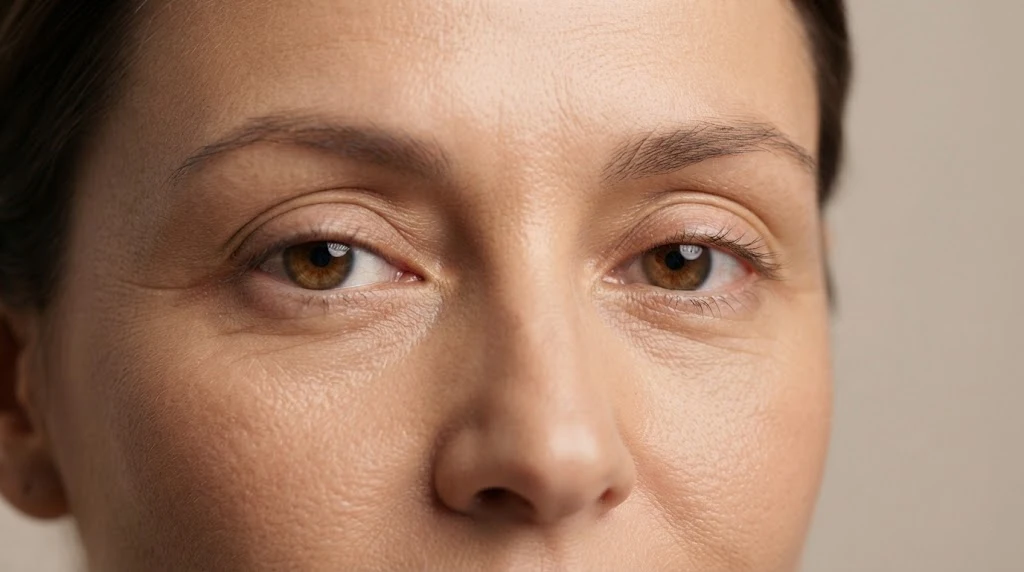
Hooded eyelids do have a crease — it’s just partly or fully covered by extra skin folding down from the brow area.
The structure is there underneath. It’s simply hidden as the skin above gradually extends further down over time, especially with age.
3. Double Eyelids
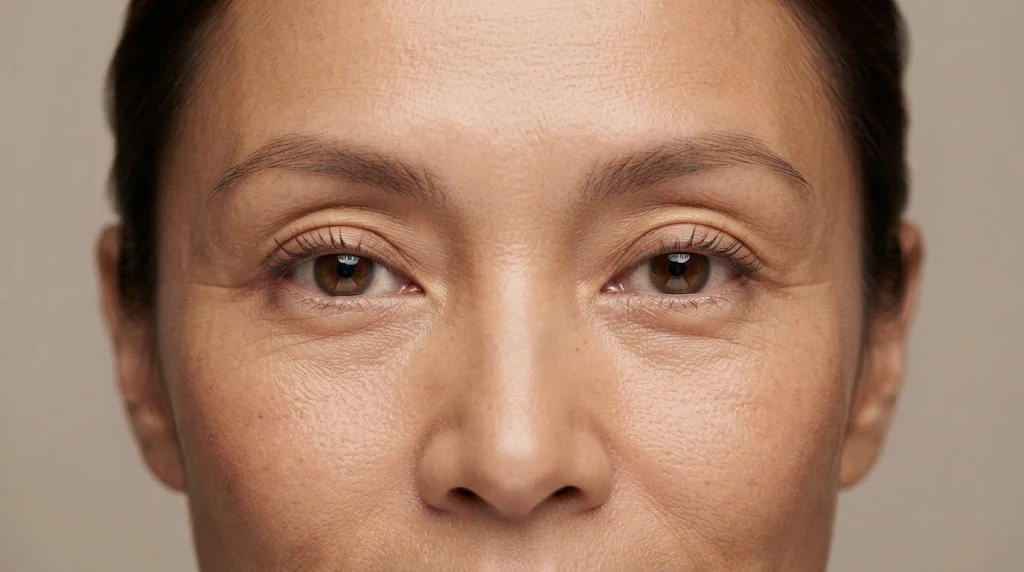
Double eyelids feature one clear, well-defined crease that splits the upper lid into two visible sections.
This crease forms where skin connects directly to the levator muscle, creating a stable fold line that stays visible across most facial expressions.
4. Triple Eyelids
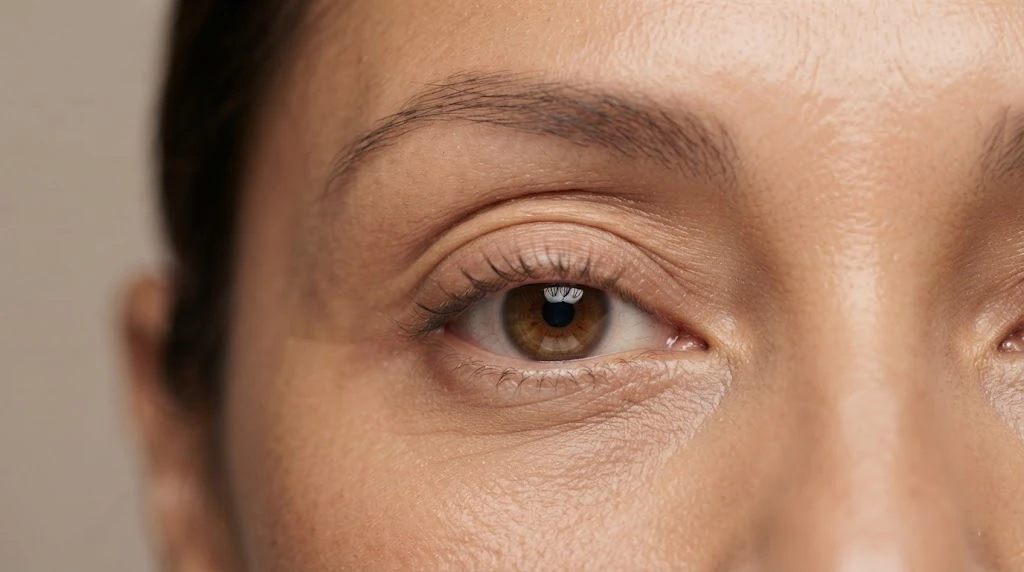
Triple eyelids show two or more distinct creases across the lid, rather than a single fold line.
This happens when the skin forms multiple points of connection with the muscle underneath, creating a layered, stacked crease pattern.
Eyelid Types at a Glance
| Type | Crease | Fold Structure | Visibility | Key Identifier |
|---|---|---|---|---|
| Monolid | None | Smooth lid surface | No fold line | Flat upper lid |
| Double eyelid | Single defined crease | Skin connects to muscle | Fully visible | Clear lid division |
| Hooded eyelid | Present but covered | Excess skin overlaps crease | Partially hidden | Fold hidden by skin |
| Triple eyelid | Multiple creases | More than one anchor point | Multiple lines | Layered crease pattern |
| Partial eyelid | Incomplete | Uneven muscle anchoring | Partly visible | Crease breaks mid-lid |
Keep in mind: no single feature decides your type on its own. Crease presence, fold structure, and visibility all work together.
Can Botox Lift Hooded Eyelids?
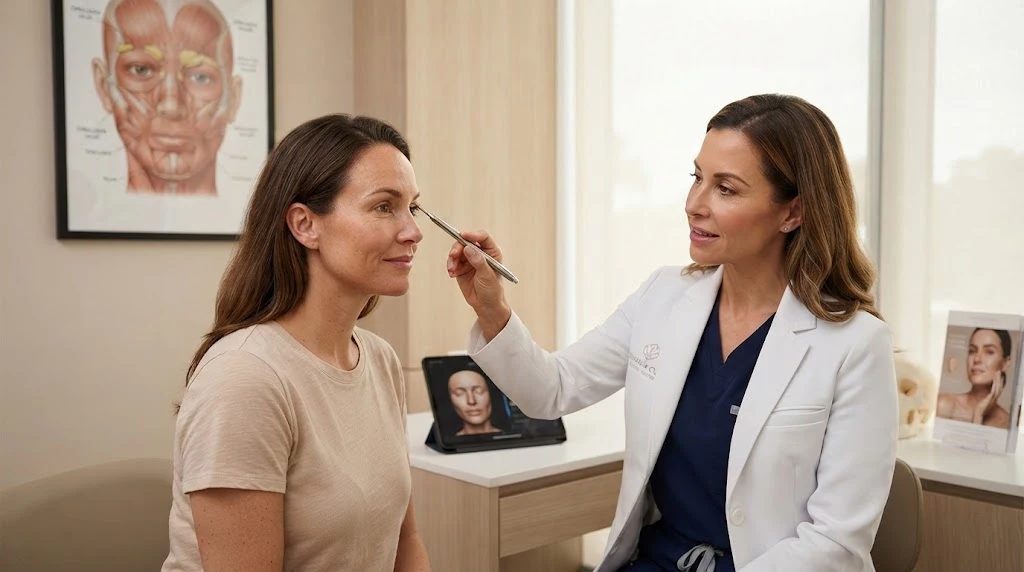
Botox can offer a modest improvement for hooded eyelids, but it won’t actually reshape or lift the underlying tissue.
Hooding happens because of excess skin folding over the crease — and that’s something Botox simply can’t remove or restructure.
What Botox can do is relax the muscle around the eye (the orbicularis oculi), which allows the brow to sit slightly higher. This can reduce the appearance of heaviness over the lid.
Bottom line: any change from Botox is subtle, temporary, and indirect. It won’t alter your natural crease or eyelid structure.
Common Myths About Eyelid Types
People often confuse eyelid types because different anatomical causes can look similar on the surface. Here are the mix-ups we see most often:
- Hooded eyelids vs. monolids — Both can look crease-less at a glance, but hooded lids are hiding a crease, while monolids simply don’t have one.
- Ptosis is not an eyelid type — It’s a medical condition caused by weak muscle function, not a natural crease category.
- Your eyelid type doesn’t affect your vision — Fold pattern has no connection to eyesight.
- Your type doesn’t change with age — Skin can shift and sag over time, but your underlying crease structure stays the same.
Knowing these differences can help you avoid confusing a normal variation with a medical issue.
How Eyelid Types Vary Across Populations
Eyelid shapes differ across populations because of genetics — specifically, differences in how creases form, how thick the skin fold is, and how the muscle attaches.
- Monolid eyelids appear more frequently in many East Asian populations, where a defined crease is less common.
- Epicanthic folds, which affect how much of the inner eye corner shows, also appear more often in certain groups.
None of these differences affect eye function or vision in any way. And importantly, no eyelid type belongs exclusively to any one population — every type can appear across different ethnic backgrounds.
How to Identify Your Own Eyelid Type
To figure out your eyelid type, check three things: whether you have a crease, how visible it is, and where it sits.
| What to Check | What You See | Likely Type |
|---|---|---|
| Crease presence | No fold line above the lash line | Monolid |
| Crease visibility | Crease present but hidden by skin from the brow | Hooded |
| Crease visibility | Crease fully visible, clearly dividing the lid | Double eyelid |
| Number of folds | More than one crease line | Triple eyelid |
| Crease coverage | Crease visible near one corner only | Partial eyelid |
| Corner angle | Outer corner sits higher than inner corner | Upturned eyelid |
Don’t be surprised if your eyelids show traits from more than one category — overlap is common, and results aren’t always perfectly clear-cut.
Not sure which type you have? A qualified oculoplastic specialist can give you an accurate, professional assessment.
Final Thoughts
Your eyelid type comes down to how your crease forms, how your skin behaves, and how the muscle underneath shapes your lid. These are fixed anatomical traits — not beauty categories, and definitely not something you can change through effort alone.
No single feature determines your type by itself, and overlapping traits are more common than most guides admit.
Understanding your own anatomy — before any consultation, treatment, or cosmetic decision — puts you in a much stronger position to make an informed choice.
Frequently Asked Questions
What kind of eyelids do Caucasians typically have?
Double eyelids with a well-defined crease are the most common, though hooded and partial types also appear frequently within this group.
What’s the most attractive eyelid type?
There isn’t one. Attractiveness is subjective and varies by culture, individual taste, and personal aesthetic standards — no single eyelid type is universally preferred.
Which eyelid type is the rarest?
Triple eyelids are considered the least common, since they require multiple distinct anchor points to form along the lid — a less frequent anatomical occurrence.
Stay with faminaz for more expert beauty and wellness guides.